



















“Free and fair elections are the cornerstone of a democratic society, and effective policing is crucial to ensuring the integrity of the electoral process.” Unknown.
These words align deeply with Uganda as the country prepares for its upcoming general elections due mid-month in January 2026.
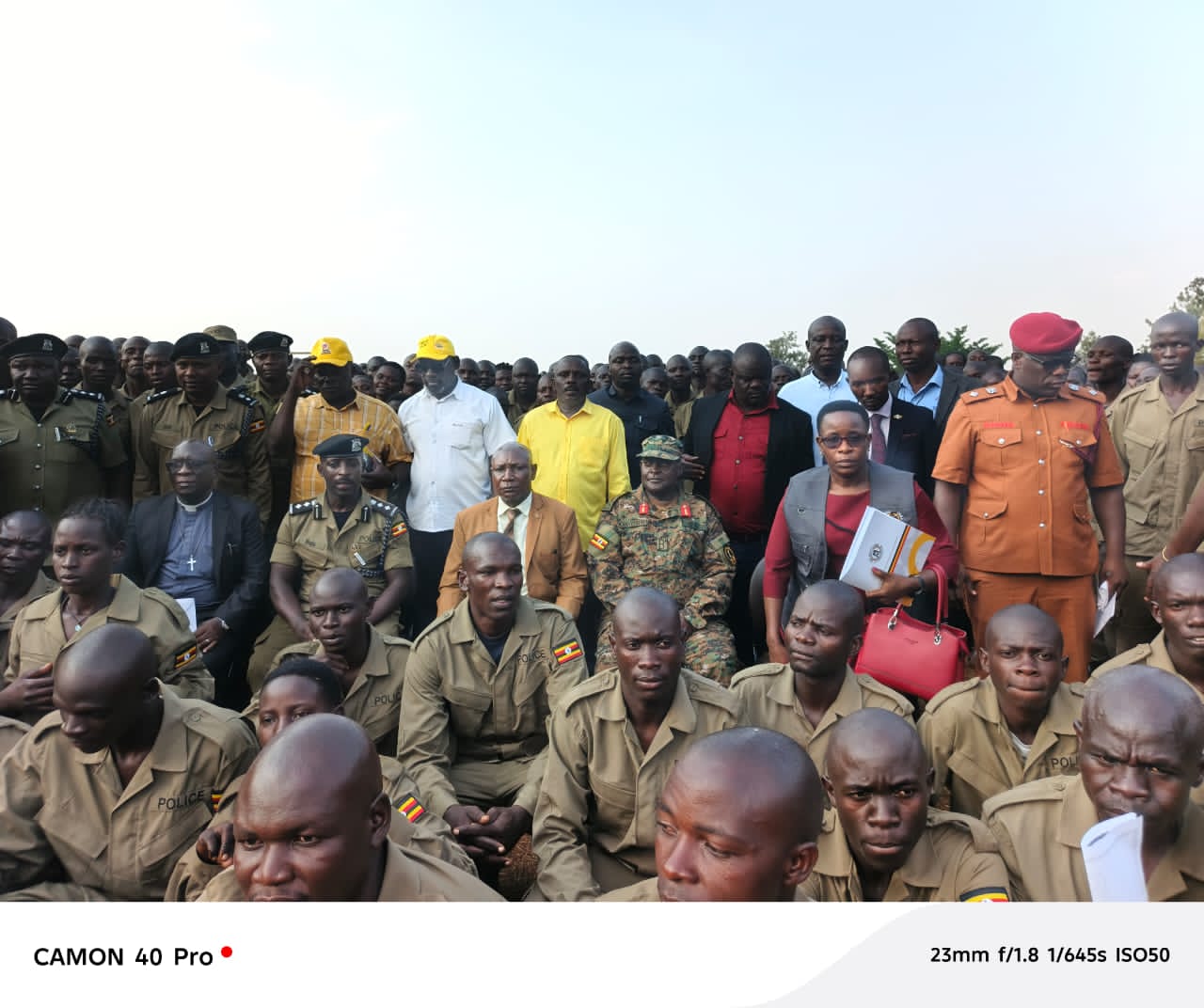
In what has been described as a significant development, the Kiira Region Police Command on Thursday 18th December,2025 held a pass-out ceremony for 1,398 Election Special Police Constables (ESPCs) who underwent a 10-day intensive training course at Busoga College Mwiri in Jinja district.
According to the Kiira Regional Police publicist SP James Mubi, the training, which started on December 8 and ended on December 18, aimed to equip the ESPCs with the necessary skills and knowledge to maintain public safety and security during the elections.
As Lee P. Brown, a renowned law enforcement expert, once said, “The police must always maintain a relationship with the public that gives validity to the historic tradition that the police are the public and the public are the police.”
The Guest of Honor, Hajji Ahmed Kateregga Musaazi, the Resident District Commissioner (RDC) for Jinja district, praised the trainees for their high morale, exemplary discipline, and dedication during the training period.
“…You have impacted professional knowledge and skills to these brothers and sisters of ours who have on this pass-out day demonstrated a high level of preparedness in maintaining public safety and security at the polling stations…,” he said.
The RPC Kiira Region, SSP Charles Nsaba, congratulated the trainees upon the successful completion of the course and praised them for being disciplined and loyal individuals throughout the training period.
He appealed to them to spread the message of peace and assured that in case of any opportunity to join the Uganda Police Force (UPF), the ESPCs would be given special consideration or priority, provided they meet the recruitment requirements.
As Chief (ret.) Tom Weitzel said, “…Policing must remain rooted in service, not politics.” In line with this principle, SSP Nsaba cautioned the ESPCs against misusing police uniforms for unprofessional behavior, such as getting involved in unlawful arrests, misusing social media platforms, and engaging in corrupt and subversive tendencies.
The Cantonment Commander Busoga sub-region, Brig Gen Emmanuel Kanyesigye, who also graced the ceremony reaffirmed his commitment to supporting the police before, during, and after the elections.
“…You are no longer free to behave the way you want because you now belong to the national security apparatus…,” he said, adding “Peace and security are the pillars of development worldwide. Let us be part of the winning team in achieving the integrated sustainable national economy.”
As the ESPCs prepare to take on their new roles, it is essential to remember that their duties must be guided by the principles of professionalism and impartiality. As Chief(rtd)Tom Weitzel aptly puts it, “…policing must remain rooted in service, not politics, that requires courage, clarity and a commitment to principle over popularity”, this commitment to principle over popularity is crucial in ensuring that the trust and confidence of the public they serve.
However, past experiences have shown that ESPCs are often vulnerable to exploitation by unscrupulous superiors who may withhold their allowances logistics leaving them frustrated and disillusioned. Furthermore, the temporary nature of their employment which is typically limited to the election period can create a sense of uncertainty and desperation among ESPCs.
Commentators say unless carefully managed, this situation can lead to security risks in their communities as disgruntled ESPCs may resort to illicit activities to make ends meet.
The Uganda Police Force faces a significant challenge in ensuring that these ESPCs are properly discharged and provided with alternative sources of livelihood after the elections. Moreover the UPF’s ability to absorb them into the regular police force is a pressing concern.
Will the UPF be able to provide opportunities for these temporary officers or will they be left to fend for themselves. The answer to this question remains uncertain and it is crucial for the UPF to address the same proactively to prevent potential security risks and ensure the well-being of the personnel.
But once again as Lee P. Brown noted, “The degree of cooperation of the public that can be secured proportionately diminishes the necessity of the use of physical force and compulsion in achieving police objectives.”
The Kiira Region Police Command chief says they are confident that the ESPCs will work tirelessly to maintain public safety and security during the elections.
The pass-out ceremony for ESPCs marked a big stride in Uganda’s electoral preparations.
Notably, the pass-out was conducted simultaneously across all police regions in Uganda, underscoring the level of preparedness and coordination between the Electoral Commission and the Uganda Police Force-the lead security agency.
This synchronized effort demonstrates the commitment of both the EC and the UPF to ensuring a peaceful and secure electoral process.
ESPCs are temporary police officers recruited to support security operations during elections in Uganda.
Their primary role is to maintain law and order at polling stations, ensuring the safety of voters, candidates or their agents and electoral officials. The concept of ESPCs in Uganda is not new as the UPF has been recruiting special constables to support election security for several years.
For instance, in the 2021 general elections, the police hired 50,000 polling constables. As to whether it is a universal practice, ESPCs are not a standard feature in all countries. However, many countries deploy special security personnel or forces during elections to maintain order and ensure the integrity of the electoral process.