








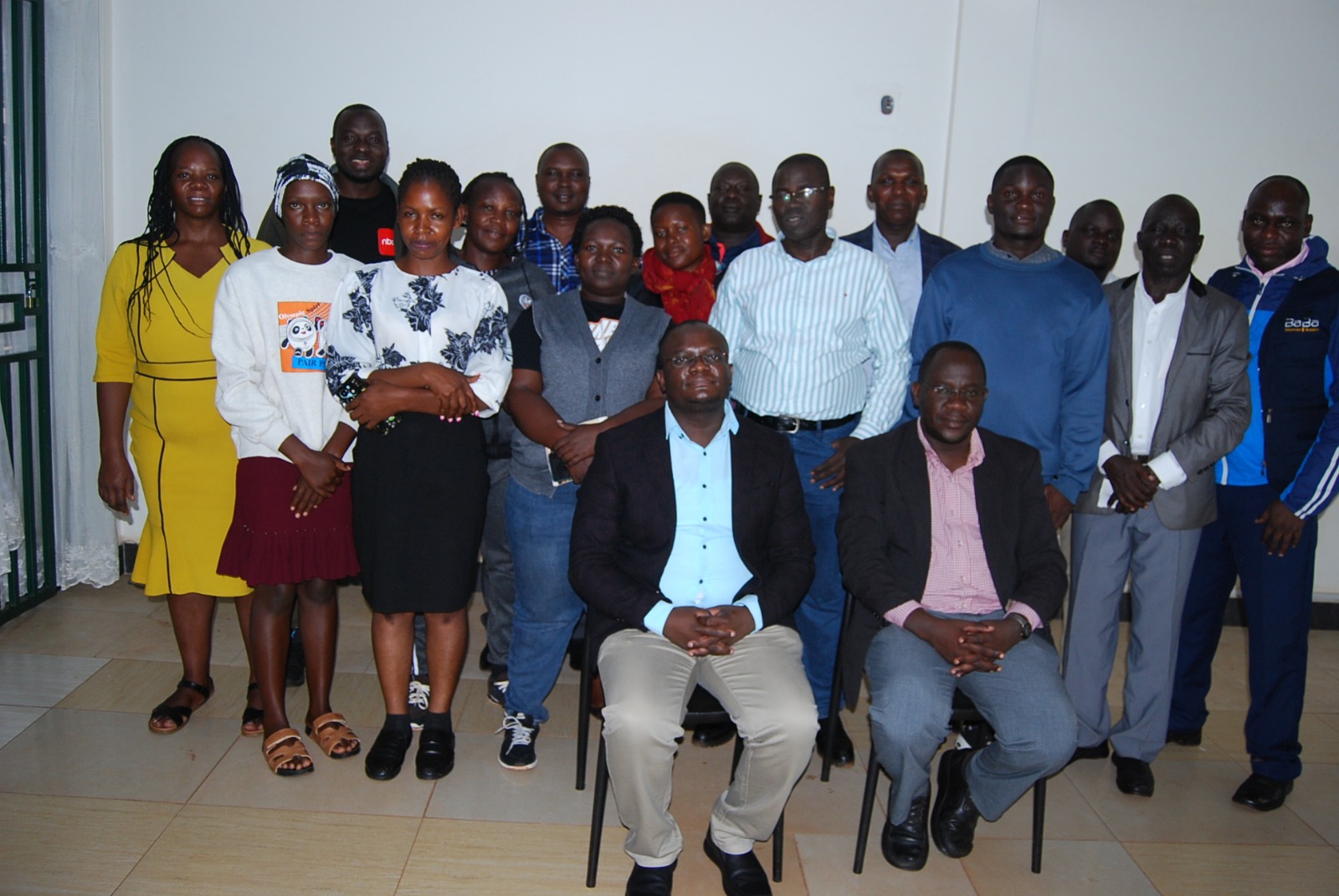
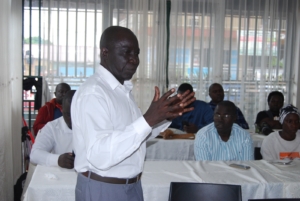
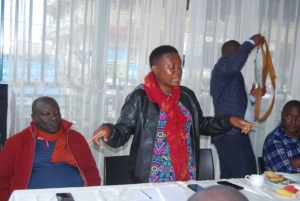
During a health café for health reporters organized by Health Journalists Network in Uganda (HJNU), held on Friday 6th February, 2026 at Nile Deluxe Hotel in Jinja City, a pool of journalists discussed a catalogue of complexities surrounding abortion and safe abortion post care in Uganda.
Dr. Aggrey Bameka, an associate consultant obstetrician and gynecologist at Buwenge General Hospital in Jinja district was one of the facilitators at the event.
He told the inquisitive catalogue of reporters from both the print and broadcast media that health workers are only allowed to conduct safe abortions in cases where the mother’s life is in danger.
Dr Bameka who also doubles as the coordinator Busoga Local Maternity and neonatal System gave a grim picture of how unsafe abortion has increasingly become a burden to families, communities and the government as a whole.
The Current State of Abortion in Uganda.
Quoting data from the National Annual MNCH and MPDSR Report, FY 2024/2025, Dr Aggrey Bameka said cases of abortion have moved away from adolescents to married women from the age of 25 and above.
“on average every day we record at least 2 cases of abortion, and most of them report when in severe circumstances having tried through some quacks, so ours is to handle the emergencies…”, Dr Bameka said.
According to the Maternal and Perinatal Death Surveillance and Response (MPDSR) report for the Financial Year 2024/2025, abortion related complications account for 4% of all maternal deaths equals to 189 deaths per 100,000 live births nationwide, with Busoga sub region (described as the pathology of all diseases) facing an even greater risk at 7%, mostly among women aged 25 and older.
Information available indicates that many abortions occur illegally in unregulated settings where deaths are not documented.
This is seen as a departure from previous reports that linked unsafe abortion mainly to school-age going teenage girls who often resorted to abortions due to feat of stigma, expulsion or even rejection by families and communities.
Additionally, Dr Aggrey Bameka, who is also a member of the Association of Obstetricians and Gynecologists of Uganda (AOGU) said some women experiencing first-trimester pregnancy loss may not realize they were pregnant, often mistaking it for a delayed or heavy menstrual period, implying many cases do not enter official records at health facilities.
AOGU, formed in 1985 is a registered non-profit professional organization that aims to promote professionalism, undertake research, represent its members at local, regional and international levels and champion Sexual Reproductive Health and Rights (SRHR)of the people in the region.
He says the mother Ministry has issued guidelines which provide a framework for healthcare providers to follow, but that the lack of clear implementation and enforcement of these guidelines has led to confusion and inconsistent application of the law.
In Uganda, the debate surrounding abortion continues to rage on, with many women and girls facing significant challenges in accessing safe and legal abortion services.
The debate around abortion is complex with some arguing that the current law as it is should be liberalized to allow for safe abortions and others opposing it based on cultural and religious grounds.
Abortion is often viewed through a narrow lens dominated by restrictive laws and societal stigma overlooking the complex realities faced by survivors of rape, incest and individuals living with HIV.
These individuals are forced to navigate a harsh environment further compounded by the judgement of conservative and religious groups leaving them without access to safe and compassionate care.
What is Abortion?
Abortion, in medical terms, refers to the termination of a pregnancy before the fetus reaches viability which is usually considered to be around 20-26 weeks of gestation.
This is either spontaneously(miscarriage)or intentionally (induced abortion). It involves the removal or expulsion of an embryo or fetus from the uterus, resulting in the end of the pregnancy.
It is a complex and multifaceted topic and its discussion involves medical, legal, social and personal considerations.
Relevant Laws on Abortion in Uganda.
Veteran journalist and lawyer Paul Watua emphasized the need for in-depth analysis and reporting on reproductive health issues, particularly abortion and safe abortion.
He noted that journalists often focus on sensationalizing stories rather than providing context and nuance, which can perpetuate misinformation and stigma.
Counsel Watua took time to guide the scribes on relevant laws surrounding abortion:
Article 22 of the country’s Constitution, deals with the right to life and specifically Article 22(1) states that ‘no person shall be deprived of life intentionally except in execution of the sentence of a court in respect of a criminal offence under the laws of Uganda for which a death sentence is provided.
Article 22(2) states that ‘no person has the right to terminate the life of unborn child except as may be authorized by law’.
Also, the Penal Code Act (PCA) has several provisions related to abortion, specifically sections 141,142 as well as sections 205 and 206.
Section 141 states that, ‘any person who with intent to procure the miscarriage of a woman, whether she is with child or not unlawfully administers to her or causes her to take any poison or other noxious thing or uses any other means, commits a felony’.
Section 142 states that, ‘any woman who, with intent to procure her own miscarriage, whether she is with child or not, unlawfully administers to herself any poison or other noxious thing, or uses any force or any other means, commits a felony’.
These provisions criminalize abortion in most cases, except where the life of the mother is in danger, as provided for in the constitution and other laws.
Section 205 and 206 also deal with concealment of birth and killing of an unborn child. These laws are often seen as restrictive and can lead to unsafe abortions, which can have serious health consequences for women
These provisions, protects the right to life, while the Penal Code Act, under sections 141 and 142, criminalizes abortion, except in cases where the mother’s life is in danger.
Watua says in criminal law, a felony is a serious crime that is typically punishable by imprisonment for more than a year or even death depending on the jurisdiction.
What Does UN Say About Abortion?
For the first time a United Nations report in 2021 focused on bodily autonomy: the power and agency to make choices about your body without fear of violence or having someone else to decide for you.
The Report, titled My Body is My Own described as ‘groundbreaking’ by feminists, by the UNFPA states that nearly half of all women are denied their bodily autonomy
According to a report by Femme Forte Uganda, ‘Women Are Not Vessels, They Are Subjects of Their Own Rights…’, a woman has the right to make choices about her body, including whether to have sex or undergo an abortion. This perspective emphasizes bodily autonomy which is the power and agency to make decisions about one’s own body without fear of violence or coercion.
Femme Forte Uganda is a feminist organization that focuses on movement building, advocating for bodily autonomy, reproductive justice and transformative leadership.
Landmark Cases and Court Rulings.
According to the Hindu Times newspaper, the Supreme Court in India on 6th February 2026 ruled in favor of a minor girl’s right to terminate a 30-week pregnancy, while noting that a person cannot be compelled to carry her pregnancy to its full term.
“What has to be considered is the right of the minor child to continue a pregnancy which is ex facie illegitimate in as much as she is a minor and has to face this unfortunate situation of having the pregnancy owing to a relationship that she had”, a bench of Justice BV Nagathna and Ujjal Bhuyan remarked in court.
The court highlighted the right to reproductive autonomy of a woman and in the present the bench noted that the minor had shown a clear and consistent unwillingness to continue the pregnancy.
“…if the interest of the mother is to be taken note of, then her reproductive autonomy must be given sufficient emphasis”, the bench said.
The court also said that there were cases in which women may have no other option but take the dangerous and life-threatening alternative of turning to quacks for an abortion.
Both Dr Bameka and Counsel Paul Watua cited the landmark case of Bolam vs Friern Hospital Management Committee (1957) to support the position.
The case highlights the importance of informed consent and the need for healthcare providers to prioritize the well-being of their patients.
In Uganda, the lack of clear guidelines and inconsistent application of the law have led to a situation where many women and girls are forced to navigate a complex and often hostile healthcare system.
For context, the Bolam vs Friern Hospital Management Committee (1957) case is a landmark medical negligence case in the UK that has had significant implications for medical practice and the way health professionals handle cases.
Case Summary:
John Hector Bolam, a 56-year-old man, was admitted to a psychiatric hospital and was given electroconvulsive therapy (ECT) without anesthesia or muscle relaxants.
Bolam suffered injuries, including fractures, and claimed that the hospital was negligent in not obtaining his informed consent for the treatment.
The Judgment: The court ruled in favor of the hospital, establishing the Bolam test, which states that a doctor is not guilty of negligence if they have acted in accordance with a practice accepted as proper by a responsible body of medical professionals skilled in that particular art.
The Bolam case has led to increased caution among health professionals, with many adopting defensive medical practices to minimize the risk of litigation. However, this has also led to concerns about over-defensiveness and the potential for patients to be denied beneficial treatments.
In Uganda, the Bolam case has been cited in various court decisions, including medical negligence cases. Ugandan courts have also emphasized the importance of informed consent and the need for healthcare providers to act in accordance with accepted medical practice.
Uganda vs Kafureka Case.
This case occurred in 2006 and involved a defendant who injected a young woman with the intention of administering an abortion, resulting in the death of both the woman and the fetus. The court found the defendant guilty of murder, reasoning that the intent to abort the fetus was sufficient to establish the mens rea element of murder.
Mens rea is a Latin term used in Law to describe the mental state or intention behind a person’s actions. It refers to the guilty mind or culpable mental state required to constitute a crime. In short, mens rea is the intention or knowledge that a person has when they commit a crime which can affect their level of culpability.
In this landmark case, the court upheld the principle that attempting to procure an abortion can be considered murder if the woman dies as a result. Some critics have continued to argue that the laws should be liberalized to allow for safe and legal abortion services.
Radical feminists argue that women have sole rights over their bodies and reproductive choices citing the intimate connection between a woman and her womb. They believe that since women carry the pregnancy, they should have autonomy over their own bodies and make decisions about their reproductive health whether to abort or not.
On the other hand, a counter argument is that pregnancy is not solely a personal issue but also a social one. This perspective asserts that the moment a woman becomes pregnant, she is not the only stakeholder, the fetus, her family, the man’s family and society as a whole have a vested interest in the pregnancy’s outcome.
This viewpoint emphasizes the interconnectedness of human experience and the potential impact of reproductive choices on multiple individuals and communities
In an address, Counsel Paul Watua sparked laughter with his witty remark, “there is nothing like self-impregnation”, as he wondered aloud the perspectives of some women who advocate for sole rights over their reproductive choices.
Counsel Paul Watuwa’s sarcasm highlights the absurdity of ignoring the role of others in the reproductive process which echoes the philosophical notion that ‘no man is an island, entire of itself, every man is a piece of the continent, a part of the main’.
In her concluding remarks, Taus Nakato, the Coordinator of the Health Journalists Network Uganda and Nation Media Group Bureau Chief for Busoga, urged journalists to elevate their reporting skills by gaining a deeper understanding of health-related issues and presenting them with context and sensitivity.
“Health is a sensitive issue that should not be handled with recklessness, and journalists play a critical role in shaping public perceptions of health and the need for accurate and responsible reporting”, she stressed.
Nakato affectionately known as Omulongo among her peers also made a passionate appeal to the Ministry of Health and its partners to provide training programmes for media professionals, particularly those covering health beat.
By doing so,Taus Nakato says she hopes will enhance the quality of health reporting in Uganda and promote informed public discourse on health issues.