

“War is the realm of uncertainty”, a Prussian general and military theorist best known for On War (Vom Kriege) Carl don Clausewitz (1780-1831) wrote and on 26th February,2026 that uncertainty favored the hunters not the hunted.
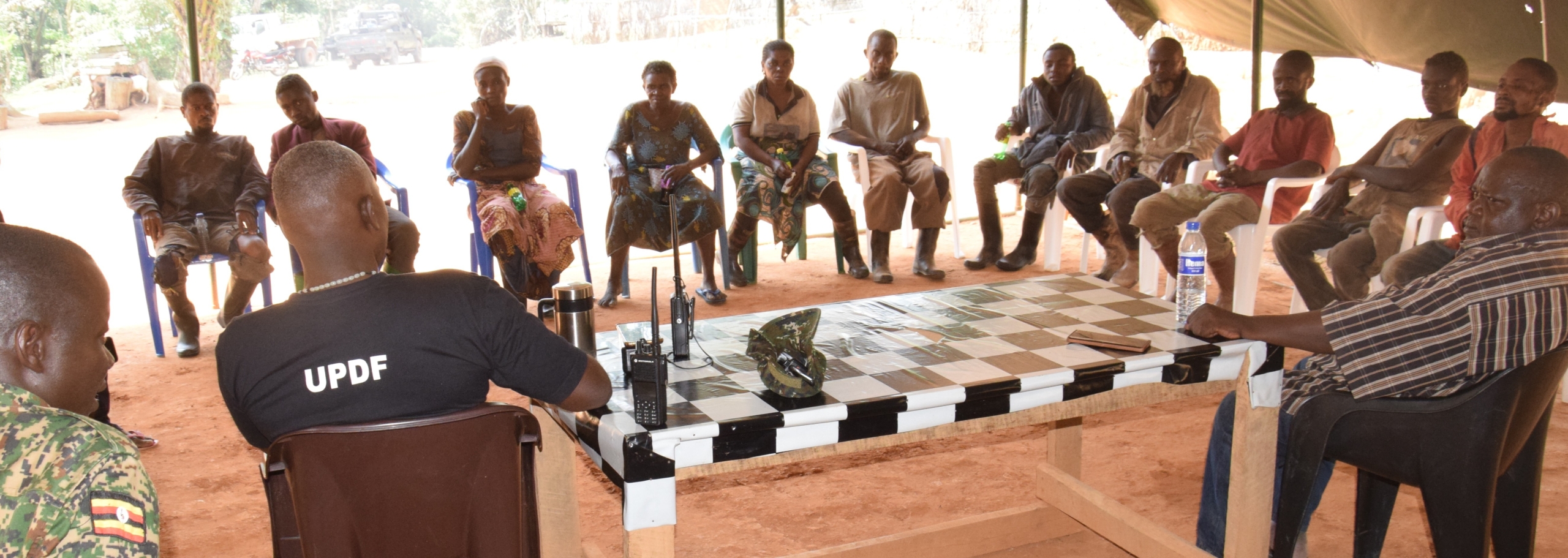
In a pre-dawn assault, Uganda Peoples’ Defense Forces (UPDF) and the Armed Forces of the Democratic Republic of Congo (FARDC) under Operation Shujaa slipped through Ituri’s forest west of the Epulu River and overran an Allied Democratic Forces camp, killing several insurgents, seizing weapons and bomb-making material, and freeing twelve civilians held in harsh conditions.
Commanded on the ground by Maj Gen Stephen Mugerwa, overall leader of Operation Shujaa, the joint force took the rebels by surprise, recovering AK-type rifles, improvised explosive devices, detonators and a milling machine used to fabricate casings, along with tools, cell phones and food stocks.
Survivors released near Ofayee-Ndimo told officers they endured forced lab our and beatings; medics evacuated them for treatment.
Remnants of the cell fled into Ituri forest, and patrols are still sweeping abandoned huts and crater paths. Mugerwa pledged to “maintain pressure until the ADF is decisively neutralized.”
Launched in November 2021, Shujaa combines Ugandan and Congolese battalions against ADF factions blamed for massacres in North Kivu and Ituri.
The Epulu camp was a key logistics node, so the raid marks one of the most significant seizures this year.
Funding comes from Kampala and Kinshasa; civilian-protection units are now escorting returnees. The joint headquarters says fresh operations will follow within days.
For Uganda, Shujaa is meant to push the ADF away from the border and eliminate them totally from where the insurgents have in the past launched attacks and bombings inside Uganda, so a direct strike lowers short-term risk to Ugandan towns and shows Kampala’s willingness to fight threats externally.
For the DRC, the raid gives Kinshasa a visible win in Ituri, seizing bomb-making gear and freeing hostages bolsters the FARDC’s credibility and keeps political pressure on the army to protect civilians, but it also obliges them to hold reclaimed forest, which has been hard in the past.
The record helps explain why Uganda and President Yoweri Kaguta Museveni, one of Africa’s longest-serving leaders is still treated as a key stabilizer in the Great Lakes.
Kampala fields a battle-tested army that can deploy across porous frontiers, shares intelligence with Kinshasa and regional partners and has kept Shujaa going despite ADF limited reprisals, giving neighbors partner willing to pursue militants beyond its own soil.
Museveni’s personal ties to regional leaders and his leverage in mediation forums translate battlefield action into diplomacy, so even critics accept that Ugandan troops and Museveni’s network remain central, not sufficient on their own but hard to replace in efforts to contain ADF-linked violence and anchor a broader peace framework for eastern Congo and the wider Great Lakes.