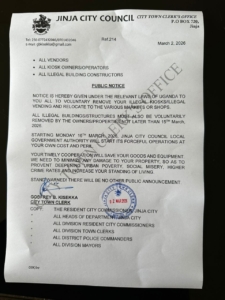

























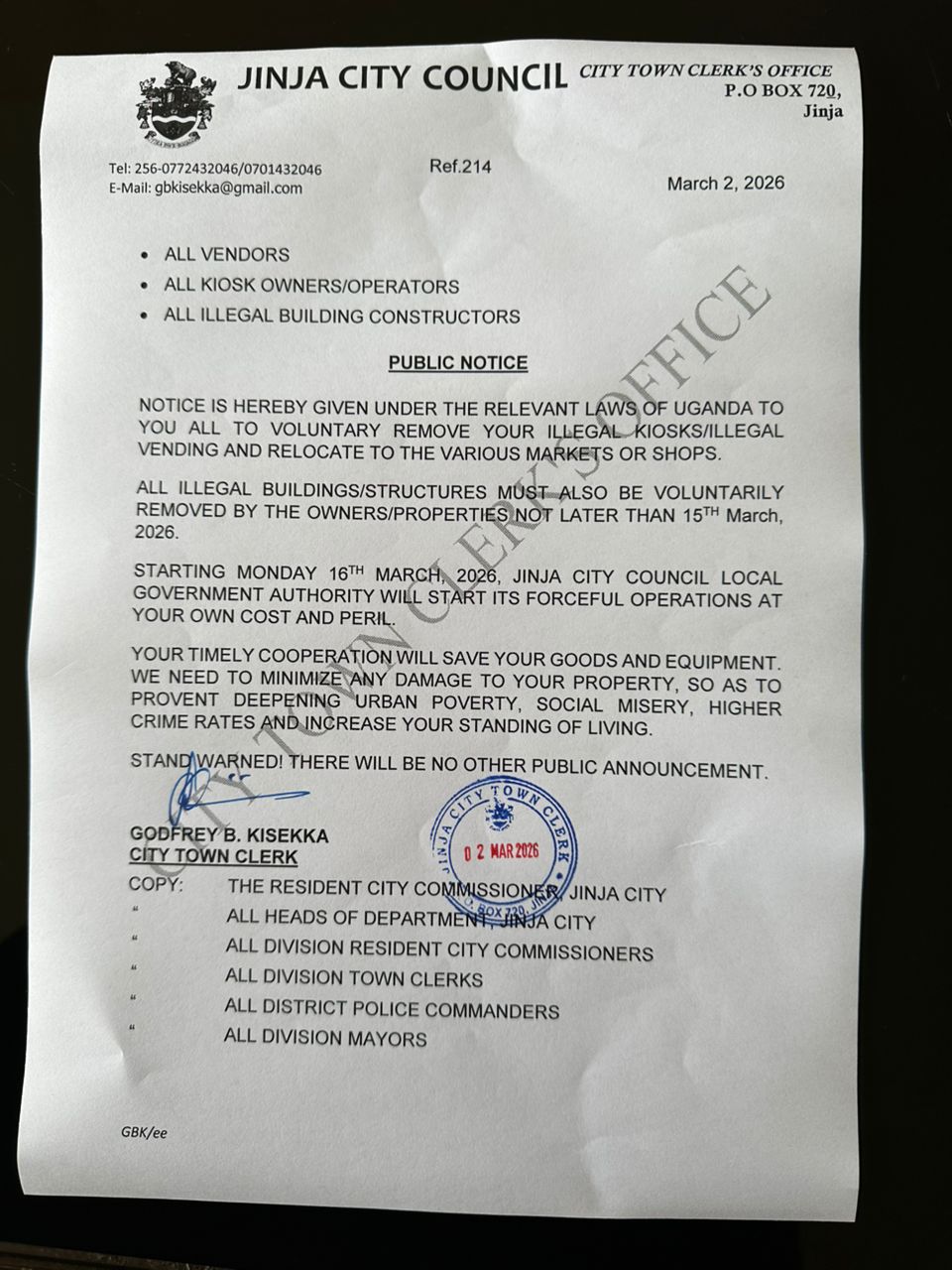
Jinja City Council (JCC) residents shrug at the City Town Clerk Godfrey B. Kisekka’s latest deadline—bins by 8 March, kiosks gone by 15 March—because similar threats have come and gone without enforcement.
What bothers them now are impassable, potholed roads that become mini‑lakes in rain, and dark streets where criminals ambush widows and single mothers walking home.
Locals also point to Jinja SSS’s decaying fence—built with over 3 billion shillings from parents—now being stripped for scrap as thugs work undisturbed. The stretch past Nalufenya Children’s Hospital toward Kampala Road, they say, is “another Gaza” after dark, with no streetlights.
Instead of press‑shy circulars and forced evictions, communities are asking Kisekka to redirect energy to drainage, lighting and protecting public investments that safeguard lives and livelihoods.
Residents also warn that pushing youth off kiosks and verandas without alternatives will backfire. Idle, indebted young people, many supporting siblings and earning a living, they argue are more likely to turn to theft or mugging to survive.
The cost of chasing them out, locals argue, will exceed any tidy-street gains: insecurity steepens, traders hire guards or watchmen and customers stay away.
For communities still navigating potholed roads and blacked-out streets, that trade-off makes Kisekka’s order-first approach look far costlier than keeping vendors working while Council fixes lighting, drainage and market access.
Although Jinja City Council’s intention to restore trade order and sanity, to keep public health standards, avoid illegal construction on road reserves and service lanes as well as safeguard traders and the community, and nudge shopkeepers toward orderly waste habits, it is clear and well‑meaning for the wider community, the sloppy notice, laced with typographical errors, is now inviting public mockery which undermines confidence in City Hall’s competence and authority.
Now the Town Clerk’s (Godfrey B Kisekka’s) notice has become fodder for secondary criticism: readers point to slips like “voluntary” remove instead of voluntarily and “provent” for prevent as evidence of hurried drafting.
One resident quipped that such errors in a statutory directive from a senior civil servant amount to an institutional embarrassment if City Hall cannot proof‑read a one‑page memo, how can it restore sanity, supervise solid waste disposal and management as well as trucks and eviction crews without accountability glitch.
However, Kisekka has made his stance clear reports as well he brushes off questions saying media commentary is ‘none of his business’ and giving no room for interview.
That silence has deepened the credibility gap but Sowali Mulyangere, the JCC-UPDF-backed enforcer is running a sensitization drive that is feeling slow and long on threats, without adequate alternatives like market, with the corresponding social amenities like toilets or lighting.
With compliance unclear and Jinja City Hall’s top Clerk indifferent to media coverage, the Operation Orderly City looks set for Monday without anyone in town confident whether it will bring in the much-desired results or just ridicule and resistance.
The standoff has a recent precedent that still shapes sentiment. Months ago, Council and police razed about 100 NRM-linked youth kiosks near St James SSS after political aspirants and tycoons instigated the operation.
Abandoned by their own party and unprotected, those young traders voted opposition in the last elections and retain deep resentment toward NRM leaders, police and City Halll.
They keep quiet now-Kisekka and the security teams operate with force but their silence resistance shapes voting patterns and neighborhood talk. Locals say Town Hall should learn from the episode: order enforced without alternative livelihoods stores up political and social costs that outlive any ‘clean’ street headline.
Mulyangere, formerly employed as the Council staff driver but found himself into ‘big things’ because of his association and connection to powers that be say they are using both the carrot and stick approach so that members of the public can understand and appreciate the benefits of an orderly and organized Jinja City.
He admits the challenges but is also quick to say that by next week things will have changed and hopes that the population embrace the exercise which is being done in good faith.
Residents also accuse Town hall of misdirection that while Kisekka issues threats, garbage mounds like inselbergs of rotting waste swarming with flies and stench sit uncollected in markets and lanes.
At the same time, JCC faces allegations of hypocrisy after reports emerged that the City’s designated landfill at Masese was quietly allocated to a private interest in exchange of money.
Locals say it is doublespeak to pose as a champion of sanitation while disposing of the very land meant to hold the city’s rubbish. To them, the operation reads less like genuine public-health care and more like a bid for headlines and personal gain-what critics call ‘stomach and fame’ politics over real service delivery.