





















NAIROBI—The Kenya Commercial Bank (KCB) Group PLC announced on March 11, 2026 that it recorded KSh 68.4 billion in profit after tax for the year ended December 2025, an 11 percent rise powered by loan‑book growth, higher net interest income and tighter cost control.
The board proposed a final dividend of KSh 3 per share—subject to shareholder approval—on top of the KSh 4 interim payout made in November 2025, bringing total dividends to KSh 7 per share or KSh 22 billion for the year.
Total assets climbed 9.3 percent to KSh 2.15 trillion despite the divestiture of National Bank of Kenya. Customer loans expanded 15 percent to KSh 1.59 trillion and funded interest‑earning assets of KSh 1.84 trillion, up 13.8 percent year‑on‑year.
According to a press release sent to The Exposure Uganda (TEU), revenue reached KSh 214 billion from KSh 204 billion, with non‑funded income contributing 31 percent on the back of digital‑banking investments.
Subsidiaries outside KCB Bank Kenya delivered 30.7 percent of profit before tax and 30.5 percent of the balance sheet, underscoring the regional diversification strategy.
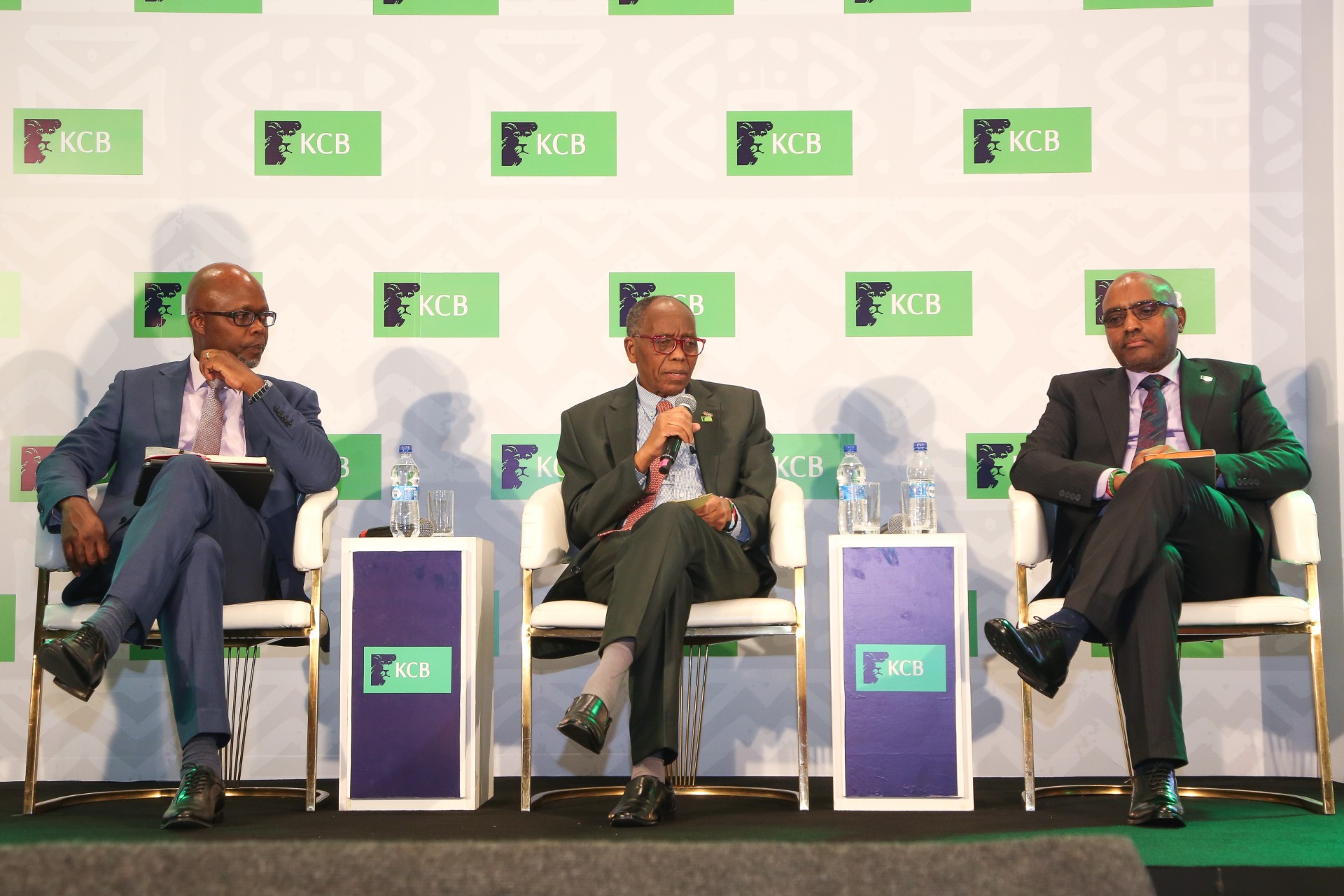
Speaking during the results announcement, KCB Group CEO Paul Russo had this to say: “Our 2025 performance reflects the strength of the KCB franchise, the resilience of our regional footprint, and the continued trust that customers place in us”.
Despite a challenging operating environment, Paul Russo said they delivered solid growth driven by disciplined execution, continued investment in digital innovation, and that their unwavering commitment to supporting sector‑focused lending that catalyzes economic transformation across the region.
“We remained focused on sustainable growth, supporting customers and delivering long‑term value for shareholders”, he said.
Asset quality improved as the non‑performing‑loan ratio fell to 16.9 percent from 19.2 percent, with gross NPLs down to KSh 211.8 billion.
The cost‑to‑income ratio declined to 42.5 percent from 45.4 percent and operating expenses shrank 2.5 percent YoY. Return on equity stood at 22.5 percent, return on assets at 3.3 percent, and the group’s liquidity ratio closed at 50.8 percent against a 20 percent regulatory floor.
KCB Group Chairman Dr. Joseph Kinyua added: “Looking ahead, we are optimistic about sustained business activity and economic growth prospects this year across the markets we operate in”.
Dr Kinyua said they were closely watching the increased global uncertainties attributed to heightened geopolitical tensions and higher tariffs.
“The Board remains committed to providing strong governance and strategic oversight to ensure that KCB continues to deliver long‑term value while supporting economic transformation across East Africa”, he said.
Recent corporate moves highlighted in the release include a KSh 227 million sponsorship of the 2026 WRC Safari Rally, a $150 million AfDB financing package for green and trade finance, a pending investment in payments firm Pesapal, and regulatory approval to acquire a 75 percent stake in another payment’s technology company.
The group also rolled out a unified mobile app focused on payments, saving and investments, and collected several industry accolades, including Top Bank in Africa from The Banker.
About KCB Group.
KCB Group Plc, East Africa’s largest commercial bank, was founded in 1896 and is headquartered in Kenya, its lead market through KCB Bank Kenya.
The Group has expanded into Tanzania, South Sudan, Uganda, Rwanda, Burundi and the Democratic Republic of Congo, with KCB Bank Kenya and Trust Merchant Bank (TMB) maintaining representative offices in Ethiopia and Brussels respectively.
Beyond banking, KCB Group owns KCB Bancassurance Intermediary, KCB Investment Bank, KCB Asset Management, KCB Foundation and Kencom House Limited.
Today it operates the region’s biggest branch network—about 450 branches, 1,249 ATMs and more than 1.3 million merchants and agents delivering 24/7 services—supported by mobile and internet banking and a 24‑hour contact center.
A correspondent network of over 200 banks worldwide ensures seamless international trade facilitation for customers.