



























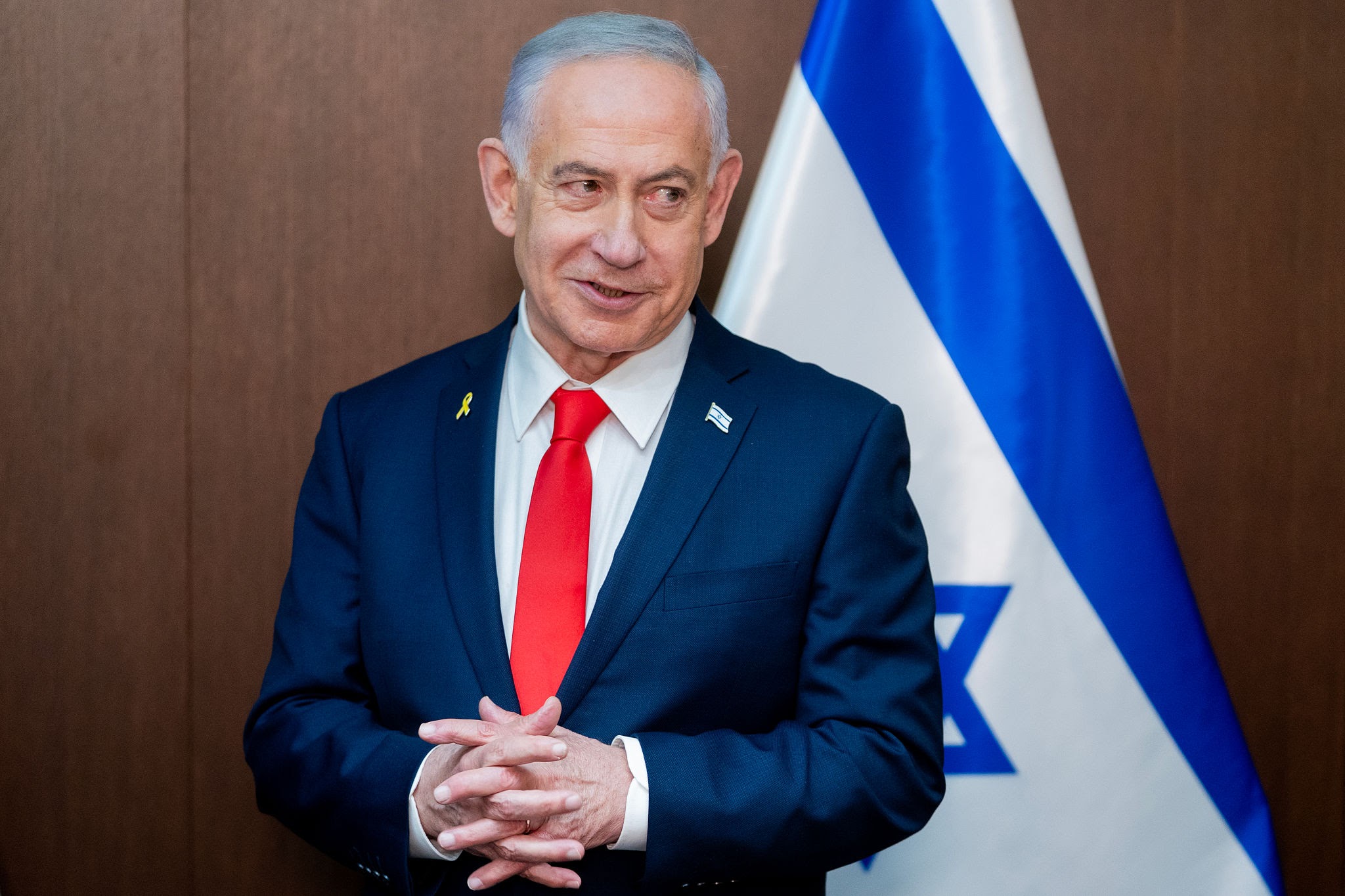
The Israeli’s Prime Minister Benjamin Netanyahu’s throw‑away comparison, “Jesus Christ has no advantage over Genghis Khan”, reads like a briefing‑room epigraph for realism.
To some people, including men of God across pulpits from Jinja, Kampala to Nairobi and Lagos, Netanyahu’s quip landed not as political realism but as a blasphemy that a sitting Prime Minister can suggest that God’s son holds no edge over a Mongol warlord.
African Christians who have long prayed for Israel as Biblical heats now field memes asking why the ‘chosen’ nation’s leader treats Christ like a footnote.
Muslim commentators, meanwhile note with satisfaction that no head of state would risk equating Prophet Mohammed with Genghis Khan.
The outrage is less about foreign policy than wounded reverence where faithful listeners heard Durant’s cold history lesson twisted into a public shrug at the crucifixion.
The heat obscures the narrow point Netanyahu was making that: in an anarchic international system, survival belongs to the strong.
He was not preaching Mongol values; he was paraphrasing Will Durant to warn Israeli journalists that evil has beaten good in history when goodness comes unarmed.
Will Durant was an American historian and philosopher who in his 1968 book The Lessons of History- with Ariel Durant, he writes that “nature and history do not agree with our conceptions of good and bad, they define good as that which survives, the universe has no prejudice in favor of Christ as against Genghis Khan”
From a military‑philosophical angle, that is the same cold calculus the Florentine diplomat and author of The Prince Nicolo Machiavelli (1469-1527) laid out in The Prince: a ruler who banks on being loved, or on the inherent justice of his cause, courts ruin.
Machiavelli observed Cesare Borgia and concluded that fear is more durable than affection because men break promises when it is easy, but they hesitate to cross someone who can punish them.
He did not glorify cruelty, he just said effective leaders keep it in reserve and use it decisively so they do not have to use it repeatedly.
Durant, Machiavelli, Thucydides, Hobbes and Morgenthau each warned that morality unbacked by power invites disaster.
Jesus’ kingdom operates on a different ledger where meekness and forgiveness are victories in themselves but states do not have divine guarantors on speed dial.
Apply that to modern Jerusalem: Netanyahu argues that Iran’s Revolutionary Guard is not deterred by resolutions or moral appeals; it responds to Iron Dome, F‑35s and an un‑blinking willingness to strike first.
In realist terms, Thucydides(460-400BC), Thomas Hobbes (1588-1679), later Hans Morgenthau (1904-1980), the international arena is anarchic, there is no 911 to call, and survival is the first moral duty. Good intentions are a luxury paid for by overwhelming strength.
Jesus’ ethic in the Sermon on the Mount points the opposite way. “Turn the other cheek” and “go the extra mile” are not tactical manuals; they are a disruption of honor‑based revenge cycles.
The logic is spiritual and communal: refuse to mirror the aggressor’s violence, reclaim dignity, and expose the injustice. It works in contexts where witness matters, civil rights sit‑ins, Gandhian satyagraha, because public opinion or divine justice is the enforcer.
But it assumes either a shared moral framework or an authority beyond the brawl. In raw interstate war, Jesus’ approach would read as unilateral disarmament: if Khamenei slaps your embassy, hand him a second target. Realists would call that suicide and cite 1942 or 1973 as proof.
Machiavelli sits between them. He would say: by all means turn the cheek in public if it wins allies, but have a dagger behind the robe. His prince appears merciful while planning for betrayal—goodness as optics, power as infrastructure.
The Israeli Premier Netanyahu echoes that when he insists Israel must be “strong enough, ruthless enough” so that morality even gets a seat at the table. Contrast that with Tolstoy’s literal reading of Jesus, where soldiers should desert and evil collapses for lack of cooperation.
History, Netanyahu mutters, offers Genghis Khan more often than it offers saints.
So, the gap is about what each thinks keeps people alive. Jesus bets on conscience and a God who vindicates; Machiavelli bets on prudence and controlled fear; Netanyahu bets on Iron Dome and the willingness to use it. All three see evil clearly. Only one expects it to yield without a fight.
Netanyahu’s office later stressed he was not celebrating a brutal pattern. Journalists in the room may have missed the reference, but the world heard the sound bite.
The debate will keep roiling in churches, conference halls and talk shows or while others have already turned it into a Tik Tok trend, split screen clips of pastors shouting “never” …. but the realist footnote stands that goodness can inspire, yet without the means to enforce it, history has a habit of remembering Genghis Khan.
It should be noted that interpretation starts with the speaker’s intent, not our reflex. A line ripped from Durant about power and survival is not a theology examination, it is a warning that history rewards the strong. Before we outrage or meme, we have to hear the actual argument, otherwise we are reacting to our own echo, not what was meant.
I keep hearing of stuff like, “here is how I understand this verse or chapter…”as if personal impressions settle the meaning. In advanced biblical interpretation, that is a red flag-because ‘my understanding’ can be biased, wrong or just under-read.
The text meant something before I showed up: its grammar, context and authorial intent set the bounds. I bring questions to it, not the other way around.
Personal application comes after we have wrestled with what the writer meant, otherwise we are not interpreting Scripture, we are editing it to fit us.
Who Is Genghis Khan?
Genghis Khan (C 1162-1227), also known as Chinggis Khan was the founder and first khan of the Mongol Empire. Born Temujin, he united the Mongol tribes and built the largest contiguous land empire in history. He is remembered for ruthless conquest, merit-based leadership, religious tolerance, a legal code (Yassa)and promoting trade across Eurasia.
According to antiquity, Genghis Khan’s campaigns slaughtered millions but also enabled the Pax Mongolica and Silk-Road exchanges.
Why Is Netanyahu referred to as “Bibi”?
According to information available, it is a Hebrew diminutive from childhood, “Bibi” comes from “Ben” which means son in Benjamin, reduplicated as a family name. It struck at home, followed him through school and now the IDF and the press picked it up. It is not an acronym, just the Israeli habit of turning names into familiar, reduplicated forms.