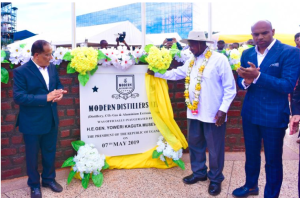









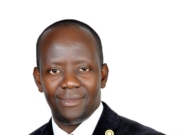









The Sunday afternoon arrest of Magan M Patel, a prominent and influential industrialist, entrepreneur and founder of the MMP Group and its flagship company Nile Agro Industries Ltd as the November edible grasshoppers(nsenene)has sparked ripples across Uganda’s business/investment and environmental communities.
Patel was arrested following days of evasion of action by the noticeably compromised police top gurus and environmental chaps who prefer to not only save their image but pocket as well because they consider the accused as a very well-connected person to Uganda’s government top brass.
It was not readily established where he was taken but impeccable sources say Patel was released within 30 minutes and did not step in any police station to record a statement.
NEMA Speaks Out
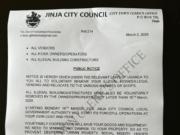
But the National Environment Management Authority (NEMA)on Monday released a brief statement owning the arrest of Patel.
“…five suspects including the investor {Patel} reported to be of Asian origin were arrested during an operation conducted on Sunday 28th December,2025 and transferred to Kampala to facilitate further investigations. In the course of the operation, five Sino trucks and two tractors suspected to have been used in the illegal activity were impounded. Two of the suspects were later released on police bond on medical grounds…”, reads part of the press release.
The strongly worded one page release says NEMA’s legal team is currently finalizing the investigation file and that the suspects are expected to be presented before courts of law within the course of this week.
The statement concludes by stating that NEMA reiterates its commitment to protecting Uganda’s wetlands and is calling upon the public, investors and developers to comply with environmental laws and report any suspected environmental violations through established channels.
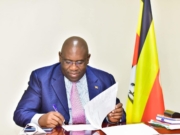
The Dr Barirega Akankwasah-led environment watchdog quotes Section 55 of the NEMA Act, Cap 181 and related regulations wetlands and water bodies are legally protected, and their use is restricted, which provides for strict penalties for offenders or fines, upon conviction of unauthorized backfilling the way Patel was doing, construction or dumping, among other illegal activities.
Many have described it as a dramatic fall from grace for a man once considered untouchable.
Some have hailed the action done in the glare of camera as a bold move by the authorities to hold the powerful accountable while others are speculating about the potential implications for his business empire and the larger investment climate in the country.
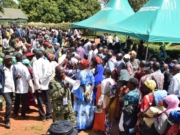
The incident captured live by phone users has sparked widespread discussion about the importance of respecting the law and the environment.
As the news of Pate’s arrest spread, many took to social media to express their reactions with some calling it a long overdue reckoning and others expressing concerns about the potential fallout.
The incident has also raised questions about the extent of Patel’s influence and whether it will continue to shield him from accountability.
What Wrong Did Patel Do?
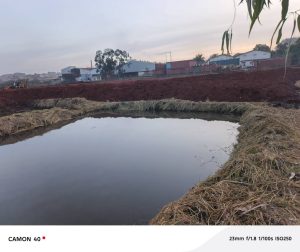
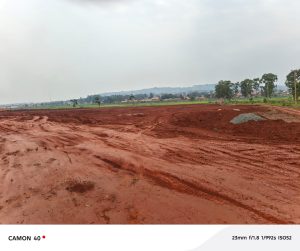
Patel who is no stranger to land-related scandals is said to have bought a piece of land from the locals at 17M/-.Unfortunately the land in question lies in one of the key wetlands (Masese) in Jinja City.
Its not clear whether Patel who owns close to 80 acres of land within the city was not privy to this information or like they say the poison that kills the dog blocks his nose.
Without regards to any guidance from the environment experts including NEMA, Patel chose the time when nearly all the politicians are busy in election campaigns to begin backfilling the wetlands.
Little did he know that some speculators had hurriedly dug makeshift fishponds on the very land which they hired from the former landlord.
According to intelligence, the speculators some who have mastered the art of blackmailing big-moneyed guys for big sums of cash started running around and using social media and some media people to blackmail Patel of having damaged their freshly made fishponds.
The group led by journalist-cum politician Julius Kirya Nabambula demanded for 800 million Uganda shillings as compensation but Patel agreed to settle for 250 million shillings.
The talkative Kayira who is vying as Jinja City councilor on NUP ticket claims they have invested a lot in fish farming in line with President Yoweri Museveni’s call to the wananchi to use the wetlands sustainably.
“…this Patel is frustrating us the citizens and is also defying and undermining the efforts of President Museveni to help citizens fight poverty from households, something must be done…”, he cried.
Patel did not honor his side of the bargain not knowing that the Nabambula-led group has connections in nearly all government ministries like Water and Environment and NEMA.
It eventually caught up with him that armed men in army uniform then grabbed him as if they were arresting village chicken thief and not the once powerful investor.
While it’s a crime to carry out any activity on wetlands without getting clearance from relevant government authorities including Jinja City Council and NEMA or ministry of Water and Environment, both Patel and the group claiming compensation are guilty.
Patel being an important investor paying taxes worth millions of shillings to the state coffers and employing hundreds of Ugandans may cry that the manner in which he was handled was not worthy of his status, some will argue that in Uganda there is nobody above the law.
Its also true that some greedy speculators have exploited on Patel’s weak points to embarrass and humiliate him and now has become a man of scorn on the internet which goes beyond borders meaning even in his native village in India, clan members are wondering what has happened to their son.
Other investors already in the country and others contemplating coming to invest in Uganda might consider pausing a bit to establish whether the investment climate space in the country is as rosy as Uganda’s chief promoter and President Yoweri Kaguta Museveni has always made the world to believe.
Uganda’s Wetlands Status and Challenges.
Uganda’s wetlands are a vital part of the country’s ecosystem, covering around 13.9% of its land surface, with over 8,613 gazetted wetlands as of 2023. Among these include Masese, Kirinya and Budhumbuli.
The government has made significant efforts to protect these wetlands, recognizing their role in climate change mitigation, water filtration, and biodiversity conservation.
Wetland Conservation Efforts:
Restoration: The National Environment Management Authority (NEMA) has restored over 1.2 million hectares of degraded wetlands, increasing Uganda’s wetland cover from 8.9% in 2019 to 13.9% in 2025.
Protection: All 8,613 wetlands are now officially protected, with detailed information on their locations, boundaries, and total area coverage.
Enforcement: NEMA has established an Environmental Protection Force to combat wetland degradation and enforce protection measures.
Challenges Facing Wetlands:
Urban Expansion: Uganda is losing intact wetlands to urban expansion, with a 6.3% loss reported.
Encroachment and Pollution: Human activities, such as agriculture, logging, and industrial waste, threaten wetland ecosystems.
Government of Uganda Initiatives:
Gazetting Wetlands: The government officially gazetted all wetlands in 2023, providing legal protection and promoting sustainable management practices.
The gazzetted wetlands in Uganda were launched on 23 february,2024 during the World wetlands Day celebrations in Gulu City.
The Uganda Gazette on wetlands, officially titled “The National Environment (Declaration of Wetlands) Notice 2023 was officially launched during the Gulu event.
This notice provides a legal basis for the government to act against wetland degradation and promote sustainable management practices.
Collaboration: Partnerships with organizations like the United Nations Development Programme (UNDP) and the Green Climate Fund (GCF) support wetland restoration and community development projects.
These efforts demonstrate Uganda’s commitment to preserving its wetlands and promoting sustainable development.
What are Wetlands.
Wetlands are areas where water covers the soil, either permanently or seasonally. The Ramsar Convention defines wetlands as:
“areas of marsh, fen, peatland or water, whether natural or artificial, permanent or temporary, with water that is static or flowing, fresh, brackish or salt, including areas of marine water the depth of which at low tide does not exceed six meters”
Ramsar sites are wetlands of international importance designated under the Ramsar Convention, an intergovernmental treaty signed in 1971 in Ramsar, Iran.
The convention aims to conserve and manage wetlands globally, recognizing their ecological, economic and social significance.
These sites are protected and managed to maintain their ecological integrity and promote sustainable use. In Uganda there are several Ramsar sites including Lake George, Lake Bisinia, Murchison Falls-Albert Delta, Nabugabo wetland system, Lutembe Bay Wetland system, Lake Nakuwa Wetland system, Lake Opeta Wetland system and Sango Bay-Musambwa Bay Wetland system, among others.
In Uganda, wetlands cover around 13% of the land surface and include:
Seasonal wetlands: Floodplains, valley bottoms, and swamps that dry out periodically.
Permanent wetlands: Lakes, rivers, and papyrus swamps.
Papyrus swamps: Dominant vegetation is papyrus (Cyperus papyrus)
Important ecosystems: Support fisheries, agriculture, and wildlife, and provide essential services like water filtration and climate regulation.
According to experts, wetlands are crucial for the country’s biodiversity, climate resilience, and human well-being, making their conservation a priority.
The country’s major wetlands include systems around large lakes like Victoria (Mabamba Bay, Lutembe Bay, Nabajjuzi), Kyoga (Namatala-Doho), and Albert (Murchison Falls-Albert Delta), along major rivers like the Semliki and Katonga, and important catchments like the Achwa system, vital for biodiversity (especially shoebills) and water management, though threatened by urbanization and pollution.
Key sites like the Murchison Falls-Albert Delta, Lake Mburo-Nakivale, and Lake Bisina are internationally recognized Ramsar sites.