














Preamble: This Law Is Not A Ugandan Invention But The Stakes Are Uniquely Ours.
Every nation guards its right to decide. The United States has FARA (Foreign Agents Registration Act). Russia has its Foreign Agents Law. Kenya has the Public Benefits Organizations Act. Ethiopia, India, Israel, and the European Union all regulate foreign funding and influence, many with clauses tougher than Uganda’s current draft.
The Protection of Sovereignty Bill 2026 is therefore not an isolated Ugandan invention. What makes it urgent is how it collides with family remittances, church donations, and the doctrine of a God who, as Daniel 4:35 declares, “does according to His will… and none can stay His hand.”
This week, as Parliament’s Legal and Defense Committee reviews revisions, Uganda’s President Yoweri Kaguta Museveni, Archbishop Elect Professor Mugume Bagambaki Richard, Bank of Uganda Governor, the World Bank, religious bodies, the media, and senior bankers like Madam Irene Aguti have all entered the arena. The Bill will likely become law. The question for Labour Day 2026 is whether it will govern by consent, by coercion, or by grace.
When Family Love Met A Foreign Agent Clause.
When Cissy sent 207,000 shillings from Canada this week, her uncle in Otwal Trading Centre in Oyam district did not ask Parliament for permission. He raised his hands and gave thanks saying: “Obanga ber, atin omini obedo atini” translated as ‘ God Is good, the child of your brother is your child’.
Until last week, the original draft of the now contentious Protection of Sovereignty Bill 2026 risked defining that act of family love as “foreign agency.”
Today, both State House and the Church have spoken, and the conversation has shifted from fear to doctrine, from clauses to creeds, yet not all Ugandans are persuaded.
“Oppressive And Exploitative”, A Patriot Banker Breaks Ranks.
“I totally do not agree with that bill, it is oppressive and exploitative. And this is coming from a patriot,” said Madam Irene Aguti, a senior banker and human rights enthusiast, in comments to The Exposure Uganda (TEU) on Thursday. “I understand the need to widen the tax base, but some of the clauses simply alienate our fellow Ugandans, it needs to be rethought,” Aguti roars.
The Revision: What Changed After The Backlash.
Her remarks land as Government revises the Bill’s most contested provisions. The definition of “foreign agent” has been narrowed. Ugandan citizens are no longer broadly categorized as foreign agents.
Financial institutions, media houses, the Uganda Law Society, health facilities, academic and research institutions, and faith-based organizations are now exempted, provided external funding is used for authorized purposes such as service delivery, education, research, or religious activities.
Diaspora remittances, foreign direct investment, grants, trade financing, and humanitarian support will not be restricted unless linked to prohibited activities. Prosecutors must now prove intent to deliberately act against Uganda’s national interest before any case can proceed.
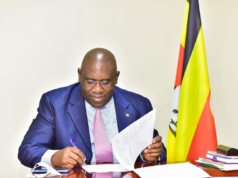
The Attorney General Hon. Kiryowa Kiwanuka has also limited liability specifically to “agents of a foreigner,” and the responsible minister may expand the list of exempted entities by regulation. The Legal and Defense Committee of Parliament is reviewing the changes before tabling its final report.
M7 Steps In: “Policy Independence, Not Money Restrictions”.
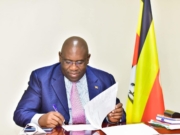
As the Bill is being amended, Uganda’s long serving President, Gen (Rtd) Yoweri Kaguta Museveni addressed Ugandans, particularly the youth, to clarify what he called “growing public debate and misinformation.”
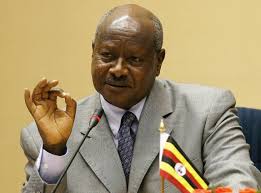
Gen Museveni dismisses claims that the Bill seeks to restrict foreign investment, remittances, or external support to religious institutions. The version he introduced in Cabinet, he says, is focused strictly on safeguarding Uganda’s independence in decision-making, not limiting financial flows into or out of the country.
The President traced the sovereignty struggle to Africa’s colonial past, when the continent, except Ethiopia, fell under foreign domination following centuries of slave trade and internal divisions.
He credits Pan-African movements, including figures like Marcus Garvey and organizations such as the ANC of South Africa, alongside global allies, for securing Africa’s liberation, culminating in South Africa’s independence in 1994.
According to Museveni, the core purpose of sovereignty is to preserve Uganda’s authority to determine its own policies across political, social, economic, and diplomatic spheres. These include decisions on governance structures, cultural values, economic strategies, and foreign relations.
Quoting a principle, he attributed to Mwalimu Julius Nyerere, Gen Museveni underscored that true independence includes the freedom for a nation to make its own choices even mistakes without external interference. He warned against foreign influence through funding or advocacy aimed at shaping Uganda’s internal decisions.
He reaffirms that Uganda’s Constitution provides for the exercise of sovereignty through democratic processes such as elections and referenda, and urged both domestic and international actors to respect these mechanisms.
Museveni stresses that Uganda remains committed to a free-market economy, allowing the unrestricted movement of legally earned money, including remittances, investments, and donations. He describes this openness as a key driver of economic resilience, particularly in counterbalancing inefficiencies within public institutions.
Drawing on a personal example, he cited efforts to revive Ankole cattle, once dismissed by colonial-era experts, which have since gained international recognition.
He acknowledges South African President Cyril Ramaphosa for supporting their promotion. The President made it clear that government would not support any policy that interferes with private sector financial flows, noting that such freedoms are central to Uganda’s economic growth and transformation. He added that he had engaged government officials, including Hon. Denis Hamson Obua and Parliamentary Committee leaders, to ensure the Bill remains focused on protecting policy independence without encroaching on private enterprise or financial freedoms.
The ‘Old Man’ from Rwakitura concluded by encouraging those seeking to influence others to do so through positive example rather than coercion, referencing a teaching from the Book of Matthew — “let your light shine before others, so that they may see your good works,” Matthew 5:16, and “whoever would be great among you must be your servant,” Matthew 20:26.
The Pulpit Answers Parliament: Archbishop Mugume On Sovereignty, Free Will, Grace.
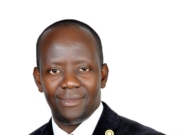
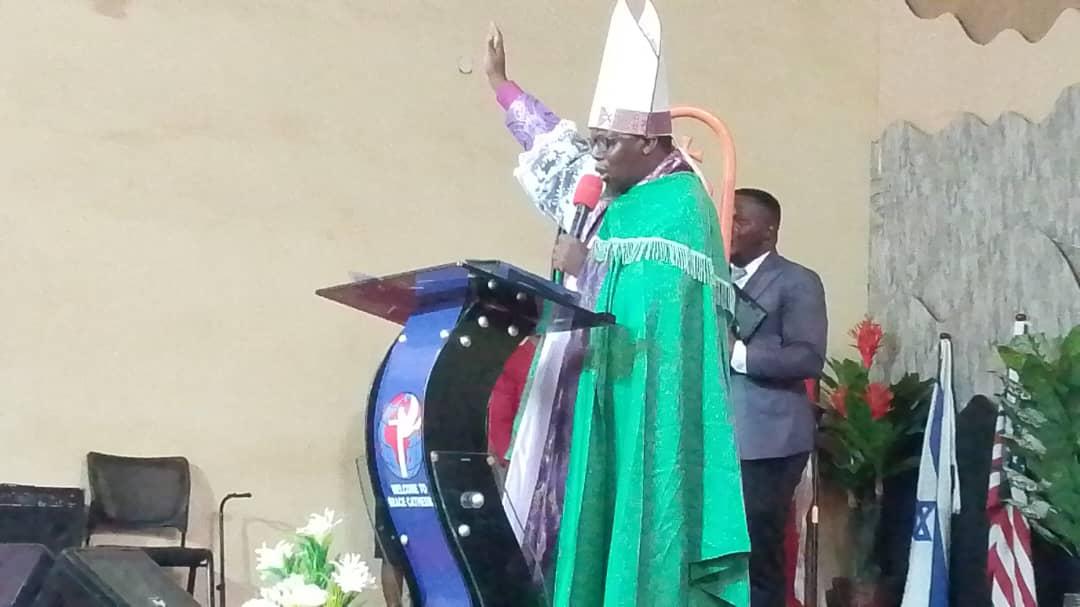
While the State clarifies its Bill, Archbishop Elect Professor Mugume Bagambaki Richard, the Ecclesiastical Episcopal Patriarch of Five-Fold Episcopal World Federation and Chancellor of UCCSAT University, releases a Labour Day theological treatise that has since circulated across churches, WhatsApp groups, and community radio. His message: “God’s sovereignty is ever better than man-made sovereignty bills.”
The Archbishop teaches that the sovereignty of God refers to the fact that God is in complete control of the universe. A belief in God’s sovereignty, he writes, is distinct from fatalism, which denies human free will. Humans are able to make genuine choices that have real consequences. God does not directly cause everything to happen, yet He does allow all that happens to happen. And, ultimately, God’s will is going to be accomplished.
At first blush these statements may seem unimportant to one’s daily life and better suited for an esoteric theological discussion. However, the sovereignty of God is quite practical and has a significant impact on our daily lives.
The sovereignty of God impacts everyday life in that it removes all cause for worry. We can trust that what the Bible claims about God’s character is backed up by His ability. Not only does God love us, but He has the ability to care for us. Those who are part of the family of God can claim the promise in Romans 8:28, “And we know that in all things God works for the good of those who love him, who have been called according to his purpose.” We can rest in the fact that our God is actually able to work all things for our good, even when we cannot readily see how that may happen.
The sovereignty of God impacts everyday life in that we can trust God’s sanctifying work in us. Many times, Christians feel that maturing in the faith is completely up to them, as if God saves us and then expects us to do the rest. Christians do play a role in their own maturity. We are certainly called to obedience, and what we do matters.
However, in recognizing that God is sovereign, we also trust Him to bring us to maturity. See Galatians 3:3 and Philippians 1:6. Looking to Romans 8 again, we read, “For those God foreknew he also predestined to be conformed to the image of his Son, that he might be the firstborn among many brothers and sisters. And those he predestined, he also called; those he called, he also justified; those he justified, he also glorified.
What, then, shall we say in response to these things? If God is for us, who can be against us? He who did not spare his own Son, but gave him up for us all: how will he not also, along with him, graciously give us all things? Who will bring any charge against those whom God has chosen? It is God who justifies.
Who then is the one who condemns? No one. Christ Jesus who died, more than that, who was raised to life, is at the right hand of God and is also interceding for us.” Romans 8:29–34. Our salvation has been God’s sovereign plan from eternity past. Rather than focus on our own performance, we can rest in the character of God and focus instead on actually getting to know Him.
The sovereignty of God also affects how we make decisions, we recognize that God is in control, so we need not be paralyzed by decision-making. If we make the wrong decision, all is not lost. We can trust in God’s faithfulness and His ability to set us back on the right course.
On a related note, we can and should make decisions. God’s sovereign control does not mean that we sit idly by and allow life to happen. It means that we can go bravely into life, trusting that our loving Father sees the larger picture and is faithfully working everything for His glory.
That God is sovereign impacts our sense of identity. When we understand how powerful God is and how much He loves us, we can know we are secure in Him. As the objects of God’s sovereign love, we allow God to define us and give us our worth rather than look to the changing ideals of the world to do so. When we understand that God is in complete control, we are freed to live our lives. We need not fear ultimate failure or final destruction. Romans 8:1. We need not fear worthlessness. We can be confident that God will have His way and that it will be good. We can trust that the One who says He loves us is fully able to act on that love in all ways. We can trust that, even when the world seems completely out of control, God is in control. We know He has the big picture covered, so we can trust Him with our daily details.
God’s sovereignty works together with free will. It is impossible for us to fully understand the dynamics of a holy God molding and shaping the will of man. Scripture is clear that God knows the future, Matthew 6:8; Psalm 139:1-4, and has total sovereign control over all things, Colossians 1:16-17; Daniel 4:35. The Bible also says that we must choose God or be eternally separated from Him. We are held responsible for our actions, Romans 3:19; 6:23; 9:19-21. How these facts work together is impossible for a finite mind to comprehend, Romans 11:33-36.
People can take one of two extremes in regard to this question. Some emphasize the sovereignty of God to the point that human beings are little more than robots simply doing what they have been sovereignly programmed to do. Others emphasize free will to the point of God not having complete control and/or knowledge of all things.
Neither of these positions is biblical. The truth is that God does not violate our wills by choosing us and redeeming us. Rather, He changes our hearts so that our wills choose Him. “We love Him because He first loved us,” 1 John 4:19, and “You did not choose me, but I chose you,” John 15:16.
What are we to do then? First, we are to trust in the Lord, knowing that He is in control, Proverbs 3:5-6. God’s sovereignty is supposed to be a comfort to us, not an issue to be concerned about or debate over. Second, we are to live our lives making wise decisions in accordance with God’s Word, 2 Timothy 3:16-17; James 1:5.
There will be no excuses before God for why we chose to disobey Him. We will have no one to blame but ourselves for our sin. Last but not least, we are to worship the Lord, praising Him that He is so wonderful, infinite, powerful, full of grace and mercy, and sovereign.
Now about sovereign grace. Sovereign grace combines two of God’s attributes, His sovereignty and His graciousness. Both of these characteristics of God are so vast that many volumes have been written about each. Briefly though, the doctrine of sovereign grace is the melding of the two into a thrilling truth that gives us a glimpse into the mind and heart of our great God.
The sovereignty of God is His total control of all things past, present, and future. Nothing happens beyond His knowledge and control. All things are either caused by Him or allowed by Him for His own purposes and in accordance with His perfect will and timing, Romans 11:36; 1 Corinthians 8:6. He is the only absolute and omnipotent ruler of the universe and is sovereign in creation, providence, and redemption.
The other half of sovereign grace is grace. The grace of God is His unmerited favor toward those who have not earned it. It is undeserved favor. There are numerous examples of God’s grace in the Bible, both to His people and to those who reject Him.
Mary found grace in the eyes of the Lord who bestowed upon her the privilege of bearing the Savior of mankind, Luke 1:28. She may have been a godly young woman, but nothing she could have done would have made her worthy of such a blessing. She was the recipient of God’s grace, and He sovereignly chose her for the task, sovereign grace.
The apostle Paul admits that he was a servant of God only by grace and it was by grace that he labored effectively for the cause of Christ, 1 Corinthians 15:10. Sovereign grace chose to save Paul on the Damascus Road, and sovereign grace showered him with untold blessings.
As Christians we, too, benefit from God’s sovereign grace. “For by grace are you saved through faith,” Ephesians 2:8. Our very salvation and position in Christ is due to His grace through the faith that He gives us, Hebrews 12:2. Even those who hate God receive His grace.
Every breath God allows them to take is a product of His common grace to all creation: “He makes His sun to rise on the evil and on the good, and sends rain on the just and on the unjust,” Matthew 5:45. Even the atheist enjoys the effects of God’s sovereign grace through God’s beautiful creation and His provision of the resources necessary for food, clothing, and housing. God doesn’t owe these things to us, but He sovereignly provides them to exhibit His grace.
The sovereign grace of God is noted most often by theologians in the matter of election. We see it best explained in Ephesians 1:5–6: “He predestined us to be adopted as his sons through Jesus Christ, in accordance with his pleasure and will to the praise of his glorious grace, which he has freely given us in the One he loves.” Here, in the same sentence, we have a reference to predestination, God’s sovereignty, and God’s glorious grace, sovereign grace.
God sovereignly chose those He would save through His gracious act of sending His Son to die on the cross for their salvation. Sinners were unable to save themselves or, like Mary, to merit God’s favor because of their transgression of His Law. “But where sin abounded, grace did much more abound,” Romans 5:20. Therefore, Christians are “justified freely by His grace through the redemption that is in Christ Jesus,” Romans 3:24.
Contact Archbishop Mugume: +256775050183 mugumebagambakirichard@gmail.com