





















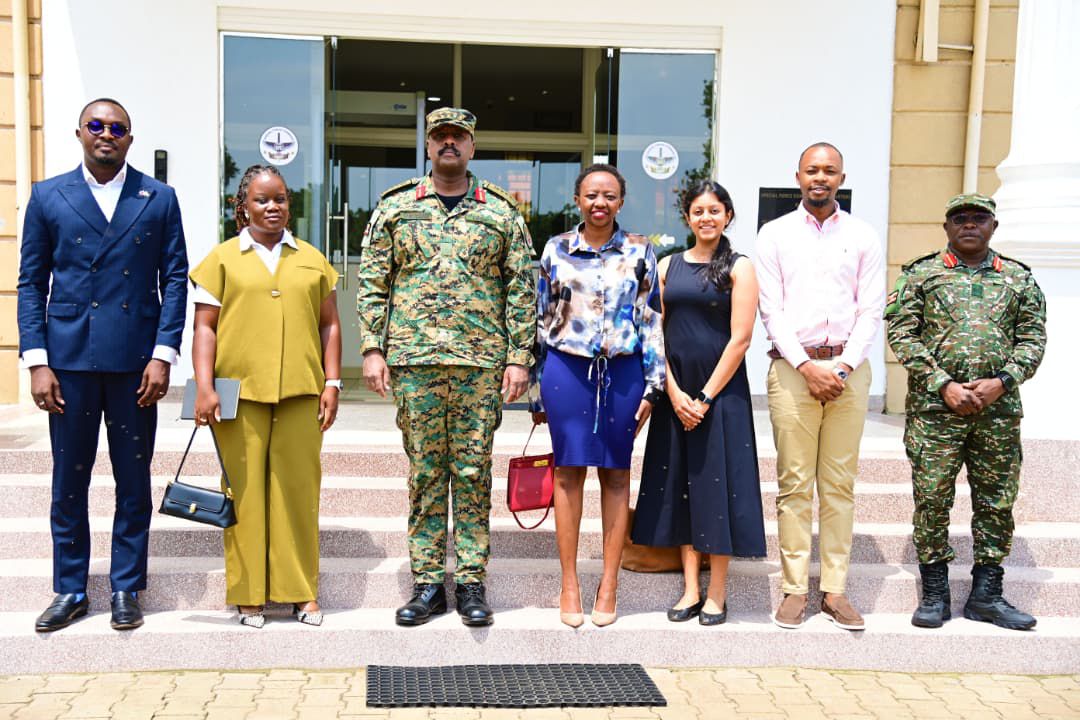
Like they say “sisterhood is powerful, and our bond is unbreakable”, Ms. Charlene Ruto, the daughter of Kenyan President William Ruto, has paid a courtesy visit to the Chief of Defense Forces (CDF) of the Uganda Peoples’ Defense Forces (UPDF), Gen Muhoozi Kainerugaba.
The meeting took place Wednesday 25th February, 2026 at the Special Forces Command (SFC) headquarters in Entebbe in Uganda.
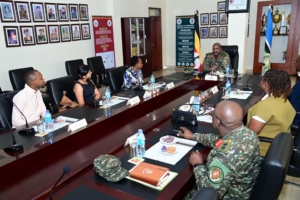

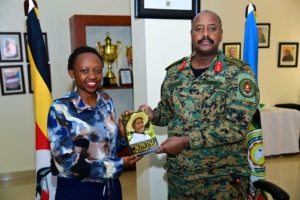
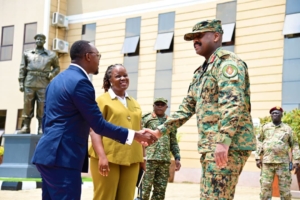
The visit comes on the heels of a recent announcement by Gen Kainerugaba on his official X account (formerly Twitter), where he declared his intention to visit Kenya’s President Ruto in the near future, signaling a continued commitment to fostering close ties between the two neighboring nations.
Ms. Ruto’s delegation included Mr. George Nkya, Honorary Consul of Morocco; Mr. Festus Orina, Ms. Varsheeni Ragupathy, and Hon. Jane Frances Acilo.
During the meeting with President Ruto’s daughter, Gen Kainerugaba, affectionately known as “MK” by his peers and dubbed the “Twitting General” for his active online presence, extended a warm welcome to his guests while
Ms. Ruto expressed gratitude to the General for the warm reception and generous hospitality extended to her and her delegation.
This engagement highlights the multifaceted relationship between Uganda and Kenya.
The two East African Community partners share more than just a border, with numerous communities speaking the same languages and sharing intertwined cultural practices and ancestral values, creating a unique bond between the peoples of the two nations.
Beyond these cultural and social ties, the diplomatic and economic partnership between Nairobi and Kampala remains robust.
Trade between the two nations is a cornerstone of the regional economy, with the volume of bilateral trade reaching an impressive over USD 1.5 billion in 2025.
Meanwhile, Kenya remains a crucial partner for landlocked Uganda, serving as its primary gateway to international markets through the Mombasa port, where the vast majority of Uganda’s imports and exports are routed.
This strategic interdependence makes the strong and cordial relationship between their leaders and key institutions, like the military, vital for regional stability and prosperity.
Ms. Charlene Ruto’s visit to Gen Muhoozi Kainerugaba highlights the strong ties between Uganda and Kenya, two nations with deep-rooted cultural and familial connections.
Many Ugandans have relatives and friends living, married, or working in Kenya, and vice versa. This bond is reflected in the warm relationship between Presidents Yoweri Museveni and William Ruto, who have fostered close diplomatic and economic ties.
The two countries share a vibrant cultural exchange, with Kenyans renowned for their excellent Kiswahili skills.
Ugandans are now embracing the language, though there’s a humorous saying: “Kiswahili was conceived in Tanzania, born in Kenya, fell sick in Uganda, and died in DRC,” poking fun at the varying proficiency levels.
President Museveni, his son Gen Muhoozi Kainerugaba, and many UPDF soldiers and police officers speak fluent Kiswahili, facilitating East African Community (EAC) integration. This shared language has bridged cultural gaps and fostered regional cooperation.
With Kiswahili as a common language, interactions between Ugandan and Kenyan leaders are warmer and more effective. President Ruto’s decision to let his daughter Charlene visit Gen Kainerugaba reflects the strong trust and camaraderie between the families.
The growing acceptance of Kiswahili in Uganda, particularly among younger generations, is driving this shift. As regional integration gains momentum, language barriers are dissolving, paving the way for deeper economic and cultural ties.
Uganda’s complex history has contributed to the perception of Kiswahili. During Idi Amin’s regime, his soldiers, known as the Uganda Army (UA), used Kiswahili to communicate, often in brutal contexts. This led to associations with violence and oppression.
The soldiers’ limited education and use of “dry” or “broken” Kiswahili created a lasting impact. Many Ugandans linked Kiswahili speakers to brutality and illiteracy. Urban dwellers who spoke Kiswahili, often with slangs, were stereotyped as having questionable lifestyles and were called “Bayaye”.
This historical context has influenced Uganda’s language dynamics. However, attitudes are shifting, and Kiswahili is gaining acceptance, especially among younger generations.
What You Need To Know:
Born on 11 January,1993 in Nairobi Kenya, Ms. Charlene Ruto is a former student of Day University where she studied Mass Communications holds a Master’s in Business Administration) MBA_ in Tourism from Les Roches International School of Hotel Management.
Ms. Cherlene Ruto is known as a youth activist, environmentalist, and politician participating in various international and national forums. She founded SMACHs Foundation, focusing on mechanized farming and conservation.
Charlene Ruto also worked as a Media Relations Officer and Director of Communications in hospitality. She is educated, skilled and passionate about social causes. She campaigned for her father’s 2022 presidential bid and attends global events.