
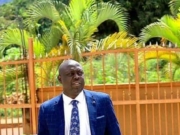
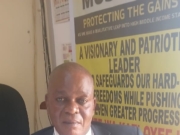

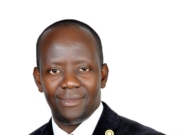



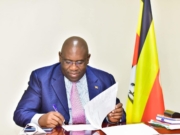

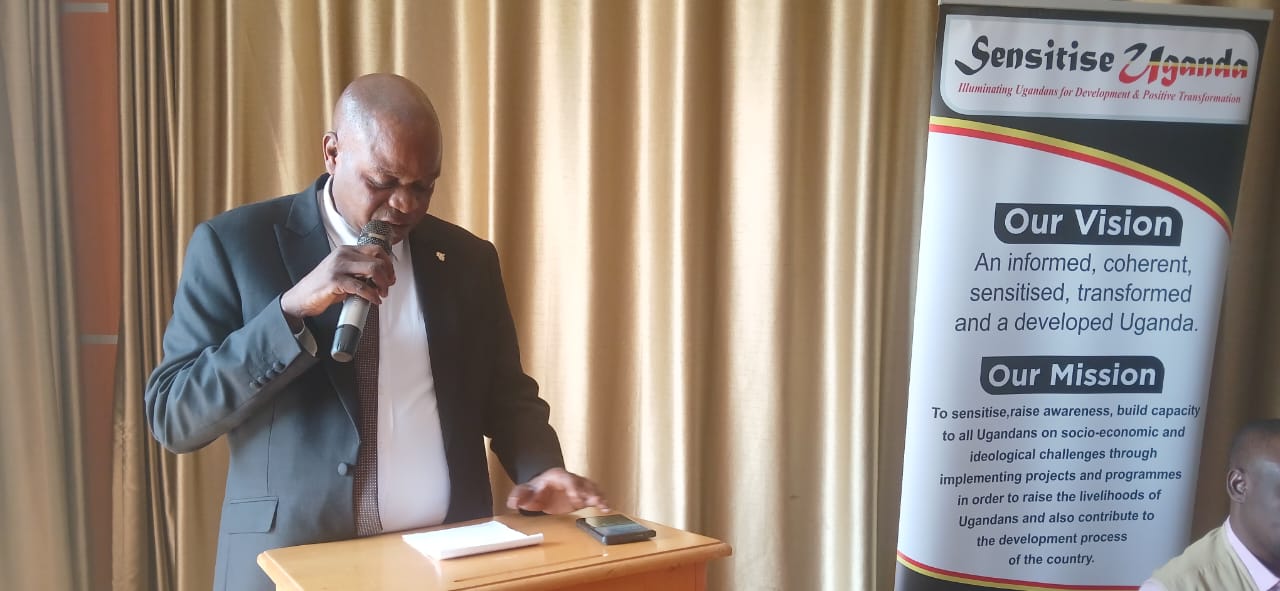
Jinja RCC Richard Gulume Balyainho opens his remarks with “charity begins at home, so does patriotism”, tying to 17th-century Sir Thomas Browne’s line to his call to Ugandan journalists to look after their own country first.
Speaking Thursday at a one‑day regional post‑election dialogue at Hon. Daudi Migereko’s Source of the Nile Hotel in Jinja City, Gulume said “A house divided against itself cannot stand.”
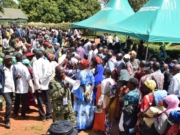
The forum, jointly run by Sensitize Uganda and the Uganda Human Rights Commission (UHRC), brought journalists, state and non‑state actors, and civil society together to reflect on election coverage, safety and ethics.
Sensitize Uganda is a civil-society organization that raises awareness on social-economic and political issues running civic education projects, election data portals and dialogue forums to promote participatory democracy and good governance.
UHRC is a constitutional body created by Uganda’s 1995 Constitution (Article 51) to monitor and advance human rights.
Its mandate (Article 52) includes investigating abuses, visiting jails, running civic‑education programs, and reporting to Parliament.
It is headquartered at Plot 22 Lumumba Ave (Buganda Road) in Kampala and currently chaired by Mariam Fauzat Wangadya, a veteran celebrated lawyer and longtime human-rights advocate who was appointed by President Yoweri Museveni in 2021.
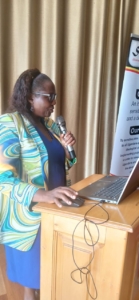
Richard Gulume Balyainho who attended both as guest of honor and participant said “We need to listen as much as we speak,” he urged, calling for constructive, inclusive engagement that strengthens mutual understanding and lifts professional standards.
He argued that just like charity starts with family, reporters should nurture Uganda’s image before chasing foreign-driven negativity.
The veteran public officer who doubles as the Chief Whip or Dean of all RDCs in Busoga warned Ugandan media practitioners against reckless, lopsided and sensational stories that serve external adversaries, urging them instead to market Uganda’s beauty, peace, hospitality and resources.
“You should not be seen as competing with fly-in foreign reporters who magnify tiny flaws while ignoring gun violence back home, remember no country in the world is perfect”, he said.
As the saying goes that you can not only criticize, you must also commend, Gulume praised the media’s watchdog and agenda-setting role but also urging them to celebrate the country’s gains too.
Gulume tied his message to the country’s gains, the very achievements that inspired the NRM’s “Protecting the Gains” slogan for the January 15 election campaign.
Reporters and broadcasters in Busoga often rib Gulume about his other name, Balyainho-“they eat a lot” in Lusoga-a cheeky nod to how passionately he speaks about President Yoweri Museveni and the NRM.
Gulume also took time to urge media owners in Jinja City which he often describes as the ‘sitting room’ of Busoga to adopt clear vetting and recruitment systems and to run in‑house training and mentorship so that broadcasters can meet professional standards.
He warned that Busoga’s flood of loud voices with smartphones now suddenly calling themselves radio hosts or bloggers does not make them journalists.
Gulume says he does values citizen journalism where ordinary people report what they see but he said it needs apprenticeship and polishing to meet professional standards.
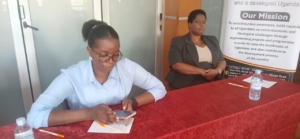
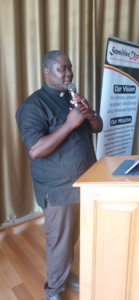
Blogger vs Vlogger.
A blogger is someone who regularly writes and publishes commentary or analysis and tutorials online using text and images. Blogging took off after the term “weblog” was coined in 1997 and tools like Blogger launched in 1999.
A vlogger does the same through video by recording a ‘video blog’. The first vlog appeared in 2000 by Adam Kontras and the word spread after YouTube launched in 2005.
Neither title alone makes a journalist—holding a smartphone and posting content is not enough. Journalism requires verification, editorial oversight and adherence to ethics.
Bloggers and Vloggers are not licensed like journalists, but are regulated by general laws of copyright, defamation and privacy, among others. When they cross the line, plagiarize, defame, beach privacy or hide paid promotions they can face takedown notices, lawsuits, fines or platform bans.
It is important to note that reputation damage often hits many of them who act recklessly.
Journalists have countered Gulume’s school of thought calling it blurry and argued that what officials in government often call “positive news” is the promotion of government programmes while ignoring fraud by the officials running them.
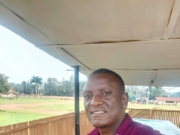
Veteran journalist Joe Wacha working in Moroto district said exposing abuse or corruption should be treated as ‘positive’ because reporters act as whistle-blowers even if unintentionally.
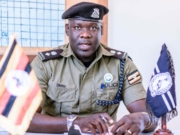
Kiira Deputy RPC SSP Christopher Katumba,who also attended rejected claims of police brutality against journalists during the run‑up to the January 2026 polls, insisting officers acted professionally and fired no teargas or bullets.
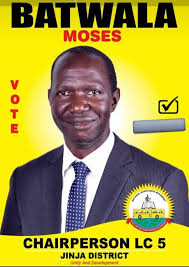
Witnesses, however, noted the heavy anti‑riot deployment around Jinja SS—Jinja City’s Tally Centre, where tear gas was fired to disperse NUP supporters upset by delays in declaring results for candidates Hon Dr Timothy Lusala Batuwa, Hon Paul Mwiru, Hussein Muyonjo (“Swengere”) and Sarah Lwansansula.
So, Katumba’s statement is disputed. In other words, he was sugar-coating the event, painting the regional police as angels despite what witnesses and journalists saw.
Standing in for RPC SSP Charles Nsaba, Katumba had sharp words for “irresponsible” journalists who, he said, become confrontational during high‑intensity operations, abandoning reporting to act like activists.
He lamented Uganda’s low level of civic discipline, pointing out that motorists obey seat‑belt and helmet laws only when police are visible, as if the gear protected officers rather than the riders.
Citing a benchmarking trip to Ghana, where, he said, campaigns run without armed police because citizens are law‑abiding, Afande Katumba described how even a petite officer can summon a suspect without resistance, whereas in Uganda suspects flee, hide in ceilings, or jump walls, and bystanders throw stones and insults.

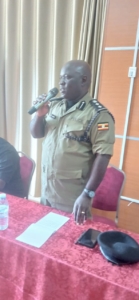
He used the example to justify police forcing unruly suspects, including leaders, under pickup seats, calling it a response to indiscipline.
All told, the dialogue proved fruitful because everyone agreed that no one is an island. They also agreed that nation-building works best when we operate independently yet together like ants and bees, silent, unarmed and remarkably orderly.
If insects can be that smart and orderly with no insults, no stones then how much better could Ugandans be.