
























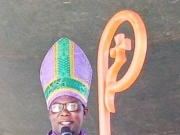




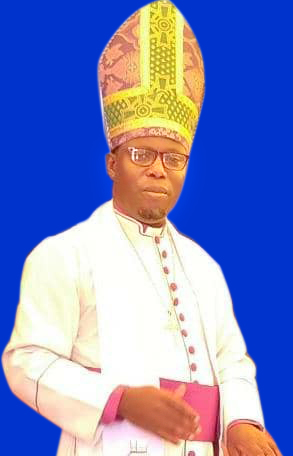
At a weekend conference on resurrection doctrine, Archbishop‑Elect Professor Mugume Bagambaki Richard, the Ecclesiastical Episcopal Conference Archbishop of Upper City Covenant Churches, used the Ascension liturgy to launch a close reading of Christ’s three days in the grave.
Prof Mugume is also the President of Five-Fold Episcopal World Federation and President UCCSAT University.
For context, ascension refers to the bodily rising of Jesus to the father 40 days after the resurrection as recorded in Luke 24:50-53, Acts 1:6-11.
Luke’s gospel shows Him leading disciples out near Bethany, blessing them and being ‘taken up’. Acts adds a cloud and angelic promise of return.
Bethany today is the West Bank town of al-Eizariya which in Arabic means ‘place of Lazarus’, about 2km east of Jerusalem on the southeastern slope of the Mount of Olives.
It sits along the old Jerusalem-Jericho Road, just across the separation barrier from the city. Known for the Tomb of Lazarus, Franciscan and Orthodox churches and a mosque built over the Crusader-Byzantine remains, the traditional site where Jesus stayed with Mary, Martha and Lazarus and near where Luke/Acts place the Ascension.
Theology ties the event to Psalm 110:1(Sit at my right hand), the Son’s enthronement, intercession and pending gift of the Spirit which is Pentecost.
The ascension liturgy is the worship shape churches use on that feast (Sixth Thursday of Easter or following Sunday). Readings usually include Acts 1, Psalm 47(God has gone up with a shout), Ephesians 1 or Hebrews (exaltation) and Luke’s ascension account.
Prayers celebrate Christ reigning ‘far above all rule and authority” and ask grace to live as His witnesses”.
Hymns like ‘Hail the Day That Sees Him Rise’(by Charles Wesley) and the Ascension preface-the chant done right before the Sanctus in the Eucharistic prayer to proclaim the rising of Christ.
In the Roman Missal’s Preface II of the Ascension, it runs:
It is truly right and just…to give you thanks, Lord, holy Father…through Christ our Lord, who, after His resurrection, appeared openly to all His disciples and, forty days later, was taken up into heaven.
The apostles’ hearts grew with joy as they watched His Triumph-He ascended as the King, escorted by angels, to take His place at your right hand and to make us partakers of His divine nature…
Liturgical books shorten it but the core is gratitude for Jesus lifted “far above all rule and authority”, opening heaven for us. The celebrant chants this preface, then the congregation joins the “Holy, Holy, Holy…”.
Liturgically it flips Easter joy toward mission, King enthroned, spirit imminent, church sent.
“There is a great deal of confusion regarding this question,” he told delegates, citing the Apostles’ Creed line “He descended into hell” as pastorally useful but exegetically slippery.
“The Hebrew Scriptures’, sheol, simply means ‘the place of the dead,’” Mugume explained to his Five-Fold Episcopal World Federation audience, “and the New Testament (hades) mirrors that.
The archbishop-elect said Revelation chapter 20 makes the distinction final: hades is temporary; the lake of fire permanent.”
He insisted preachers translate carefully. “Psalm 16:10 in the King James (KJV)says ‘hell,’ but that is misleading; Peter at Pentecost quotes it and means ‘grave.’ Jesus said to the thief, ‘Today you will be with me in paradise’ (Luke 23:43), not Gehenna.”
For Prof Mugume, the blessed side, Abraham’s bosom-saw messianic fulfillment. “All the believing dead awaited resurrection; Christ joined them to proclaim victory, not to suffer further punishment.”
He dismissed extra‑biblical elaborations: “It was the death of Jesus on the cross that sufficiently provided redemption. As He hung there, He took the sin burden… ‘It is finished’ (John 19:30). That cry ended atonement.”
In Prof Mugume’s view, clarity protects worship: “Did Jesus go to hell? No. Did Jesus go to sheol/hades? Yes—specifically to paradise. “Hades is the Greek word the New Testament uses for the temporary realm of the dead, mirroring Hebrew sheol.
It is not the final hell (Gehenna), it is the holding pace with two compartments in Luke 16, comfort for the righteous and torment for the unrighteous, separated by a chasm. Revelation 20 says hades will give up its dead and be destroyed at final judgement.
So Biblically(Biblical Theology), Hades is equal to grave /world of departed spirits before resurrection.
Does Gehenna Exist?
Gehenna started as a real valley known as Ge-Hinnom or Valley of Hinnom just south-west of Jerusalem’s walls.
In the First Temple period it became infamous for idolatrous rites. I Kings and Jeremiah record kings allowing children to be burned there for Molech.
The prophets treated it as a byword for covenant betrayal and Jeremiah announced God would turn the place from an altar into a graveyard.
By the second Temple era the valley was Jerusalem’s refuse zone (Ugandans would call it kasasiro (Luganda or ka-bolo/wango yugi or wii-odur (Leblango).
Fires burned rubbish, animal/bird carcasses and bodies of executed criminals, maggots fed where flame did not reach. That visceral picture of smoke, stench, worms and unquenchable fire gave Jesus a ready metaphor.
When he warns about Gehenna as recorded in Matthew 5:22, Mark 9:43-48 and Luke 12:5_Jeaus means final judgement not the garbage pit itself, but the image pulls from Tophet’s history of child-sacrifice and Josiah’s later curse.
In short, Ge-Hinnom is a literal place you can visit today but, in the Bible, it functions as a symbol of irreversible divine punishment called ‘hell’ in many translations.
The New Testament never uses it for the temporary abode of all dead(hades/sheol). Gehenna is the final fire, body and soul for the unrepentant.
The professor‑archbishop’s lecture, circulated via UCCSAT University, aims at catechists wary of social‑media myth‑making.
Archbishop Mugume Bagambaki can be reached at +256774459971 or mugumebagambakirichard@gmail.com.