
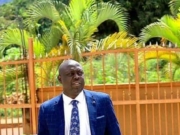
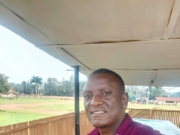


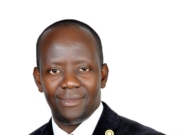




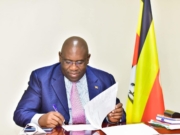
Iran’s ambassador to Uganda His Excellency Majid Saffar says the Islamic Republic of Iran will determine how the imposed US-Israeli conflict ends.
As can be recalled, the U.S-Israeli conflict dubbed Operation Epic Fury began in the early hours on 28 February,2026 when coordinated strikes targeted military and leadership infrastructures.
The operation, ordered by US President Donald Trump who turns 80 on 14 June, 2026 after failed negotiations, began with key strikes taking place over more than six weeks including operations against Iran’s oil infrastructure.
“As our supreme Leader and the people of Iran have affirmed, the United States and Israel may have initiated this war, but its conclusion shall be determined by the Islamic Republic of Iran”, HE Saffa said.
A Memorial, Not Just Mourning.
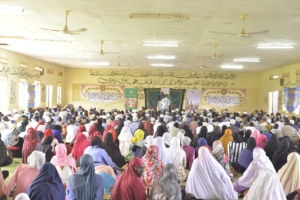
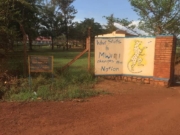
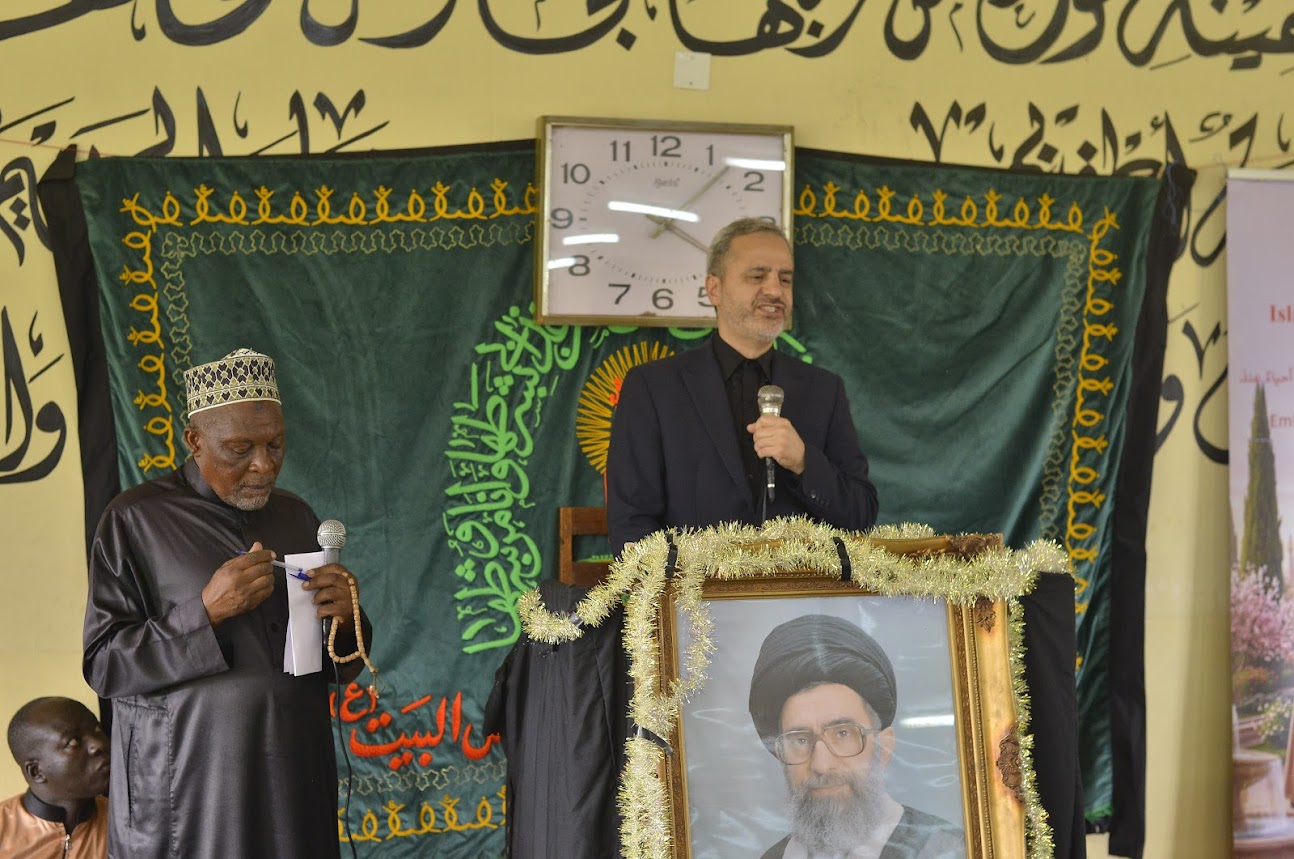
The remarks by the ambassador came during a Duwa memorial prayer in Buyemba village, Mayuge district organized by Uganda’s Shia Muslim community under the Ahlul Bait Islamic Foundation Uganda (ABIFU).
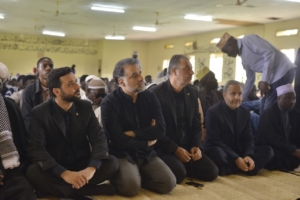
“We are fully prepared to use all our resources to repel this malice. Iranians have never and will never surrender to foreign bullies”, he told the attentive congregation who responded with a deafening praise to God (Allah).
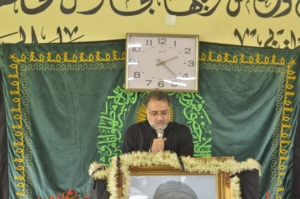
The soft-spoken diplomat, dressed in a black suit paid glowing tribute to the fallen Supreme Leader as a man of global repute whose philosophy was anchored on peace, cultural and economic independence.
Addressing Muslim faithful, the Ambassador, in a scripted speech framed the moment as more than loss. “This occasion is not merely one of mourning. It is a moment of contemplation, an invitation to reflect upon the life, legacy and enduring influence of a personality whose impact transcended geography, culture and generations,” the Ambassador said.
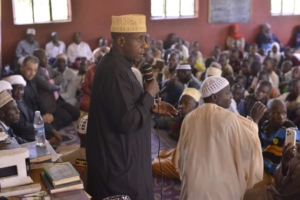
He described Khamenei as a figure whose stature went beyond politics. “His Eminence Grand Ayatollah Imam Khamenei was not only a political leader. He was, in the truest sense, a scholar, a thinker and a man of profound moral conviction,” the Ambassador told the gathering.
The eulogy emphasized Khamenei’s grounding in Islamic scholarship and his engagement with global challenges. “His intellectual depth was rooted in a rich tradition of Islamic scholarship, yet his vision spoke directly to the complexities of the modern world,” the Ambassador noted. “He possessed a rare ability to bridge tradition, faith and reason, identity and progress.”
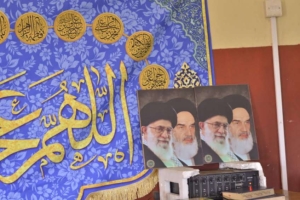
“His personal life reflected simplicity, discipline and humility, despite holding one of the most influential positions in the Islamic world, he remained deeply connected to ordinary people”.
The ambassador added, “his speeches resonated not only with policy makers, workers and thinkers alike because they were grounded in sincerity and a deep moral clarity that cut across class and profession”.
Gratitude To Uganda, Call to Shared Values.
In closing, the Ambassador expressed gratitude to Ugandans for their overwhelming moral support and empathy.
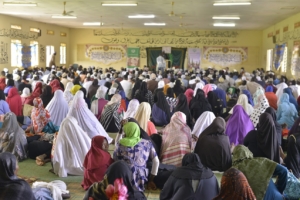
“I wish to convey my sincere appreciation to the people of Uganda for their empathy, their presence and their principled support, such gestures go beyond diplomacy, they reflect a deeper human connection that binds our nations together”, he said.
The diplomat continued saying, “it is a reaffirmation of shared human values, justice, dignity and the right of nations to chart their own destiny”.
In Byemba, Chest-Beating Grief and Condemnation.
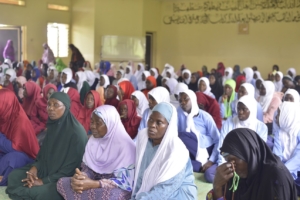
The ceremony was hosted by Hajji Omar Bongo who serves as the EAC Director for ABIFU.
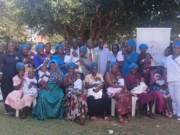
Flanked by dozens of sheikhs and Imams, along with youth, elders and women from the community, Hajji Bongo vowed open support for Iran while denouncing the US and Israel.
Attendees beat their chests in a traditional gesture of grief and resolve as speakers condemned the strikes.
Hajji Bongo also slammed what he called ‘reckless social media posts especially on Tiktok and X (formerly Twitter) that describe Shia Muslims in Uganda and globally as “terrorists”.
He said those behind such posts are ignorant of the historical facts and the selfish exploitative agenda which drives some western nations, singling out the US and Israel which speakers described as “Zionist terrorist regime led by warmonger Benjamin Netanyahu.
Senior Cleric Urges Discipline.
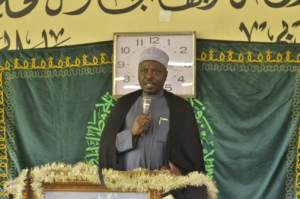
Kampala-based powerful cleric Sheikh Yusuf Mulumba also addressed the gathering and encouraged Shia community in Uganda to remain firm in their faith by following the path of peace and unity as the Holy Qur’an says.
Quoting several verses and chapters from the Qur’an, Sheikh Mulumba urged believers not to let grief turn to vengeance but that their response must show the world the discipline of their faith.
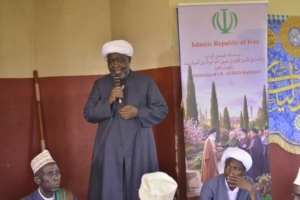
“We pray for justice, yes, but we also pray for peace for our families, for Uganda and for all nations now drawn into this crisis”. His measured tone provided a local counterweight to sharper geopolitical remarks heard earlier in the service.
Praise For Museveni’s Wise Neutrality.
Speakers at the gathering pledged continued support for President Yoweri Museveni’s NRM government, praising him as a peacemaker and guarantor of freedom of worship in Uganda.
They said unlike some leaders including several from Africa who have issued reckless and uninformed public statements, President Museveni the current NAM chair has remained carefully and wisely neutral without raising dust.
Rev Otto: One Family Under One Creator.
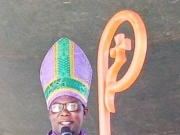
A different note was struck by Rev. Nelly Nelsons Otto, a Church of Uganda clergy and veteran journalist whose presence drew a standing ovation before he even spoke.
In a setting heavy with grief, religious suspicion, and geopolitics, his message reached for common ground.
“As-salamu alaykum — peace be upon you all,” he began, his voice steady in the packed mosque. “I am grateful to stand here in this house of prayer, as a follower of Isa al-Masih, among my brothers and sisters who submit to God.”
Isa al-Masih is the Arabic name for Jesus the Messiah used in the Qur’an and by Arabic speaking Christians and Muslims.Yeshua is the original Hebrew/Aramaic name for Jesus used by Messianic Jews, Hebrew-speaking Christians and scholars referencing the historical Jesus.
For Rev. Otto, the moment was not about sect or state, but about shared origin. “In moments like this, I am reminded that our Scriptures speak with one voice about where we come from — and why we must love one another,” he said.
He turned first to the Qur’an (English edition), reciting Surah Al-Hujurat 49:13: ‘O mankind, indeed We have created you from male and female and made you peoples and tribes that you may know one another. Indeed, the most noble of you in the sight of Allah is the most righteous of you.’
Then he opened the Bible to Acts 17:26: ‘From one man He made all the nations, that they should inhabit the whole earth; and He marked out their appointed times in history and the boundaries of their lands.’
Standing before Shia Muslims, senior clerics, youth and women, Rev. Otto drew the texts together with a simple conviction: “Brothers and sisters, whether from Mayuge, from Iran, or from anywhere: we are one family under One Creator. Color does not change that. Geography does not change that. Language does not change that. Creed does not change that.”
He paused, letting the point settle. “Our tribes, languages, and nations are not walls to divide us, they are invitations: to know, to respect, and to love one another as God intended from the beginning.”
To a community still processing loss and regional almost global war and possibly loss of dear ones, he offered prayer, not polemic. “So today, I do not come to debate nor look for differences, I come to greet you, to pray with you for peace in Busoga, in Uganda, and in the world. May the God of Abraham, the Most Merciful, bless this gathering and make us instruments of His peace.”
The congregation men in skullcaps, women in hijabs, youth, some in school uniforms, nodded as he spoke. Several sheikhs were seen wiping their eyes. When he finished, the applause was long and warm, a counterpoint to the sharper denunciations heard earlier in the service.
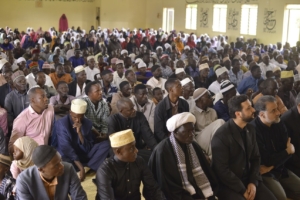
For many present, Rev. Otto’s words reframed the day: grief for one leader, yes, but also witness to a belief that all people, irrespective of color, geography, language, and creed, remain God’s people.
EXPLAINER(Editor’s): Rev. Otto’s address, while rare during formal Islamic prayers, is not unusual at interfaith memorials.
Globally, Shia communities often host non-Muslim dignitaries to offer condolences at public mourning events, especially when the deceased is viewed as a figure of international stature.
In Uganda, Christian and Muslim clergy regularly share platforms at funerals, peace rallies, and national gatherings under the Inter-Religious Council of Uganda framework.
The Council brings together Muslim, Anglican, Catholic, Orthodox and Pentecostal leaders who often share platforms at funerals, disaster relief events and peace functions.
Shia communities including those linked to Iran often emphasize azardari (public mourning) and wahdat al-ummah, (unity, oneness and cohesion) of the Islamic community but also broader human unity. Qur’an 21:92: states: “Indeed this, your Ummah, is one Ummah, and I am your Lord, so worship Me”.
At memorials for prominent figures, Shia centers in Lebanon, Syria, Iraq and even the UK, among others have often hosted non-Muslim dignitaries to offer condolences. The goal is to show that the deceased’s impact transcended geography, culture, faith and generations.
Because the Buyemba service was a community memorial during the 40-day mourning period, not a doctrinal prayer, and Rev. Otto’s message focused on shared humanity while quoting both Qur’an and Bible, his invitation aligns with local norms of solidarity.
Arba’een:40 days of Mourning in Shia Tradition.
In Islamic tradition, particularly in Shia practice, the 40th day after death known as Arba’een marks the end of the initial mourning period.
It is a time for remembrance, prayer and reflection on the life and legacy of the deceased and in this context the Grand Supreme Leader often observed with gatherings, recitations from the Qur’an, and charitable acts in their name.
For many Muslims, it signifies that the soul has completed its early transition and that the community should renew its commitment to the values the person embodied while still alive
Tehran’s Response and Ceasefire On Edge.
Since the joint US-Israeli strikes that killed Supreme Leader Ayatollah Ali Khamenei, Iran’s response has been military, diplomatic, and domestic.
Iran’s Foreign Ministry & leaders have since described the attack as “wholly unprovoked, illegal, and illegitimate” and said “attacks by Iran will continue until as long as they are defending”
Supreme National Security Council said Iran was targeted by a “brutal air operation” during negotiations, and “the resilient Iranian nation will never surrender to their petty demands through these cowardly actions”
While mediators in Oman and Qatar push for de-escalaton and prisoner exchanges, rhetoric remains heated on the ground. Against that backdrop, appeals for restraint, dignity and peace before the region and in deed the global community slides further into open war. Whether those calls are heard in Tehran, Washington or Tel Aviv remains uncertain as the ceasefire teeters day by day.
A World Divided.
The war has since split global opinion very fast. According to analysts, the conflict is not a neat East vs West line but a messier with governments, streets, house of prayers and blocs hedging or breaking ranks.
The conflict has split the world with Iran, Russia, China and much of the Global South denouncing the attack as an illegal assassination, while the US, Israel and allies defend it as self-defense against a nuclear and proxy threat.
A large middle bloc, from Turkey to the EU and UN has avoided taking sides and is pressing for the seemingly fragile ceasefire to prevent wider war.