

Two men stood before the crowd. Both were called Jesus. One was an insurrectionist and a murderer. The other was the Son of God. Pilate asked the people to choose. They chose the killer.
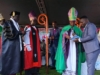
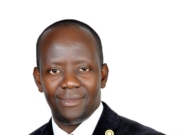
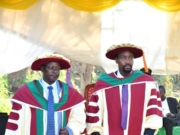
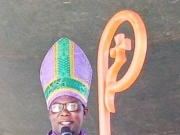
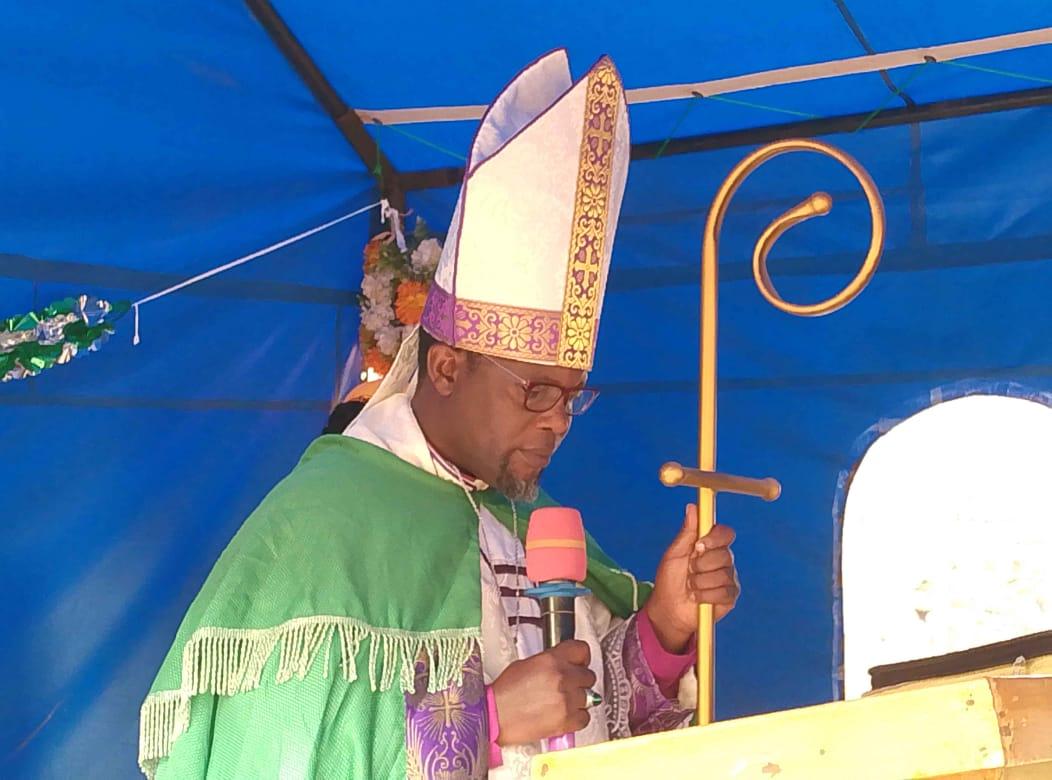
“Barabbas is mentioned in all four gospels of the New Testament, his life intersects that of Christ at the trial of Jesus,” says Archbishop Elect Professor Mugume Bagambaki Richard of the Five-Fold Episcopal World Federation.
That was Jerusalem, AD 33. This is Uganda, 2026. The names change. The choice does not. From Buganda Road Court to the ballot box, from pulpits in Kampala to prayer palaces in Jinja, we keep opening the gate for Barabbas. We still nail Truth to a cross.
It was the most loaded choice in human history. One gate of the Antonia Fortress swings open. Two men stand there. Both named Jesus. One walks to freedom. The other walks to a cross. And what an intersection.
The Crime That Deserved A Cross.
If Barabbas stood in the dock at Buganda Road Court, Makindye Court, Nakawa Court or Jinja Chief Magistrates Court today, the Director of Public Prosecutions would not be spoilt for choice.
Mark called him a stasiastēs, an insurrectionist. Luke added phonos, murder. John used lēstēs, an armed bandit.
In modern Uganda that file translates to treason under Section 23 of the Penal Code Act, terrorism under Section 7 of the Anti-Terrorism Act, murder under Section 188, and aggravated robbery under Sections 285 and 286. All four carry the death penalty.
He would be arrested by JATT or DIS, not by a regular detective. Bail would be out of the question. Capital offences are not bailable. There is no Passover custom in Uganda’s Criminal Procedure Code and no mob vote to set a man free. The only way out after conviction would be the Presidential Prerogative of Mercy under Article 121, and that comes after the hangman is already booked.
“Pilate offered the mob a choice. The release of Jesus or the release of Barabbas, a well-known criminal who had been imprisoned for an insurrection in the city and for murder,” Archbishop Mugume recounts.
Under Roman law, Lex Julia de vi publica, the sentence for armed rebellion was one thing. Crucifixion. Barabbas’ cross was already waiting. The nails were cut. The title Enemy of Caesar was ready.
Yet Pilate, the Roman governor, knew something was off. “Pilate had already declared Jesus innocent of anything worthy of death, he knew that Jesus was being railroaded and it was out of self-interest that the chief priests had handed Jesus over to him,” the archbishop notes.
Pontius Pilate tried the Passover custom. Release one prisoner as goodwill. He thought the contrast would be obvious. A killer versus a healer. Guilty versus innocent. Mob leader versus miracle worker. He was wrong.
Hosanna to Crucify Him in Five Days.
Sunday morning, the same Jerusalem crowd that shouted, “Hosanna to the Son of David,” with cloaks on the road and palm branches waving, wanted a king. But their kind of king. A Barabbas in sandals who would drive Rome into the sea.
By Friday morning, the chant changed. “But with loud shouts they insistently demanded that he be crucified, and their shouts prevailed,” Archbishop Mugume reads from Luke 23 verse 23.
What happened?
“Pilate seems to have been surprised at the crowd’s insistence that Barabbas be set free instead of Jesus. The governor stated that the charges against Jesus were baseless and appealed to the crowd three times to choose sensibly,” he says.
But crowds do not do sensible things. Crowds do self-interest.
“They expected a political messiah to overthrow Rome. When Jesus did not storm the Antonia Fortress but talked of _my kingdom is not of this world_, He became useless to their agenda,” the archbishop explains.
Then the priests worked the room. “If you release this man, you are not Caesar’s friend,” John 19 verse 12. “The chief priests stirred up the crowd,” Mark 15 verse 11. Suddenly loyalty to Jesus costs you. Shockingly, Barabbas looks safer.
That is the human story, from Jerusalem to Kampala, Nairobi or Johannesburg or Lagos and Kinshasa or Kigali. We are with you in the morning when you are multiplying fish. We are against you by evening when standing with you might cost us a tender, a job, a reputation.
We are also with you only when your bank account is fat or the fleet of SUVs are still running, or when you are still holding that juicy office and winning elections, or not bogged down with sickness, or we can still get free beers and gifts from you. The moment the money dries, the convoy stalls, the title is lost, or the hospital bed calls, the crowd thins. Hosanna becomes silence. Silence becomes crucify him.
The Exchange That Still Happens.
“In some manuscripts of Matthew 27 verses 16 to 17, Barabbas is referred to as Jesus Barabbas, meaning Jesus, son of Abba,” Archbishop Mugume points out. “If Barabbas was also called Jesus, that would make Pilate’s offer to the crowd even more spiritually loaded. The choice was between Jesus, the Son of the Father, and Jesus, the Son of God.”
The crowd chose the son of the earthly father. The murderer walked. The Son of God took his cross.
“The story of Barabbas and his release from condemnation is a remarkable parallel to the story of every believer,” the archbishop says. “We stood guilty before God and deserving of death. But then, due to no influence of our own, Jesus was chosen to die in our stead. He, the Innocent One, bore the punishment we rightly deserved. We, like Barabbas, were allowed to go free with no condemnation.”
So, what happened to Barabbas? “The Bible gives no clue, and secular history does not help,” he admits. “Did he go back to his life of crime. Was he grateful? Did he eventually become a Christian? No one knows.”
But we know this. “The choices available to Barabbas are available to us all. Surrender to God in grateful acknowledgment of what Christ has done for us, or spurn the gift and continue living apart from the Lord.”
Pilate, Power, and the Price of Peace.
Pilate washed his hands. “Wanting to satisfy the crowd, Pilate released Barabbas to them. He had Jesus flogged, and handed him over to be crucified,” Archbishop Mugume quotes Mark 15 verse 15.
“Pontius Pilate’s brief appearance in Scripture is full of tragedy,” he reflects. “He ignored his conscience, he disregarded the good advice of his wife, he chose political expediency over public rectitude, and he failed to recognize the truth even when Truth was standing right in front of him.”
That is the warning for every parliament, every boardroom, every newsroom in 2026. When given an opportunity to evaluate the claims of Jesus, what will we decide. Will we accept His claim to be the King, or will we follow the voice of the crowd.
We Choose Barabbas: Africa’s Habit of Crucifying Truth and Electing Thieves.
It is not uncommon in our Ugandan context. We glorify the corrupt embezzlers. The LC1 who eats the Emyooga money but buys sodas at the burial is called generous in Butagaya, Buwenge, Bwondha or Imanyiro.
We elect jokers to positions of leadership because they say what we want to hear. They promise tarmac in 90 days while throwing waragi at campaign rallies to numb the mind. They dance on TikTok instead of reading policy. They share millions in posh hotels during campaigns. They post empty flowery slogans everywhere. We know they are unserious, but they flatter our bitterness, so we vote. Pilate called it satisfying the crowd, Mark 15 verse 15. We call it populism. Same cross.
We ignore truth tellers. The auditor who flags the missing public funds is transferred. The journalist who exposes wetland degradation in Jinja City is arrested and dumped for months in Kirinya Prison. Truth is innocent but inconvenient. So, we crucify it, quietly, legally, by acclamation.
Look at our elective politics where positions like MP or LC5 seats are bought like cows in many constituencies. Some use their connections and influence to rig with impunity. Why. Because they are sons and daughters of the father, Bar Abbas, connected, feared, or just loud and dangerous.
Look at our cathedrals and prayer palaces, where some prophet who predicts visas gets a convoy in Kampala and other cities. The ones who question church land grabs get called rebellious or opposition-leaned, or are transferred on an annual basis.
The pastor who sells miracle oil, rice, handkerchief or holy water gets a Mercedes. The general overseer who runs dozens of media houses with tithes but pays workers peanuts gets celebrated.
We will release the preacher who slept with three choir girls if his altar call is strong. But the one who says _sell what you have and give to the poor_, we say he is not deep. We want Jesus Barabbas in a collar. Powerful, rich, never confronts us.
Archbishop Elect Professor Mugume Bagambaki Richard put it bluntly. “The choice Pilate set before them could not have been clearer cut. A high-profile killer and rabble rouser who was unquestionably guilty, or a teacher and miracle worker who was demonstrably innocent. The crowd chose Barabbas to be released.”
And who have we been crucifying. The whistleblower. The doctor who will not steal. The engineer who refuses to sign off on fake culverts and pavers. The judge who will not take kitu kidogo or chai The Son of God type. Truthful, costly, will not join our stasis.
Why We Keep Choosing Barabbas in Uganda.
The psychology is simple. Barabbas fits our wounds. Poverty trauma means a thief who shares looks like a savior. At least he eats with us. Ethnic fear means we prefer our Barabbas over their Jesus. Tribe over truth. Cynicism means _they are all corrupt_ becomes license to pick the entertaining one.
The system rewards Barabbas. Electoral laws monetize politics and lock out poor truth tellers. Nomination fees cost millions. Barabbas has stolen it already. Church economics fills cathedrals with prosperity preaching.
The Church’s role has shifted from prophetic to profitable. Many prayer palaces now run on _touch not my anointed_, 1 Chronicles 16 verse 22, twisted to shield guilty men.
That verse is part of David’s song when the Ark came to Jerusalem. It is about giving God glory, not men. _“Touch not my anointed, and do my prophets no harm”_ which some twist to shield guilty men of God like bishops, priests, or fathers.
In context, God was warning pagan kings not to harm Abraham, Isaac and Jacob as they moved through foreign nations. It was protection for vulnerable people under God’s covenant. It was not a press pass for church leaders to dodge audits.
How ‘Touch Not My Anointed’ Is Twisted in Uganda.
“You endiga, or romo, meaning church member, the media, police or any other authority cannot question me. I am anointed.” It has become a gag order. A pastor accused of selling church land quotes it. A bishop who took donor money meant for orphans and widows quotes it.
In Scripture, anointed meant set apart for God’s task, often with suffering. David was anointed, yet submitted to Nathan’s rebuke after Bathsheba, 2 Samuel 12. He did not say “touch not my anointed”.
Anointed now means “I am above board resolutions, financial reports and the Penal Code”. Try to ask for books of accounts and you hear, “The Bible says touch not my anointed. You are fighting the church and God will punish you.”
Nathan cannot rebuke David if David pays the rent. Cathedrals that once buried martyrs now bury audits. The same crowd that sang Tukutendereza in Kampala, Jinja, Mbarara, Masindi and Fort Portal or Apwoyo Twal in Lango, Acholi and West Nile or Karamoja nowadays spend more time on revenue collection.
So, What Now.
Prof Mugume Bagambaki is now saying stop clapping for thieves. If they cannot explain the source of their wealth, do not dance at their events. Do not offer them seats in front rows. Do not hand over the microphone to them during service.
Vote for boredom over jokes. The guy with spreadsheets, not slogans. Nations are not built by comedians, from Uganda to South Africa to Nigeria to DRC to Rwanda.
Remember you are Barabbas. You were guilty. You got grace. Do not use your freedom to elect more murderers.
Because the next time Pilate asks, _which one do you want me to release to you_, Africa will answer with its votes, its offertory, its silence, and its applause.
The Point Is: A Nation Gets the Barabbas It Tolerates.
Pontius Pilate gave the crowd a choice between two men called Jesus. They picked the insurrectionist and sent the Innocent One to a cross. Archbishop Elect Professor Mugume Bagambaki Richard put it plainly: “The choices available to Barabbas are available to us all.”
Uganda in 2026 stands at the same Antonia Fortress gate. The names are different. The choice is not. Every election, every church appointment, every court file asks us again: Jesus Barabbas or Jesus the Son of God?
We were Barabbas. Guilty. Sentenced. Then Grace walked to our cross. The reality is: if we use that freedom to keep releasing thieves because the SUVs are still running and the beers are still free, God will stop sending the Innocent.
And we will be left with the Barabbas we chose. From Buganda Road Court to the ballot box, from Kampala pulpits to prayer palaces in Jinja or other cities and towns. The gate is still open. Who walks free this time?
Contact Archbishop Elect Prof. Mugume Bagambaki Richard
WhatsApp: +256 774 459 971
Email: mugumebagambakirichard@gmail.com
UCCSAT University, Five-Fold Episcopal World Federation, Upper City Covenant Churches.