
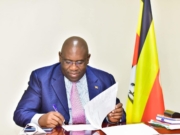
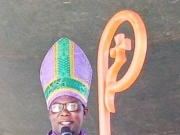
The Bishop of Busoga Diocese Rt Rev Prof Dr Grace Lubaale has implored christians to conduct soul searching and repent so that their lost relationship with God, lost faith and hope can be restored to Jesus Christ.
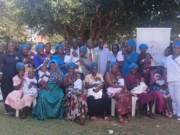
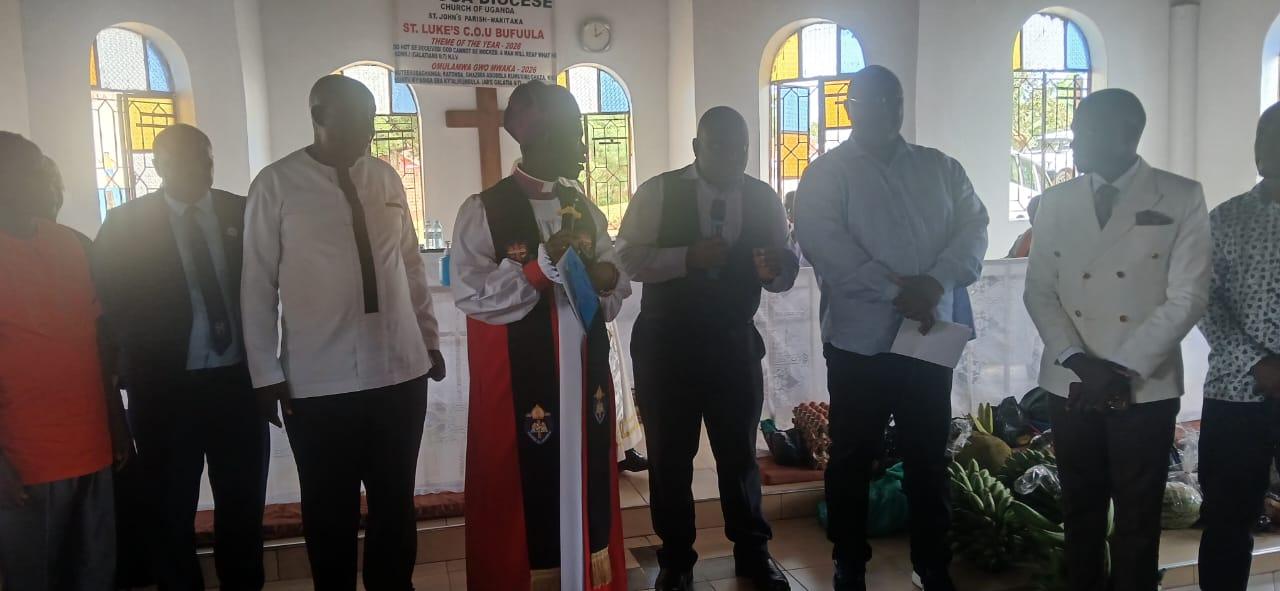
He was on Sunday 3rd May,2026 preaching during a thanksgiving ceremony held at St Luke’s Church of Uganda Bufuula Parish under Wakitaka Archdeaconry in Jinja City.
Anchoring his sermon under the theme Jesus Reinstates levareging The Post Resurrection Period, Bishop Lubaale exposited on an encounter between Peter and Jesus Christ as recorded in the Gospel of John 21:15-17 in which Peter was reinstated.
For context, Post Resurrection Period is the 40 days between Jesus’ resurrection and His ascension into heaven when Jesus did three things, firstly proving he was alive, taught about the kingdom and commissioned the church.
The text used by Bishop Lubaale presents one of the most tender leadership moments recorded in the Bible. Hours before Jesus was crucified, Peter disowned Him three times, yet Peter had boasted “even if all fall away, I will not” Mark 14:29.
Jesus had warned him that “before the rooster crows twice you will disown me three times” Mark 14:30. Note that Peter was the ‘rock’ the inner circle guy so his failure was public and crushing.
In that culture, denying you knew someone three times meant the relationship was legally dead and Peter had quit.
The bishop explained to the Bufuula congregation the reason Jesus asked Peter three times was to heal three denials. Peter was reinstated not by promising to do better, but by being loved, fed and given work to do.
He said it is the reason the Church of Christ here on earth cannot just preach, it must shepherd and that shepherds do not devour the sheep, they feed them.
Standing before a packed congregation, that included the crème de la crème of Busoga MPs, academics, bankers, and elders, Bishop Rt. Rev. Prof. Dr. Grace Lubaale opened John 21 and made it personal.
The Text That Became the Theme.
“The same Jesus who met Peter on the beach at dawn is present here today,” Bishop Lubaale declared. “And He still reinstates.”
He walked the church through Peter’s story: bold in the boat, broken in the courtyard, weeping after the rooster crowed. “Peter had denied the Lord three times. In the eyes of men, his ministry was over. But Jesus did not cancel him. Jesus cooked him breakfast.”
Why Three Questions.
“Jesus asked, ‘Do you love me?’ three times because Peter had denied Him three times,”, the bishop explained. “One affirmation for every denial. One ‘Feed my sheep’ for every ‘I don’t know Him.’
This is how God heals: publicly, specifically, completely, he does not rub your nose in failure, he gives you work to do.”
Application: Beyond Peter to Bufuula.
Then Bishop Lubaale turned the mirror to the congregation:” Some of you came here with marriages that have slipped, you denied each other with harsh words. Some have education dreams that fractured when fees ran out. Some have businesses that collapsed like Peter’s net that night, you toiled all night and caught nothing, John 21:3. Some have health that is broken, and you are weeping bitterly like Peter did.
“Come Back to the Fire” — A Word to Those Who Walked Away.
Bishop Lubaale did not shy away from the empty pews in some church buildings. He brought the message right inside the Church, speaking directly to those who have slipped away from St. Luke’s and churches across Busoga.
“Some of you left not because you stopped loving Jesus,” he said, his voice softening. “You left over what I will call petty issues: hymns you feel are boring, a sermon that ran too long, a choir robe you did not like, or clergy whose personalities irritate you. The fire did not go out. You just walked away from it.”
Then he drew the line to Peter.
“Peter did not deny Jesus because the Romans threatened him. He denied Him at a charcoal fire because a servant girl irritated him with a question, John 18:17. Sometimes we disown the Lord over small, human things. We let preferences become departures. We let irritation become exodus.”
The Passionate Appeal.
The bishop stepped from the pulpit and stood at the aisle. “But hear me: the same Jesus who made breakfast for Peter is setting the table again. He is not asking you to defend the hymn book. He is not asking you to agree with every committee. He’s asking, ‘Do you love me?’
If your answer is still ‘Yes, Lord,’ then come back the way Peter did: hurt, honest, but available, we need you to ‘feed my sheep, the Church is not a club for the perfect, it is a hospital for the willing, it is a fire for the cold.”
He paused, then added with a smile that drew laughter and nods:
“We can change the hymns. We can shorten the notices. We can even train the clergy to irritate you less. But we cannot do Church without you. Peter’s restoration meant the Church was born at Pentecost. Your return means Bufuula becomes that ‘mini city like Nazareth.’ Do not get a petty issue abort a resurrection story.”
The Invitation.
Closing, Bishop Lubaale stood by the Communion table and said:
“Peter’s restoration started with breakfast. Yours starts here. Come back to the fire. Let Jesus ask you the question. Your failure is not final. Your denial is not the end of your story. ‘Do you love me?’ If you can say ‘Yes, Lord,’ then hear His voice: ‘Feed my sheep.’ Start with your family. Start with this church. Start with this acre. Jesus reinstates and He sends.”
The altar filled. Tears, prayer, and fresh commitments followed. Outside, as the congregation broke bread, MP-Elect Wanzala and Prof. Muranga were seen sketching next steps for the Master Plan: “feeding sheep” in concrete, bricks, and audited accounts.
From the Pulpit: “What Do We Mean by ‘Church’?
Like any word in theology, the word “Church” must be interpreted by context. Bishop Lubaale paused the thanksgiving to teach what he called “the standard principle in all kinds of interpretation: meaning flows from context.”
He reached for the late Swiss theologian Hans Küng, who argued in his 1967 work The Church that the “Church” is not, in the first place, a building, nor an institution, nor a hierarchy. The “Church” is, in the first place, the community of those who believe in Jesus Christ and are gathered by Him. It is the People of God, the Body of Christ, the Temple of the Holy Spirit.”
The bishop unpacked it for Bufuula. “People of God means you, farmers, teachers, traders, MPs or politicians, students, mothers, not the bricks,” he said, gesturing to the congregation.
“Body of Christ means we are one organism, a body does not grow one leg and leave the other idle, and that is why we need the Master Plan. The 13 acres and the pews are one body”.
Then came the pointed line: “Temple of the Holy Spirit means this is God’s house. So, transparency, Bills of Quantities, and audits are not ‘corporate’ ideas. They are temple maintenance. We do not steal in God’s house.”
That definition matters, he warned, because we use the word “Church” wrongly and it wounds us. When we say “we are going to church, or I have left their church”, we reduce the Church to real estate and then when the roof leaks, we say “the Church is failing, or so and so has spoiled our church”.
Küng, whose words still shape both Catholic and Protestant thought, reminds us: you can burn the building and not destroy the Church. Persecution in Acts 8 scattered the Church; it didn’t end it.
The second misuse is worse: “Church” meaning “clergy only.” When people say “let the Church speak on corruption, or human rights injustices or abuse of power” they usually mean “let the bishops or archbishop issue a statement.” That turns 99% of believers into spectators.
“Prof. Muranga in the lab, Wanzala in Parliament, Kigenyi at KCCA, Moses Semwanga at Kiira College Butiiki, Dr Ephraim Batambuze in the wards, they are the Church doing economics, law, and policy,” Bishop Lubaale said. “‘Feed my sheep’ isn’t just pulpit work.”
He also tackled the denominational trap. “Our church does not do that, we are not like the other churches, we are better”, often meaning: “Anglicans do not, Catholics do not, Pentecostals do not, Seventh Day Adventists do not.”
But Jesus’ Body is not sectarian., Bishop Lubaale said adding “When we build the rental, it will not house Anglican Christians only, when we connect piped water, it will be used by all people of God, when we grow groundnuts, everyone will enjoy binyewa, amaido ocelo and odii. Money has no denomination. Neither does poverty’.
Finally, the Sunday-only error: “I was in church 2 hours this week.” That makes Monday to Saturday secular, and excuses fraud in business and neglect at home. Yet Jesus restored Peter on a weekday, at breakfast, by the lake. The Church feeds sheep at the office, in the lab, and on the 13 acres.
“So, when I say ‘Jesus Reinstates the Church,’ I am not talking about plaster and paint,”, the bishop concluded. “I am talking about you. Peter was the Church, broken, forgiven, sent. Bufuula is the Church, probably hurt by ‘basket fatigue,’ but now called to feed, tend, and govern. The building will follow the Body. The Body must follow the Head.”
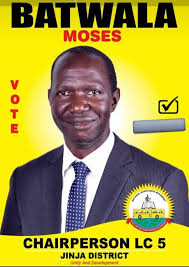
The teaching landed, minutes later, when Kirya Wanzala pledged to work on a “realistic and workable Master Plan, “and Benon Kigenyi pledged $2,500, Hussein Muyonjo aka Swengere pledged some reasonable amount after swearing in on 12th May while others gave it what they could, it was not just fundraising.
It was Hans Küng’s People of God, learning to act as the Body of Christ and steward the Temple of the Holy Spirit.
From Altar Call to Action: Bishop Lubaale Commissions the Master Plan.
Before the final benediction, Bishop Lubaale did what Peter did after breakfast, he moved from restoration to assignment. “Jesus did not just forgive Peter. He gave him work: ‘Feed my sheep”, the bishop said.
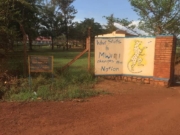
“So today, restoration must have an address. For St. Luke’s Bufuula, the address is 13 acres.”
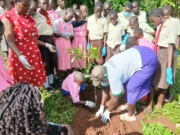
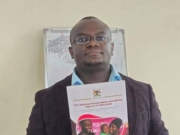
With that, he formally launched the St. Luke’s Church of Uganda Bufuula Parish Integrated Development Plan, placing it under the theme ‘Jesus Reinstates’. He laid hands on the architectural concept booklet, praying for the congregants.
Then he charged the laity and the ordained by name: “Prof. Muranga, you are the Church in the lab, bring science to this soil. Hon. Wanzala and Hussein Muyonjo, you are the Church in Parliament — give us a ‘realistic and workable Master Plan.’
Benon Kigenyi, and Moses Semwanga and all the professionals you are the Church in finance, let your dollars and shillings and skills disciple this village. This is what ‘Feed my sheep’ looks like in 2026”.