


















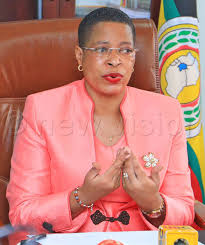
There is a word the ancient Greeks carved into their tragedies with fear and reverence, and that word is hubris, a form of arrogant pride that convinces a mortal that he has outgrown the human condition, that the laws which bind lesser men no longer apply to him, and that the gods themselves must make room for his ascent.
According to Oxford English dictionary, hubris is defined as excessive pride or self-confidence.
Merriam-Webster defines it as exaggerated pride or self-confidence, but also as a great or foolish amount of pride or confidence that leads to disaster. Then Cambridge dictionary puts hubris as pride or confidence that is unreasonable or extreme.
The key thread in all the three definitions is that hubris is not normal pride, it is excessive, unreasonable and destructive pride that makes you ignore limits.
Hubris is not confidence, which is the quiet knowledge that you can do a job, and it is not ambition, which is the healthy desire to rise, but it is the intoxicating delusion that you have arrived, that you are untouchable, and that history will make an exception for you.
Every civilization that has survived long enough to write its own story has also written the epitaph of those who succumbed to hubris, because the Greeks understood that hubris always summons its twin, nemesis, the inevitable, crushing downfall that follows when a mortal dares to equate himself with the divine.
From the roof of Babylon where King Nebuchadnezzar declared that he had built the great city by his own mighty power and was driven to eat grass like cattle for seven years, to the podium in Caesarea where King Herod Agrippa accepted the crowd’s shout of “the voice of a god” and was eaten by worms in the same hour, to the cliffs of Crete where Icarus flew too close to the sun and drowned in the Aegean Sea, the script has never changed, and it is a script that Uganda is now reading aloud with Rt Hon Annette Anita Among as its most visible protagonist.
The on-going Anita Among’s story cannot be understood as a mere political scandal, nor can it be reduced to the language of sanctions, investigations, or parliamentary revolts, because beneath those headlines lies a universal archetype that has haunted power since the first king claimed the sky, and that archetype is the moment when power stops being a responsibility and becomes a possession, when the Speaker’s gavel stops being a tool of order and becomes a weapon of silence, when the House of Speaking ceases to be a forum for debate and becomes a private chamber where only one voice is permitted to echo.
Her ascent was swift and intoxicating, a trajectory that carried her from Bukedea District Woman MP to the Chair of Uganda’s 11th Parliament at the age of forty-eight, a rise that would test the humility of any mortal because when foreign delegations bow, when bills move at your nod, when your name alone can stall or accelerate the machinery of government, the whisper of hubris begins to speak in the language of Nebuchadnezzar: “I built this.”
The danger of that whisper is not that it is loud, but that it is seductive, and it tells you that the rules written for those still climbing no longer apply to you, that the institutions designed to check power are now inconveniences to be managed, and that the people who once carried you to the chair are now subjects to be corrected.
The clearest moment of that intoxication came when Anita Among publicly shouted down Hon Jackson Karugaba Kafuuzi, the Deputy Attorney General, a lawyer born in 1977 with years of litigation and legislation behind him and appointed by President Yoweri Museveni, the man Ugandans refer to as the “Fountain of Honor,” and in that moment she did not merely disagree with his legal opinion, she vowed that he would never be permitted to speak in Parliament so long as she held the gavel, a statement that should have frozen the blood of every Ugandan who understands that Parliament is, by constitutional design, the House of Speaking, the one place where government and opposition, attorney and backbencher, must argue, correct, and deliberate on laws that affect forty-eight million citizens.
To declare that the government’s chief legal adviser would not be allowed to utter a word was to declare that this was not a house of speaking but her house, and that is the precise moment when hubris stops being a private sin and becomes a public assault on the republic itself, because Caligula mocked the Roman Senate, but Anita Among attempted to silence it, and Macbeth murdered Duncan to secure the crown, but Anita Among attempted to murder debate to secure the chair.
The insults did not end with the Deputy Attorney General, for on multiple occasions she referred to elected Members of Parliament as being “without sense,” dismissing men and women who had survived campaigns, police teargas, and rural mobilization as children who needed to be scolded, and in that language we hear the echo of Herod Agrippa who accepted worship and did not rebuke it, and we hear the echo of every leader who believes that the people who elected them are now beneath them, because hubris always ends with the leader looking down from a height that exists only in his own imagination.
But the intimidation did not end at the floor of Parliament, because hubris, once intoxicated with the gavel, extends its shadow into the electoral arena, where aspirants who dared to contest against preferred candidates were systematically intimidated and threatened into quitting the races, while a few others were lucky enough to be bribed or bought off with money, favors, or promises, until only the chosen favorites sailed through unopposed or walked over weak, demoralized opponents who had been hollowed out before the first vote was cast.
Reports that have since circulated suggest that this machinery of control was not a solo act, but a coordinated operation in which some officials from the Judiciary, the Electoral Commission, and the Police were handy in ensuring that the shoddy projects tied to Anita Among’s name moved through the system without scrutiny, approval, or resistance, turning institutions that should have been referees into accomplices.
The most glaring and heartbreaking example of this power without restraint unfolded in Jinja City, where within a few days a piece of land belonging to the Jinja Nile Resort Hotel mysteriously bore titles in the names of Anita Among’s twin children, who are minors and could not have legally transacted, negotiated, or earned such property, leaving the original investors in tears and in shock as they watched years of capital, sweat, and legitimate business evaporate in the face of a signature and a stamp.
This is not merely an abuse of office; it is the textbook definition of hubris in action, because it reveals a belief that laws, land registries, children’s rights, and investors’ livelihoods are all negotiable once you have arrived, and it proves that when a leader believes herself untouchable, she will reach not only for the microphone but for other people’s land, other people’s children’s futures, and other people’s tears.
What makes the Anita Among saga particularly Ugandan, and particularly dangerous, is that she is not an isolated case but the most visible manifestation of a silent epidemic that runs through the big shots who keep billions in manholes that carry no water, through the Chief Accountants who preside over garages that house no cars, through the commissioners and contractors who believe that invisibility is immunity and that because they do not drive a Rolls Royce they cannot be seen, when in fact their invisibility is their greatest vulnerability because it is born of the same arrivalism that convinced Nebuchadnezzar he was a god and convinced Icarus that the sun was his friend.
This is the spirit Ugandans call “I have arrived,” and it is the spirit that tells a technocrat that he is above the Auditor General, that tells a political broker that he is above the Inspectorate, and that tells a citizen to say “Uganda, you are serious alone,” which is our national lullaby for impunity, the belief that if you steal quietly and do not flash your wealth, the tears of the mother who buried her child because the hospital had no medicine will never find you.
But tears do not evaporate, they accumulate, and they bounce back, and the physics of hubris is as reliable as the physics of gravity, which is why we now see the nemesis arriving in the form of international sanctions from the United States and the United Kingdom, in the form of domestic investigations and parliamentary revolts, in the form of a public repudiation that no amount of wealth or political capital can silence, because the doctor who survived COVID-19 but cannot pay school fees, the soldier who faced bombs in Somalia but was shouted down by a civilian, and the citizen who was sent home from a government hospital to “go buy medicines” while money was being used as tissue in sealed rooms, all of them have contributed their tears to a reservoir that does not forget and does not forgive.
The Bible did not hide King David’s adultery nor the planned murder of his army commander Uriah the Hittite, and it did not hide Peter’s denial, because scripture is not interested in public relations but in pedagogy, and history did not hide Napoleon’s exile or Idi Amin’s flight to Saudi Arabia, because the past is not a biography but a manual, and Anita Among’s name will become coursework for students of Literature who will study her as a modern tragic heroine, for students of Political Science who will dissect her as a case study in institutional overreach, and for students of Law who will parse her for attempting to silence the Deputy Attorney General in the House of Speaking, and this is not cruelty but necessity, because a nation that refuses to study its fallen cannot avoid falling in the same way.
Among the Lango where I come from, there is a proverb that says Pe Ikun Wang Bur Ilwangi, which means do not surrender the wound to the fly, because when a wound is left open the fly comes, lays eggs, and creates maggots, and Uganda’s wound is corruption, arrivalism is the fly, and the silent Anitas in their garages are the maggots, and if we surrender the wound to the fly, we will all rot together, but if we join hands and do something we may yet heal.
So, the question is not whether power corrupts, because Lord Acton(1834-1902) settled that in 1887, and the question is not whether Anita Among is the first to fall, because Nebuchadnezzar, Herod, Caligula, and Macbeth fell before her, but the question is whether Ugandans and Africans are finally literate enough to read the manual that history has written in blood and worms and melted wax, and whether we are brave enough to be serious together instead of serious alone, because you can silence journalists, you can shout at generals, you can shut down a Deputy Attorney General, you can buy off investigators, but you cannot outrun tears, you cannot outrun history, and you cannot outrun gravity.
Every Nebuchadnezzar meets the grass, every Herod meets the worms, every Icarus meets the sea, every Caligula meets the Guard, every Macbeth meets the sword, and every Speaker who silences the House meets the gavel of history, and every silent Anita meets the day the manhole is opened, and on that day the world will see that hubris was never a private affair but a public crime, and that the law of gravity applies to Speakers and to clerks, to the visible and to the hidden, to the ones on television and to the ones counting cash in sealed rooms.
Uganda must follow this saga with keen interest, not as gossip but as a case study, because if we do not learn from Anette Anita Among, we will become her, and most of us will not even get a headline when we fall, we will simply rot in our garages, and that is why Pe Ikun Wang Bur Ilwangi, that is why we must be serious together, and that is why the weight of the gavel is heavier than the weight of gold.
TEU Editorial Position.
Why Journalism Is the Third Arm of State Integrity
Professional media houses do not follow individuals, they follow impact and they follow it for the same reason other state institutions do their work: because the country cannot survive if any one arm abandons its post.
The Daily Monitor, The New Vision, NTV, NBS, and TEU, among others, are doing the same because it is right. Not because it is popular. Not because it is safe. Because it is right.
The UPDF does not apologize for protecting territorial integrity. You cannot tell the Uganda People’s Defense Forces to “stop guarding the border” because a neighbor is offended.
Their duty is the map of Uganda because when the border is breached, they respond and that is their oath.
The Uganda Police does not apologize for maintaining internal security hygiene and you cannot tell the Uganda Police to “stop checking counterfeit goods” because a trader is powerful.
Their duty is the hygiene of the republic. When crime is reported, they investigate. That is their oath.
Journalism does not apologize for maintaining constitutional hygiene, you cannot tell The Daily Monitor, The New Vision, NTV, NBS, or TEU to “stop reporting on Parliament” because an office holder is offended. Our duty is the hygiene of the Constitution.
When the House of Speaking is declared closed to the Deputy Attorney General, when aspirants are intimidated, when strategic land is titled to minors, when the Judiciary, EC, and Police are alleged to facilitate irregularities we report because that is our oath.
The parallel is exact: UPDF protects the land the Police protect the law.
Journalism protects the record.
If one arm fails, the other two are exposed. If the border is porous, crime increases. If crime is unchecked, the border is meaningless. If the record is falsified, both the border and the law are meaningless because the public cannot know what is real.
This is why “public interest” is not a slogan, it is a doctrine.
The Guardian newspaper exposed the Panama Papers. The New York Times exposed Watergate. The Daily Monitor and state-owned New Vision, among others have exposed CHOGM money, pension scandals, and OPM scandals.
NTV and NBS have broadcast investigations that forced resignations, investigations and prosecutions.
They did not do it because they were “after” a person, they did it because they were “for” the Republic. TEU does the same. The case of the 11th Parliament meets every global test of public interest: governance, public funds, fair elections, and institutional integrity.
Therefore, TEU’s position is non-negotiable: We are not pursuing Anita Among. We are pursuing impunity. We are not attacking a person. We are defending an institution. We are not practicing vendetta journalism. We are practicing constitutional journalism.
Our acclaimed slogan stands: We Expose. You Decide.