





An Oath Without a Book: Law, Perception, and the Weight of a Promise.
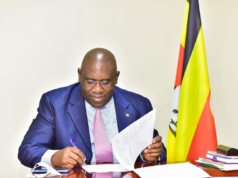
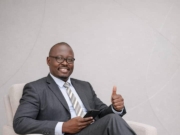
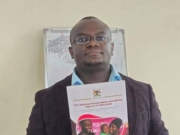
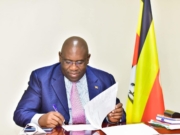
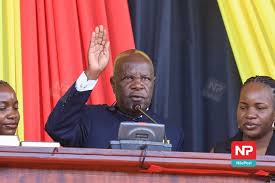
There has been a lot of hullabaloos about the non-holding of any of the holy Books during the just concluded swearing-in of MPs when Hon Ofwono Opondo, the Eastern MP for the Elderly took his oath with a raised hand instead.
“I swear by Almighty God that the evidence I shall give shall be the truth, the whole truth, and nothing but the truth.”-Oaths Act, Cap 19, Laws of Uganda.
This is Uganda’s legal form of oath, inherited from British common law. It once assumed a Christian-majority state where invoking God deterred perjury.
“No one is bound to swear against his conscience.” — St. Thomas Aquinas, Summa Theologica.
Aquinas wrote this in the 13th century to argue that forcing someone to swear against their belief makes the oath meaningless. It’s the philosophical basis for allowing affirmation.
“The law is reason free from passion.” — Aristotle, Politics
For Aristotle, law works only when it rises above emotion and prejudice. In today’s debate, it reminds us to judge by the Constitution, not by gesture.
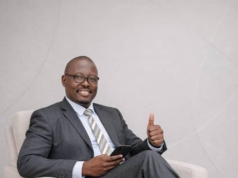
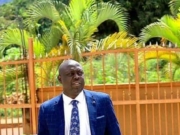
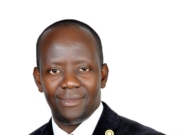
Hon. Ofwono Opondo’s decision to take the parliamentary oath by raised hand, without holding a Bible or Quran, has stirred the country. The image went viral. Talk shows debated it. Social media split into two camps: those who saw disrespect, and those who saw constitutionalism in action.
The debate is less about the man and more about what we expect an oath to mean in 2026. These three quotes frame it: the legal form we inherited, the conscience clause that makes it fair, and the reasoned standard we should apply.
What the Law Actually Says.
The law is straightforward. The Oaths Act, Cap 19, Section 5(1)(a) provides that a Christian holds the Gospels and a Muslim holds the Quran when swearing. But Section 5(1)(b) immediately adds “in any other manner which is lawful according to any law, customary or otherwise, in force in Uganda.”
The Constitution’s Fourth Schedule gives the MP’s oath with a deliberate choice: “swear in the name of the Almighty God /solemnly affirm”.
Article 81(4) makes it mandatory to take one of the two before sitting in Parliament. It does not mandate a book.
The implication is clear: Hon. Ofwono Opondo’s solemn affirmation with a raised hand is lawful. Refusing to take either oath or affirmation would disqualify him. Choosing affirmation does not.
The Principle Behind the Provision:
We have not been able to get comments from legal experts like Dr. Sarah Bireete or Prof. Fredrick Ssempebwa on this specific swearing-in, but their public record on constitutionalism tells us why the “solemnly affirm” option exists.
Dr. Bireete, Executive Director of the Center for Constitutional Governance, has consistently argued that constitutional provisions must protect freedom of conscience and prevent the state from imposing one standard on all citizens. Actions that force uniformity, she has warned, disproportionately target and exclude.
Prof. Ssempebwa, a member of the 1995 Odoki Commission, explained in a 2024 interview that the Constitution was designed to make Parliament independent and inclusive.
The inclusion of affirmation was part of that design to allow Ugandans of all beliefs, or none, to serve in public office without violating conscience.
In short, the provision is not a loophole. It is a feature.
History and Practice:
Oaths on holy books trace back to medieval Europe, where the state and church were fused. Touching the book called God as witness and raised the perceived cost of lying.
Britain began allowing affirmations for Quakers in 1695, and extended it to anyone with conscientious objection by 1888. Uganda inherited that model.
In practice, Uganda’s Chief Registrar or the officer administering the oath asks the person which faith they profess to provide the right book. If none is professed, the affirmation route is used. Parliament’s records show both oaths and affirmations have been taken since 1995.
Internationally, Article 18 of the International Covenant on Civil and Political rights (ICCPR) protect freedom of thought, conscience, and religion. Forcing a religious oath would breach that standard.
It is a UN treaty adopted in 1966 that sets out the basic civil and political rights people are entitled to. Uganda ratified it in 1995 so it is binding on the state under international law.
Key Part Relevant to this article:
Article 18 protects freedom of thought, conscience and religion. It says everyone has the right to freedom of thought, conscience and religion which includes the right to have or adopt a religion or belief of one’s choice.
It also says no one shall be subject to coercion which would impair their freedom to have or adopt a religion or belief of their choice.
Why It Matters:
Forcing an MP to swear on a Bible or Quran when they do not believe in it, like the case of Hon Ofwono Opondo would be coercion of belief. It is the reason the Constitution gives the ‘solemnly affirm’ option. Uganda’s oath/affirmation choice keeps us in line with Article 18.
In short ICCPR is the international rulebook saying the state can not force you to swear by a God you do not believe in. The Constitution’s affirmation clause is how Uganda complies.
The real debate: perception vs. substance.
So why does this still cause controversy?
Legal Meaning: The binding act is the spoken promise recorded in Hansard. Holding a book is optional.
Ethical Meaning: Perjury laws apply equally to oaths and affirmations. Lying under affirmation carries the same criminal penalty.
Political Meaning: In Uganda, the gesture carries symbolic weight. Many voters equate holding a book with “fear of God.” Choosing affirmation can be read as secular, pragmatic, or as an attempt to avoid hypocrisy.
Ugandans have a saying for this: “He says he does not eat chicken, but he drinks the soup”. The point is simple: the outward refusal means little if the substance remains.
In the same way, holding a Bible or Quran in your hand does not make you honest, just as refusing it doesn’t make you dishonest.
There’s also the Luganda proverb: “Ekibi tekyeyongerako mu ddini” loosely translated as evil does not increase because of religion. The book does not sanctify the hand that holds it. Integrity comes from what you do after the oath, not from the prop you hold during it.
Ugandans have seen both types in Parliament, the one who swears on the Bible and steals, and the one who affirms and serves. A book does not guarantee integrity, an affirmation does not preclude it.
The Test That Really Matters:
The Constitution designed this choice deliberately. The binding force of the oath is the promise to the Republic and to the people of Eastern Region’s older persons, not the material object in the hand.
The real test for Hon. Ofwono Opondo, and for all MPs, will not be what they held on 14 May 2026. It will be what they deliver in the next five years.
We do not have to look far to see why a book in the hand has never been a guarantee of truth. In courts across Uganda and around the world, complainants, defendants and witnesses raise the Bible, Quran or swear “so Help Me God”, then walk out and deliver testimony that collapses under cross examination. Perjury cases exist precisely because the gesture fails.
From land disputes to high-profile corruption trials, the record is full of people who swore on the holiest texts and lied with conviction. The same happens everywhere globally where “so help me God” is recited daily, yet false affidavits, fabricated witnesses and manufactured evidence still reach the dockets. If holding the book made people incapable of lying, we would not need perjury laws, contempt charges or forensic verification.
What happened on 14 May 2026 was a legal act, recorded in Hansard. What matters now is whether the act translates into service for Ugandans over the next five years.
If we want less hypocrisy in public life, we stop mistaking symbols for substance. Measure the MPs by what they do after the oath not by what was in their hands during the oath-taking.