

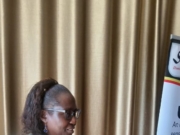





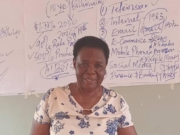




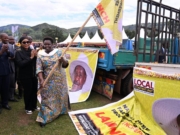

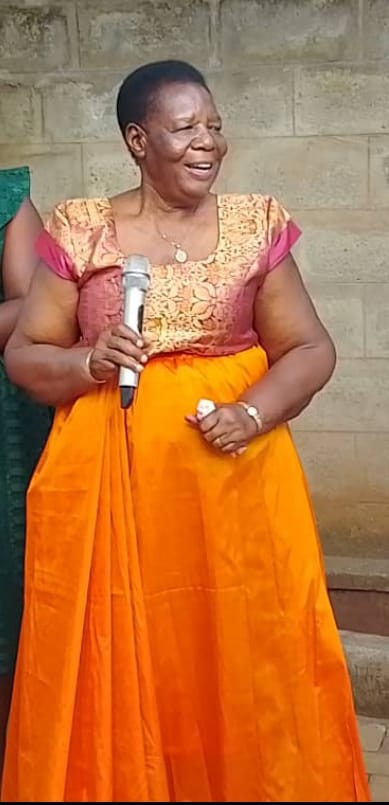
Senior Presidential Advisor (SPA) for Poverty Alleviation in Busoga, Hon. Florence Mutyabule, has appealed to the Ministry of Health and health departments at local government level to embed regular health check-ups for mothers working in market stalls, shops, supermarkets, fuel refilling stations and factories, warning that Uganda’s workforce is being broken by a triple burden of time poverty, trauma, and undiagnosed disease among women.
Her appeal was contained in a congratulatory message to women in Busoga ahead of International Labour Day on May 1st, which the country will mark under the theme “Safeguarding Uganda’s Progress: Empowering the Workforce and Promoting Decent Work for Competitive Enterprises.”
The national celebrations will be held at Bishop Nkoyoyo Primary School Matale Grounds in Buikwe district, where President Yoweri Museveni is expected to preside as chief guest.
Working Hard Is Ordained but Do Not Neglect Personal Health.
“Working hard in any sector is something ordained by God for everyone, but I also encourage women, as mothers of the nation and the world, to also set apart time for personal health assessment”, she said.
The former Namutumba District Woman MP said the national theme cannot be achieved if the health of mothers continues to decline.
“You cannot talk about empowering the workforce when the women who raise, feed, and nurse that workforce are collapsing from time poverty and untreated diseases,” she said.
Speaking as a mother and grandmother, Mutyabule added “You cannot have decent work for competitive enterprises when the mother in the market stall, fuel station or factory has never checked her blood pressure, never screened for cervical cancer, and is battling depression alone.”
The Triple Burden of Time Poverty Crushing Mothers.
Hon Mutyabule described three pressures that are collapsing mothers and, with them, the labor force Uganda seeks to empower. The first is time poverty.
The Uganda Time Use Survey 2017/2018, published by UBOS in June 2019, found that women spend 30 hours a week on unpaid domestic and care work, more than double the 12 hours a week spent by men.
UN Women analysis of the same data shows that in urban areas, women spent 3.7 hours daily on unpaid care work compared to 1.0 hour for men. In rural areas, women spent 3.3 hours daily against 1.1 hours for men.
UN Women (United Nations Entity for Gender Equality and the Empowerment of Women) is the UN agency dedicated to advancing gender equality and women’s rights globally. It was created in July 2010 by the UN General Assembly merging four previous UN bodies that focused on women.
A 2024 study in Paliisa, Mpigi, Mbarara and Masindi found the gap persists, with women spending 5.5 hours per day on unpaid care work versus 3.5 hours for men, while men spend 7.4 hours in paid employment compared to 5.3 hours for women.
Trauma-Single Motherhood & Rising Depression.
The second pressure is trauma linked to rising single motherhood. UBOS data from the Uganda National Household Survey 2023/2024 shows 30.1 percent of Ugandan households are female-headed.
Mutyabule described the rise as traumatic. A 2025 study by Makerere University School of Public Health in Jinja and Iganga found that 43 percent of single mothers screened positive for moderate to severe depression, compared to 19 percent of married mothers.
Only 8 percent had accessed counseling. Butabika National Referral Mental Hospital has recorded a rise in female admissions for depression and anxiety, with economic stress cited in six out of ten cases.
Undiagnosed Disease -Mothers Dying from Preventable Causes.
The third pressure is undiagnosed disease. WHO data shows Uganda is among 10 countries that account for about 60 percent of all maternal deaths globally, with 5,900 deaths estimated.
Cervical cancer remains the leading cause of cancer-related mortality among women in Uganda. Despite national strategies to expand screening, uptake remains critically low.
A UDHS 2022 analysis found significant pro-rich inequity in screening utilization, with wealthier and urban women having disproportionate advantage. In Eastern Uganda, a cross-sectional study found only 23.4 percent of postpartum mothers complied with the WHO-recommended 8+ ANC contacts schedule, and only 23.2 percent attended their first ANC within the first trimester.
“Safeguarding Uganda’s progress starts with safeguarding the mother,” Mutyabule said. “A sick mother cannot produce a healthy worker. A traumatized mother cannot raise a competitive citizen.”
Let Every Market Day Be a Health-Check Day.
To address this, she appealed to the Ministry of Health, District Health Officers, and municipal health departments to embed regular check-ups for mothers working in market stalls or stores and supermarkets, fuel refilling stations and factories into district workplans and budgets.
“Let every market day also be a health-check day. Let every factory have a health corner. Let fuel stations partner with nearby health centers for monthly BP and blood sugar camps. These are the workplaces of our mothers. Decent work must include decent health,” she said.
RMNCHAH Sharpened Plan 2022-2026 Backs the Appeal.
She said her call aligns with Uganda’s Reproductive, Maternal, Newborn, Child and Adolescent Health Sharpened Plan and Investment Case II 2022/23–2026/27.
Published by the Ministry of Health in January 2022, the plan has the bold objectives of ending preventable maternal, newborn, child, and adolescent deaths and safeguarding the health and development of all children, adolescents, and women.
It calls for collective action where all stakeholders align with national and subnational mutual accountability frameworks to deliver their commitments.
Busoga From worst Indicators To Recovery.
Busoga has historically recorded some of Uganda’s poorest RMNCAH indicators, often falling well below national averages. In 2016, 40 percent of women of reproductive age in the sub-region did not access healthcare. Many turned to underqualified traditional birth attendants due to distant specialized facilities and limited expertise at primary facilities.
First-trimester antenatal care attendance was 18 percent in 2018. Regular antenatal visits of four times or more stood at 37 percent. Deliveries overseen by trained health professionals were at 47 percent. Maternal mortality for Busoga was recorded at 448 per 100,000 live births, compared to the national figure of 336 at the time. Emergency transport for obstetric complications largely depended on boda-bodas, placing mothers and newborns at significant risk.
USD 10M WHO-KOICA Project Delivering Results In Five Districts.
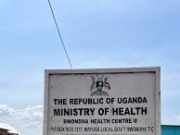
To implement the RMNCAH Sharpened Plan in Busoga, the Ministry of Health, WHO and the Korea International Cooperation Agency are implementing a USD 10 million, five-year Health System Strengthening Project in Bugiri, Buyende, Iganga, Kamuli and Mayuge districts.
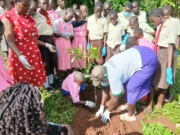
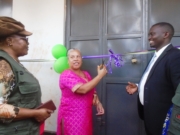
Launched in October 2021, the project is refurbishing 30 health facilities, installing solar lighting and water systems, strengthening cold chain systems, and providing medical equipment. Ambulances procured through the project now facilitate an average of 100 successful emergency referrals each month. The project has also trained 159 health workers and reached 11,700 students with sexual and reproductive health education through school health clubs.
Measurable Gains-ANC, Skilled Births, Referrals Up.
The interventions have already delivered measurable improvements. First-trimester antenatal care attendance increased from 18 percent in 2019 to 41 percent in 2024. The proportion of women completing at least four ANC visits rose from 37 percent to 51 percent. Skilled birth attendance increased significantly, from 47 percent to 67 percent.
Access to postnatal care within two days of delivery improved dramatically from 73 percent to 99 percent for women and from 86 percent to 98 percent for newborns. Emergency referral services were enhanced, with 7,230 referrals conducted using project-supported ambulances.
WHO Rep Says No Woman Should Die Giving Life.
Despite the progress, WHO Representative in Uganda, Dr. Kasonde Gomani Mulenga Mwinga, said sustained efforts are needed. “We must now rally collective leadership, sustained investments, and robust accountability to ensure that no woman dies while giving life and no child is denied the right to survive and thrive,” she said.
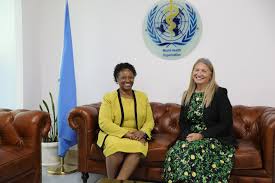
The Director General of Health Services, Dr. Charles Olaro, noted that Busoga’s strategies are being integrated into the national RMNCAH Sharpened Plan and Vision 2040. He added that districts must ensure renovated facilities are well-managed, equipment is used effectively, and health workers communicate better to boost service uptake.
Decent Work Begins At Home-Mothers Union Lessons.
Mutyabule said the Labour Day theme of safeguarding progress must begin with the mother. She urged families and communities to ensure girls and women are safe from early pregnancy, gender-based violence, and economic desperation. “Decent work begins at home. Safety begins at home,” she said. She has previously urged men to support pregnant wives and daughters to attend antenatal sessions and to ensure women access protein-rich foods, warning that malnutrition is a silent killer.
Women:51% of Uganda, 53% of Voters, 75% of Farm Labour.
UBOS National Population and Housing Census 2024 puts Uganda’s total population at 45,905,417. Women and girls are 51 percent of the population. The Electoral Commission says out of 21,681,491 registered voters in 2025, women make up 53 percent. Women provide over 75 percent of the labor in agriculture, the bulk of the labor downtown, roadside markets and lower-level jobs in public service.
Scripture Meets Statistics-Honor God With Your Bodies.
Mutyabule, the former Mothers Union in Busoga Diocese for 10 years anchored her appeal in scripture and public health. “Genesis 2:15 says God put man in the garden to work it. Proverbs 31 praises the woman who works with her hands. But Exodus 20:8 also says, ‘Remember the Sabbath.’ Even God rested,” she said. She quoted 1 Corinthians 6:19-20: “Do you not know that your bodies are temples of the Holy Spirit… You were bought at a price. Therefore, honor God with your bodies.”
“If a mother collapses, the nation collapses. If her mind breaks, the children break. We cannot fight poverty by killing the poor. We cannot safeguard progress by burying producers,” Hon Mutyabule said.
A Mother’s Health Is The Nation’s Insurance.
As Uganda celebrates Labour Day under the theme, “Safeguarding Uganda’s Progress”, she said the country must answer who safeguards the mother of the worker and who ensures the girl-child grows up safe to join the workforce. “A mother’s health is not her luxury, it is the nation’s insurance, break the triple burden, and you safeguard Uganda’s progress”, she concludes.
TEU Editorial: As Uganda marks Labour Day, the nation must confront a hard truth: progress has no insurance if the mother is uninsured.
The factory floor, the market stall, the fuel pump, supermarket, among others are not just workplaces. They are the frontline of Uganda’s economy, staffed by women carrying the triple burden of time poverty, untreated trauma, and undiagnosed disease.
Hon. Florence Mutyabule’s call is not sentiment; it is strategy. The RMNCAH Sharpened Plan 2022–2026 already provides the policy, and Busoga’s USD 10M recovery shows results are possible.
What remains is political will: to take the clinic to the mother, not wait for the mother to collapse on the way to the clinic. Break the triple burden, and you do more than empower a workforce. You safeguard Uganda’s progress for a generation.