






We Are Fearfully Made, But How Are We Made?” Archbishop Elect Bagambaki Probes Body-Soul-Spirit Paradox, Warns Against Mysticism and Demon-Possession Theology.
Five-Fold Episcopal World Federation leader says dichotomy vs. trichotomy debate is “impossible to be dogmatic” but Scripture is clear: man is material and immaterial, with an eternal soul breathed by God.
The centuries-old paradox of human constitution: whether man is body and soul, or body, soul, and spirit, is receiving fresh theological scrutiny from Archbishop Elect Professor Mugume Bagambaki Richard of the Upper City Covenant Churches, who says Scripture presents man as a “unity of both material and immaterial aspects,” yet warns that dogmatism on the internal architecture has led to pastoral error.
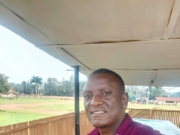
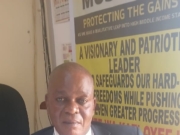
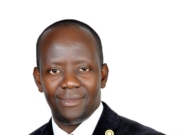
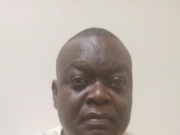
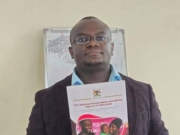
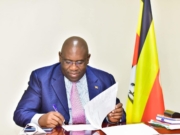
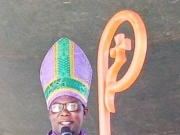
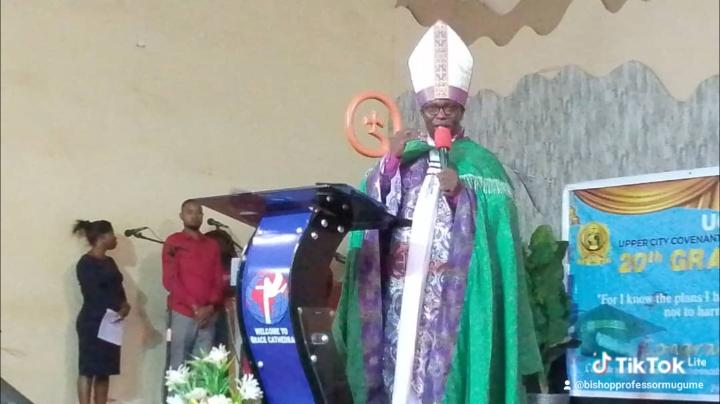
The acclaimed archbishop elect, Prof. Bagambaki, is a towering figure in both pulpit and academy, who serves as Vice Chancellor of UCCSAT University and presides over the Upper City Covenant Churches, with a scholarly corpus of hundreds of publications shaping contemporary African theological discourse.
Writing an authoritative opinion piece ahead of his scheduled consecration on 14 December 2026 in Mpigi District as Archbishop of the Ecclesiastical Episcopal Conference under the Five-Fold Episcopal World Federation, Prof. Bagambaki, who also serves as President and Chancellor of UCCSAT University, says the debate between dichotomy and trichotomy must be handled with humility.
“Theologians have differed over this issue for centuries, and there has never been a decisive orthodox declaration of which is true,” he states. “It is impossible to be dogmatic.”
Being dogmatic means asserting one’s beliefs as absolutely unquestionably true and refusing to listen to evidence, questions or alternative views. “I am right, the debate is closed and I will not hear otherwise”-type of response from dogmatists.
They treat disputed doctrines as settled creeds, shutting down Biblical inquiry with appeals to authority rather than exegesis, and thereby turning secondary issues into tests of fellowship.
“Genesis 1:26–27 indicates that God created mankind distinct from all the other creatures,” the Archbishop Elect explained. “Scripture clearly teaches that man is intended to experience intimate relationship with God, and, therefore, He created us as a unity of both material (physical) and immaterial (spiritual) aspects.” He cited Ecclesiastes 12:7, Matthew 10:28, 1 Corinthians 5:5, 2 Corinthians 4:16; 7:1, and James 2:26, noting that the physical body is temporal while “the immaterial aspects are intangible: soul, spirit, intellect, will, conscience, mind, emotions, among others.
These exist unendingly beyond the lifespan of the physical body.
Two Views, One Personhood.
He outlines the two dominant frameworks. “Is humanity dichotomous ‘cut in two’ or trichotomous, ‘cut in three’? In other words, do we have two parts (body and soul-spirit), or do we have three parts (body, soul, and spirit)?”
He says dichotomists see man as body and spirit, or body and soul-spirit, with the terms often interchangeable. “Genesis 2:7 states that man was created as a ‘living soul’ (KJV). When the Bible speaks of the ruach ‘breath, wind, or spirit’ being separated from the body, the person is disintegrated dead,” referencing Ecclesiastes 12:7, Psalm 104:29, and 146:4. “Luke 1:46–47, Isaiah 26:9, Matthew 6:25; 10:28, and 1 Corinthians 5:3, 5 show spirit and soul used as synonyms referring to the same spiritual reality within each person.”
Trichotomists, he noted, emphasize 1 Thessalonians 5:23 and Hebrews 4:12, “which seem to differentiate between spirit and soul.” But he cautioned against proof-texting: “The dichotomist counters that, if 1 Thessalonians 5:23 teaches trichotomy, then, by the same hermeneutic, does Mark 12:30 teach tetrachotomy?”
The Human Spirit: Breath of God, Seat of Consciousness.
“The human spirit is the incorporeal part of man,” Bagambaki taught. “The Bible says that the human spirit is the very breath of Almighty God and was breathed into man at the beginning of God’s creation: ‘Then the LORD God formed a man from the dust of the ground and breathed into his nostrils the breath of life, and the man became a living being’ (Genesis 2:7).”
“It is the human spirit that gives us a consciousness of self and other remarkable, though limited, ‘God-like’ qualities,” he said. “The human spirit includes our intellect, emotions, fears, passions, and creativity. It is this spirit that provides us the unique ability to comprehend and understand (Job 32:8, 18).”
He explains that Hebrew neshamah and Greek pneuma mean “strong wind, blast, or inspiration.” “Neshamah” is the source of life that vitalizes humanity (Job 33:4). It is the intangible, unseen human spirit that governs man’s mental and emotional existence. The apostle Paul said, ‘Who among men knows the thoughts of a man except the man’s spirit within him?’ (1 Corinthians 2:11). Upon death the ‘spirit returns back to God who gave it’ (Ecclesiastes 12:7; see also Job 34:14-15; Psalm 104:29-30).”
“Every human being has a spirit, and it is distinct from the ‘spirit,’ or life, of animals,” he stressed. “God made man differently from the animals in that He created us ‘in the image of God’ (Genesis 1:26-27). Therefore, man is able to think, feel, love, design, create, and enjoy music, humor, and art. And it is because of the human spirit that we have a ‘free will’ that no other creature on earth has.”
Fall and Renewal: From Adam to Pentecost.
“The human spirit was damaged in the fall,” the Archbishop Elect said. “When Adam sinned, his ability to fellowship with God was broken; he did not die physically that day, but he died spiritually. Ever since, the human spirit has borne the effects of the fall. Before salvation, a person is characterized as spiritually ‘dead’ (Ephesians 2:1-5; Colossians 2:13). A relationship with Christ revitalizes our spirits and renews us day by day (2 Corinthians 4:16).”
He links Genesis to the Upper Room: “Interestingly, just as the human spirit was divinely breathed into the first man, so the Holy Spirit was breathed into the first disciples in John 20:22: ‘And with that He breathed on them and said, “Receive the Holy Spirit”’ (Acts 2:38). Adam was made alive by the breath of God, and we, as ‘new creations’ in Christ, are made spiritually alive by the ‘Breath of God,’ the Holy Spirit (2 Corinthians 5:17; John 3:3; Romans 6:4).”
“Upon our acceptance of Jesus Christ, the Holy Spirit of God joins with our own spirit in ways we cannot comprehend,” he added, citing 1 John 4:13 and Romans 8:16. “As children of God, we are no longer led by our own spirit but by God’s Spirit, who leads us to eternal life.”
The Human Soul: Eternal Personhood.
On the soul, Bagambaki says, “The Bible is not perfectly clear as to the nature of the human soul. But from studying the way the word soul is used in Scripture, we can come to some conclusions. Simply stated, the human soul is the part of a person that is not physical. It is the part of every human being that lasts eternally after the body experiences death.”
He points to Genesis 35:18: “Rachel named her son ‘as her soul was departing.’ From this we know that the soul is different from the body and that it continues to live after physical death.”
Quoting Scottish Christian minister, author and poet George MacDonald (1824-1905), he said: “You do not have a soul. You are a Soul. You have a body. In other words, personhood is not based on having a body. A soul is what is required.”
He also cites Exodus 31:14, Proverbs 11:30, Psalm 16:9-10, Ezekiel 18:4, Acts 2:41, and Revelation 18:13 as evidence that Scripture refers to people as “souls” when addressing the value of human life.
“The human soul seems to be distinct from the heart (Deuteronomy 26:16; 30:6) and the spirit (1 Thessalonians 5:23; Hebrews 4:12) and the mind (Matthew 22:37; Mark 12:30; Luke 10:27),” he notes.
“The human soul is created by God (Jeremiah 38:16). It can be strong or unsteady (2 Peter 2:14); it can be lost or saved (James 1:21; Ezekiel 18:4). We know that the human soul needs atonement (Leviticus 17:11) and is the part of us that is purified and protected by the truth and the work of the Holy Spirit (1 Peter 1:22). Jesus is the great Shepherd of souls (1 Peter 2:25).”
He identifies Psalm 16:9-10 as Messianic: “David wrote, ‘Therefore my heart is glad, and my whole being rejoices; my flesh also dwells secure. For you will not abandon my soul to Sheol, or let your holy one sees corruption.’ This cannot be speaking of David (as Paul points out in Acts 13:35-37) because David’s body did see corruption and decay when he died. But Jesus Christ’s body never saw corruption (He was resurrected), and His soul was not abandoned to Sheol. Jesus, as the Son of Man, has a soul.”
Pastoral Caution: Avoiding Mysticism and Demon-Possession Error.
“Is it important to conclusively decide between dichotomy and trichotomy? Perhaps not; however, a word of caution is appropriate,” Bagambaki warns.
“Some who hold the trichotomists view have erroneously taught that God can bypass our soul/intellect and communicate directly with our spirit; such teaching leads to irrational mysticism.”
“Other churches have used the trichotomous position to teach the possibility of Christians being demon-possessed,” he said. “Because they see the soul and spirit as two separate immaterial aspects within the Christian, they postulate that one can be indwelt by the Holy Spirit and the other can be possessed by demonic forces.
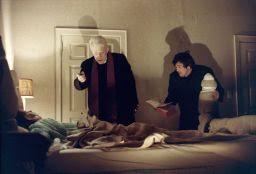
This teaching is problematic in that there are no biblical references that those who are indwelt by the Holy Spirit can be simultaneously possessed by demons.”
Fearfully Made, Eternally Accountable.
“Regardless of whether a Christian believes dichotomy or trichotomy best represents an accurate understanding of Scripture, we can all unitedly praise God with the psalmist: ‘I praise you because I am fearfully and wonderfully made; your works are wonderful, I know that full well’ (Psalm 139:14),” he concluded.
He notes that the penetrating power of Scripture: “How could the Word of God penetrate ‘even to dividing soul and spirit’ (Hebrews 4:12)? When the Bible talks about man’s spirit, it is usually speaking of an inner force which animates a person in one direction or another. It is repeatedly shown as a mover, a dynamic force (e.g., Numbers 14:24).”
“It has been said that there are only two things that last: the Word of God (Mark 13:31) and the souls of men,” Bagambaki said. “This is because, like God’s Word, the soul is an imperishable thing. That thought should be both sobering and awe-inspiring. Every person you meet is an eternal soul. Every human being who has ever lived is a soul, and all of those souls are still in existence somewhere. The question is, where? The souls that reject God’s love are condemned to pay for their own sin, eternally, in hell (Romans 6:23). But the souls who acknowledge their own sinfulness and accept God’s gracious gift of forgiveness will live forever beside still waters with their Shepherd, wanting for nothing (Psalm 23:2).”
EXPLAINER(Editor’s): Dichotomy vs. Trichotomy: How Theologians Describe Man.
Dichotomy teaches man is body plus soul/spirit with two parts. Soul and spirit are two names for the same immaterial aspect of a person. Key verse: _Genesis 2:7 “the LORD God formed man… and breathed into his nostrils the breath of life, and man became a living soul.” Other support: Luke 1:46–47; Matthew 10:28; Ecclesiastes 12:7
Trichotomy teaches man is body: soul, spirit: three parts. Body relates to the world, soul to the mind, will, emotions, and spirit. God-consciousness. Key verse: 1 Thessalonians 5:23 “may your whole spirit and soul and body be kept blameless.” Also: Hebrews 4:12
Both agree that humans are material plus immaterial, the immaterial is eternal, and Christ redeems the whole person (2 Corinthians 4:16).
Why It Matters:
Over-stressing trichotomy has led to errors like “God bypasses your mind” or “Christians can be demon-possessed.” Over-stressing dichotomy can reduce worship to psychology.
Most scholars today lean dichotomous but warn against dogmatism — exactly Prof. Bagambaki’s position.
About The Author:
Archbishop Elect Professor Mugume Bagambaki Richard leads Upper City Covenant Churches and serves as President and Chancellor of UCCSAT University. He will be consecrated on 14 December 2026 at Nindye Diocese Nkozi in Mpigi District, Uganda.
Contact: WhatsApp +256774459971 | Email: mugumebagambakirichard@gmail.com