









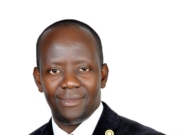






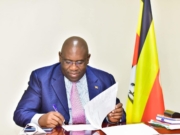





By Isaac Christopher Lubogo.
KAMPALA
At The Exposure Uganda (TEU), we do not flinch at complicated cases or controversial patients. Like a chief surgeon rolls a bleeding body into theatre, switches on the floodlights, and calls for the scalpel, so does TEU wheel the Protection of Sovereignty Bill, 2026 onto the slab for public dissection.
The law arrived in emergency with arteries severed by bad drafting. Parliament applied gauze, changed the dressing, and declared the patient stable.
Some people disagree. The vitals are weak. The internal hemorrhaging is constitutional.
Today, the operating table is ours. The legal surgeon is Isaac Christopher Lubogo. He wears no gloves when cutting through political anesthesia. The incision starts now.
Read him verbatim. We Expose, You Decide.
When the Chairperson of the Legal and Parliamentary Affairs Committee, Hon. Baka Stephen Mugabi, tells the country that the amendments to the Protection of Sovereignty Act have reduced “constitutional risk to zero,” he is asking us to believe in magic.
I have read the final text. I have studied the “trimmed” definitions and the “reduced” penalties. Here is the truth that needs no law degree to understand: The patient has been bandaged, but the internal bleeding has not stopped.
This bill is no longer the monster it was in its first draft. But to claim it is now safe for democracy is a dangerous illusion. Let me explain, in plain language, why this law remains a threat to every journalist, academic, banker, and citizen who dares to think or speak freely.
- The “Clarity” That Is Not Clear.
Hon. Mugabi says the definitions have been tightened. But ask him to answer this simple question: What exactly is a “foreign interest”?
The law hinges on this phrase. It determines whether you go to jail or stay free. Yet after all the amendments, the term remains a floating, empty box. If I accept a research grant from a university in London, am I now a vessel for a “foreign interest”? If I interview a diplomat from Nairobi and write an article critical of the government, have I been “influenced”?
Under settled Ugandan law (the Salvatori Abuki case), any law that forces a citizen to “guess” at its meaning is void before it starts. You cannot obey a law that the Chairperson himself cannot define in a single sentence.
- Today You Are Safe. Tomorrow You Are a Criminal.
The most frightening admission came quietly from the Chair’s own guide. He assures banks and NGOs that they are exempt. But then he adds a killer phrase: “Even exempted actors can fall back into liability.”
Read that again. Fall back.
This is not an exemption; it is a suspended sentence. It means your constitutional rights are conditional on the mood of the Minister. Today, your bank processes a remittance—you are safe. Tomorrow, that same bank finances a legal aid clinic that writes a critical report on a policy—suddenly you have “fallen back” into being a foreign agent.
This violates the very essence of the Rule of Law. The law must be predictable. It cannot be a game of “gotcha.” When a law tells you “You are safe, but watch your step,” it is not protecting sovereignty. It is creating terror.
- Ten Years for a Policy Brief?
Let us talk about proportionality. The original bill threatened 20 years in jail. The new bill reduces that to 10 years and a UGX 1 billion fine.
Professor, with respect, ten years is a lifetime. What crime are we talking about? We are not talking about selling state secrets. We are talking about “disruptive activities” —a phrase you kept in the law even though no one can define it.
In the Susan Kigula case, our courts ruled that the punishment must fit the harm. What is the harm of a journalist writing a critical article? What is the harm of a professor giving a speech?
If the answer is “embarrassment to the government,” then ten years in prison is torture, not justice. Reducing the dose of a poison does not make it medicine.
- The Sovereignty Trap.
The Chair argues that this bill protects Article 1 of the Constitution—the sovereignty of the people.
He has it exactly backwards.
The famous CEHURD case reminded us that sovereignty resides in the people, not in the mechanisms of the State. When you criminalize “influence,” you are criminalizing democracy. A citizen writing to their MP is exerting influence.
A civil society group submitting a report to the UN is exerting influence. A family sending money home from Dubai is exerting economic influence.
Are these hostile acts? No. They are the lifeblood of a republic. This bill takes the noble idea of sovereignty and turns it into a bludgeon to silence dissent.
- The Bank of Uganda “Green Light” is a Red Herring.
The Chair claims the Bank of Uganda has given a “green light,” so the overlap with financial regulation is fixed.
With respect, the Bank of Uganda does not have the final word on the Constitution. The Constitutional Court does. A policy letter from a regulator can be reversed tomorrow. The law as written still allows the Minister to reclassify any financial transaction that he deems to be “influencing policy.”
No serious investor will look at that uncertainty and say, “This is a safe bet.”
The Verdict: Improved, but Not Constitutional.
Here is the bottom line.
The amendments have softened the blow. The diaspora is no longer explicitly targeted. The penalties are lower. But “better” is not the same as “good.” And “improved” is not the same as “constitutional.”
This law still suffers from four fatal wounds:
- Vagueness: No one knows what “influence” means.
- Overreach: It captures normal democratic debate.
- Conditional Exemptions: Your safety depends on the Minister’s mercy.
- Disproportionate Punishment: Ten years for speech is barbaric.
The Call to Action.
Hon. Mugabi says there is “zero risk.” I say there is a 100% chance that this law will end up in the Constitutional Court. And when it gets there, the judges will strike down the vague parts, just as they have done before.
My advice to Parliament is simple: Do not wait for the judges to embarrass you. Go back to the drawing board. Repeal the clause on “economic sabotage” entirely. Require a judicial warrant for any inspection. And define your terms so clearly that a journalist can read the law and laugh, rather than read the law and weep.
Until then, do not tell us the risk is zero. The only thing that is zero is the public’s trust in a law that makes citizens feel like criminals for the simple act of thinking.
Isaac Christopher Lubogo is a legal scholar and author of “The Last Supper” critique on the Protection of Sovereignty Act, 2026.
Editor’s Note: The Protection of Sovereignty Act, 2026 awaits Presidential assent. The surgery is public. The diagnosis is Lubogo’s. We Expose, You Decide.
Send your second opinion: editor@theexposureuganda.com/0776462509