

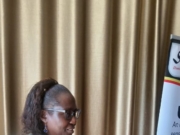


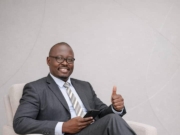





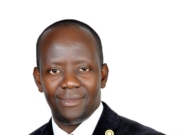




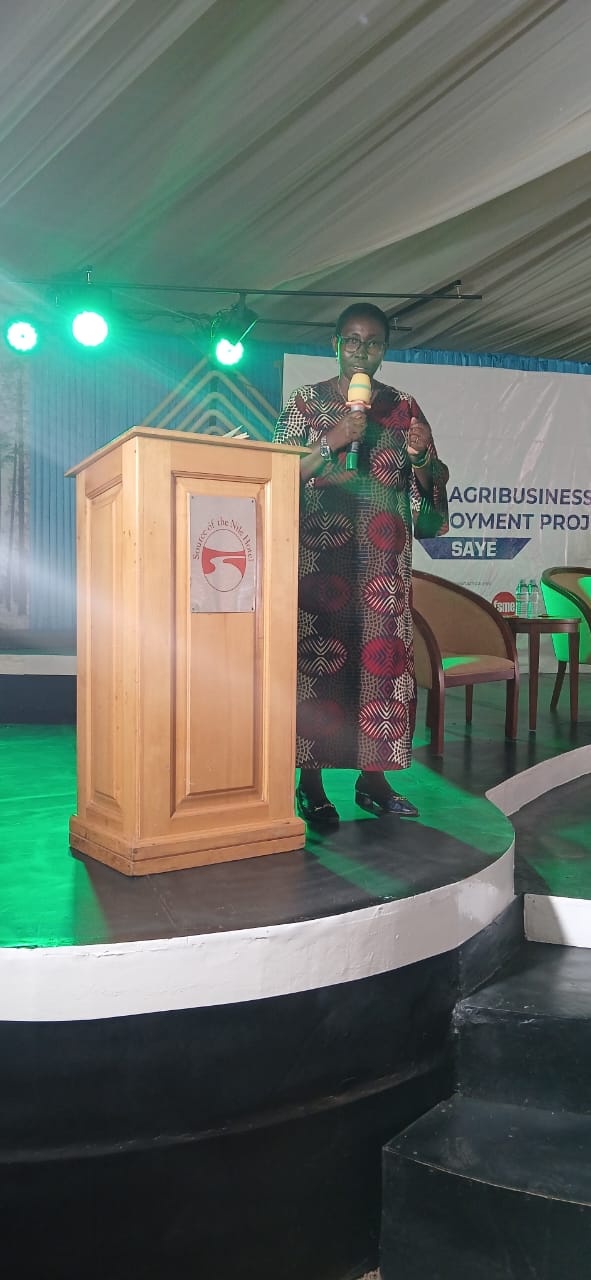
“Yonder woman holds the hoe that feeds a village and the title that could transform a nation”, Prof Saphina Biira the Deputy Vice Chancellor in charge of Academic Affairs and Research at Busitema University reminded listeners at the Source of the Nile Hotel in Jinja City.
She was underscoring a stark figure that only about of 20% of Ugandan women formally own land, a gap she says throttles the much-desired socio-economic transformation of the country.
Prof Saphina Biira who calls herself a legally married wife, mother of four and local farmer with more than 20 exotic cows says that when most women, who make up 52%of the population, as per Census 2024, hold just use rights, it drags on growth.
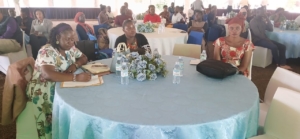
“Women cannot leverage land as collateral for credit, so they under invest in better seeds or equipment, huge chunks of land stay fragmented and productivity lags”, said the soft-spoken don.
A Physicist by training (PhD in Materials Science and Nuclear Technology, University of Pretoria), Prof Biira was on Thursday 26 March, 2026 addressing participants during celebrations to mark this year’s International Women’s Day organized by Heifer International Uganda at the magnificent Source of the Nile Hotel in Jinja City.
She told participants drawn from different agri-business(agro-processors) and IT sectors from selected districts that the land question has negative strip falls where households become more food-insecure, children’s education suffers and domestic-violence risk rises because women lack exit options.
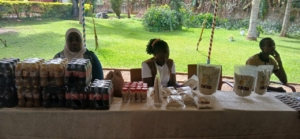
“We need to support women at household level by engaging parents to give land to their children, mindset change because even some enlightened women also do not want to buy own land because of a wrongly held tradition and custom”, Prof Biira noted.
Prof Biira said at the macro level you get lower agricultural output, weaker entrepreneurs, and a persistent gender-wealth gap that keeps Uganda’s economy from reaching its potential.
According to the 1995 Constitution and Land Act which prohibits gender discrimination, experts and activists say deep-rooted patriarchal customary practices often restrict women to mere user rights rather than ownership particularly in rural areas.
It is this disparity that Prof Biira and activists say reduces economic productivity and increases vulnerability to poverty and eviction.
At the same event, Prof Biira urged the government especially the Uganda National Bureau of Standards (UNBS) to loosen up on certification for up-country and rural micro-enterprises. She noted that small producers keep complaining that the current process is slow, costly and geared toward bigger firms with cash and connections.
UNBS is the statutory body that develops standards, tests and certifies products and issues market access permits. Prof Biira’s point is that a more streamlined, affordable pathway-tiered fees, mobile inspection teams, outreach sensitization would let rural SMEs meet quality benchmarks and reach larger, even international markets without being crushed by bureaucracy.
Experts say certification is a game changer for Uganda’s rural SMEs because the UNBS mark does more than tick a box, it builds buyer confidence, cuts post-harvest waste and opens doors to regional export markets.
According to development specialists, certified products are better placed to secure financing and command higher prices thus turning local harvest into scalable agribusinesses.
Uganda’s legal framework formally backs women’s land rights but experts warn the gap between law and practice remains wide.
The 1995 Constitution enshrines equality and prohibits gender discrimination in land ownership while the Land Act (1998), as amended) requires spousal consent for family-land deals and permits joint titling.
The Succession Act and Mortgage Act offer widows inheritance protection and the ability to leverage land as collateral if interests are registered. In reality, most rural disputes play out in customary courts where traditional norms relegate women to user-rights than recorded ownership, leaving the promise of equality unevenly enforced.
Bottom line: the formal law supports equality, but implementation—especially under customary tenure—still leaves many women with only use‑rights rather than registered ownership.
Ms. Neumbe Nabudere the People director (Human Resource Director) at Heifer International Uganda in her opening remarks told the audience that the day marked under the theme For All Women and Girls: Rights, Equality, Empowerment the country is reminded that inclusion is not just an aspiration, it is a responsibility.
“It means ensuring that every woman, regardless of her background has the opportunity to participate, to lead and to thrive”, she stressed.
At Heifer International, Neumbe Nabudere explained that the belief is central to their work and that they recognize that while agriculture is the backbone of Uganda’s economy, women are the backbone of agriculture.
“We believe that investing in the contributions of women farmers is one of the most effective ways to build thriving, food-secure societies and support sustainable development.
To illustrate that they “walk the talk”, the jolly speaking Ms. Nabudere said at Heifer International women make up half of the workforce and more importantly that they are also in leadership and decision-making roles. This means they influence how programems are designed, how resources are allocated and impact is delivered.
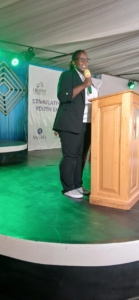
“To us, this matters because when women are part of decision-making, priorities shift, programmes become more inclusive, solutions are shaped by a wider range of perspectives and the real barriers women face are better understood and addressed”, she explained.
Neumbe Nabudere gave a warm, beaming address highlighting how through numerous programmes thousands pf young women are now running businesses in Uganda
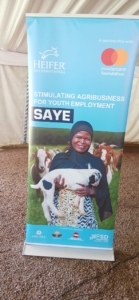
She pointed out that through their flagship programme called the Stimulating Agribusiness for Youth Employment or SAYE, more than 100,000 young people have been reached and the majority being young women and about 60,000 young people have transitioned into work,65%of these are females, starting enterprises, expanding farms and providing services along agricultural value chains.
Heifer International’s staff and managers showed up in matching white long‑sleeve shirts embroidered with the organization’s logo, black tailored trousers and black shoes, a dress code that felt both smart and unified.
Their friendliness was immediate: quick smiles, attentive listening, and a knack for making technical points feel accessible. What stuck with participants was the way the team handled breaks.
While many events see leaders served first, here the Heifer crew lingered to ensure every guest had tea and food before they themselves ate, a quiet inversion of hierarchy that felt genuine.
That mix of polished professionalism, hospitality and humility left guests joking they would happily stretch the function into a full week as they watch River Nile begins its more than 4,000 mile-run to the Mediterranean Sea through South Sudan, Ethiopia, Sudan and Egypt.