




The Exposure Uganda (TEU) Editorial Preamble.
Mr. President, Fellow Ugandans,
Some songs ask us: “Look at yourself in the mirror”. Michael Jackson sang it clearest: “I’m starting with the man in the mirror / I’m asking him to change his ways.”
Today, TEU places that mirror before the nation.
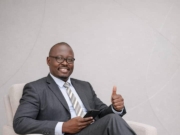
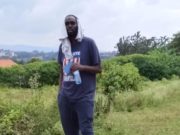
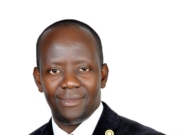
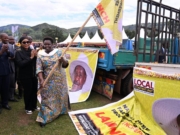
Aboard the TEU Plane, we have mounted a big, clear mirror. And aboard with us is Prof Isaac Christopher Lubogo, philosopher and political scientist. He is not shouting, not cursing. He is holding up the mirror and inviting all Ugandans: leaders and experts, professors and peasants, ministers and market vendors , to look.
What is a mirror?
A mirror is a surface that reflects reality without flattery and without distortion. It does not lie. It does not cheer. It only shows you what you are, not what you wish to be.
Who invented it, and for what purpose?
The first true glass mirrors were perfected in 13th century Venice by Venetian craftsmen who coated glass with tin and mercury. But the purpose is older than Venice. From the bronze mirrors of ancient Egypt to the polished shields of African warriors, humanity created mirrors for one reason: self-examination.
To check for dirt before you meet your king. To adjust your crown before you face your people. To see the wound before it kills you.
A mirror was never invented for vanity. It was invented for correction. This is why we hold it up now.
Mr. President, we invite you to look.
Leaders, look. Experts, look. The generation that believes, look.
Because Uganda is becoming The Republic of the Unseen a state where serious minds are ghosts, and sycophancy is crowned. Plato warned of the Ship of State where the captain ignores the navigator. Socrates died because Athens chose the comfortable lie. Nicolo Machiavelli said a prince lives through institutions, not courtiers. Fanon said a revolution betrays itself when it makes its children spectators.
The mirror does not accuse. It reveals. And what it reveals, Mr. President, is the peculiar pain of being governed but never seen. Of building intellectually, morally, professionally, yet watching leadership handed not to the best, but to the loudest loyalist.
This letter is not an attack. It is the reflection in the mirror. So, we ask all Ugandans: Look.
What do you see? TEU invites you, the reader, to look into this mirror with us. Below is Isaac Christopher Lubogo’s piece, published verbatim, as a mirror for the nation.
The Republic Of The Unseen.
An Open Letter to President Museveni from the Generation Watching Itself Be Replaced by Sycophancy.
By: Isaac Christopher Lubogo.
Mr. President,
There is a peculiar kind of pain that does not scream.
It sits quietly in the hearts of educated citizens, experienced citizens, patriotic citizens — citizens who once believed. It is the pain of being governed, but never seen.
The pain of contributing to a nation intellectually, morally, professionally, spiritually — and yet perpetually watching leadership handed not to the best among us, but often to the loudest loyalists, the safest flatterers, the most convenient praise singers. And that pain, Mr. President, is becoming unbearable.
Many of us were not born yesterday. We remember your words. We remember the fire with which you condemned African leaders who overstayed in power. We remember your warning that “the problem of Africa is leaders who overstay.” We remember the Ten-Point Programme. We remember the promise of “a fundamental change, not a mere change of guards.”
We believed you. And perhaps that is why the disappointment is so deep — because betrayal by an enemy wounds the skin, but betrayal by hope wounds the soul.
You removed term limits. Many swallowed the pain.You removed the age limit. Many protested, but eventually resigned themselves to political reality.
You retained historical figures around you for decades.
Many tolerated it because, at the very least, some possessed institutional memory, revolutionary credentials, or demonstrable competence.
But now, something more dangerous is emerging.
Ugandans are increasingly watching strategic national offices handed to individuals whom society itself struggles to intellectually or morally reconcile with the weight of the offices they occupy. And this is where the wound deepens.
Because now it no longer feels merely political.
It feels civilizational.A nation can survive ideological disagreement. A nation can survive political dominance.
But a nation begins to decay when merit itself becomes invisible. That is the crisis now haunting Uganda.
We are becoming a republic where serious minds retreat into silence while theatrical loyalty ascends to power. A republic where substance is drowned by noise. A republic where wisdom is no longer rewarded unless it kneels.
And perhaps what hurts most is this: Many capable Ugandans no longer even attempt to enter leadership spaces, not because they lack vision, but because the route to power increasingly appears humiliating.
To seek elective office today often demands not statesmanship, but performance. Not integrity, but populist theatrics. Not intellect, but survivalism. Many thoughtful citizens look at the political terrain and quietly step away, unwilling to descend into the mud simply to be noticed.
So they remain invisible. Professors remain unseen. Thinkers remain unheard.
Builders remain ignored. Patriots remain unelevated.
Meanwhile, opportunists thrive.
Mr. President, leadership is not merely about maintaining control. It is about preparing a nation to survive your absence.
History does not only ask whether a leader built roads, maintained security, or stabilized a country. History also asks: “What kind of political culture did he leave behind?”
Did he build institutions or dependency? Did he mentor statesmen or manufacture loyalists? Did he raise a generation capable of leading, or a generation trained only to praise?
These are uncomfortable questions, but nations collapse when such questions are never asked. You are now an elder statesman by age, by experience, and by historical placement. At that stage, a leader’s greatest hunger should no longer be accumulation of power, but preservation of legacy.
There comes a point in life when a man must stop asking:
“How long can I rule?” And begin asking: “What will remain after me?”
That is the question now confronting Uganda. Because many citizens no longer fear only political stagnation. They fear national exhaustion. They fear a slow erosion of dignity where excellence is mocked, mediocrity rewarded, and sycophancy normalized as a pathway to national leadership.
And yet, Mr. President, we are here. That is what perhaps pains us most. We are here. There are still Ugandans with ideas. Ugandans with integrity. Ugandans with intellectual depth.
Ugandans capable of carrying this nation forward with dignity. But increasingly, it feels as though the system does not see them. Or perhaps worse — it sees them and does not need them.
That realization is devastating. Because no citizen should feel like a stranger in the destiny of his own country. No generation should feel politically orphaned while still alive.
No nation should make its serious people feel useless.
Mr. President,
The tragedy of Uganda may not ultimately be dictatorship, corruption, or even constitutional manipulation. The deeper tragedy may be this:
That an entire generation of capable citizens slowly lost faith that merit still mattered. And once a nation loses faith in merit, it begins to consume itself from within.
History will remember your victories. But history will also remember who was ignored while you ruled. And perhaps one day, long after the slogans fade and the convoys disappear, Uganda will ask the simplest and most painful question of all:
“How many great Ugandans died unheard because power stopped listening?”
Isaac Christopher Lubogo.
For The Republic of the Unseen.