














TEU Preamble:
“There is a tide in the affairs of men, which, taken at the flood, leads on to fortune; omitted, all the voyage of their life is bound in shallows and in miseries”.- William Shakespeare, Julius Caesar.
You do not need to have read Shakespeare to understand this. In plain language, Shakespeare was saying that life gives you moments when the tide is high. If you sail when the water is up, you move fast and reach your destination. If you wait too long and miss it, your boat gets stuck in shallow water and you suffer.
He wrote it about generals before a battle, but the rule applies everywhere. A trader who buys maize or amaido and simsim from Lango or Acholi when it’s cheap and sells when it’s scarce makes money. A father who corrects his child early raises a good person. A country that fixes its Parliament now has a strong legislature for five years.
Scripture says the same thing differently: “The memory of the righteous is a blessing, but the name of the wicked will rot,” Proverbs 10:7.
Philosophy agrees that leaders are weighed not by the length of their tenure but by the weight of their legacy. And so, as Uganda’s 12th Parliament prepares to elect a Speaker on Monday 25th May,2026, the country stands at that flood tide Shakespeare warned of.
One path leads to restoration while the other leads to a name that will echo in taxis, bodaboda stages, market gossip, and radio/tiktok comedy for generations, but for the wrong reasons.
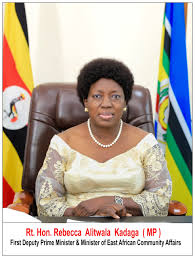
On Wednesday May 21, 2026, Hon. Ishaa Otto Amiza, the most stubborn and cheeky UPC boy from Oyam district in Lango who surprisingly does not honor or subscribe to UPC President Hon. Jimmy Akena Obote, addressed himself to His Excellency General(Rtd) Yoweri Kaguta T. Museveni and to the NRM Parliamentary Caucus with a plea that was equal parts constitutional, moral and practical. Uganda must restore the dignity of its Parliament, he argued, by returning Rt. Hon. Rebecca Alitwala Kadaga, the woman from Mbulamuti in Kamuli, to the Speaker’s chair.
The timing is deliberate because Monday is the flood tide. In 48 hours, 529 Members of Parliament will file into the chamber and cast a secret ballot that will choose the person who will preside over the 12th Parliament until 2031.
In Uganda’s unicameral system there is no second chamber to correct mistakes, no upper house to act as a safety net. The Speaker will chair the Parliamentary Commission, certify Money Bills, interpret the Rules of Procedure with finality, and, if both the President and Vice President are unavailable, will hold the office of President for up to fourteen days.
That is the office at stake and that is why Hon Otto Amiza calls this a question of national interest and why Shakespeare’s tide matters right now.
If Parliament sails with the tide on Monday, it reaches fortune. If it waits and misses the moment, it gets stuck in the shallows for a full term. Hon Otto Amiza believes the only vessel that can catch this tide is Kadaga.
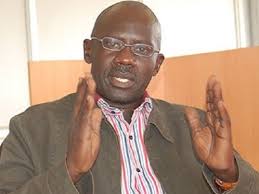
He grounds his appeal in what he calls Uganda’s present condition. Parliament, he writes, is the cornerstone of democracy, the institution that amplifies the people’s voice, forges laws, and holds executive power to account.
Yet today, he says, that sacred institution carries the scars of reputational erosion. The public has watched recurring scandals, heard the language of hyper-partisanship, and felt public trust thinning.
If President Museveni and the NRM leadership are genuinely committed to reversing that trajectory, Hon Otto Amiza contends, there is one leader whose record, institutional memory, moral authority and independent stature can begin that restoration. Her name is Rt. Hon. Rebecca Alitwala Kadaga.
Hon Otto Amiza speaks as a former Opposition MP(Oyam South) who served in the 8th Parliament. He says he saw Mama Kadaga preside with impartiality, firmness and a deep respect for procedure. Under her gavel, debates were substantive rather than theatrical, legislation moved efficiently, and the dignity of the House was visible to anyone watching from the gallery or from home. That experience shapes his judgment that she is not merely a candidate but the indispensable choice for this moment.
The vocal former legislator builds his case on grounds that flow into one another like chapters of the same book. He points first to her loyalty to the Movement, which he describes as steadfast through seasons of triumph and trial, never transactional, always principled even when she faced internal marginalization.
Then he cites her integrity and institutional competence, recalling ten years in which she steered the House with consistency and fairness and preserved the dignity of proceedings. He speaks next of her legislative mastery.
As Uganda’s longest-serving female Member of Parliament, the woman from Mbulamuti in Kamuli commands an unmatched understanding of precedent, constitutional balance and the delicate equilibrium between Executive authority and Legislative independence.
He then draws a sharp contrast that Ugandans know by experience. Unlike the outgoing Speaker, Rt Hon Anette Anita Among, Kadaga flies freely to any part of the world because not even the birds have any fear that Kadaga can remove a single feather from them.
She faces no internal and global sanctions, no visa bans, no frozen assets. Her name opens doors in the East African Legislative Assembly, the Commonwealth Parliamentary Association and the Inter-Parliamentary Union because her reputation has never been dragged through scandal.
That, Otto Amiza argues, is what restores Uganda’s parliamentary diplomacy overnight.
He adds another quality that sets her apart. Kadaga is a straight talker who can confront even the Big Man from Rwakitura with the painful truth that no one else dares to speak, yet she does it with respect. She does not know the spelling of flattery.
Where others prefer to polish words and chase approval, she chooses candor tempered with courtesy. In a House that has drifted toward sycophancy, that kind of honesty is the oxygen Parliament needs to function as a co-equal branch of government.
He addresses the question of age directly. At seventy, Kadaga is fifteen years younger than President Museveni, who was sworn in for another term at eighty-five. If age does not disqualify the highest office in the land, Amiza argues, it cannot logically preclude qualified leadership of Parliament. He calls her a beacon for women’s political emancipation.
She shattered glass ceilings, inspired a generation of Ugandan women to seek public office, and restoring her to the Speaker’s chair would affirm that women’s leadership is substantive, strategic and indispensable.
He returns to the electorate. Kadaga commands Kamuli District with overwhelming popular support, and that grassroots legitimacy translates into political courage and principled representation inside the House.
He recalls her independent judgment under pressure. Even during the highly contentious constitutional amendment on age limits, a moment that placed her personal safety at risk, she navigated immense pressure with resilience. Ugandans, he says, recognize that her decisions were made under duress, not deference, and that is the caliber of independence Parliament requires to serve as an effective check on executive overreach.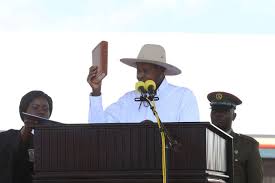
He describes her as a unifying national figure. As Speaker she created space for robust debate across party lines and ensured Parliament functioned as a national institution rather than an extension of the ruling party’s caucus.
Finally Otto Amiza speaks of intellectual rigor and strategic foresight. By many accounts the 11th Parliament was hampered by gaps in knowledge and strategic direction.
Kadaga, he says, offers the opposite: analytical depth, procedural mastery and a commitment to evidence-based lawmaking.
The conclusion Amiza draws is simple. If President Museveni desires a Parliament that transcends embarrassment and functions as a genuine, co-equal branch of government, the path is clear. Reinstate Rt. Hon. Rebecca Kadaga as Speaker. In his view she alone embodies the rare convergence of loyalty, experience, competence, independence and unifying character required to restore sanity to the House and reclaim Uganda’s parliamentary heritage. This is what it looks like to take the tide at the flood.
But Otto Amiza does not stop at praise. Without mincing words,Otto Amiza issues a sober caution that reads like a warning from history. Any attempt by President Museveni, in his capacity as Chairman and Supreme Leader of the NRM, to impose Hon. Jacob Oboth Oboth or any other candidate primarily to advance what Amiza calls a narrow, family-centered succession agenda linked to Gen. Muhoozi Kainerugaba through informal structures such as the so-called PLU carries profound political risk.
He says such a move could fracture the NRM’s internal cohesion and destabilize the unity of Parliament. To steer the nation toward a governance model reminiscent of the Idi Amin era, where military influence supersedes constitutional order, would not only be regrettable, he writes, but deeply ungrateful to the Ugandan people who have exercised remarkable patience over four decades in pursuit of peace, security and inclusive development. That is the shallows Shakespeare warned about, and that is how a leader’s name rots.
Here the language of literature, scripture and philosophy converge. Shakespeare reminds us that omitted opportunities bind a life in shallows. The Bible distinguishes between a name that blesses and a name that rots. Theology teaches that power is stewardship, not inheritance.
Philosophy insists that leaders are judged by what they leave behind. Applied to Monday’s vote, the meaning is direct. Some leaders are remembered for the good they did because they served the institution rather than the other way around.
Others become the subject of social media comedy, radio skits and gossip in saloons, taxis and bodaboda stages because they chose patronage over principle. Uganda will choose which story it wants told about the 12th Parliament.
Hon Otto Amiza closes with a line that echoes the preamble. Uganda deserves a Legislature that serves the people, not patronage networks. The moment for decisive, statesmanlike action is now. He signs off, “For God and My Country,” and under his name adds the YBO Foundation’s creed: Promoting Integrity, Accountability and Effective Representation.
TEU Note to Readers: The Constitution’s Article 82 is clear. The Clerk to Parliament presides until a speaker is elected, and the Speaker needs more than half of all votes cast. If no candidate reaches that threshold, the top two proceed to a run-off. The 12th Parliament will sit for five years. In a unicameral system, that choice is final. History will record who understood the tide and who missed it.
We Expose. You Decide.