














“Truth without love is too hard; love without truth is too soft.” — John Robert Walmsley Stott (1921–2011), the British Anglican clergyman, theologian, and author widely regarded as one of the most influential evangelical voices of the 20th century.
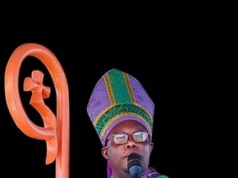
It is that unresolved tension between truth and love that Prophet David Isanga, known to his followers as Nabbi Daudi says Uganda can no longer afford to ignore, and it is on the historically bloodstained soil of Luwero that he intends to force the confrontation.
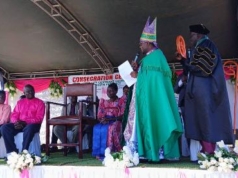
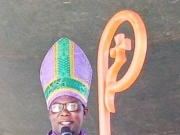
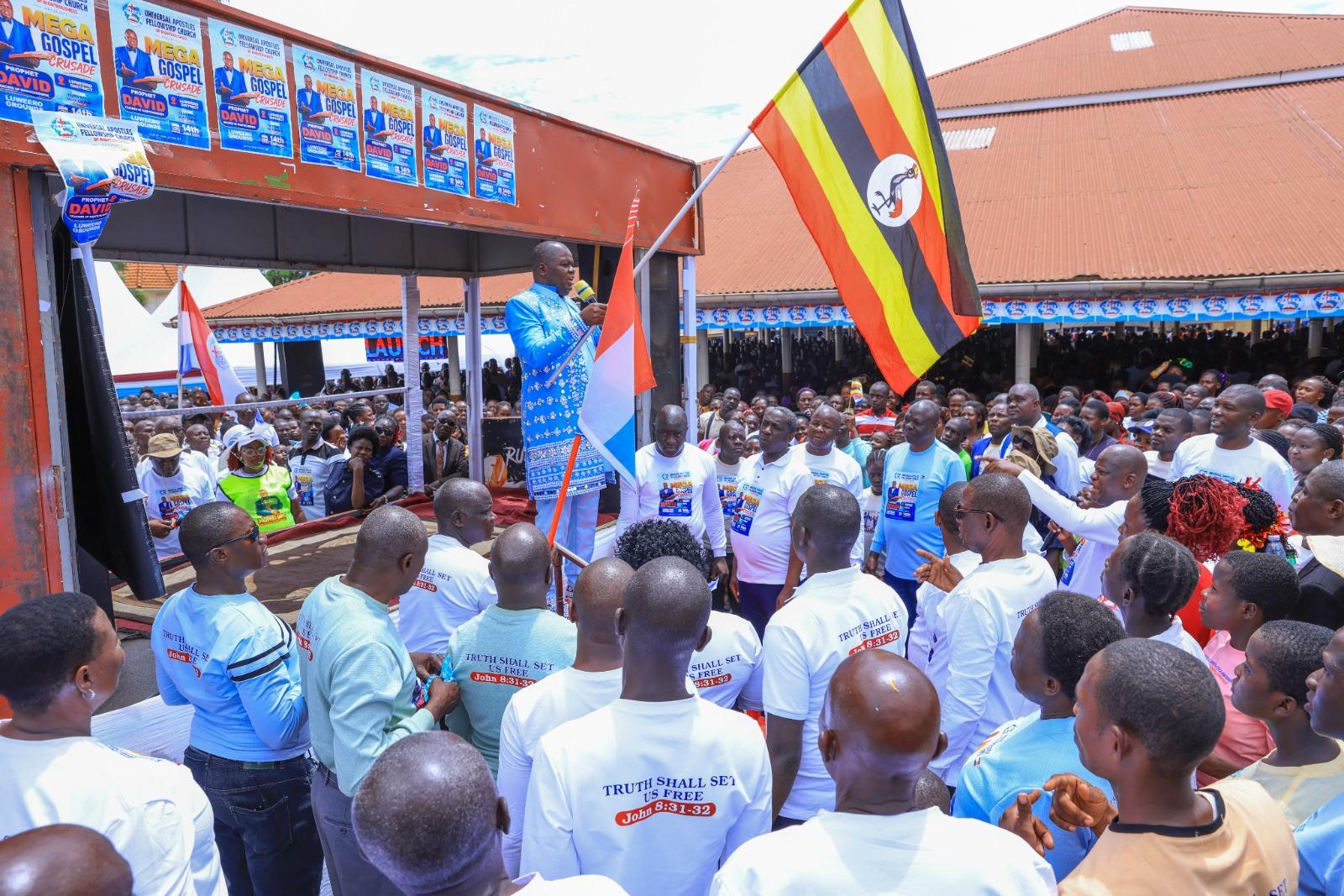
Addressing thousands at the Universal Apostles Fellowship Church of Righteousness (UAFCR) headquarters on Acacia Road in Jinja City on Sunday, the Supreme Spiritual Leader reminded the nation that while Gen (Rtd)President Yoweri Kaguta Museveni’s five-year guerrilla war delivered political liberation from Luwero in 1986, a deeper form of captivity has remained unbroken for four decades.
For that reason, UAFCR has announced a Mega Gospel Crusade in Luwero on June 14, 2026, under the uncompromising theme ‘Truth Shall Set You Free’, drawn from the Gospel of John, with the stated aim of completing the freedom that began in the bush but stalled in the heart.
This declaration comes after Nabbi Daudi convened a full house of church elders on Saturday for an intensive teaching session that drew together leaders from every tier of UAFCOR’s structure, from babulizi(preachers) at the grassroots to pastors, priests, overseers, and zonal heads, along with youth and women leaders from across the fellowship.

In that closed session, he charged them to shepherd God’s people with genuine love and care while refusing to dilute the Church’s stance on sin and the patterns that feed it, stressing that the Church has matured from strength to strength and must now function as a sanctuary of calm and comfort for the downtrodden, for those tormented by sin, by demonic oppression, and by the grinding challenges of daily life.
The Church, he told them, must become a center of whole healing where anyone who walks through its doors returns happier and refreshed, not because of emotional sentiment or stage-managed excitement, as he said happens in some denominations, but because of sound biblical teaching that gives clear direction on how to avoid sin and the courage to abandon it.
Using the analogy of a classroom, he said that just as a teacher cannot award marks to a pupil who has failed, church leaders cannot play games with the question of sin; their duty is to rebuke, to correct, and to restore with firmness anchored in Scripture.
Nabbi Daudi also issued a pointed warning to women leaders in particular, cautioning them against murmuring, gossiping, and grumbling, which he said attract God’s wrath and corrode fellowship, and instead called them to model humility and obedience to the Word so that they remain firmly in righteousness.
He further cautioned all leaders against indecency in dress and speech, insisting that those who stand before God’s people must lead by example in conduct, appearance, and language, because compromise at the top breeds compromise in the pews.
Nabbi Daudi, who has never concealed his loyalty to the National Resistance Movement, opened his Sunday address by congratulating President Museveni, now 82, on his swearing-in for another five-year term following the January 15 polls, crediting the stability secured since 1986 for creating the very freedom of worship that makes a gathering of this magnitude possible.
Because there is peace, he told congregants and the assembled press, the Church can proclaim its message openly; because there is liberty, believers can assemble in Luwero without fear of state interference; and because of that liberty, he argued, the nation now bears the responsibility to exchange spiritual duplicity for righteousness rather than continue the religious double-mindedness that he believes has been normalized across denominational and even faith lines.
The selection of Luwero is deliberate, and Prophet Daudi was careful to spell out the symbolism for his audience. Just as Moses confronted Pharaoh and led Israel out of Egypt after four centuries of bondage, parting the Red Sea so that former slaves could walk into freedom, Uganda emerged from political tyranny when Museveni’s forces broke out of the Luwero Triangle, yet too many citizens remain, in the Prophet’s words, in “spiritual Egypt”, politically free but inwardly chained by habits and allegiances that contradict the creeds they recite every week.
It is for this reason that UAFCR has designated Luwero as the altar where a second liberation must begin, envisioning the June crusade as the decisive moment when the nation moves from private compromise into public righteousness, with Scripture alone wielded as the weapon of choice.
The condition that drew his sharpest rebuke was what he described as a pervasive culture of religious duplicity that erases the moral line between sanctuary and street, between believer and unbeliever, between adult and youth.
The man of God spoke of men and women who command the front rows of churches and mosques, who bear Western names with pride and quote sacred texts with fluency, yet whose lives contradict every syllable they utter.
They lift holy hands and post Scripture on social media by day, he said, but by night they kneel before Jaajas in ancestral shrines, bartering rituals for visas, jobs, marriages, and business contracts that the Bible condemns; they observe Ramadan and keep the five daily prayers while constructing enterprises on bribery and graft; they arrive at Sunday worship sober and solemn only after spending Friday intoxicated beyond speech, all justified under the respectable disguise of “networking with friends.”
That, he insisted, is neither the righteousness for which Christ died nor the freedom for which Ugandans bled in the bush.
Beyond the sexual immorality of adultery and fornication that he said has grown so commonplace that communities no longer recoil, the trained physician-turned Prophet condemned the open commercialization of faith that has converted Christianity into a marketplace of handkerchiefs, anointed rice, special water, and oil marketed as guaranteed passports to prosperity, healing, and foreign travel.
Citing the solemn warning that closes the book of Revelation (22:18) against adding to God’s Word, he argued that such practices are not harmless culture but a modern idolatry that invites judgment rather than blessing, and he cautioned against the accelerating attempt to insert unbiblical philosophies into what some promoters are branding an “African Bible” in the name of cultural relevance.
For UAFCR, whose Luganda motto is Mutukirivu, righteousness is not a brand that can be adjusted to flatter the wealthy, the credentialed, or the connected; it is, as he put it, the only cut-off point that matters before God, irrespective of the academic titles a person may parade.
Contrasting his approach with President Museveni’s, Nabbi Daudi said that whereas the guerrilla war relied on stealth, surprise, and prolonged engagement with a physical adversary, the Luwero crusade represents a direct and public assault on what he identifies as the true enemy: Satan and the cluster of entrenched sins that continue to corrode Ugandan society, including witchcraft, idolatry, theft and embezzlement of public resources, and the kind of false doctrine that teaches congregants they can worship God on Sunday and ancestral spirits on Monday.
The President fought to disarm politics of the gun, and leadership of impunity he observed; the Church must now fight to disarm the heart of sin, and both campaigns, though different in method, deserve to be called liberation because both seek to set a people free to live without fear.
With less than five weeks to the appointed date, UAFCR confirmed that intercessory prayer chains, street evangelism units, and district mobilization teams are already active across Greater Luwero, laying the groundwork for a day-long convocation that will blend brass bands and mass choirs with public testimonies of deliverance and the free distribution of Bibles and discipleship materials in Luganda, Luo, and Lusoga.
The June 14 event will beam live on national and regional mainstream media outlets and stream across popular social media platforms, while also being headlined in major traditional and online newspapers, The New Vision, the Daily Monitor, The Observer and The Exposure Uganda, Mulengera News and followed by Nile Post, Chimpreports, The Independent Magazine, and other leading digital outlets, as part of a deliberate strategy to carry the call to repentance beyond the crusade grounds into every Ugandan home.
Prophet Daudi closed by placing the choice before every listener without apology: no one can serve God in church and Jaajas in the shrine, no one can wear the name of a believer while living as a habitual adulterer, and no one can claim to be led by the Holy Spirit while regularly drinking to the point of incoherence.
Uganda has peace, he said, and the nation should be grateful; what Uganda needs now is truth, because only truth will complete the freedom that began in Luwero forty years ago.
How Nabbi Daudi Is Using ‘Truth Shall Set You Free’ in Luwero.
Prophet David Isanga told thousands gathered at the UAFCOR headquarters in Jinja on Sunday that he has chosen ‘Truth Shall Set You Free’ as the theme for the June 14, 2026 Mega Gospel Crusade because he believes Uganda’s liberation remains unfinished.
Speaking at the launch, Nabbi Daudi said President Museveni’s guerrilla war broke the country’s political chains in Luwero in 1986, but a different kind of bondage still grips the nation.
He described Uganda as being trapped in what he called “spiritual Egypt”, politically free yet inwardly enslaved by shrine worship, adultery, drunkenness, corruption, and the sale of so-called anointed items.
“For UAFCR, truth means Scripture alone, not ancestral spirits, not cultural additions to the Bible, and not the kind of sentimental religion that blesses sin on Monday after worshipping on Sunday”, he said.
The context of The Truth Shall Set You Free Then and Now.
Original context when Jesus said it-John 8:31-32 Full verse”So Jesus said to the Jews who had believed him, ‘If you abide in my word, you are truly my disciples and you will know the truth and the truth will set you free”.
What Was Happening: Jesus was teaching in the temple in Jerusalem during a heated exchange with Jewish religious leaders and crowds. Some had just begun to believe in Him.
What “truth” meant here:
The person of Christ-Jesus was not talking about facts or data or statistics. In John’s Gospel 14:6, He had already said “I am the way and the truth and the life”. The ‘truth’ is Himself, His teaching, His identity as Messiah, His work on the cross.
Freedom from what: The crowd immediately objected: “we are offspring of Abraham and have never been enslaved to anyone”. Jesus answered: “Everyone who practices sin is a slave to sin”. So, the freedom He offered was not political freedom from Rome, it was spiritual freedom from the power, penalty and deception of sin.
Condition: “If you abide in my word”, meaning remain, obey, live in what He teaches. Freedom is not automatic; it is tied to discipleship.
In short John 8, “the truth will set you free” meant that knowing and following Jesus breaks the chains of sin, religious hypocrisy and spiritual blindness.

Nabbi Daudi is drawing a direct parallel between Luwero 1986 and Luwero 2026: political vs spiritual-that whereas Museveni’s war freed Uganda from dictatorship, tyranny and gun violence, Nabbi Daudi argues that Uganda is still captive to secret sins and religious duplicity-serving God on Sunday and Jaajas on Monday to Friday.
Truth As Confrontation-For UAFCR, ‘truth is the uncompromising standard of Scripture that exposes witchcraft, sexual immorality, corruption and abuse of office and fake African bible additions. It is not comfortable because it rebukes.
Freedom as National Repentance-Nabbi Daudi is also telling Uganda that peace without righteousness is incomplete freedom. So, the Crusade is framed as the moment to ‘cross from private compromise into public righteousness’. The media beam ensures that the whole country hears and watch the choice.
The tension he is exploiting: John R. W Stott’s quote, “truth without love is too hard, love without truth is too soft”. Nabbi Daudi argues that ‘soft’ religion-love, peace, freedom of worship since 1986 but now needs ‘hard’ truth that names sin and demands change.
Jesus used it to call individuals from slavery to sin into discipleship, Nabbi Daudi is using it to call a nation from spiritual compromise into public righteousness, using Luwero as the altar where Uganda finishes what 1986 started.