



















From the crowded streets of Kampala to other cities and urban centers, down to rural trading posts and deep villages, worry and anxiety are quietly eroding the health and hope of Ugandans.
In response, many have turned to structured routines of jogging at dawn, paying for gym memberships, and booking sessions with therapists and wellness coaches. Others, however, have resorted to heavy alcohol consumption and substance abuse in a desperate bid to numb the pressure emanating from strained homes, demanding workplaces, and debts that refuse to yield.
Yet beneath these coping mechanisms lies a deeper question: what exactly is worry, and why does it grip so many with such tenacity?
What Is Worry? Three Angles to Understand It.
The Dictionary Angle.
The Oxford English Dictionary defines worry as giving way to anxiety or unease, allowing one’s mind to dwell on difficulty or trouble. In common usage, it denotes a mental preoccupation with a problem, usually projected into the future, that generates persistent unease and saps the present of peace.
The Clinical Angle.
Psychology describes worry as a chain of negative, repetitive thoughts and images concerning uncertain future outcomes that feel largely uncontrollable. According to the American Psychological Association, it represents an attempt to mentally solve a problem whose resolution remains ambiguous yet potentially threatening.
When it becomes excessive and persistent, worry evolves into a core feature of Generalized Anxiety Disorder. Clinically, it is future-focused, intrusive, out of proportion to the actual risk, and often interferes with sleep, concentration, work productivity, and interpersonal relationships.
The Biblical and Theological Angle.
Scripture frames worry not merely as an emotional state but as anxiety over the future that arises from misplaced trust. Jesus addressed it directly in Matthew 6:25-34, saying, “Do not worry about your life… Can any one of you by worrying add a single hour to your life?” He labeled it futile and a symptom of little faith, calling instead for a prior pursuit of God’s kingdom and trust in His provision.
The Apostle Peter later reframed it in 1 Peter 5:7 with the instruction, “Cast all your anxiety on Him because He cares for you.” Thus, biblically understood, worry is a spiritual issue of attempting to control what belongs to God alone.
All three perspectives agree that worry is draining and ineffective. Where they diverge is in the prescribed remedy: psychology leans toward cognitive restructuring and behavioral intervention, while Scripture calls for surrender, prayer, and a renewed trust in God’s character.
The God Who Sees and Provides: Jehovah Jireh and Jehovah Roi.
The God revealed in Scripture is not distant or detached from human suffering. He is personal, and He makes Himself known through names that describe how He engages with human need. For anxious Ugandans today, two names stand out with particular relevance: Jehovah Jireh and Jehovah Roi.
Jehovah Jireh – “The Lord Will Provide”.
This name originates in Genesis 22:14, following Abraham’s ordeal on Mount Moriah. Having been commanded to offer Isaac, Abraham walked to the very edge of obedience when God intervened and provided a ram caught in the thicket as a substitute. Abraham named the place Jehovah Jireh, meaning “The Lord will provide.”
The context is crucial: Abraham faced a situation that was humanly impossible and emotionally devastating. Yet God saw the crisis, intervened at the decisive moment, and provided precisely what was needed. The Hebrew word jireh conveys the idea of seeing to a matter, providing, and caring for it with intention.
Bringing this home:Many Ugandans today find themselves on their own Mount Moriah, pressed to the edge by school fees, rent arrears, medical bills, and business debts that seem insurmountable.
Jehovah Jireh does not promise that the walk to the mountain will be avoided. He promises that He sees the ram in the thicket before His people arrive there.
Provision may not arrive in the expected form or on the expected timeline, but it comes from the God who knows the full extent of the condition.
Jehovah Roi – “The God Who Sees Me”.
This name emerges in Genesis 16:13, when Hagar fled into the wilderness pregnant, rejected, and alone. An angel met her at a spring and promised her a future, prompting her to declare, “You are the God who sees me, for I have now seen the One who sees me.” Hagar was a servant, a foreigner, and socially invisible, yet God saw her distress, heard her affliction, and addressed her by name.
For the Ugandan who feels invisible: betrayed by family, overlooked at work, forgotten in community, Hagar’s testimony is a lifeline. Jehovah Roi sees you in the wilderness. He sees the tears shed at night when no one else is aware. Your pain has not escaped His notice, and your story has not been forgotten by Him.
The Pattern Continues Throughout Scripture.
At Cherith and Zarephath in 1 Kings 17, when the brook dried up, God sent ravens and then a widow to sustain Elijah, demonstrating that He knew exactly where His prophet was and met him there. Psalm 23:1 declares, “The Lord is my shepherd, I shall not want,” portraying a shepherd who sees the sheep, knows their need, and provides pasture accordingly.
In Matthew 6:26-32, Jesus points to the birds of the air and the lilies of the field to argue that if God feeds and clothes them, He will certainly provide for those of greater value.
The theological thread running through these accounts is consistent: the Bible never promises the removal of every wilderness, but it insists that in every wilderness, God sees, He knows, and He provides. His provision is often not early by human standards, but it is never late by divine timing.
Therefore, when Prof. Bagambaki says, “Why worry much? God knows your condition,” he is echoing these ancient names of God. Jehovah Roi sees you, and Jehovah Jireh will provide for you. The central question is not whether God sees, but whether you will trust Him when He declares, “I have overcome the world.”
A God Who Knows and Provides.
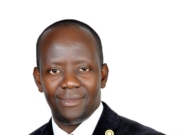
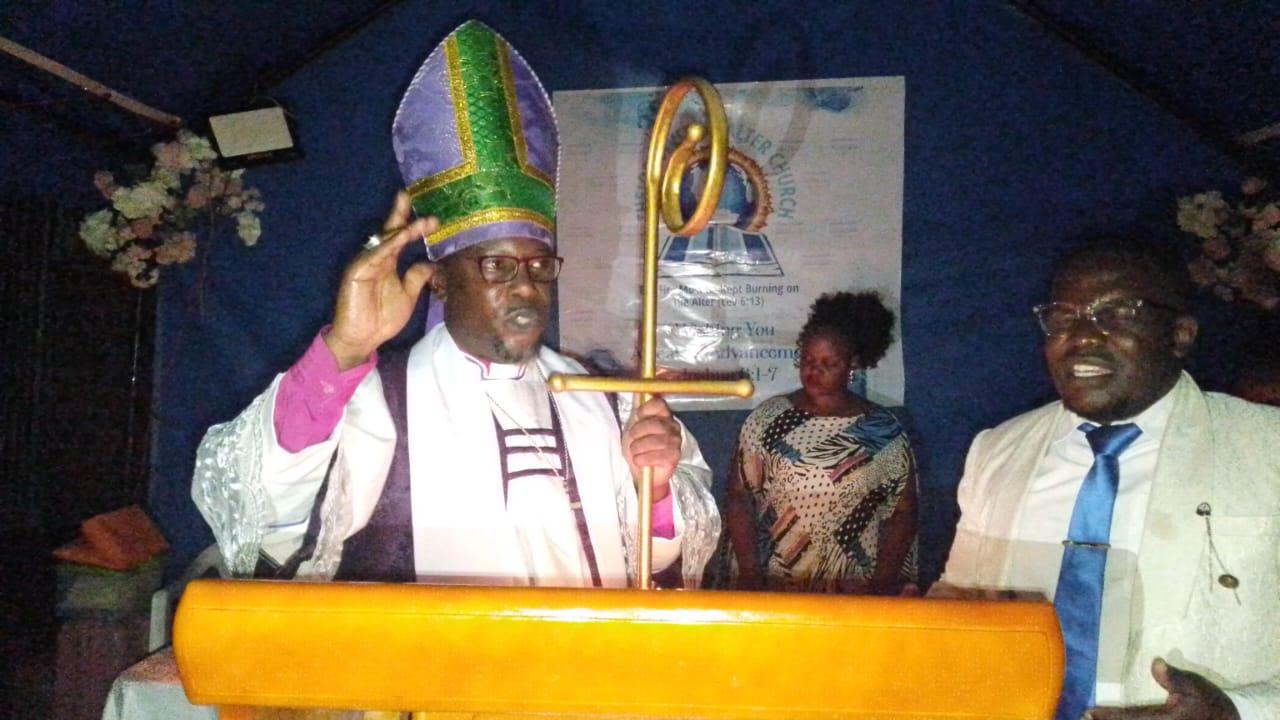
It is this burden of worry that Archbishop Elect Professor Mugume Bagambaki Richard says the Gospel addresses directly and authoritatively.
Speaking from his office, Prof. Bagambaki, Patriarch of the Five-Fold Episcopal World Federation and Chancellor of UCCSAT University, anchored his counsel in 1 Corinthians 10:13:
“No temptation has overtaken you except what is common to mankind. And God is faithful; He will not let you be tempted beyond what you can bear. But when you are tempted, He will also provide a way out so that you can endure it.”
Historical context: Paul wrote this letter to the Corinthian church around 55 AD. Corinth was a wealthy, morally compromised port city where believers confronted sexual immorality, idolatry, and social pressure to compromise their convictions.
Paul’s message was pastoral and reassuring: your trials are not unique, God sets a limit to what you will face, and He provides a way of endurance.
Bringing it home: Today’s Ugandan faces analogous pressure to cut ethical corners at work, to abandon faith for financial gain, and to capitulate when a business collapses or a relationship fractures.
“God will not allow a burden that His grace cannot carry,” Prof. Bagambaki explained. “The way out may not remove the problem instantly, but it will give you the strength to stand upright under it.”
Trouble Is Real, But Victory Is Secured.
Citing John 16:33, he reminded Ugandans that Jesus spoke with unflinching realism and enduring hope: “In this world you will have trouble. But take heart! I have overcome the world.”
Historical context: Jesus spoke these words in the Upper Room on the night before His arrest. His disciples were about to face betrayal, fear, dispersion, and persecution. Yet He spoke of victory as already secured, not as a distant possibility.
Bringing it home: Ugandans confronting job loss, familial betrayal, or devastating medical diagnoses often feel abandoned and exposed. “Your situation may look like Friday night,” Prof. Bagambaki said, “but Sunday is coming. Do not allow the present darkness to erase the promised dawn.”
Strength Beyond Ourselves.
Drawing on 2 Corinthians 1:8-9, he observed that even the Apostle Paul experienced pressure “far beyond our ability to endure, so that we despaired of life itself.”
Historical context: Paul was likely recounting near-death experiences in Ephesus (now located in western Turkey in Izmir Province right next to the modern town of Selcuk-about 3km southwest of Selcuk’s center), stemming from persecution or severe illness. His conclusion reframed the purpose of such extremity: “This happened that we might not rely on ourselves but on God, who raises the dead.”
Bringing it home: “Many Ugandans feel overwhelmed beyond their strength,” Prof. Bagambaki noted. “God permits that moment so that you cease trusting in your salary, your connections, or your own resilience, and begin to lean entirely on Him. That is precisely where genuine endurance and peace are born.”
He reinforced this with Romans 8:37, 1 John 5:4, and Psalm 129:2 texts written to communities under Roman persecution, theological distortion, and centuries of affliction. The consistent message is that God’s people prevail not by escaping hardship, but by overcoming it in Him.
The Exposure Uganda (TEU) Dissect: Let Scripture Interrogate Your Situation.
We Expose: Many Ugandans are carrying burdens in isolation, and the coping methods chosen are often deepening rather than resolving the wound.
You Decide: Ask yourself honestly and without evasion:
Are you suffering from depression following a breakup and feel as though life has lost its meaning?
Are you low in spirit because a doctor has delivered devastating news regarding a terminal illness?
Has the business in which you invested heavily collapsed, leaving you uncertain where to begin again?
Have you been betrayed, not once, not twice, not five times, but repeatedly, by friends, family, or colleagues you trusted?
Do you consider yourself unlucky, cursed, or abandoned by both God and man?
If your answer to any of these questions is yes, then hear this with clarity: the God of 1 Corinthians 10:13 knows the exact weight you carry. The Christ of John 16:33 has already overcome the power behind your trouble. The God of 2 Corinthians 1:9 desires that you cease relying on your own strength and begin leaning fully on Him.
Your situation is not final, and your faith is not foolish, because the same God who delivered Paul, strengthened David, and sustained the early church is present with you in Uganda today.
Contact: Archbishop Elect Prof. Mugume Bagambaki Richard
Phone: +256775050183 | Email: mugumebagambakirichard@gmail.com