








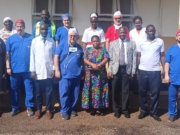
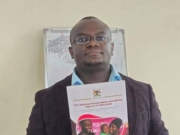




Gone are the days when vocational studies were dismissed as a last resort. At Fountainhead Institute of Management and Technology (FIMAT) in Awita Cell, Amuca Ward, Lira City, technical training is being redefined as a ministry, and a launchpad for Uganda’s next generation of entrepreneurs, innovators, and employers.
The institute this week announced a new bursary opportunity for short-term skills training and is calling for urgent applications to its Solar Energy Training Course, a practical program designed to give youth hands-on skills for sustainable income and immediate employment.
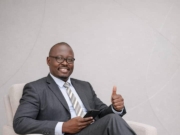
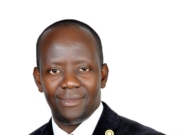
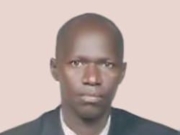
For Director Tom Okao, described by staff as “humble, down-to-earth, and guided by rich Christian ethics and principles,” the mission is personal and scriptural.
“I am motivated by James 1:27, which says: ‘Religion that God our Father accepts as pure and faultless is this: to look after orphans and widows in their distress and to keep oneself from being polluted by the world,’” Okao said.
Context of James 1:27.
James talked like that because the Church was full of talkers. People loved sermons, conferences and seminars or workshops and religious debates, yet orphans and widows were starving and poor members were humiliated.
St James drew a line: if your religion does not touch a widow’s empty stomach or an orphan’s lack of skills, God calls it “worthless” (James 1:26.
That is why Tom Okao ties FIMAT to this verse saying “we will not be a college of ‘hearers’ only, we will be doers, skills are how we look after people now.
Telling a hungry widow or unskilled poor orphan “God bless you” while you walk past with a full wallet in an air-conditioned four-wheel drive and belching is dead religion and that is the opposite of James 1:27.
James was quoting Jesus who said the same in Matthew 25:35-40: “I was hungry and you gave food…whatever you did for the least of these, you did for me’.
“I cannot give money or food to every disadvantaged boy, girl, or widow. But I can give them a skill. There’s an old proverb: Give a man a fish and you feed him for a day; teach a man to fish and you feed him for a lifetime.
That is our philosophy at FIMAT, and it is working wonders across Lango, Acholi, West Nile, and Teso,” he added.
Why Skills Are the New Currency.
Uganda’s job market is changing. While university degrees remain valuable, FIMAT argues that the economy increasingly rewards people who can do, not just know.
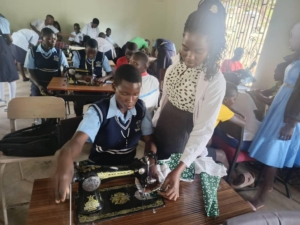
“Look around, the furniture in our offices, the vehicles on our roads, the fridges and air conditioners keeping businesses running, the electricity in our homes, and the well-built houses across our towns — these are all the works of men and women who graduated from vocational institutions.”
FIMAT maintains it does not undermine university education, but challenges the notion that degrees alone guarantee progress.
“It is an open secret that many degree holders, some with master’s, are still moving from office to office with applications and getting no reply,” Okao said. “Meanwhile, the certificate or diploma holder from a vocational college is busy making money and progress because they can solve a problem today.”
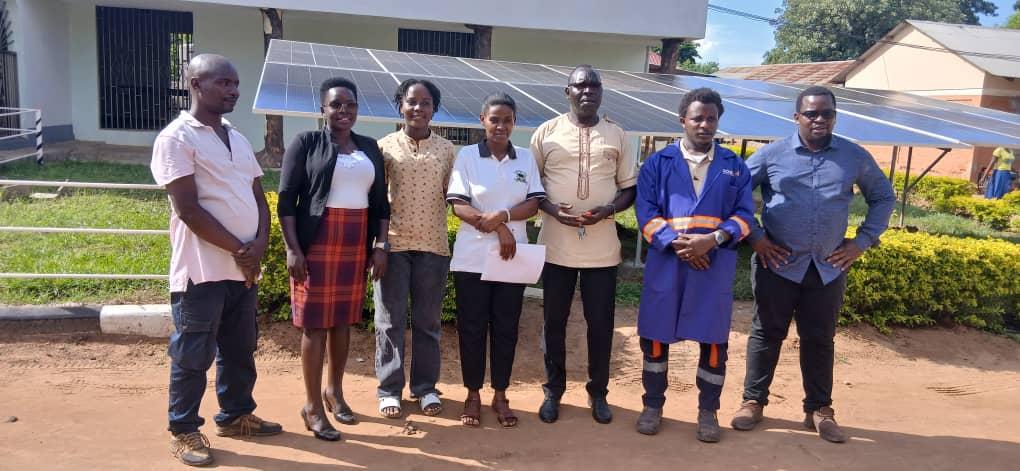
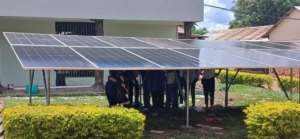
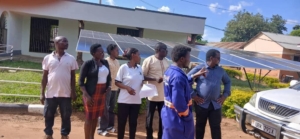
That is why FIMAT’s new bursary targets solar energy — a sector where demand for certified technicians already outstrips supply. The short-term course is 70% practical, includes entrepreneurship training, and links graduates to companies electrifying rural Uganda.
Program highlights:
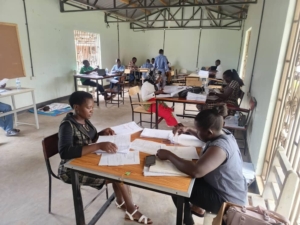
Hands-on training: 70% practical, 30% theory in FIMAT’s equipped workshops.
- Job linkage: Training aligned with needs of solar companies operating in Northern Uganda.
- Entrepreneurship module: Learners taught pricing, client management, and business registration.
- Bursary support: Limited slots available to reduce cost barriers for committed youth.
From Local Roots to National Reach.
While founded in Lira, FIMAT’s impact now stretches far beyond. “Children from as far as Busoga, Bukedi, and Buganda — and even some from South Sudan — have found the institute to be their single trusted friend,” Okao said.
Through bursaries extended under the Lango Cultural Institution, hundreds of youths have gained skills that pay. These are the technicians keeping Uganda running — the solar installers, electricians, builders, and mechanics behind the infrastructure we depend on daily.
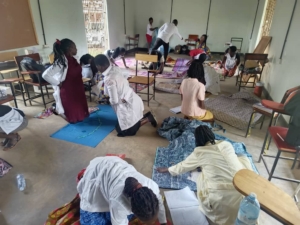
“Parents used to ask, ‘Will my child get an office job?’” Okao said. “Today they ask, ‘Will my child be able to earn and stand on their own?’ At FIMAT, the answer is yes. We train for independence.”
A Message to Stakeholders: Skills Are National Infrastructure.
The institute’s core message to youth is a mindset shift: “Move from ‘What did I study?’ to ‘What problems can I solve?’
“For the orphan James 1:27 calls us to serve, a skill is dignity. For the widow, it is independence. For Uganda, it is development,” Okao said.
It is for this reason that The Exposure Uganda (TEU), We Expose, You Decide, says it will continue to partner with progressive forces like FIMAT. The publication is urging cultural leaders, policymakers, parents, clergy, and the private sector to join hands with Tom Okao’s vision.
“Okao has carried the burden of sponsoring so many youths, but the task is bigger than one man. It needs the support and blessing of every stakeholder,” reads a statement from The Exposure Uganda.
“A skilled child in Lira or Lango helps a family in Buganda, Busoga, Ankole and any part of the country. A solar technician trained in Amuca Ward can light a village in Teso. That is the global village we live in.”
“Vocational training is no longer about fixing what’s broken. It’s about building what’s next,” Okao said. “Don’t just chase papers. Chase competence. The market will pay for it.”
Limited slots available for the Solar Energy Training Course.
For admission and inquiries, contact: 0774 181 007
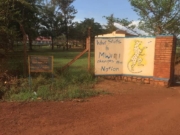
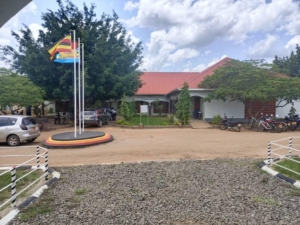
Visit: Fountainhead Institute of Management and Technology, Awita Cell, Amuca Ward, Lira City.
Editor’s Note: This is a sponsored feature by The Exposure Uganda in partnership with FIMAT. We Expose, You Decide.