




Preamble: Welcome to The TEU Workshop.
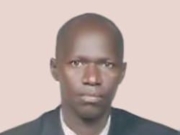
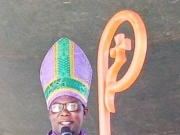
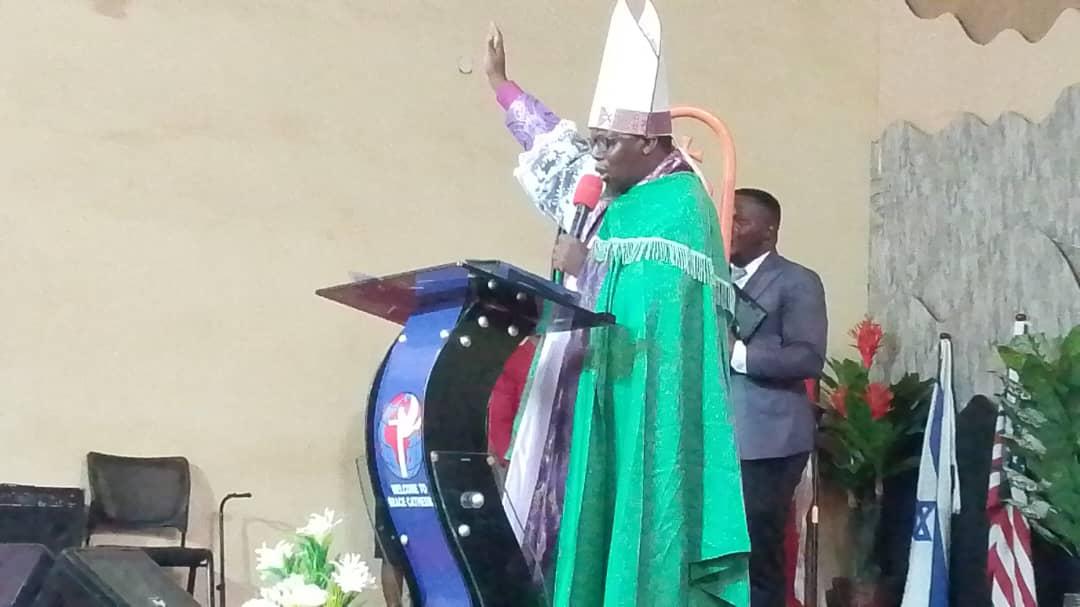
Workshop Foreman’s Voice: “Welcome to the TEU Supersonic Workshop, Station 20260518. I’m your foreman today, Archbishop Elect Professor Mugume Bagambaki Richard, and this is not a talk shop but a place where we fix things with tools in hand.
On the bench before you lies, The Manual, not a party manifesto or policy brief but the Bible, which we handle the way engineers handle a service manual: to check the original design specs, diagnose what has gone wrong, and restore function.
Look around this workshop. There is grease on the floor, sawdust in the air, oil on the benches, and the sharp bite of metal from the saws. The welder stands in the corner with his mask down, the protective glass shielding his eyes from the excessive bright light that would otherwise blind him.
The electrician moves past in heavy boots, pliers in hand, because one wrong touch here can end a life. Occasionally a spanner slips and skins a knuckle. Sometimes the dust gets in your eyes and you cough. Mechanics leave here with dirty overalls and sometimes with bandages, and people on the street call them dirty.
The Manual is the same, it is not a clean, decorative book for display. It occasionally commands things that get under your nails, that challenge your pride, that expose your faults and leave you feeling stripped and dirty.
It can even rebuke in ways that feel like a wound. Proverbs 27:17 says iron sharpens iron, and that process throws sparks.
Yet if you follow The Manual carefully, it is excellent guidance. It builds what is broken, aligns what is crooked, and gets the engine running right. Above the door hangs the sign that reads, GET OUT OF LAZINESS. WHOSEVER DOES NOT WORK SHOULD NOT THINK EVEN OF EATING EITHER,’ taken from 2 Thessalonians 3:10, and the fine print on the workbench clarifies that this targets unwillingness rather than inability because the same Manual commands us to look after widows, orphans, the elderly, the sick and the disabled in James 1:27.
Today we are stripping the engine of ‘work’ to ask what it really is, who qualifies as a worker, and why Uganda continues to act as though half the engine does not exist. Put on your overalls, your mask, and your boots. Expect some grease and some sparks. Pick up your tools. The Manual is open. Let’s work.”
The Workshop Report: Theology, Economics And the Ugandan Who Is Already Working.
Archbishop Elect Prof. Bagambaki begins by turning to 2 Thessalonians 3:6–15, a letter Paul wrote around 51 A.D to a church where some believers had laid down their tools.
Convinced that Christ’s return was imminent, they stopped working, became meddlers rather than laborers, and expected others to feed them. Paul’s answer was direct: “The one who is unwilling to work shall not eat,” and he offered himself as the example by reminding them that he and his companions had worked night and day so as not to be a burden.
The rule, Prof. Bagambaki stresses, is aimed at idleness by choice and not at poverty by circumstance.
From The Manual, the foreman draws a wider picture of work. Genesis shows God himself as the first worker, creating for six days and resting on the seventh, and Adam placed in the garden to cultivate and maintain it before the Fall ever occurred.
After the Fall, work became toil and the ground was cursed, yet it did not become sin, for Proverbs still calls the slack worker a brother to the destroyer and warns that laziness brings hunger. At the same time, Scripture never confuses inability with laziness, and it insists that true religion looks after orphans and widows, the disabled and the elderly.
That distinction reshapes how the workshop defines work. Prof. Bagambaki says work is any intentional and productive activity that cultivates, maintains or improves life and community and therefore reflects God’s character.
Economists may measure work by goods and services that carry value, while development economists insist on measurable contributions to wellbeing, but the theological lens sees work as co-creation with God in Colossians 3:23 and as fruit that reveals character in Matthew 7:16. When these two perspectives collide in Uganda, they expose a blind spot where large sections of the population are laboring without being named as workers.
Through the workshop window the foreman points to the streets of Kampala, Jinja, Lira and Arua, where the economy is being built by hands that national budgets rarely count. There is the woman from Anyomolyec in Otwal who rises before dawn to sweep a grass-thatched kitchen and light firewood, producing meals, health and childcare that economists call unpaid care work and that Uganda’s GDP does not capture even though the United Nations estimates such labor equals roughly nine percent of global output.
There is the old man trimming a hedge for cash, the youth washing cars in Wabigalo, Namuwongo, Kazimingi and Mafubira, and the disabled man on Lira Main Street or Obote Avenue who sits on a verandah to shine shoes.
None of them carry contracts or pay NSSF, yet the transport touts shouting “Kampala Kampala! Mbarara! Arua Pakwach or West Nile!” are the reason buses and taxis move at all.
The Uganda Bureau of Statistics (UBOS)headed by Dr Chris Ndatira Mukia as ED estimates that the informal sector accounts for about fifty-one percent of GDP and employs more than eighty percent of the workforce, which means policy continues to be designed for the minority and expected to serve the majority.
It is at this point that the foreman addresses a tension common in many church buildings across Uganda, where believers spend the whole week praying, shouting “Hallelujah!” and “I receive it in Jesus’ name!” while following pastors who teach them to PUSH, which means Pray Until Something Happens, and yet they must still eat.
Paul, Prof. Bagambaki notes, never opposed prayer because he himself wrote “pray without ceasing” in 1 Thessalonians 5:17, but he confronted the Thessalonians because they had turned prayer into an excuse for idleness.
The apostle called them busybodies, not busy people, and set himself as a model by working night and day before delivering the rule that the unwilling should not eat.
In the workshop’s reading, prayer and work are the two hands of the believer, one lifted to God and the other holding the hoe, the spanner or the shoe-shine brush, and if both hands remain in the air, then no door is opened and no food is earned.
The Manual insists on balance: Psalm 127:1 says that unless the Lord builds the house the builders labor in vain, yet James 2:17 reminds us that faith without works is dead. To those who PUSH all week, the foreman’s message is that they should also PRODUCE, because God may send ravens to Elijah but He tells the disciples, “You give them something to eat.”
The church therefore has a duty to teach both altars and anointing oil and hoes and hammers, lest it produce believers who are loudest on Sunday and hungriest on Monday.
From theology the workshop moves to policy. Prof. Bagambaki argues that Uganda must first correct a distorted theology that either treats work as a curse, as in Bob Black’s 1985 essay “The Abolition of Work,” or preaches that blessing means not working at all, for The Manual treats work as worship and laziness as sin while still demanding that work be dignified.
(For context: Bob Black whose real name was Robert Charles Black born in 1951 was an American anarchist, essayist and lawyer known for critiquing the modern work ethic from an anarchist/post-left perspective.
He argues that compulsory wage labor or work is the main source of human misery and should be abolished, replaced by voluntary, playful, self-directed activity).
Second, the country must redefine who counts as a worker, because if budgets and statistics only reward the salaried then they will keep missing the woman at the firewood, the car-washer and the shoe-shiner, and social protection, SACCOs and market infrastructure will continue to be built from the boardroom instead of the workshop floor.
Third, the workshop must address habits of lateness and laziness, which The Manual does not legislate as a commandment but treats as matters of love and reputation, for 1 Corinthians 13:5 says love is not rude and Ecclesiastes 7:1 says a good name is better than precious ointment, meaning that chronic tardiness damages Christ’s reputation and must be corrected through awareness, planning and prayer for wisdom in James 1:5.
On welfare, the foreman recalls that the Bible’s system was/is work-based, as seen in Leviticus where the poor were allowed to glean fields, and that 1 Timothy 5:8 is severe in declaring that anyone who does not provide for his household has denied the faith and is worse than an unbeliever. The line is therefore clear: those who can provide must do so, and those who cannot must be helped with dignity.
The workshop concludes by recalling that while the Fall made work hard, Revelation shows a future where work is restored without thorns and thistles, and until that day Jesus’ standard remains, “My food is to do the will of him who sent me and to finish his work.”
From that standard the TEU workshop draws its final judgments. Work is good because it reflects God and is the path of Uganda’s development. Unwillingness to work is sin, but inability is not, and the church and the state must learn to tell them apart. Prayer is fuel but never an excuse, and those who PUSH must also PRODUCE.
Uganda’s real workers are often invisible, yet the woman at the firewood, the tout and the shoe-shiner are building the country, and national budgets must begin to see them or they will keep designing for a workshop that does not exist.
Finally, lateness and laziness are reputation issues that tell the world Christ is unreliable, and the workshop fixes them with love, discipline and wisdom.
Foreman’s Closing Message.
“Tool down. The Manual is closed for today. If you can work, work. If you cannot, you will not be left to starve. If you are already working but no one sees you, The Manual sees you, and TEU sees you. That is the job.
Archbishop Elect Professor Mugume Bagambaki Richard.
Ecclesiastical Episcopal Conference Patriarch of Five-Fold Episcopal World Federation
Archbishop of Upper City Covenant Churches
President and Chancellor, UCCSAT University
Contact: +256775050183.
We are The Exposure Uganda (TEU) with our acclaimed slogan We Expose, You Decide.
No topic is complicated or controversial enough for us not to tackle. We do it with a lot of fairness, objectivity and professionalism. We are also not ashamed or afraid to guide when and where necessary.