















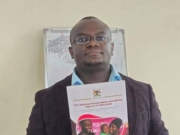
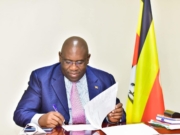






A new work of legal and political scholarship, Courts Under Capture: The Political Economy of Judicial Power and Constitutional Decline in Uganda by Isaac Christopher Lubogo, is setting the stage for renewed debate over the independence of Uganda’s Judiciary.
Published this year by Suigeneris Publishers, the 36-section book moves from theory to evidence to remedy, arguing that structural, financial and institutional factors, not just individual conduct, are shaping how courts exercise constitutional oversight over executive power.
The book’s release comes as public trust in institutions remains a central issue in Uganda’s governance discourse. Lubogo, a practicing lawyer, says his aim is not to indict individual judicial officers, but to examine the “architecture of incentive” within which judges work.
“Not An Indictment, But a Structural Analysis”.
From the Preface, Lubogo is precise about the book’s scope: “It is not an indictment of individual judicial officers. It is not a claim that every ruling favorable to the State is the product of pressure, fear, or inducement.” He acknowledges that Uganda’s judicial history contains “real examples of courage, examples this book discusses alongside the examples of deference.”
The central thesis is narrower: structural, political, financial and psychological factors have combined to create conditions where the Judiciary appears reluctant to exercise robust constitutional oversight over the executive.
That reluctance, Lubogo argues, “need not be the product of any single villain or any single decision” but can emerge from how judges are appointed, how courts are funded, how acting positions are allocated, and how security agencies have at times demonstrated that court orders can be defied without consequence.
He introduces a four-part vocabulary that runs through the book: corruption is individual and transactional; bias is a predisposition; institutional dependence is a structural weakness; capture is what happens when that dependence is systematically leveraged to subordinate judicial power to political interest. “A judiciary can be captured without a single judge ever taking a bribe — if the architecture of appointment, promotion, and funding does the work instead,” he writes.
Chapter 1-2: From Theory to Constitutional Text vs Practice.
Chapter One builds the conceptual foundations, drawing on Montesquieu’s separation of powers, Hamilton’s “least dangerous branch” in Federalist No. 78, and modern scholars like Ronald Dworkin and Lon Fuller.
For non-legal readers: Montesquieu’s Separation of Powers also called trias politca is the idea that to protect liberty, government power must be split into separate branches that check each other, instead of being concentrated in one person or body.
Hamilton’s ‘Least Dangerous Branch’ comes from Federalist No 78 written by Alexander Hamilton to defend the US Constitution. He was answering critics who feared the new federal judiciary would become too powerful.
The argument: law is not just command, but principled interpretation. A captured judiciary, on this account, abandons principled interpretation for outcomes convenient to power.
Chapter Two juxtaposes Uganda’s 1995 Constitution with practice. Article 128(1) states plainly: “In the exercise of judicial power, the courts shall be independent and shall not be subject to the control or direction of any person or authority.” Articles 128(5)-(6) go further, charging judicial administrative expenses to the Consolidated Fund and declaring the Judiciary “self-accounting.”
The gap, Lubogo argues, is between text and administration. He engages Dr. Busingye Kabumba’s critique that the Constitution often functions more as a symbol than a restraint, raising the question of “constitutional ownership”: whether Ugandans truly gave themselves the 1995 Constitution or experienced it as a product of the National Resistance Movement settlement.
Chapter 3-4: Appointments and the Power of the Purse.
Chapter Three examines the political economy of judicial appointments. Four questions guide it: Who appoints judges? Who promotes them? Who controls acting appointments? Who influences elevation? The Judicial Service Commission is meant to buffer politics from the bench, yet the President retains significant appointment power, especially at senior levels. The book focuses on “acting appointments” as a subtle form of influence: officers serving in acting capacity know confirmation depends on political or quasi-political actors, creating indirect pressure without any directive being issued.
Chapter Four turns to budgetary dependence, anchored by the Constitutional Court’s own 2009 ruling in Uganda Law Society & Anor v The Attorney General.
The Court held that judicial independence was undermined by excessive dependence on the Executive for resources, a system “fundamentally inconsistent” with Article 128(5)-(6).
Lubogo sets out figures that have become part of the public record: the Judiciary’s budget has hovered between 0.10 and 0.14 percent of GDP, and about 1.2 percent of the national budget.
The Acting Chief Justice Hon Steven Kavuma, addressing the 2015/2016 budget, stated the Judiciary received “a miserable 0.6 percent” compared to 95 percent for the Executive and 4.4 percent for Parliament.
Physical consequences are documented: only 53 percent of courthouses are Judiciary-owned, with the Court of Appeal at one point sharing premises with a bar, a bank and a restaurant, and once suffering a ceiling collapse during proceedings.
“A judiciary dependent on the Executive for its financial survival can never be fully independent, in the sense Article 128 contemplates,” Lubogo concludes. This is true, he adds, even if every budget decision was made in good faith — dependence creates vulnerability whether or not it is consciously exploited.
Chapter 5-6: Elections, Security Agencies and Enforcement.
Chapter Five tackles the most politically sensitive terrain: election petition jurisprudence. The 2016 presidential petition Amama Mbabazi v Yoweri Kaguta Museveni, Electoral Commission & Attorney General is central. Lubogo notes the structural asymmetry: petitioners must gather evidence of malpractice nationwide within weeks, against a State that controls the machinery that conducted the election.
He examines two jurisprudential tendencies: a “rigid insistence on technicalities” that can foreclose substantive claims, and the “political question doctrine” that sometimes frames issues as non-justiciable. The chapter’s finding is stated carefully: these doctrines have tended, cumulatively, to insulate incumbents from effective constitutional challenge. It is a claim about pattern, not individual motivation.
Chapter Six examines the coercive dimension of independence through episodes involving security agencies. The 2005 siege of the High Court by operatives informally called the “Black Mamba” unit, who sealed the premises to re-arrest suspects just released by the court, is documented.
President Museveni’s recorded post-incident statement to judges — “You are judges but you are Ugandans first… You should not provoke people” — is quoted as capturing a tension between judicial role and political reality.
The chapter also reviews Attorney General v Joseph Tumushabe, where the Supreme Court declared military trials of civilians unconstitutional, followed by documented executive non-compliance. Lubogo calls such partial compliance “the slow poison that dissolves the rule of law.”
Chapter 7: The Discipline of Counterexamples. Discipline of Counterexamples is a research method Lubogo uses which basically the academic habit of stress-testing your own argument instead of cherry-picking only evidence that supports it.
A book built on a capture thesis, Lubogo argues, must account for cases that complicate it. Chapter Seven is dedicated to this discipline.
Three Cases Frame the Analysis:
Kyagulanyi & Another v Attorney General 2021 — The High Court ruled the house arrest of opposition leader Robert Kyagulanyi unlawful, a clear assertion of individual liberty against security agencies.
Male H. Mabirizi Kiwanuka v Attorney General 2018 .The Court dismissed challenges to the removal of presidential age limits from the Constitution, a change of direct benefit to the incumbent presidency.
The 2024 Consolidated Petitions on the Anti-Homosexuality Act. The Constitutional Court upheld most provisions of the 2023 law, a ruling with broad political and social support.
Lubogo’s conclusion is nuanced: if a pattern emerges, it is that Ugandan courts show greater willingness to assert independence in individual-liberty cases detention, due process, than in cases touching the structural durability of executive power, such as term limits.
He calls this “selective courage” that may preserve the perception of independence precisely where stakes for executive survival are lower.
Chapter 8-9: Consequences and Public Perception.
Chapter Eight asks what capture does to jurisprudence itself. Lubogo identifies five consequences: Executive-centric jurisprudence — ambiguous provisions interpreted to preserve executive power, through conventional reasoning.
Weak constitutionalism: constitutional provisions become symbolic rather than enforceable restraints. Fragile rights jurisprudence, citizens lose confidence that rights violations will be vindicated.
Erosion of public trust , grievances shift from courts to political mobilisation.
Legal cynicism , the belief that “the law only works against the weak.”
Chapter Nine turns to perception, because “legitimacy depends not only on actual independence but also on perceived independence.” Evidence is drawn from Uganda Law Society positions, lawyer statements, civil society monitoring, media commentary and academic surveys.
Despite the difficulty of proving judicial corruption directly, independent surveys have consistently ranked the Judiciary among the most corrupt institutions.
Lubogo includes a striking anecdote from a law student: “It is not enough to do legal research; one should also be prepared, if necessary, to bribe the judge.” The significance, he argues, is not whether it is universally true, but what it reveals about the transmission of cynicism to new entrants.
Chapter 10: Remedies Proposed.
The final chapter connects diagnosis to remedy. Proposals include:
Independent judicial budget. The Uganda Law Society’s proposal for a fixed 4 percent of the national budget, replacing case-by-case negotiation with the Executive.
Transparent appointments. Published criteria and reasons for decisions to weaken indirect pressure. Stronger Judicial Service Commission, Secure funding and membership structure less susceptible to political influence.
Constitutional amendments. Enforcement mechanisms and automatic remedies for non-compliance with Art. 128(5)-(6).
Fixed timelines: Statutory deadlines for acting-to-substantive appointments, promotions and transfers to reduce discretion.
Lubogo closes by offering the book “not as an attack on the Judiciary but as an act of solidarity with it — and with the constitutional order it was built to protect.”
Context and Scholarly Anchors.
The book draws heavily on Uganda’s legal scholarship. Lubogo acknowledges intellectual debts to the late George W. Kanyeihamba, Busingye Kabumba, J. Oloka-Onyango, Henry Onoria and Godfrey B. Asiimwe. It also references the Uganda Law Society’s institutional positions and litigation, which provided documentary backbone for the budget argument.
Case law cited includes ULS v AG 2009, Amama Mbabazi v Museveni 2016, AG v Tumushabe 2005, Kyagulanyi v AG 2021, Mabirizi v AG 2018, and the 2024 consolidated petitions on the Anti-Homosexuality Act.
Reaction and Relevance.
While the book does not allege bad faith by any individual judge, its structural analysis is likely to resonate in current debates about governance, elections and institutional reform. The distinction between corruption and capture is particularly timely: it suggests reform must target architecture , funding, tenure, appointments — not just individual discipline.
Lubogo’s practitioner perspective adds weight. He writes of practicing “in courtrooms housed above restaurants and beneath crumbling ceilings” and hearing cynical advice that “legal research alone is not enough.” Yet he anchors every argument in the documented record and gives full weight to cases that cut against the capture thesis.
About the Author and Publication.
Courts Under Capture is published by Suigeneris Publishers, Kampala. ISBN 978-9913-0-1234-5. It is typeset in Garamond and Arial and printed in Uganda. The book includes a full list of cases, statutes, abbreviations and bibliography for researchers.
The dedication reads: “To the judicial officers of Uganda who, often without recognition, continue to defend the independence of their office against considerable pressure — and to every citizen who still believes that the law can be made to work for the weak as well as the strong.”
With constitutionalism and institutional independence under scrutiny across the region, Lubogo’s work adds a detailed Ugandan case study to a growing comparative literature on court capture.
Who Should Not Miss This Book?
Because Courts Under Capture is structural analysis, not a hit-list of judges, Lubogo says it is written “as an act of solidarity with the Judiciary.” The audience is broad:
Law students and young advocates need it to understand incentives behind rulings, not just outcomes. The vocabulary of capture vs dependence helps them navigate a system where, as one student put it, “legal research alone is not enough.”
Judicial officers and the Judicial Service Commission are directly addressed. The book is dedicated to judges “who often without recognition continue to defend independence.” Chapters on appointments and budget speak to the pressures they face daily.
Parliament and Ministry of Finance officials cannot ignore Chapter Four. If Article 128(5)-(6) promises self-accounting but the budget reality is 0.6% vs 95%, then budget decisions are constitutional decisions. The 4% fixed allocation proposal in Chapter Ten is aimed squarely at them.
Civil Society Organizations (CSOs), media, donors and governance watchdogs, among others will find Chapter Seven’s “discipline of counterexamples” useful. It models how to test claims against Kyagulanyi and Mabirizi instead of flattening complex judicial behavior into “captured” or “independent.”
Empowered citizens who, as the dedication says, “still believe that the law can be made to work for the weak as well as the strong” will find Chapter Eight most urgent. It explains why, when courts lose trust, people abandon litigation for political mobilization.
Those seeking gossip about individual judges will be disappointed. Lubogo refuses partisan attack. This is architecture, not personalities.
Conclusion: From Diagnosis to Remedy.
Lubogo closes by tying diagnosis to concrete proposals. The book’s final argument has four parts:
The gap is real: Uganda’s Constitution has strong text on independence. The problem is practice: appointments, funding, acting positions, and enforcement create incentives for deference where executive power is at stake.
The pattern is selective, not total: Counterexamples prove courts still assert independence. The pattern is bolder on personal liberty, more cautious on structural power. Capture, where it operates, is strategic.
The cost is jurisprudential: Beyond individual cases, capture reshapes legal reasoning itself. Constitutional provisions become symbolic. Rights enforcement becomes fragile. Trust erodes. Cynicism grows.
The remedy must match the diagnosis: Chapter Ten proposes a fixed 4% judicial budget to end funding dependence; transparent appointments with published reasons; a stronger, better-funded Judicial Service Commission; fixed statutory timelines for promotions; and constitutional amendments with enforcement mechanisms for Art. 128(5)-(6).
“The question is not whether Article 128 exists — it does, in clear language,” Lubogo writes. “The question is whether Uganda’s architecture of appointments, funding, and enforcement gives that language practical effect. Until it does, constitutionalism risks becoming something we perform, not something we live.”
He offers the book “not as an attack on the Judiciary but as an act of solidarity with it — and with the constitutional order it was built to protect.”
Whether read as diagnosis, warning or call to action, the book insists that the question is not whether Article 128 exists, but whether the surrounding architecture of appointments, funding and enforcement gives that language practical effect.
For media inquiries, review copies, or interview requests with the author(0774694058) contact Suigeneris Publishers, Kampala.