

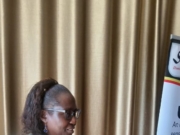














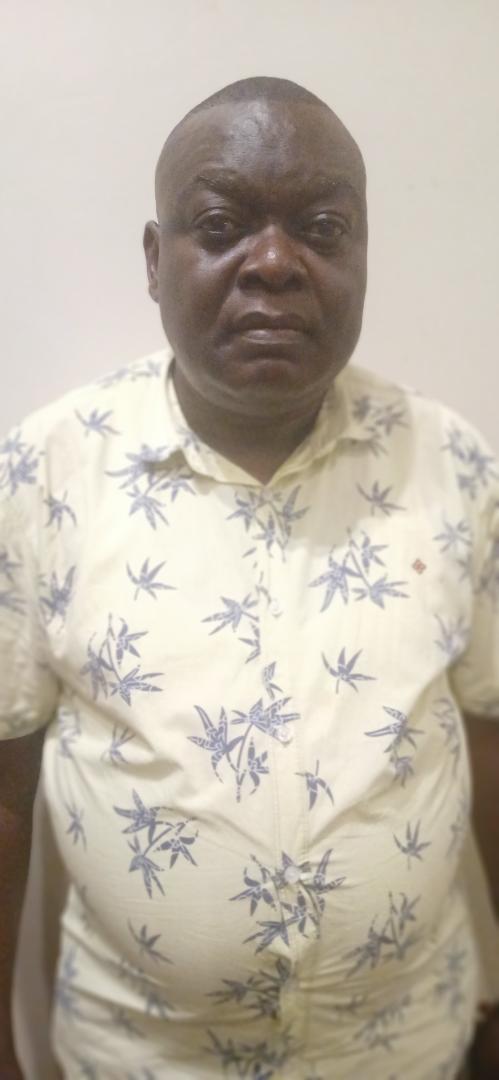
The Prime Minister of Bukono Chiefdom, Michael Mwandha, has renewed calls for the Government of Uganda to reclassify industrial hemp from a narcotic to an agricultural crop, citing its potential to create jobs, replace imports, and unlock new industries in Busoga.
Speaking in an exclusive interview with The Exposure Uganda (TEU) at his office in Bukono, Mwandha, locally known as Katukiro, said the crop remains misunderstood due to its association with marijuana, yet global evidence shows it is “a job creation plant” already transforming economies from Australia to Rwanda.
Bukono is one of 11 chiefdoms that make up the traditional Busoga Kingdom and is headed by hereditary chief Nkono Godfrey Mutyaba.
Why it is called “Industrial Hemp”
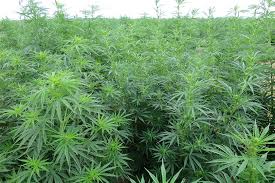
The word “industrial” separates this crop from marijuana. Both come from the same plant species, Cannabis sativa. The difference is what it is grown for and how much THC it contains.
TEU values context because it facilitates understanding and meaning and so THC in full is tetrahydrocannabinol which is the main chemical in marijuana that makes people feel high. It affects the brain and changes how a person feels, thinks and acts.
By international standard, industrial hemp must have 0.3% THC or less. At that level, a person cannot get high from it. It is grown for its stalk and seed, not for the flower.
For centuries, farmers grew it for strong fiber to make rope, sails, clothes, and paper, and for seeds that give oil and protein. That is industrial use – turning the plant into raw material for factories.
The name is written into law. The 1961 UN Single Convention on Narcotic Drugs says in Article 28 that the treaty “shall not apply to the cultivation of the cannabis plant exclusively for industrial purposes (fibre and seed) or horticultural purposes.”
Governments that have legalized the crop, including Australia, Canada, and Rwanda, use the term “industrial hemp” to show it is a commodity regulated by agriculture departments, not drug agencies.
What is Industrial Hemp?
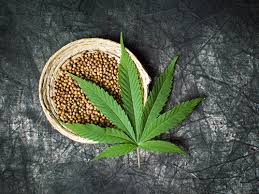
Industrial hemp is Cannabis sativa L, cultivated for fiber and seed with THC of 0.3% or less by dry weight. At that level it does not produce psychoactive effects. Marijuana varieties typically contain 5% to 30% THC.
Where it is grown Most.
China produces about 70% of global hemp fiber for textiles and industry. Canada planted 55,000 hectares in 2024, mainly for food-grade seed and oil. France leads the EU in hempcrete for construction.
The United States legalized commercial hemp under the 2018 Farm Bill and reported 21,000 hectares in 2025. In Africa, Rwanda, Malawi, Lesotho, South Africa, and Morocco have licensed commercial production since 2020.
Why Hemp remains Controversial.
Hemp faces regulatory resistance because the plant is visually identical to marijuana, making field enforcement by the Abbas Byakagaba boys difficult without laboratory testing. The controversy also stems from history.
The 1937 Marihuana Tax Act in the United States and the 1961 UN Single Convention initially placed all cannabis varieties under strict control. However, Article 28(2) of the 1961 Convention states that the treaty does not apply to cannabis cultivated exclusively for industrial or horticultural purposes. Many governments are now revising domestic laws to align with that exemption.
What Science says.
Peer-reviewed studies have documented multiple uses for low-THC hemp.
In agronomy, a 2023 paper in the journal Foods by researchers at Japan’s National Agriculture and Food Research Organization described hemp as a “sustainable plant with high industrial value.” The authors noted that hemp needs less water and fewer pesticides than cotton. Life-cycle assessments estimate that one hectare of hemp can sequester roughly 15 tonnes of carbon dioxide.
For nutrition, a 2020 review in the International Journal of Food Science and Technology explained that hemp seeds contain all nine essential amino acids. Amino acids are the building blocks of protein that the human body cannot make on its own.
The review called hempseed “a rich source of essential amino acids in highly digestible protein,” meaning the body can absorb it easily, like protein from eggs.
On materials, a 2022 study in the Journal of Cleaner Production tested “hempcrete,” a mix of hemp stalk, lime, and water. The researchers found the blocks are lightweight, resist fire, and do not grow mould. Fire resistance means the material can slow the spread of flames, which is important for rural housing.
In medicine, the U.S. Food and Drug Administration approved a drug called Epidiolex in June 2018. The FDA said Epidiolex is a “purified form of CBD,” a compound from the cannabis plant, used to treat seizures in two rare forms of epilepsy in children. The FDA added: “This is not an approval of marijuana or all of its components. This is the approval of one specific CBD medication for a specific use.”
Benefits listed by Katukiro Mwandha
Katukiro Michael Mwandha said Bukono Chiefdom has identified ten uses for industrial hemp if government licenses farmers to grow it under agriculture regulations.
Textiles-The fiber from hemp stalks can be spun into cloth for jeans, canvas, and rope. Mwandha said the material is stronger and lasts longer than cotton.
Biodegradable plastics. Hemp stalk can be processed into packaging and car panels. He noted that BMW and Mercedes already use hemp composites in vehicle interiors.
Paper. The stalk can be pulped for books and newsprint. “One acre of hemp equals four acres of trees,” Mwandha said, referring to yield comparisons used in the paper industry.
Building blocks-Mixed with lime and water, hemp stalk makes “hempcrete” bricks for low-cost housing. The blocks are lightweight and insulate against heat, he said.
Cosmetics and perfumes. Hemp seed oil is used as a base for soaps, lotions, and perfumes sold worldwide.
Nutrition for families. Hemp seeds and oil contain protein and healthy fats. Mwandha said the flour can add protein to porridge for children.
Medicine. “With deep science, we can get medicine,” Mwandha said. He pointed to Epidiolex; a drug approved in the United States that uses a compound from the cannabis plant to treat severe epilepsy in children.
Veterinary use-Mwandha said farmers in Bukono have used hemp leaves to treat poultry and to manage skin worms in goats.
Cancer research claim. He claims that hemp “if mixed with blackseed, can cure cancer.”
The Exposure Uganda notes that there are no human clinical trials or approvals from the Uganda Cancer Institute or National Drug Authority confirming hemp or blackseed as a cancer cure.
The World Health Organization says patients should rely on proven hospital treatment.
Jobs across the value chain. Mwandha calls hemp “a job creation plant from farmer to factory,” saying it could support growers, truck drivers, factory workers, and shop attendants if processing plants are built in Busoga.
The Exposure Uganda notes that while some laboratory studies show cannabinoids can slow tumor cells in a dish, there are no human clinical trials or approvals from the Uganda Cancer Institute or National Drug Authority confirming hemp or blackseed as a cure for cancer.
The WHO and FDA emphasize that approved cannabis-derived medicines are limited to specific conditions such as treatment-resistant epilepsy.
How countries that embraced hemp are doing.
Canada: $300M in seed and oil exports in 2024, supporting 4,000 farms.
Australia: Legalized hemp food in 2017 and moved cultivation to agriculture departments. The country has a domestic market valued at over 50 million Australian dollars and 1,500 direct jobs. Government reports have not linked hemp farming to an increase in drug crime.
France: 20,000 hectares for hempcrete and textiles, with 10,000 construction jobs.
Rwanda: Began exports in 2021 and earned $6 million from hemp shipments to Europe in 2024.
Malawi: Issued $12 million in export licenses since 2020 as part of tobacco diversification.
Mwandha cited Australia’s model, where farmers must plant certified seed, map fields with GPS, and submit crops for random THC testing. Regulation is handled by agriculture departments rather than narcotics boards.
Risks if not handled properly.
Experts and regulators flag five risks:
Diversion: High-THC cannabis could be grown under a hemp license if testing and seed certification are weak.
Market collapse: U.S. CBD prices fell 80% in 2019 after oversupply. Experts say start with fiber and grain, not just CBD.
Agronomy failure: Hemp needs well-drained soil with pH 6–7.5. Yields will be poor in waterlogged Busoga soils without trials.
Health claims: Selling unproven “cancer cure” products violate Uganda’s Food and Drugs Act.
Processing gap: Growing without decortication factories leaves farmers with unsold stalks. A crop researcher who reviewed global case studies for this article, but asked not to be named because she is not authorized to speak for her university, said: “Hemp is not magic. Without seed systems, testing labs, and factories, it becomes another failed promise.”
The legal path for Uganda.
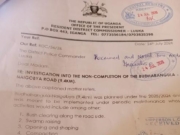
Uganda’s Narcotic Drugs and Psychotropic Substances Act of 2015 already permits cultivation of cannabis with less than 0.3% THC for medical, scientific, or industrial purposes under license. However, the National Drug Authority has issued fewer than 10 permits, all for research. The regulations needed to operationalize full commercial licensing through the Ministry of Agriculture have not been issued.
Mwandha is requesting that Bukono be designated as a pilot zone for three years under the National Agricultural Research Organization.
He proposes that farmers use only EU-certified seed, that all fields be mapped and tested, and that cultivation be tied to signed agreements with processors. “If we fail under those conditions, then close it. But do not criminalize a farmer for planting a crop that the UN convention itself allows,” he said.
What next?
The Ministry of Agriculture had not responded to The Exposure Uganda’s request for comment by press time. The 12th Parliament, led by new Speaker Rt Hon Jacob Marksons Oboth Oboth, is in the process of constituting different parliamentary committees.
Because the committees are not yet fully in place, The Exposure Uganda could not get a comment from the chairperson of the Agriculture Committee.
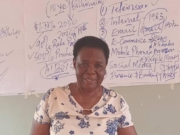
Mwandha has framed the issue as one of value chain control rather than crop choice. “Sugarcane brings two billion shillings into Busoga every day, yet poverty remains. The question is not which crop we grow, but who controls the processing and the profit. Hemp gives us a new chain to try.”
TEU Editor’s Note: This article cites the 1961 UN Single Convention on Narcotic Drugs; the U.S. FDA June 2018 approval announcement for Epidiolex; the 2020 review “Hempseed as a nutritious and healthy human food or animal feed source” in the International Journal of Food Science and Technology; the 2023 paper “Hemp: A Sustainable Plant with High Industrial Value in Food Processing” in the journal Foods; and the 2022 study “Hemp Concrete with Mineral Additives as a Durable and Fire-Resistant Material” in the Journal of Cleaner Production.
Medical claims about cancer are not endorsed. Readers should consult the Uganda Cancer Institute and the National Drug Authority for guidance on treatment. Farmers should not plant restricted crops without written authorization from the relevant government bodies