








UCCSAT Seminary Address Calls Clergy to Guard Doctrine, Pursue Godliness Amid Global Skepticism.
The Exposure Uganda (TEU).
Editor’s Note: Why We Wrote It This Way. Before you scroll away, pause and receive this article in context. The length and language here are deliberate. TEU is not just another news platform, we are a revolutionary digital newsroom, and we do things differently, passionately.
Every TEU piece is crafted with attention to detail, we give you all the ingredients that make an article sweet to consume, nutritious for your mind, and nourishing for your spirit. Because information is food, and we refuse to let our readers suffer from information malnutrition.
So read it fully, chew on it, let the doctrine, the history, the charge from Archbishop Mugume settle. Don’t skim truth.
We Expose, You Decide.
The Exposure Uganda (TEU)Preamble: When the Word Is Dismissed.
It is increasingly difficult for both laity and clergy to speak of Scripture with confidence. Across lecture halls, radio and television stations, newspaper columns, social media feeds, and even from some pulpits, the Bible is no longer merely questioned. It is dismissed.
The Word of God is described as feeble, outdated, or a western ideology meant to keep people in the dark. “Religion is the opium of the poor,” critics repeat, arguing that faith numbs people while power and wealth rule the world. In an age where military and economic might are treated as the only real paths to security, Scripture is mocked as wishful thinking.
The skepticism has moved inside the church as well. Some so-called men of God have been filmed tearing pages from the Bible, calling it merely the work of men. Others question core doctrines openly: Is there really heaven or hell? Where does God live? If God put us on earth, why does the Bible say we shall go to heaven? These are not new questions, but they are being asked louder and with less patience for answers rooted in Scripture.
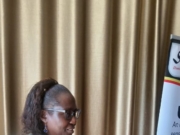
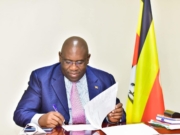
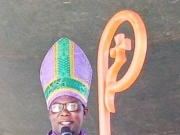
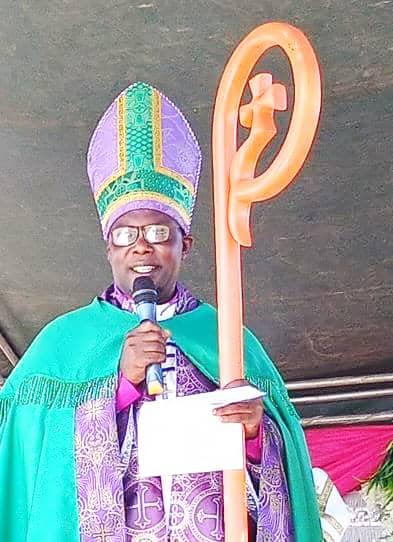
As May 2026 drew to a close last weekend, ministers gathered at Upper City Covenant Seminary and Theological College University listened to what Archbishop Elect Prof. Mugume Bagambaki Richard called a trumpet blast for this generation.
In a special address titled “The Faithful Steward in the Last Days”, drawn from 1 Timothy 4:1-16, the Ecclesiastical Patriarch of the Five-Fold Episcopal World Federation and President/Chancellor of UCCSAT warned that the pulpit has become the frontline in a battle over truth.
In this climate, Archbishop Elect Prof. Mugume told seminary students, clergy, and ministers in training that Paul’s letter to Timothy was written for exactly this moment. Timothy was not an abstract figure. He was a young pastor, the son of a Jewish mother and a Greek father, converted through Paul’s preaching. Paul mentored him, ordained him, and left him in Ephesus to shepherd a church under pressure. Timothy was young, facing older elders, false teachers, and a culture that despised his authority. Paul’s letter was a survival manual for a minister standing in a storm.
For context of TEU readers: Ephesus was the heart of intellectual pride, religious mixing, and moral compromise in the first century. It housed the Temple of Artemis, one of the seven wonders of the ancient world, and it was a center for magic, philosophy, and trade.
Today Ephesus lies in ruins near modern Selçuk in Turkey. The great city that once boasted wealth and influence is now a field of broken columns. The harbor silted up, the trade routes shifted, and the city faded. The Word Paul sent to Timothy, however, still speaks to churches two thousand years later. Civilizations collapse. Scripture remains.
Turkey, known as a transcontinental (crossroads of Europe and Asia) country with 3% in Europe a place called Thrace and Istanbul on both sides of the Bosphorus.The other 97% is in Asia, called Anatolia or Asia Minor.
Sermon Body: Four Charges from the Patriarch.
Prof. Mugume, who is due for consecration and installation on 14 December, 2026 framed the passage around four charges for ministers who must survive the last days. The first charge is to discern and defend the faith. Paul writes that the Spirit expressly says some will depart from the faith in later times.
The archbishop stressed that this is not cultural commentary but Spirit-inspired foresight. Bishops do not guess the times; they heed the Spirit. The danger, he noted, is not persecution from outside but defection from within.
When the pulpit becomes a platform for departure, the church bleeds from the inside. He identified doctrines of demons as demonic strategy, not just human error. That is why ministry must war in the Spirit, not only debate in the mind. On legalism, he pointed to verses forbidding marriage and certain foods.
Any teaching that adds human rules to Christ’s finished work is a yoke God never placed on His people. God’s answer is clear: everything created by God is good and sanctified by the word of God and prayer. The church does not retreat into superstition. It receives creation with thanksgiving, Scripture, and prayer. His charge to clergy echoed Titus 1:9. A bishop must give instruction in sound doctrine and rebuke those who contradict it. Guard the table of the Lord from poison, he told ministers.
The second charge is to be an athlete of godliness. Train yourself for godliness, Paul commands. From the Chancellor’s desk, Prof. Mugume said UCCSAT trains minds, but Paul trains hearts.
A degree without devotion produces PhD Pharisees, he said, adding that a good minister must first be nourished on the words of faith before feeding others. In 2026 and modern ear, he said, irreverent silly myths look like viral lies, conspiracy doctrines, and TikTok theology.
Everything must be tested, explaining that the Greek word gymnazo means to train like an athlete. Godliness is not mystical drift. It is daily repetition of prayer, Word, fasting, and holiness. Bodily fitness helps for seventy years. Godliness has value for seventy years plus eternity. That is the investment Paul calls for. Ministry fatigue, the archbishop said, is cured by eternal vision because our hope is set on the living God.
The third charge is to let your life preach, let no one despise you for your youth, Paul told Timothy and to be an example. The archbishop explained that this means authority is earned in holiness, not age.
Example speaks louder than titles and that the five-fold ministry is proven in speech, conduct, love, faith, and purity. For every pulpit, Paul gives three priorities: public reading of Scripture, exhortation, and teaching.
Before building programs, the church must build people with Scripture and the Bible remains the curriculum. Titles open doors, Prof. Mugume reminded Upper City Covenant Churches, but character keeps them open. The mitre is a symbol. The cross is the standard. He urged every parish to reflect that they are not a club of titles, but a school of Christlikeness.
What is the Mitre?
The mitre is the pointed, split headpiece many associate with bishops and archbishops. Another word for it is simply the “bishop’s hat” or “episcopal mitre”.
It is not jewelry or a crown of power. The two peaks represent the Old and New Testaments, reminding the wearer that his first duty is to teach both Law and Gospel. The split down the middle points to the tongues of fire at Pentecost, meaning every bishop stands under the Spirit, not above the Word.
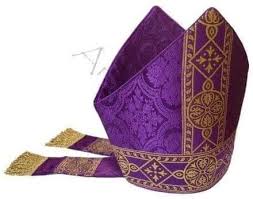
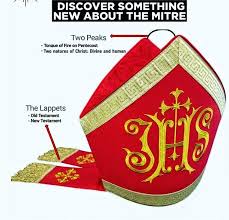
As Archbishop-Elect Prof. Mugume said, “The mitre is a symbol. The cross is the standard.” It is worn during processions, blessings, confirmations, and ordinations to show the church: this man is set apart to guard doctrine and feed the flock.
It comes off during prayer and the Eucharistic prayer to show that before God, office bows to worship. For TEU readers, the lesson is simple: titles and vestments mean nothing without a life and doctrine that match 1 Timothy 4:16.
Training Does Not Replace the Spirit, It Stewards It.
In this same vein, another voice has grown louder, some pastors dismiss formal training in ministry as a waste of time. They argue the twelve apostles never attended a seminary. They point out that Jesus Himself did not go to a university but worked in a carpentry workshop with Joseph.
From this they conclude that doctrine is irrelevant, and that those called to serve have no business with philosophy, economics, Aristotle, Plato, Socrates, Shakespeare, Chinua Achebe, or Wole Soyinka.
The archbishop addressed this view directly, reminding ministers that while the Spirit calls, the Spirit also equips. The apostles may not have enrolled in a seminary, but they were trained. Three years with Christ was the most rigorous theological, pastoral, and missional school in history.
They learned Scripture by hearing it expounded daily, they learned prayer by watching Jesus pray, and they learned doctrine by wrestling with His teaching. That was training, even if it did not look like a modern classroom.
The early church understood this and it is the basis when the apostles appointed deacons in Acts, they looked for men full of the Spirit and wisdom. When Paul wrote to Timothy, he told him to entrust what he heard to faithful men who will be able to teach others also. The word able means trained, tested, proven. The church has always set apart time for preparation because sheep deserve shepherds who know the terrain.
Doctrine is not irrelevant, it is the map and without it, sincerity leads people off cliffs. Paul charged Timothy to watch his life and doctrine closely. Jesus warned that false teachers would come with convincing words.
Philosophy (the language of Theology), Political Science, Economics, Statistics, Literature, and History, among others are not masters of the pulpit, but they are tools.
Paul proved this at Mars Hill, the Areopagus in Athens, where he preached to the philosophers and thinkers of his day. Instead of ignoring their culture, he engaged it.
He began with their altar to an Unknown God and then quoted their own poets. He said, “In him we live and move and have our being,” echoing the Cretan poet Epimenides. He declared, “We are his offspring,” quoting the Stoic poet Aratus.
Then he pressed them to repent because God has fixed a day when he will judge the world in righteousness by a man he has appointed. Paul did not fear their books but used them as a bridge to the gospel.
This means understanding Socrates, Plato or Aristotle and Immanuel Kant or Chinua Achebe does not make a man worldly. It makes him wise enough to translate the gospel into the language of his generation. Ignorance is not holiness. Preparation is not unbelief.
Jesus grew in wisdom and stature, and in favor with God and man Luke 2:52 tells us. He knew the Scriptures so well that at twelve He was asking questions in the temple courts that amazed teachers.
Archbishop Mugume used the same principle for clergy saying just like Jesus grew intellectually “wisdom”, physically “stature”, spiritually “favor with God”, and socially “favor with man”, ministers must also grow in all four areas, not just spiritual gifting.
The carpentry workshop taught Him work ethic, but the Scriptures taught Him truth and we follow both patterns. A call without preparation produces enthusiasm without accuracy, he said and added that a degree without devotion produces the PhD Pharisees the Archbishop warned about.
What the church needs is devotion plus preparation, Spirit plus skill, fire plus focus.
So, to every young minister listening: Do not despise training. Do not fear books. Seminary will not give you the call, but it will help you keep the call. It will teach you to rightly divide the Word, to recognize heresy, to counsel the broken, and to lead the church with wisdom.
The world is reading Socrates, Plato, Aristotle, Wole Soyinka, and Chinua Achebe or William Shakespeare. If the church cannot read Scripture well and understand the world well, we will keep losing the conversation. Training does not make the preacher, Spirit does, but training helps the preacher not to waste the Spirit.
The fourth charge is to fan the flame and finish well. Do not neglect the gift you have, Paul wrote. Keep a close watch on your life and doctrine. Ministry, the Archbishop said, is not self-appointment. It is Spirit gifting plus church confirmation.
The Five-Fold Episcopal World Federation exists to guard this order. Ministers must be absorbed in their calling, not half-hearted. Visible progress should embarrass a minister’s past self. Stagnation is a scandal to calling.
On the question of ministry, Prof. Mugume addressed a growing argument that everyone in any profession is in ministry because of the priesthood of all believers. He clarified that the Bible teaches all believers are a royal priesthood, called to witness for Christ in their homes, workplaces, and communities.
That is a priesthood of service and witness. But there is also a distinct calling to the office of minister, elder, and bishop, confirmed by the church through laying on of hands. All believers minister, but not all are called to preach and teach with authority in the pulpit. The distinction matters because it guards order and accountability.
Paul’s final instruction is to guard two things: life and doctrine. Lose doctrine and you drift into heresy. Lose life and you fall into hypocrisy. Guard both, and you will save yourself and your hearers. Your endurance, the archbishop said, is someone’s salvation.
Conclusion: The Word Outlasts Every Storm.
In closing, Prof. Mugume told the Five-Fold Episcopal World Federation that 1 Timothy 4 is Paul’s job description for survival in the last days. Defend truth without fear, discipline yourself without excuse, display Christ without apology, and develop your gift without neglect. He closed with 1 Timothy 4:16 and a patriarchal blessing. May the God who called Aaron to holy garments call you to holy living. May your doctrine be pure, your life be blameless, and your ministry be fruitful. And may the churches under Upper City Covenant and FFEWF be known not for noise, but for fidelity to Christ.
So, to every preacher, clergy, and minister in training reading this: Do not tire. Do not quit. The pulpit may feel like a lonely place today. The questions are sharper. The mockery is louder. The world says the Bible is feeble, a western story, opium for the poor. Even some voices from inside the church tear at its pages. But history, both sacred and secular, has one verdict that never changes. God’s Word stands when everything else falls.
The prophet Jeremiah knew this weight. For forty years he preached to kings and priests who refused to listen. He was thrown into a muddy cistern for telling the truth. Yet every word he spoke came to pass, Babylon fell exactly as he declared. The empire that silenced him is dust, His words remain.
Celebrated 20th century English writer/journalist Gilbert Keith Chesterton (1874-1936) referred to by friends as “The Apostle of Common Sense” said, “The Christian ideal has not been tried and found wanting, it has been found difficult and left untried.” The difficulty is not proof of failure. It is proof of its weight.
The early apostles faced the same test. Eleven frightened men in an upper room, with no army, no wealth, no platform. Rome had legions. Caesar claimed the title Lord and God. Within three centuries, the message of a crucified carpenter conquered that empire without drawing a sword. Nero burned Christians, but he could not burn the gospel. Tertullian saw it clearly when he wrote, “The blood of the martyrs is the seed of the church.” What they tried to destroy became what multiplied.
Even secular history bows to this pattern. The Soviet Union spent seventy years trying to erase God. Churches became museums, Bibles were banned and state propaganda declared religion dead. Then in 1991 the USSR collapsed overnight. Churches reopened. People stood in lines for Bibles the moment they were allowed. Ideology shattered. Scripture remained.
Voltaire (Francois-Marie Arouet), the French philosopher, writer and loud voice of European Enlightenment (1694-1778), mocked Christianity and predicted the Bible would vanish within one hundred years.
A century later, his own printing press in Geneva was bought and turned into a Bible printing house. C.S. Lewis captured the irony best: “Christianity, if false, is of no importance, and if true, of infinite importance. The only thing it cannot be is moderately important.” Time keeps proving he was right.
The French Revolution (1789-1799) tried to replace God in the traditional Christianity with “Reason” as the supreme authority in 1793.
Churches were closed or repurposed, altars were torn down. Priests were executed and forced to swear loyalty and made to be employees of the state.
Calendar was changed and they created a new “French Revolution Calendar” to erase Sunday and Christian feast days. Each month got 10-day ‘weeks’ called decades.
The Cult of Reason led by Jacques Hebert and others, Paris set up festivals where a woman would be enthroned as the “Goddess of Reason” inside churches. The idea was that human reason, science and liberty would replace God, saints and revelation. Months were renamed. Within ten years the experiment collapsed. Napoleon reopened the churches. The guillotine could not cut out the hunger for eternity in the human heart.
This is why Isaiah’s promise still stands unbroken: The grass withers, the flower fades, but the word of our God will stand forever. Empires rise and fall. Philosophies change with every generation. Military and economic power look permanent until they are not. But the Word that spoke the world into being will never go out of date. It will never be defeated. It will never become unnecessary.
So, preacher, guard doctrine when it is unpopular. Practice godliness when no one is watching. Be an example when you are young, old, celebrated, or ignored. Your endurance is someone’s salvation. Your faithfulness today is building the church that will stand tomorrow. The crowd may be smaller. The questions may be harder. Preach anyway. Teach anyway. Live holy anyway.
Because at the end of it all, tanks will rust, trends will fade, and every platform will go silent. Only one voice will have the last word. God’s Word. And those who proclaimed it faithfully will stand with it.
Why It Matters for Mugume’s UCCSAT Charge:
Archbishop Mugume in his message warned the clergy: The pulpit is the frontline as Scripture faces dismissal.
The French Revolution is a real-world example of what happens when a society tries to build on reason alone and push biblical doctrine to the side. After the chaos, Napoleon had to bring the Church back with the Concordat of 1801 because the state could not replace what faith held together. In short, The Revolution did not erase God legally, but tried to dethrone Him publicly and install Reason as the new god of the nation.
Persist in this, for by so doing you will save both yourself and your hearers, 1 Timothy 4:16. To Him be glory in the Church and in Christ Jesus, forever and ever. Amen.
Delivered by Archbishop Elect Prof. Mugume Bagambaki Richard.
Ecclesiastical Patriarch, Five-Fold Episcopal World Federation.
Contact: WhatsApp +256775050183 | Email: fivefoldepiscopalworldfederati@gmail.com.