




What began as a desperate attempt to recover two stolen cows ended in flames, blood, and two bodies in Kole District on Saturday, after a witchcraft ritual went wrong and an angry mob took the law into its own hands.
Police in North Kyoga say 50-year-old witch doctor Mary Oming and 22-year-old Ecom Ivan are both dead following chaotic scenes in Otwonoipingi Cell, Western Ward B, Akalo Town Council on June 13, 2026.
It started two weeks ago when two cows disappeared from the home of Ayo Mary, 50, a farmer in Dii-badi Cell. Instead of reporting the theft to police, she turned to a witch doctor. On Saturday afternoon, Mary Oming arrived at the homestead on a motorcycle, registration number UFH 274E, to perform rituals meant to expose the thieves.
Reports reaching us say the ceremony spiraled because during the ritual, two young men were reportedly affected. One of them, Ecom Ivan, a 22-year-old peasant farmer from Otwonoipingi, began eating grass before collapsing dead in Ayo Mary’s compound.
A second youth, Ogoro Selestino, 22, who would have joined the grass eating saga survived. A case of murder was registered at Kole CPS vide CRB 268/2026
What happened next was swift and brutal. Relatives of Ecom, enraged by his sudden death, turned on the witch doctor. Oming ran into a grass-thatched house and locked herself inside. The mob set the house on fire. When the flames forced her out, they were waiting. She was beaten to death on the spot.
By the time the smoke cleared, two grass-thatched houses had been razed, Oming’s body lay between them with deep wounds to the head and burns across her body, and the motorcycle that brought her had been torched. Ecom’s body was found in the compound with no visible injuries. Both Ayo Mary’s family and Ecom’s relatives had fled the area.
A team from the Regional CID and Scene of Crime Office, together with detectives from Kole District, documented the scene on Saturday evening. Both bodies were taken to Lira Regional Referral Hospital mortuary for postmortem.
A case of murder was registered as Kole CRB 268/2026. No arrests have been made. Police say all suspects are still at large.
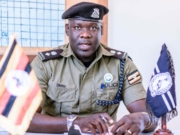
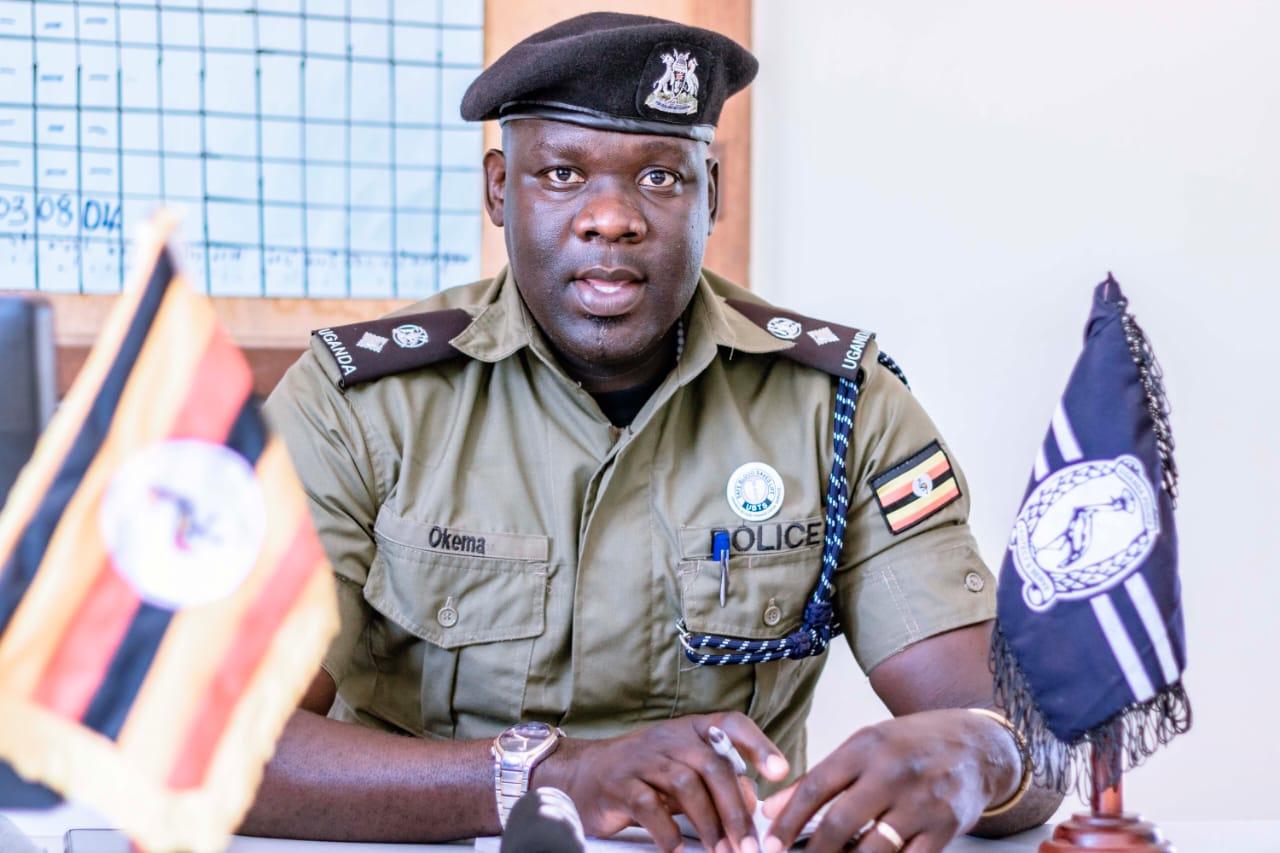
When contacted for comment, North Kyoga Police spokesperson SP Patrick Okema was hesitant. He instead asked this reporter who had provided information about the incident. Sources within the force indicate that police bosses still want to investigate further and apprehend suspects who remain off the hook.
Yet journalists and the public do not need permission to know what happened in their own backyard. Article 41 of the Constitution of Uganda guarantees every citizen the right of access to information in the possession of the State, except where release prejudices security or interferes with the privacy of others. The Access to Information Act, 2005 operationalizes that right, placing a duty on public bodies to proactively release information of public interest.
The Press and Journalist Act Cap 105 further recognizes the role of media in fostering accountability. Article 29(1)(a) of the Constitution protects freedom of the press and expression. A double murder, arson, and mob justice in a trading centre is not a state secret. It is a public tragedy. The community has a right to know, and the press has a duty to tell it, especially when suspects are still at large and the safety of witnesses may depend on public scrutiny.
The law is clear on what unfolded in Akalo. Under Section 188 of the Penal Code Act, any person who causes the death of another with malice aforethought commits murder — an offence punishable by death. Because the mob acted together, each member faces liability under what the law calls “common intention.”
Section 21 of the Penal Code Act says when two or more persons form a common intention to carry out an unlawful purpose, and an offence is committed in the process, each of them is deemed to have committed that offence if it was a probable consequence of their plan. In plain terms: if you run with the mob, you own what the mob does. You don’t have to land the fatal blow. If you joined the chase, blocked escape, set the fire, or even shouted encouragement, the law treats you as a joint offender. The penalty is the same — for murder, that is death.
Those who set the houses alight also face charges of arson under Section 327, which carries life imprisonment. Destroying the motorcycle is malicious damage to property under Section 335, attracting up to five years.
The events also invoke Uganda’s Witchcraft Act. Practicing witchcraft or procuring the services of a witch doctor is an offence under Section 3, punishable by up to five years in prison. In the eyes of the law, both the woman who performed the ritual and the woman who invited her committed an offence before the violence began.
Lango: A Sub-Region on Edge — Why Police Say 2.7 million People Live in Uganda’s Criminal Hotbed.
The double murder in Akalo is not an isolated flare-up, it is a symptom. For years, police and security agencies have flagged Lango Sub-region which is home to 2.7 million people per the 2024 Population Census — as one of Uganda’s most crime-prone areas, a terrain fertile with the ingredients for violence.
The triggers, according to security briefings, are often shockingly petty. Domestic violence erupts because a wife cooked late, returned late from the market, or spends too much time on a smartphone.
Men are hacked over affairs with other women, or for running multiple relationships. Families implode over land and assets left by dead parents. Greed drives youth to sell ancestral land to buy a boda boda motorcycle, sparking blood feuds with siblings and uncles.
Relationships have turned lethal where police records across the sub-region document cases where girlfriends and boyfriends take their own lives over suspicion, or one kills the other after accusations of cheating. Love, here, too often ends at the mortuary.
The rot runs deeper because even in places of worship or faith institutions (churches and mosques) meant to be sanctuaries have become battlegrounds not against Satan but among members and leaders. Quarrels and disputes over leadership are the order of the day, splitting congregations into warring camps.
The cultural arena, once a place of solace, is not spared. Grey-haired elders meant to carry wisdom now trade insults and verbal artilleries on radio stations and social media platforms, attacking and contradicting each other in public, eroding the very institution of clan guidance.
Politically, Lango is very toxic. Society is highly polarized into factions of who supports or does not support who. Alliances shift, grudges linger, and every funeral, wedding, prayer or fundraising becomes a campaign rally. In this climate, a stolen cow does not go to police. It goes to a witch doctor. A disagreement does not go to court. It goes to the mob and radio presenters feast on them sensationally.
The concern has reached the highest levels. At a prayer meeting earlier this year, a senior UPDF officer Maj Gen Keith Katungi the then Lira Garrison Commander openly implored the Lango Paramount Chief, HRH Eng Dr Michael Moses Odongo Okune, to study the sub-region’s crisis and lead efforts to stabilize Lango after decades of instability, so it can return to a peaceful area for meaningful growth and development.
What Makes a Region Crime-Prone? The Security Lens.
From a security and criminology perspective, areas like Lango exhibit classic markers of a “potentially criminal-prone environment.” These are not insults. They are risk factors that police and intelligence use to map hotspots:
Socio-economic pressure: High youth unemployment meets quick-money temptations. Selling family land for a boda boda is not entrepreneurship. It is desperation monetized, and it removes the one safety net land that kept families stable for generations.
Breakdown of traditional dispute resolution: When clan leaders fight on Facebook and cultural heads contradict each other on radio and social media platforms like Tiktok and WhatsApp, the traditional court collapses. People resort to self-help: witch doctors, mobs, poison, and machetes.
Normalization of violence in domestic spaces: Where a late meal or a phone call or a stray text or WhatsApp message can justify a beating, violence becomes language. That language graduates from the home to the village path, then to the trading center.
Political polarization: When every issue is filtered through “whose side are you on,” neutral institutions like the Uganda Police Force, courts, local councils and others lose legitimacy. Citizens stop reporting theft because they believe the officer is “for the other camp”, or having eaten some “ngor”,a common word meaning bribe cash.
Weak faith in formal justice: Decades of case backlog, corruption allegations, and adjournments teach communities that the state will not deliver justice. So, they create theirs, instant, brutal and final.
Proliferation of small arms and impunity: Decades of insurgency left Lango and neighboring regions like Acholi, West Nile and Karamoja with trauma and, in some corners, unaccounted-for weapons. When mobs know arrests are rare and convictions rarer, the cost of killing drops to zero.
Excessive alcohol consumption. Cheap waragi or enguli with different local names like Liralira, dete, mogoamoga and unregulated drinking joints have always fuel violence in trading centers and homesteads.
Authorities say most murders, assaults, rapes and mob actions are committed under the influence of alcohol and substances like marijuana now openly consumed everywhere both in rural and urban centers under the guise of ‘charging the brain’ or Cwinyo Wic.
Lango has bled through insurgency, bled through cattle raids, and now bleeds through domestic knives and mob fire. The next chapter is not written by witch doctors or by police hesitation. It is written by whether 2.7 million people choose law over rumor, courts over mobs, and truth over silence.
The Verdict: Silence Is Not An Option.
This is why The Exposure Uganda exists. We have repeatedly and consistently told our readers that with our respected and acclaimed slogan We Expose, You Decide, we are not just another media channel.
We are a revolutionary digital news platform telling stories in a revolutionary way away from the archaic, monotonous articles that have numbed the nation.
We reject the poison of fake articles, the fog of propaganda, and the insult of insipid PR masquerading as news. We tell our stories in a dynamic format that satisfies and enriches Uganda’s information menu. Because when cows are stolen and courts are ignored, when rituals replace evidence and mobs replace judges, silence becomes complicity.
Police hesitation does not cancel constitutional rights. A spokesperson asking “who told you?” will not stop a newsroom that answers to the public. Inquiries may continue behind closed doors, but justice dies in darkness. It lives only when the facts are dragged into the light.
An American writer Walter Lippmann once warned, “There can be no higher law in journalism than to tell the truth and to shame the devil. And as another American broadcast journalist Edward R. Murrow once said, “To be persuasive we must be believable; to be believable we must be credible; to be credible we must be truthful, we will not kneel, we will not flinch.
Kole bleeds today because truth was outsourced to a witch doctor and justice was auctioned to a mob. It will bleed again tomorrow if the press kneels when asked “who told you?”
We are The Exposure Uganda (TEU).
We Expose, You Decide.