









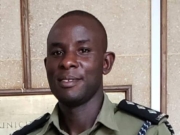

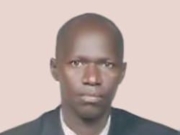


Sydney Gongondyo, a former student at Makerere University and a Uganda Rugby Cranes player, was beaten to death by an irate mob in a trading centre on the outskirts of Kampala a couple of days ago after he was mistaken for a bag snatcher who had fled the scene moments earlier, according to eyewitness accounts and police preliminary findings.
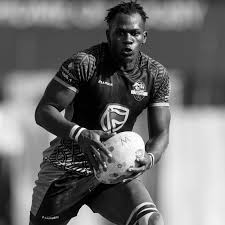
Witnesses said an unidentified man grabbed a woman’s bag and disappeared into the crowd, and within minutes Gongondyo, who was walking through the vicinity in a national team training kit, was surrounded by people who did not ask his name, did not check his identity, and did not listen to his pleas.
They descended on him with stones, clubs, sticks, kicks, and punches while he cried out that he was not a thief, that he was a responsible citizen, and that he had carried Uganda’s flag high on the rugby pitch.
The conch was already broken before the first stone was thrown. The island did not want to hear him. The island never does once law is replaced by paint and fear.
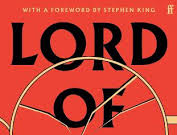
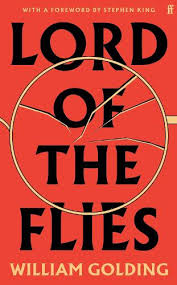
This is not an isolated tragedy but a microcosm of a national condition that William Golding diagnosed in his 1954 novel Lord of the Flies, and Uganda is now performing that diagnosis with documentary precision from rural villages to urban markets, from families and clans to churches, workplaces, schools, universities, Parliament, Cabinet, and even State House.
To Understand This Story, You Need To Understand Golding’s Book.
William Golding was a British schoolteacher who fought in World War II. He saw what “civilized” men did to each other in war. After the war he went back to teaching boys and wrote Lord of the Flies to answer one question: What happens to us when all the rules, the police, the courts, and the adults are removed?
The story is simple. A plane carrying British schoolboys crashes on an uninhabited island. No adults survive. The boys try to govern themselves. They elect a boy named Ralph to be chief. They use a conch shell as their parliament. Whoever holds the conch has the right to speak, and everyone must listen. Another boy, Piggy, is fat, wears glasses, and thinks clearly. His glasses can start the fire they need for a rescue signal.
But another boy, Jack, only wants to hunt. He paints his face to hide his shame, breaks away from Ralph, and forms his own tribe. The boys become terrified of a “beast” they think is hiding in the jungle. To please the beast, Jack’s hunters kill a pig, cut off its head, and stick it on a sharpened stake. The head rots. Flies cover it.
A quiet boy named Simon has a vision where the pig’s head speaks to him. It calls itself “the Lord of the Flies.” That name is a direct translation of Beelzebub, a Biblical name for the devil. The pig’s head tells Simon, “I’m part of you.” The meaning is clear: the real beast is not outside in the jungle. The beast is inside each of them.
The boys kill Simon when he tries to tell them the beast is not real. They murder Piggy with a boulder and shatter the conch into splinters. Jack sets the island on fire to hunt Ralph. The fire brings a naval officer who rescues them. The officer looks at children with war paint and spears and asks, “What are you doing?” Ralph weeps for “the end of innocence, the darkness of man’s heart.”
Golding’s message is not complicated, he says civilization is fragile. The conch is law, due process, and the right to speak. Break it, and we become a tribe. The Lord of the Flies is what rules when we choose rumor over evidence, revenge over trial, and fear over truth.
Now read Uganda.
Setting: The Island Without Adults.
Golding’s setting is an isolated island where no adults exist to enforce rules, which allows the boys to rewrite law until law becomes a spear. Uganda’s setting mirrors that isolation whenever institutions abdicate their adult role. When police always arrive after killings or crimes, when courts focus more on technicalities or the more paying litigant and adjourn cases for years, when Parliament debates procedure or rules and points of order and information while registries burn or leave projects stalled, and when the public decides that the street and social media platforms are the courtroom, we have created the same island.
The centre where Sydney Gongondyo was killed became an island at the exact moment the crowd chose rumor over inquiry, because an island is any place where the conch cannot be heard and where the only law is the loudest voice.
Judges 21:25 records the political condition of such a setting: “In those days there was no king in Israel.
Everyone did what was right in his own eyes.” On the fateful day, everyone in that crowd did what was right in their own eyes, and Sydney Gongondyo paid for their vision with his life.
Plot: The Killing Of Simon, Reenacted.
The plot of Lord of the Flies turns on a single sequence that begins with fear and ends with blood that cannot be washed off. Terrified of a beast they cannot see, the boys descend into ritual dancing and chanting to manage their dread, and when Simon emerges from the forest to tell them the truth that the beast is only a dead parachutist, they surround him in the dark and murder him with their bare hands while screaming, “Kill the beast! Cut his throat! Spill his blood!”
The plot of Sydney Gongondyo’s death follows Golding’s script without deviation.
The real thief, the actual beast, had already vanished into the crowd, yet the fear of loss and the hunger for immediate justice created a ritual of pursuit that required a sacrifice.
Gongondyo walked into the circle at the wrong time, wearing the wrong familiarity, and the mob supplied the rest of the narrative by calling him the beast. He attempted to speak truth to the dance, declaring his innocence and his service to the nation, but the plot of the island does not permit testimony once the chant begins, and therefore the stones became the verdict and the clubs became the sentence.
Proverbs 18:17 warns that “the one who states his case first seems right, until the other comes and examines him,” yet the island’s plot deliberately eliminates the second speaker, because examination is Piggy’s work and Piggy is inconvenient to Jack.
Characters: The People Who Killed Sydney.
Jack Merridew — The Hunter Who Leads the Mob.
In the novel, Jack is the choirboy who discovers that paint liberates him from shame and that meat wins more loyalty than meetings, so he breaks from Ralph, forms a tribe, and rules through fear and the promise of protection from the beast.
On the street that day, Jack was not one man but a spirit that possessed every person who picked up a stone first and shouted “omubi,omubi” which translates “thief, thief!” to authorize the rest, because Jack is the part of us that prefers a quick kill to a slow hearing.
Micah 2:1-2 describes Jack’s politics with ancient accuracy: “They covet fields and seize them, and houses, and take them away; they oppress a man and his house.” The mob coveted justice and seized Sydney instead.
The Hand That Drops the Rock.
Roger is Golding’s most chilling creation because he is not the leader but the lieutenant who learns that cruelty is permitted when no adult is watching, culminating in the moment he leans on a lever and sends a boulder down to crush Piggy.
In Kampala, Roger was the man who threw the second stone and the third, the one who kicked Gongondyo when he was already on the ground, experiencing what Golding called “a sense of delirious abandonment” because the island had abolished consequence.
Proverbs 1:16 says “their feet run to evil, and they make haste to shed blood,” and Roger’s feet were the fastest on that street.
Samneric The Crowd That Joined to Survive.
Samneric are the twins who tend Ralph’s fire by day and carry spears for Jack by night, not from conviction but from the calculus that survival requires allegiance to the strongest.
In the mob, Samneric were the bystanders who delivered one kick each so that they could later say “everyone was doing it,” and the shopkeeper who pointed and said “that one” to avoid being accused himself. Matthew 27:24 shows Pilate washing his hands of blood he authorized, and every Samneric in the crowd washed their hands on Sydney’s shirt.
Piggy — The Reason That Was Not Heard.
Piggy is intellect, procedure, and the unpopular reminder that the conch gives even the weak a turn to speak, which is why Jack hates him and Roger kills him. Sydney Gongondyo became Piggy the moment he invoked law, citizenship, and service, because those are procedural arguments and the island had already voted to suspend procedure.
Acts 7:59 records that Stephen was stoned while “calling out, ‘Lord Jesus, receive my spirit,’” and Sydney’s final words were his own form of testimony that the island refused to enter into the record.
Ralph – The Nation We Could Have Been.
Ralph is the elected leader who believes that fire and shelters matter more than hunting, and who weeps at the end for “the end of innocence, the darkness of man’s heart.”
Ralph was absent from that trading centre, and his absence is the indictment of every institution that should have been adult enough to hold the conch. Sydney carried the flag for Ralph’s Uganda, but he was killed in Jack’s.
The Elites: The Naval Officers Who Became Jack.
And what are the so-called “civilized” men and women referred to as “elites” of Uganda doing? At the end of Lord of the Flies, a naval officer steps onto the beach to rescue the boys, and he is shocked to find painted savages beneath British uniforms.
He represents the adult world, the law, the structure that should have prevented the island from burning.
In Uganda, our naval officers are the elites ,civil servants, the ministers, the permanent secretaries, the professors, the bishops, the CEOs, the honorable members. They arrived wearing the uniform of civilization: degrees, titles, scripture, and policy papers. But what have they become?
Are they not the ones messing up programmes meant to bring citizens into the community, turning parish models into personal estates and poverty funds into political bribes? Are they not the ones frustrating the people of Uganda with endless forms, lost files, endless adjournments, and “come back tomorrow” until tomorrow becomes a funeral? Are they not the ones stealing medicine from public hospitals and selling it in private clinics next door? Are they not the ones who steal funds for roads, schools, and dams, then charter flights to conferences to discuss why the people are poor?
Isaiah 3:14-15 indicts them directly: “The Lord enters into judgment with the elders and princes of his people: It is you who have devoured the vineyard, the spoil of the poor is in your houses. What do you mean by crushing my people, by grinding the face of the poor?”
Golding put the choirboy Jack on the island to show that education does not inoculate you from the beast. Uganda put Makerere and other universities graduates, seminarians, and foreign-trained technocrats in office to prove the same point.
The mob killed Sydney with stones because the elites killed the conch first with a pen. When budgets are eaten, courts are sold, and jobs are auctioned, you teach the street that law is a rumor and that only force is real.
The elites cry “mob justice” on television, but they manufactured the island where mobs become judges. They are not the naval officer who rescues. They are the naval officers who painted their face, took a spear, and joined Jack’s hunt.
Luke 12:48: “Everyone to whom much was given, of him much will be required.” The island required adults. It got elites.
Symbolism: What The Mob Worshipped That Day.
The Conch — Article 28 and the Right to Be Heard.
In Golding’s narrative the conch is civilization’s most fragile technology, because it works only if everyone agrees to listen when it is held, and it shatters the instant Jack decides that votes are slower than violence.
In Uganda the conch is Article 28 of the Constitution, which guarantees a fair hearing, and Article 24, which protects freedom from torture, yet the mob declared both articles irrelevant and proceeded with oral judgment and corporal punishment. What is mob justice according to the dictionary and according to the Penal Code
Act and according to an irate mob? The dictionary calls it “punishment inflicted by a crowd without legal authority.” The Penal Code Act calls it murder, assault, and assault causing grievous bodily harm. The irate mob calls it “instant justice.” Three definitions. Only one is Beelzebub. Prophet Amos 5:10 laments that “they hate him who reproves in the gate,” and the gate of that trading centre had no reproof left in it.
The Lord Of The Flies — Beelzebub On A Stick.
The title of Golding’s book refers to the pig’s head that Jack’s hunters mount on a sharpened stake as an offering to the beast, which becomes covered with flies and speaks to Simon in a hallucination, identifying itself as “the Lord of the Flies,” a direct translation of the Hebrew Ba’al Zevuv, or Beelzebub, a name for the devil.
The symbolic meaning is unambiguous because the head tells Simon, “I’m part of you,” revealing that the true beast is internal and that the tribe is worshipping its own capacity for evil.
On the street where Gongondyo died and in villages and towns where similar incidents are a daily occurrence, The Lord of the Flies was the rumor that became a god, and the flies were the dozens of men and women who swarmed a dying man because decay attracts consensus faster than truth.
Ephesians 2:2 calls Satan “the prince of the power of the air,” and the air that day belonged to him.
Face Paint — The Anonymity of the Mob. Jack’s hunters paint their faces to unmake themselves, because a painted man is not accountable and a tribe member is not an individual, and Golding uses that paint to show how civilization is a mask that can be wiped off.
The mob that killed Sydney wore the same paint not in pigment but in psychology, hooded jacket, intoxicated minds, misplaced frustration, because “mob” is the paint that turns teachers, vendors, boda riders, and fathers into a single creature with no name and no remorse.
Genesis 4:10 says “the voice of your brother’s blood is crying to me from the ground,” and the paint does not hide that voice from the record.
The Fire — The Signal We Refused to Light. For Ralph the fire is rescue, the signal to the adult world that there are children on the island who still want to be saved, and for Piggy the fire is science, because his glasses are the only way to make it.
The fire in Uganda is due process, evidence, police investigation, and trial, yet we extinguish it every time we choose the speed of the stone over the slowness of the summons.
Sydney’s words were an attempt to light that fire, but the island prefers the warmth of the hunt to the light of the rescue.
Theme: Civilization Is A Veneer, And We Just Scratched It.
Golding’s central theme is that moral order is not inherited but chosen, and that the distance between a choirboy and a killer is not nature but structure, which is why the naval officer who rescues the boys at the end is shocked to find savagery beneath English uniforms.
How often do we get shocked that even men of the collar — priests, pastors, bishops and prophets or apostles plus others holding key public positions in security and key public offices engage in savage ways: break-in or stealth entry of some people into Bank of Uganda, mysterious deaths, billions of shillings diverted or unaccounted for or embezzled in offices and churches.
The theme of Sydney Gongondyo’s death is identical, because the mob was not composed of monsters but of citizens who woke up that morning as parents, workers, and believers, and who went to sleep as executioners because the structure of law was replaced by the structure of rumor.
The second theme is that fear manufactures tyrants, since the boys invent the beast and then surrender their freedom to Jack to protect them from it, and Uganda invents “the many thieves” and then surrenders its constitution to the mob to protect it from him.
1 John 4:18 teaches that “perfect love casts out fear,” yet we have chosen fear as our governing principle, and therefore Jack governs every street.
The third theme is that silence is complicity, because the murder of Simon is accomplished not only by the hands that strike but by the eyes that watch and the mouths that do not say “stop,” and every person who recorded the killing on a phone without intervening became Samneric.
Ezekiel 3:18_ places blood on the hands of the silent: “If you do not speak to warn the wicked… his blood I will require at your hand.”
Concluding Paragraph: Why We Have Used William Golding’s Novel.
We have used Lord of the Flies because it is not a book about British schoolboys. It is a manual about what happens to any society, in any century, the moment the conch is shattered and the beast becomes an excuse.
Golding wrote in 1954 after watching “civilized” nations burn cities to ash and educated men design genocide. He was not telling us about an island. He was telling us about ourselves when the adults leave the room.
Uganda does not read Lord of the Flies as literature only. Uganda performs it as policy. The trading center that killed Sydney Gongondyo was not acting out fiction. It was completing Golding’s field experiment with a Ugandan case study.
The setting is ours whenever police arrive late and courts adjourn for years. The characters wear our national jerseys, our collars, our titles, and our face paint. The plot is our mob justice. The symbolism is Article 28 lying in splinters on the street.
The theme is our national mirror: the distance between a choirboy and a killer, between a Makerere graduate and a thief of public funds, is not nature but structure. And our structure has chosen Jack.
We have used Golding because Uganda is now the epicenter of everything that happened on that island, and the indictment is worse because it unfolds amidst all the so-called civilized people.
Some pray until their voices are hoarse and fast until their ribs show, yet sign off on budgets that starve clinics. Others drive posh cars, live in gated bungalows, and fly off for holidays and honeymoons or weekends in super cities, beaches, and resorts, but when the conch breaks, they behave exactly like the painted kids in Golding’s novel. They loot with a signature, auction justice, strangle the fire, and then post statements condemning the mob. The paint is not on their faces. It is on their payroll.
We have used Golding’s work because the naval officer is coming. He will step onto this beach and ask Ralph’s question, the only question that matters now: “What have you been doing?” If we cannot answer with law, with due process, with a conch that still summons, then we have already given him the answer. The island burned. We lit the fire. And Sydney Gongondyo’s blood is the smoke that called him here.
We Expose, You Decide.