












Philemon 1:1-25 Becomes Founding Text for Five-Fold Episcopal World Federation Uganda as Leaders Called to Trade Command for Appeal, Law for Love.
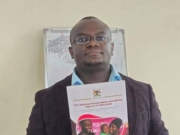
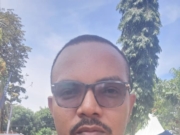
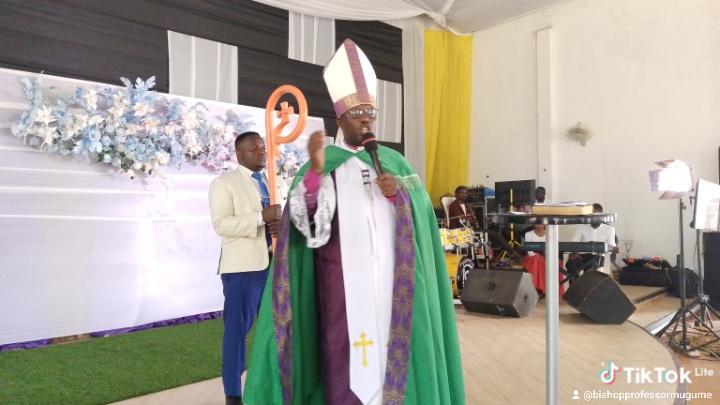
Ahead of the Launching & Consecration of Five-Fold Episcopal World Federation FFEWF Uganda set for 14 December 2026, Archbishop Elect Professor Mugume Bagambaki Richard delivered a message titled: “Gospel of Reconciliation: From Slave to Brother” from Philemon 1:1-25, positioning reconciliation as the legal and spiritual infrastructure of the new federation.
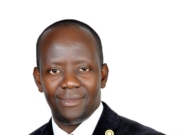
The archbishop-Elect, who serves as Ecclesiastical Patriarch of Five-Fold Episcopal World Federation, Archbishop of Upper City Covenant Churches, and President & Chancellor of UCCSAT University, told clergy and faithful that “the church is not built by titles alone. It is built by transformed relationships.”
The Text: One Page That Carries the Whole Gospel.
Calling Philemon, the “shortest letter of Paul, yet it carries the weight of the entire Gospel,” Mugume noted its context: written from prison, with no doctrinal debates, only “a plea for love to overcome law, for grace to overcome offense.”
The FFEWF Uganda 2026 Sub-Theme “Built Together Faith, Service & Transformation” Eph 2:20 frames the December launch. “If possible, so far as it depends on you, live peaceably with all,” he quoted from Romans 12:18_.
The Big Idea: “The Gospel does not just save souls. It restores broken relationships.”
Profiling The Characters: Paul, Philemon, Titus A Triangle of Gospel Leadership.
To grasp Philemon’s weight, one must understand the men who form the relational architecture of Paul’s strategy. They represent three dimensions of church life: apostolic vision, pastoral governance, and lay partnership.
Paul: The Apostolic Architect.
Paul was an apostle by divine appointment, as recorded in his letter to the Gal 1:1, a Roman citizen and former Pharisee who authored 13 New Testament epistles.
By the time he wrote Philemon, he was an aging prisoner in Rome, Philemon 1:9, yet he continued to direct churches and adjudicate disputes from his chains.
To Philemon he was the spiritual father who led him to Christ and could have commanded obedience, but chose instead to appeal on the basis of love.
Philemon 1:8-9 To Titus, he was mentor and delegator, entrusting him with organizing the volatile churches in Crete.
Titus 1:5 Paul wrote to Philemon because a personal crisis with the runaway slave Onesimus became a doctrinal test case: could the Gospel reconcile master and slave?
He wrote to Titus because the Gospel needed public order elders, sound doctrine, and credible witness in corrupt cities. Together, they reveal Paul’s method: private reconciliation must accompany public reformation.
Philemon: The Lay Patriarch of Colossae.
Philemon was a wealthy Christian in Colossae, likely converted during Paul’s Ephesian mission. Acts 19:10 Though not a cleric, he was a man of influence who hosted the Colossian church in his home, Philemon 1:2, owned slaves including Onesimus, and had a reputation for love and faith toward all the saints.
Philemon 1:5 Paul called him “fellow worker,” v.1, meaning he financed missions and refreshed the hearts of believers. v.7 Their relationship was covenantal.
Philemon owed Paul his very soul, Philemon 1:19, yet Paul waived that debt to test whether Philemon’s faith would produce voluntary love.
While Philemon and Titus likely never met, they represent two arms of Paul’s strategy. Titus secured the macro: church structure and city-wide order. Philemon secured the micro: proving the Gospel could transform households and personal offenses.
Paul wrote to Philemon to make theology domestic. If Philemon could receive Onesimus “no longer as a slave, but as a beloved brother,” Philemon 1:16, then Gal 3:28 was not theory but practice.
Titus: The Apostolic Delegate and Governor.
Titus was a Greek Gentile convert, Gal 2:3, and Paul’s most trusted trouble-shooter. He was living proof that circumcision was not required for salvation.
Gal 2:1-5 Paul deployed him to the hardest assignments: the collection for Jerusalem, 2 Cor 8:6, the Corinthian crisis, 2 Cor 7:6-7, and the disorder in Crete.
Titus 1:5 Paul called him “my true child in a common faith,” Titus 1:4, and “my partner and fellow worker.” 2 Cor 8:23 He left Titus in Crete to “set in order what remains and appoint elders in every town,” Titus 1:5, giving him jurisdiction to establish governance where none existed.
Titus and Philemon are parallel portraits. Titus represents the Gospel’s outward structure doctrine, order, and public ethics. Philemon represents the Gospel’s inward proof forgiveness, restitution, and household transformation.
Paul wrote to Titus to codify church order for the next generation. If the Gospel could produce godly elders in Crete, a place infamous for being “always liars, evil beasts, lazy gluttons,” Titus 1:12, it could work anywhere.
How The Three Interlock.
Paul’s mention of both men reveals his theology of relationships. He had apostolic rank yet waived command with Philemon and delegated real authority to Titus, modeling Five-Fold leadership that distributes power to produce maturity.
Eph 4:11-13 He refused to let doctrine stay abstract: Titus carried it to the city, Philemon carried it to the home. The letters together declare that the church must be both well-governed and well-loved. Without Titus, you have sentiment with no structure. Without Philemon, you have structure with no heart.
The Relationship of Grace: Leadership Seasoned with Gratitude. vv.1-7.
From “Grace to you and peace from God our Father and the Lord Jesus Christ” Philemon 1:3, Archbishop Mugume taught that gratitude builds bridges. Paul starts with thanksgiving because leaders must appreciate before they correct and connect before they confront.
He stressed that love is the evidence of faith, for doctrine without love is noise, 1 Cor 13:1, which is why UCCSAT must train heads and hearts.
He described Philemon’s home church as a place of refreshment, not rejection, and asked pointedly whether modern churches function as hospitals for sinners or museums for saints.
The application for bishops and pastors was clear: authority is most powerful when seasoned with gratitude and love, because people do not care what you know until they know that you care.
The Request of Love: The Jurisprudence of Appeal vv.8-16.
The archbishop-Elect called Philemon 1:10, 16 “the heart of the Gospel in one verse” “I appeal to you for my child, Onesimus… no longer as a slave but more than a slave, as a beloved brother.”
He explained that love appeals while pride commands, and true Five-Fold leadership persuades rather than pressures. Redemption change identity, because Onesimus means “useful,” and in Christ a person’s past does not define their purpose.
2 Cor 5:17-Reconciliation costs something, as Paul modeled Christ by saying, “If he has wronged you at all, or owes you anything, charge that to my account.”
Philemon 1:18 That is substitution: “He made him who knew no sin to be sin for us” 2 Cor 5:21.
Finally, status shifts in Christ. In the Kingdom, titles do not divide us because the cross unites us. Gal 3:28 For Uganda and Africa, the message was unflinching: tribalism, classism, nepotism, corruption, theft of public funds and denominationalism, among others must all bow at the cross. The Gospel turns “masters and slaves” into “brothers and sisters.”
The Response of Faith: Obedience Beyond Command-vv.17-25_
Citing “confident of your obedience, I write to you, knowing that you will do even more than I say” Philemon 1:21, Mugume said mature faith trusts in the Spirit rather than manipulating people. Leaders present Christ and trust God for results. Mature faith also holds hope for restoration, seeing beyond the prison to God’s plan, Rom 8:28, and it embraces partnership in ministry. Ministry is not a solo race, which is the vision of FFEWF: Apostles, Prophets, Evangelists, Pastors, and Teachers working together. Eph 4:11-12
Altar Call & Prophetic Declaration.
The message closed with three heart-searching questions before 14 Dec 2026: Who is your “Onesimus”? Who has wronged you? Will you let the Gospel pay their debt? Will your church be known for reconciliation, not retaliation?
As Ecclesiastical Patriarch, Mugume declared: “Five-Fold Episcopal World Federation FFEWF Uganda will be a house of reconciliation. Where broken pastors are restored, where offended members are embraced, where enemies become family.
That is the power of the Gospel.” He anchored the declaration in Matt 5:9: “Blessed are the peacemakers, for they shall be called sons of God.”
Closing Prayer.
The charge ended in intercession: “Father of Mercy, teach us to live Philemon in our homes, churches, schools, and nation. Remove bitterness. Heal old wounds.
Make Upper City Covenant Churches and Uganda in particular, a place where every Onesimus is welcomed as a brother and every Philemon releases forgiveness. Let the world see that we are Your disciples by our love John 13:35.
Archbishop Elect Professor Mugume Bagambaki Richard. Ecclesiastical Patriarch, Five-Fold Episcopal World Federation
Archbishop, Upper City Covenant Churches
President & Chancellor, UCCSAT University
WhatsApp: +256775050183
Email: fivefoldepiscopalworldfederati@gmail.com.
The Exposure Uganda (TEU): Why We Do Not Flinch.
The Exposure Uganda is not just another outlet, it is a reckoning. In a media landscape where most platforms genuflect before commercial interest, where editorial lines are drawn by advertising invoices, and where the hard questions are strangled by public relations retainers, we step into the arena unleased and unpurchased.
We do not flinch because we are not for sale.
The topics others dread: ecclesiastical corruption cloaked in liturgy, judicial U-turns dressed as jurisprudence, tribal wounds festering beneath political communiqués are precisely the terrain we were commissioned to cover.
PR firms can buy columns, but they cannot buy conviction. Advertisers can pull budgets, but they cannot pull truth. Our ledger carries no debts to the powerful, and therefore our pen owes no deference to the powerful.
We come out boldly and authoritatively because capacity without courage is complicity. We have assembled forensic legal minds, theological scholars, and investigative craftsmen who read statutes as scripture and doctrine as law.
We possess the archival memory to trace a lie to its origin, the jurisprudential literacy to dismantle a false ruling clause by clause, and the theological depth to test every spirit.
When others publish press releases, we publish evidence. When others repeat rumors, we cite the record. Authority is not claimed; it is demonstrated, paragraph by paragraph, footnote by footnote.
We are prepared because passion without discipline is noise. Our resolve is not mood-driven. It is structured. Every Philemon we cover is exegeted before it is editorialized.
Every Onesimus we defend is investigated before he is platformed. We carry the burden of the Pearl of Africa because we understand the physics of pearls: beauty is formed under pressure, and pressure reveals what a thing is made of.
So, when the nation’s wounds are exposed whether in State House, in the sanctuary, or in the Parliament or Council we do not look away. We lean in, with law in one hand and mercy in the other.
We will always come out boldly because timidity is not a journalistic virtue.
The revolutionary mandate of The Exposure Uganda is simple: to make hidden things visible and to make visible things just. If a sect multiplies because the church failed to be a home, we say it.
If a judge abandons the canons of interpretation for the convenience of a ruling, we name it. If a father in the faith treats Onesimus as chattel rather than brother, we publish the letter.
Not out of malice, but out of a covenant with the people of Uganda: that they deserve a press that fears God more than it fears men.
The Exposure Uganda.
We possess the capacity, the passion, and the resolve not borrowed, not brokered, not for hire. We report where law meets faith, where power meets accountability, where scandal meets scripture.
We Do Not Flinch. We Expose. You Decide. We Are The Exposure Uganda(TEU).