








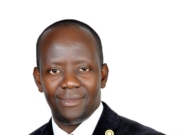







With MoSTI now under Eng. Jonard Asiimwe and Dr. Musenero moved to Energy, Busoga’s leaders ask two uncomfortable questions: How did we fall from second-best to near last, and who must now carry the weight of redevelopment?
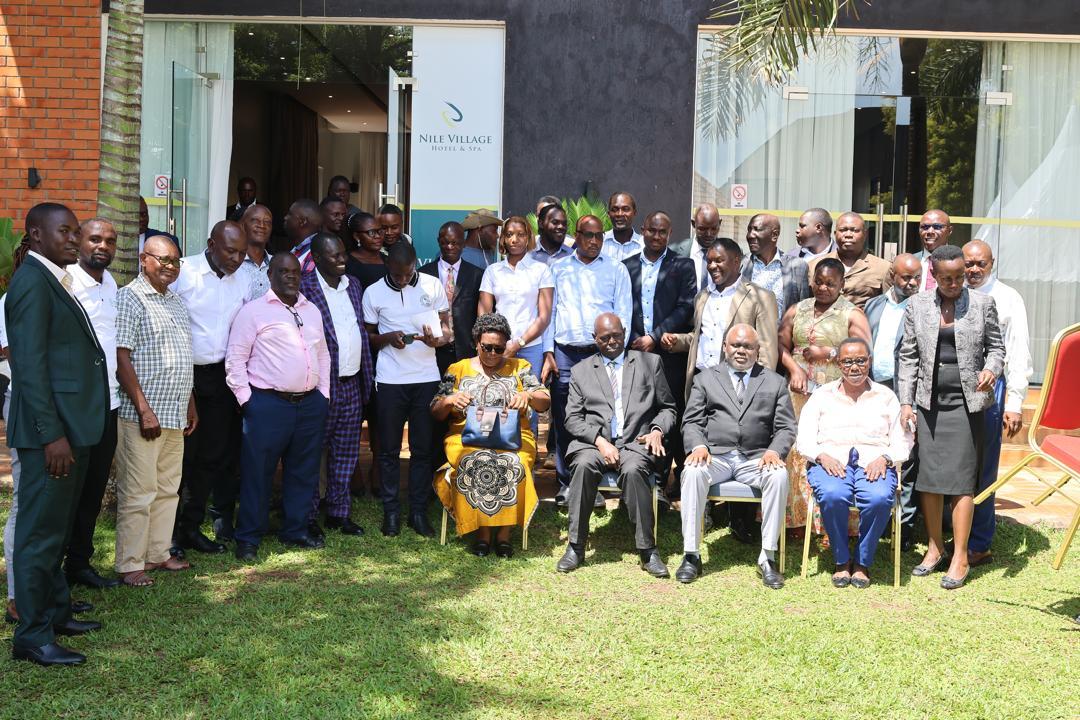
The hum of air conditioners mixes with the steady flow of the River Nile outside floor-to-ceiling glass at the Kiira Road-based Nile Village Hotel & Spa, owned by former Jinja West MP Hon Harry Kasigwa.
Inside, Busoga is doing something it has delayed for decades: holding a mirror to itself.
For one week, the air-conditioned conference hall is hosting STI-OP officials, State House representatives, Busoga Kingdom reps, all eleven District Resident District Commissioners, Chief Administrative Officers, district planners, district production officers, media, and more than a dozen think tankers drawn from Busoga, State House and STI.
The mandate is heavy: enrich the draft Busoga Sub-Region Strategic Plan for Wealth Creation before President Yoweri Museveni finalizes it for launch in his new term under Kisanja No Sleep, Zero Tolerance to Corruption.
Facilitation is being led by Dr Eric Mwima, Principal Programme Officer at STI-OP, working with a technical team whose task is to move the conversation from lamentations to calculations.
The Numbers that Do not Lie. Just as Colombian singer-song writer, dancer and global pop star Shakira Isabel Mebarak Ripoll’s global anthem insists hips do not lie, statistics about Busoga do not lie either.
Year after year, Uganda Bureau of Statistics surveys and independent research place Busoga near the bottom of household wealth rankings. The charts have puzzled elders and frustrated youth because Busoga appears to have every natural advantage.
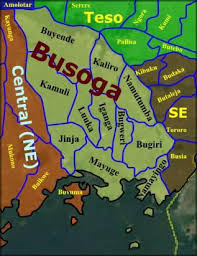
The region commands Lake Victoria, the Nalubaale and Kiira dams, vast fertile volcanic soils, and a population of over four million people. Yet poverty has remained stubborn and almost the catchword.
That contradiction is why Nile Village is full this June because the data has forced a reckoning, and it has forced two questions that now hang over every session in the Victorian Hall.
First, why has Busoga, which sixty-five years ago ranked as the third most prosperous region in Uganda after Buganda and Bunyoro, now slid to a position where it threatens to become the tail, only above Karamoja?
Second, who exactly is responsible for Busoga’s redevelopment, and will they carry that responsibility with the discipline the moment demands?

The answers, leaders say, will determine whether this consultation becomes a turning point or another entry in Busoga’s archive of good intentions.
Flashback with proper citation: Prosperity in 1959.
To answer the first question, participants have been forced to look back to the East African Geographical Review, Volume 1, published in 1959. In that study, Uganda’s regions were ranked by prosperity using income, crop diversity and market activity as proxies.
The authors concluded: “Buganda is the most prosperous region, followed by Bunyoro and the Eastern Province. The Western and Northern Provinces lag behind.”
The Eastern Province then included Busoga, Teso and Bukedi. Within that bloc, Busoga was the dominant economic engine because of Jinja’s industries, mixed farming, and proximity to Lake Victoria.
The 1959 Review warned that market prices undervalue subsistence crops rarely sold, but even with that caveat it placed Busoga’s bloc firmly at number two nationally.
Jinja was Uganda’s and East Africa’s industrial heartbeat, and household incomes in Busoga were above the national average.
Current data: Busoga at the bottom.
Fast forward to the Uganda National Household Survey 2023/24, released by the Uganda Bureau of Statistics. The survey ranks sub-regions by the share of people living below the international poverty line of one dollar per day. The results place Busoga in stark contrast to 1959:
“Busoga Sub-region has 840,700 people living below $1 a day, making it the second-poorest sub-region in the country, only above the once volatile and semi-arid Karamoja.”
The same UNHS 2023/24 data shows Busoga’s per capita income remains among the lowest, despite hosting major national assets. Earlier STI-OP analysis presented at Nile Village places Busoga at 10th nationally in household wealth in UBOS 2022, and currently only above Karamoja in overall welfare indices.
That is the statistical fall the consultation is trying to reverse. The transmission belt between natural resources and household welfare appears to have broken. That is the puzzle the Nile Village consultation is trying to solve.
The Sugarcane Trap.
In many meetings and barazas, conservatives have always protested loudly and fiercely whenever anyone questioned sugarcane growing. Their message has been consistent: “If this meeting is to end peacefully and reach a conclusion, do not criticize or say anything negative about our sugarcane ebikadho/ebikadho.”
That resistance is likely to soften now with the birth of Kibalo, because mathematics cannot be argued with. As the saying goes, hips don’t lie, you cannot claim a woman has a big nyash when every eye can see otherwise.

Numbers are the same, thanks to the experts at MoSTI, farmers will now calculate real profit and loss before planting. That is the power Kibalo brings.
Step beyond Jinja’s skyline and the landscape is a sea of cane. But the economics are brutal, millers advance seed and cash to capital-starved farmers, then lock land into contracts for nearly two years.
When payment comes, deductions for inputs, transport and fees leave farmers with a pittance. The returns per acre are low compared to other enterprises, yet for decades Busoga planted without calculating.
While farmers wait years for a single payout, the factories that began as modest operations have grown into industrial complexes. Owners have amassed enormous wealth while many farmers who supply the cane struggle to afford basic meals.
The social cost is visible across villages with children who go to school hungry and barefoot; many drop out, boys end up cutting and loading cane, and girls are married off young or become single mothers after being impregnated and abandoned.
The cane economy has delivered dozens of factories, but it has also delivered a cycle of deprivation.
After the difficult questions: How STI-OP builds tools, and why it matters beyond Busoga.
It is only after posing those two hard questions that the science response comes in. STI-OP does not build apps in isolation at a Kampala desk. Its model is “research first, then prototype, then field test”.
The secretariat starts with data from Uganda Bureau of Statistics, district production offices and household surveys to diagnose the real constraint. In Busoga and Bukedi that diagnosis was not rainfall, but failure to calculate profit before planting.
From that diagnosis, STI-OP’s research and innovation team designs indigenous concepts into digital tools. “Kibalo” from Lusoga/Luganda and “Cura” from Luo languages became the Kibalo App. The team codes the math, tests it with farmers and district production officers, then refines it until a farmer with primary education can enter acreage and get cost, revenue and profit estimates without an agronomist present. That is why the facilitation at Nile Village involves district planners and production officers directly: they are co-designers, not just trainees.
It is hoped the Kibalo App will be a game changer not only in Uganda but across the East African Community and Africa as a whole because the government of President Museveni has put a lot of emphasis and resources on science and innovation. If poverty is a knowledge deficit, then a tool that turns ancestral wisdom into precise math can travel across borders where farmers face the same problem of planting without calculating.
Another landmark innovation proving Uganda’s capacity is Kiira Motors Corporation at Mutai in Jinja District along the Jinja-Kamuli road. Kiira Motors is Uganda’s flagship vehicle innovation project under MoSTI.
Its most publicized feat is the Kayoola electric bus that drove more than 13,000 kilometers from Uganda to Johannesburg and back without charging, showcasing Uganda’s engineering and energy-efficiency acumen on a continental stage.

The trip was meant to prove that homegrown technology can survive African roads and distances. The demonstration has since translated into commercial interest: South Africa has placed orders for Kayoola buses, signaling that Uganda’s innovation can move from prototype to export.
Together, the Kibalo App and Kiira Motors show the two ends of Uganda’s STI spectrum: one solves the farmer’s pocket calculation in the village, the other proves Ugandan engineers can compete with global automakers.
If STI-OP can scale Kibalo the way Kiira Motors is scaling Kayoola, then Busoga’s wealth plan will not just be a document. It will be software and hardware working for ordinary people.
The science response: MoSTI and STI-OP, with new leadership.
The technical backbone comes from two linked government structures. The Ministry of Science, Technology and Innovation, MoSTI was created as a standalone ministry in 2019 to provide strategic leadership, formulate STI policy and law, mobilize funding for research, and coordinate all actors in the innovation ecosystem.
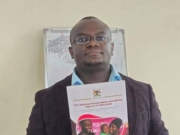
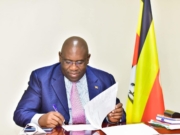
In the May 26, 2026 Cabinet reshuffle, Hon Eng. Jonard Asiimwe was appointed Minister in the Office of the President in charge of Science, Technology and Innovation, taking over the docket from Dr. Monica Musenero Musanza.
Dr. Musenero, who previously championed STI as Senior Presidential Advisor and Minister for Science, Technology and Innovation, has now been moved to Minister of Energy and Mineral Development.
This shift is significant for Busoga because Energy and Mineral Development oversees power, petroleum and minerals, the very resources Busoga hosts through Nalubaale and Kiira dams and its proximity to oil and mineral corridors.
If Busoga’s wealth plan is to leverage those resources, Dr. Musenero’s new docket places her at the table where decisions on power tariffs, rural electrification and local content in oil and gas will be made.
Working with MoSTI is the Science, Technology and Innovation Secretariat, Office of the President, STI-OP. If MoSTI under Hon Eng. Asiimwe is the architect that designs policy, STI-OP is the builder that takes science to the grassroots.
STI-OP develops practical tools, runs field research, and convenes sub-regional consultations. At Nile Village, Dr Mwima and the think tank team are doing exactly that. They are translating data into the Kibalo profitability tool and the Kibalo App, ensuring district technical teams test every assumption against ground realities.
From Ancestral Wisdom to Digital Precision.
At the center of the Busoga discussions is the Kibalo App, an indigenous innovation by STI-OP. Kibalo comes from Lusoga and Luganda and means calculating profit or loss before starting an enterprise.
Among Luo speakers in Lango, Acholi, Alur and Kumam the equivalent concept is Cura, captured in the phrase Tii Kong Cura Aber Ka Twero Keli Magoba, which means calculate carefully to know if there will be profit.
The app translates that wisdom into a simple tool. A farmer selects an enterprise, enters acreage, and the app works out costs of inputs, labor and transport, then shows expected profit per amount invested.
It ranks enterprises and filters out those with unstable markets so farmers do not waste effort on crops no one will buy. The goal is to ensure that whether a farmer speaks Lusoga or Luo, the decision to plant is guided by math rather than habit.
Guided by this approach, the draft plan is steering Busoga toward enterprises with strong local demand and export potential. Palm oil is being prioritized for cooking oil and soap industries with steady factory demand. Coffee remains central because Uganda earns most of its agricultural foreign exchange from it and Busoga’s altitude and soil are well suited. Cocoa is being promoted because global demand for chocolate keeps prices strong and returns per acre far exceed those of sugarcane.
These are being supported by poultry, fish farming in approved wetland zones, bees for pollination, and vegetables for families with small pieces of land.
A major pillar is the idea of Incorporated Family Businesses. Families are being encouraged to register as companies, pool fragmented land, buy equipment together and hold shares in cooperatives.
The logic is that as agriculture becomes more mechanized and driven by technology, organized families will own the machines and benefit as shareholders rather than being reduced to casual labor.
The Second Question: Who is Responsible?
If MoSTI under Hon Eng. Jonard Asiimwe and STI-OP can supply the science, and if Dr. Musenero at Energy can align power and mineral policy with Busoga’s needs, the second question begging an answer at Nile Village is about ownership.
Who is responsible for Busoga’s redevelopment? STI officials are candid. The model works, but only if leaders, especially elected ones, set aside divisions and work for the common good. Busoga’s chronic challenge has always been compounded by fragmentation among political leaders, cultural institutions and technical teams.
The cultural call: “Let every Musoga embrace Kibalo and kill Bwavo”
The question of responsibility has also been taken up by Busoga Kingdom itself.
Owek Veronica Vennah Kagona, Youth Minister in the Busoga Kingdom headquartered at Igenge Hill, the official palace of Kyabazinga HRH William Wilberforce K.Nadiope Gabula IV is urging every Musoga to hear, internalize and embrace the Kkibalo App.
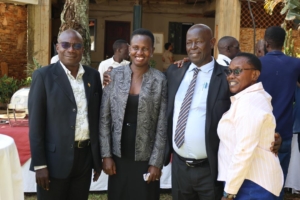
Her message is blunt: the app is Busoga’s chance to once and for all kick poverty bwavo as the Basoga call it, out of homes and replace the embarrassing but common phrase “Ffe Abasoga Tulibwavo”, meaning “We the Basoga are poor”.
Owek Kagona reminds the region that Busoga is not a region without icons.
Busoga set a continental record when the Budwege-born medical doctor Hon Dr. Specioza Wandira Kazibwe became Africa’s first female Vice President. Veteran politician and celebrated lawyer Rt Hon Rebecca Alitwala Kadaga made history as Uganda’s First Female Speaker of Parliament for 20 years (10 years as Deputy Speaker, then 10 years as Speaker).
And Dr. Joseph Muvawala (who doubles as the Katukiro), the Budondo-born Executive Director of the National Planning Authority, NPA, is proof that Busoga produces technocrats who shape national policy.
“For a region that gave Africa its first female VP and Uganda its longest-serving female Speaker, poverty cannot be our permanent identity,” Madam Kagona argues. “If our children can code apps, build electric buses at Kiira Motors, and run NPA, then every household must also learn to calculate profit before planting. Kibalo is our bridge from bwavo to wealth.”
That cultural push matters because wealth creation will fail if it stays in boardrooms. It must move into kisenge(bedrooms) at household levels where the phrase Tulibwavo is spoken most. The Youth Minister’s call is that Kibalo must become as common in Busoga as greeting in Lusoga.
For Busoga, the week at Nile Village overlooking the Nile is more than another workshop. It is an attempt to break from decades of guesswork and replace it with calculation.
With fertile land, capable people, the wisdom of Kibalo and Cura, and now a digital tool to guide decisions, Busoga is trying to rewrite its arithmetic. But the final variable is leadership.
Until Busoga answers why it fell from third-best in 1959 to near last in 2023/24, and until it settles who will carry the responsibility for redevelopment, wealth will remain a theory discussed in air-conditioned halls while poverty persists outside the glass.
TEU reports from Nile Village Hotel & Spa because Busoga’s story requires context, detail and debate. We present the information so readers are nourished with facts, not rumors.
TEU, We Expose, You Decide.