






















TEU Preamble: We Expose, You Decide.
What you are about to read is not a blame game, not a witch hunt, and certainly not a celebration of anyone’s apparent downfall. At The Exposure Uganda (TEU), no topic is too complicated, no conversation too controversial to touch or handle with honesty.
We are not for anyone, and we are not against anyone. Our duty is simple: hold up the mirror. As you read, you will decide whether to learn, change, improve, or ignore. That choice is yours. Our slogan remains unchanged: We Expose, You Decide.
This piece is written in that spirit to warn, not to wound. To instruct, not to insult. Because power, once you hold it, feels permanent. Until it isn’t.
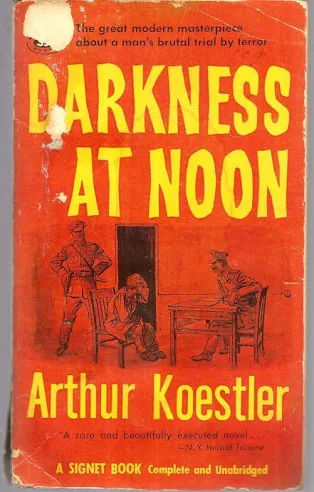
Darkness At Noon: Why Uganda’s Leaders from LC1 To Ministers & Permanent Secretaries Must Read Arthur Koestler Today.
Written for Stalin’s Moscow, read in Busoga’s council halls: Koestler’s warning about power has outlived its author.
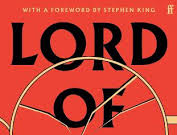
In the winter of 1940, as Europe burned in the Second World War, a Hungarian-British journalist named Arthur Koestler published a novel that would outlive both the war and the Soviet Union it was aimed at.
Darkness at Noon is set in the Soviet Union during Joseph Stalin’s Great Purges of the late 1930s, a time when the state turned on the very revolutionaries who had built it.
The story opens in the middle of the night. There’s a knock-on Nicolas Rubashov’s door. Party officials enter without explanation, without trial, without negotiation. One moment he’s a Central Committee member who helped forge the State.
The next moment he’s “Comrade No. 406” in a prison cell, his apartment sealed, his driver and secretary gone before sunrise. The same system he designed to protect the revolution now processes him as a threat to it. Koestler writes: “The grammatical fiction called ‘I’ was being corrected into ‘We’.”
The plot is simple but merciless. Through interrogations by two former comrades, Ivanov and Gletkin, and through Rubashov’s own memories, Koestler strips power down to its bones. The book asks one brutal question: what happens when the ideology you spent your life building decides you are expendable? Rubashov once justified executions and betrayals as “historical necessity” for the greater good.
Now he is the one being told his confession is necessary for the same cause. The title comes from a medieval paradox about “darkness at noon” — monks arguing that the sun did not exist during an eclipse. For Koestler, it is a metaphor for how ideology can make intelligent people deny obvious reality.
The core message is not about communism alone. It is about the seduction of power and the danger of believing that the institution you serve will protect you. Koestler’s key characters are not just Russians. They are archetypes. Every political system produces them, including Uganda’s. If you have never read the book or sat in a literature class, here are the three faces you need to know:
Rubashov, Ivanov, Gletkin: The Three Faces of Power — In Plain English.
Nicolas Rubashov – The Believer Who Becomes the Victim.
Think of him as the founding member, the “blue-eyed boy” who helped build the system from day one. He signed orders, defended purges, and told himself “this pain is necessary for the greater good”.
He truly believed the Party would always need him because of his service. Then one night there’s a knock at 2am and he’s “Comrade No. 406”. His apartment sealed, his driver reassigned, his name erased.
Uganda’s version: Every LC5 chair who says “this district is mine”, every minister who thinks “they can’t touch me, I built this ministry”, every PS who believes loyalty is protection — that’s Rubashov.
The system remembers your work until it doesn’t. The tool you forge will be used on you.
Ivanov – The Old Comrade With a Conscience. Ivanov is Rubashov’s former friend and interrogator. He’s fought in the revolution too, so he still asks moral questions: “Was all this killing really necessary?” He’s tired, human, and feels guilt. But he’s also weak. When the Party tells him to sign Rubashov’s death warrant, he does it. He represents leaders who know something is wrong but comply because “orders are orders”.
Uganda’s Version: Ivanov is the senior civil servant who whispers “this procurement is shady” in the corridor, then signs anyway. The RDC who knows the arrest is political, but still follows instructions. Good heart, no spine. Systems love Ivanovs because they feel guilt but never resist.
Gletkin – The Cold Technocrat With No Ideals.
Gletkin is the new breed. Young, precise, no emotions, no memory of the struggle. He doesn’t care about “why”. He only cares about “how”. For him Rubashov is not a person, he’s a problem to be solved. If confessing “saves the Party”, then Rubashov must confess. If destroying him “strengthens the State”, then he’s destroyed. No hesitation.
Uganda’s version: Gletkin is the new Permanent Secretary(PS) who says “policy is policy”, the junior officer who enforces POMA by the book even against the man who wrote it, the aide who drops your call the day after you’re dropped from cabinet. Systems always promote Gletkins because they’re predictable. They don’t ask questions. They execute.
The Party / The System – The Real Main Character.
Koestler makes the Party feel like a living thing. It has no face, no gratitude, no memory. It uses people, then discards them. Today you’re “Comrade”, tomorrow you’re a number. The Party doesn’t hate Rubashov. It simply moves on.
Uganda’s version: That’s every institution once you leave office. The convoy, the sirens, the cleared road — they belong to the office, not to you. The ministry, the district, the party structure will function after you. Power has no memory. The desk you sit at has buried more egos than you can count.
Koestler could not have imagined Uganda, a small country in East Africa with about 46 million people. He wrote for a Europe drowning in totalitarianism. He probably thought his warning was bound to Moscow in the 1930s. But several years down the road, _Darkness at Noon_ has become required reading in a country he never visited.
From the LC1 chairman settling a land dispute under a mango tree, to the headteacher managing a school’s funds, to the LC5 chairperson negotiating district budgets, to the mayor balancing service delivery and politics, to the ambassador representing Uganda abroad, and even to powerful officers in security institutions — the Rubashov trap is the same. Power convinces you that your position is permanent. The system convinces you that it has a memory. Then the system moves on.
The philosophical engine of this trap is older than Koestler. Niccolò Machiavelli, in The Prince, gave political leaders their most quoted and most abused line: “The ends justify the means.” For five centuries it has been used as armor by those in authority. It sounds like realism until you become the “means”. The 18th-century German philosopher Immanuel Kant pushed back with a different moral law: people are “ends in themselves”, never tools for someone else’s agenda. Jesus framed it in starker terms: “What good is it for someone to gain the whole world, yet forfeit their soul?” Uganda’s politics, like politics everywhere, keeps walking the knife edge between those two claims.
That tension is playing out in real time in Busoga. For years Rt Hon Rebecca Kadaga was known across the sub-region as “Mama”. As Speaker and later as NRM National Vice Chairperson Female and CEC member, her name was woven into Busoga’s political identity.
When Rt Hon Annette Anita Among defeated her for that CEC seat, the political weather changed. A section of kingdom leaders who had stood with Mama Kadaga for decades publicly shifted to the new center of gravity.
The catchword “AAA” dominated banners and meetings. It was politics, and politics moves. Today the weather has shifted again, many of those voices are quiet. The catchword is off the posters. That silence is not necessarily betrayal; it is often calculation. But Koestler would recognize it immediately. Systems always prefer Gletkins because they are predictable. They consume Rubashovs because Rubashovs once believed the system would remember their service.
Meanwhile Mama Kadaga is moving through Busoga on a different currency. Without the CEC title she is still being hosted, invited and celebrated. Political watchers call it “Planet 9” — a space outside formal office but still inside public relevance. It is the difference between leverage and legacy. Leverage is what you hold when you have the gavel. Legacy is what people remember when the gavel is passed on. One expires with a vote. The other outlasts it.
This pattern is not about Busoga alone, Uganda’s history is full of Rubashovs who believed the system they built would make an exception for them.
Amama Mbabazi helped design the NRM structure as Secretary General and Prime Minister. When he stepped outside it in 2016, the structure moved against him. Former bush war commander Col. Dr. Kizza Besigye was once President Yoweri Museveni’s personal physician in the Luwero jungles.
After 1986 he served in key security and political positions. Today he is in Luzira Prison facing charges of treason and other offenses. The arc from bush doctor to state builder to state defendant is pure Rubashov.
The same script played out with Rt Hon John Patrick Amama Mbabazi, once described as Museveni’s “blue-eyed boy” and widely seen as a potential successor. As Prime Minister and Secretary General, Mbabazi was the architect of much of the NRM’s legal and political machinery. He steered the Public Order Management Act through Parliament in 2013 amid fierce protest.
POMA gave police sweeping powers to regulate assemblies. In 2016, when Mbabazi himself contested the presidency, that same law was enforced against him with surgical precision. Police blocked his rallies and arrested him repeatedly.
Supporters say officers mocked him with the line: “Afande, this law is your handiwork, so enjoy it”. The lawmaker became the law’s first high-profile victim. Koestler could not have written it better. The tool you forge to control others will eventually be used to control you.
That is the “Rubashov irony”. Rubashov signed execution orders in the name of historical necessity. Years later, he was executed in the name of the same necessity. Machiavelli told princes “the ends justify the means”. He forgot to add the footnote: “until the means come for you.”
The Arrest Scene and Uganda’s Version of the Knock at 2am.
Rubashov’s arrest is chilling not because of violence, but because of speed and silence. One night he has an apartment, a driver, a secretary, a place at the Party table.
By morning he is a number. Uganda has its own version of that knock. When the State withdraws what it gave, leaders feel the same shock. Security details, escort vehicles, sirens, road clearances — they are not personal gifts. They are tools attached to an office. When the office changes, the tools move with it. Overnight, the symbols of authority disappear. The road no longer clears. The convoy no longer moves. The system that once amplified your voice now processes you like any other citizen. That is the darkness at noon moment — when the sun you thought was permanent sets without notice.
And Rubashov is not alone in that cell. Quite a number of leaders who either lost reelections or were not appointed back are already facing the reality of life outside office. They are now picking calls from people they once disregarded, because those people now hold the pen.
They are being introduced at functions with the past tense: “former MP,” “former minister,” “former RDC.” The “Honorable” drops off. The sirens stop. The gate that once opened automatically now requires an explanation. Koestler would nod and say: welcome to the grammatical correction. The “I” becomes “We” again.
District chairpersons spend fifteen years believing “this district is mine,” only to learn on election night that the district was never theirs. It belonged to voters all along. Even in schools and sub-counties, headteachers and LC3 chairs discover that authority tied only to office disappears the moment the office changes hands.
Concluding Words: Read Before Tomorrow Reads You.
To those who sit in power today, the minister signing the voucher, the RDC giving orders, the MP whose phone will not stop ringing, the security officer holding the baton, the LC5 chair controlling the district budget, the headteacher managing teachers’ payroll read Darkness at Noon and read it honestly. Not because you are guilty today, but because none of us knows what tomorrow will ask of us. Power has no memory.
The same desk you sit at has buried more egos than you can count. Koestler’s warning is simple: the system you command will not save you when the system decides to move on. Rubashov was not arrested by enemies. He was arrested by logic he helped write.
The Holy Bible is not a book of scandals meant to shame our heroes. It is a book of mirrors meant to save us. King David, the man after God’s own heart, committed adultery with Bathsheba and ordered the murder of her husband. Moses, the lawgiver who spoke to God face to face, killed an Egyptian in anger and was barred from the Promised Land because of it. Samson lost his power not to Philistines but to lust and betrayal.
King Solomon saw his kingdom split because of idolatry in old age. Peter denied Jesus three times before sunrise. Paul once held the coats of those stoning Stephen. These stories are not there to embarrass them, they are there to warn us. Great men and women fall not because they were weak, but because they believed their position made them exempt.
Strong Conclusion: The Message Is For Everyone Holding The Pen Today.
Let this be said plainly, without fear and without favor: Power is borrowed, legacy is built, and the darkest noon comes only to those who refuse to see the light while they still can.
If you are a minister today, remember that the same policy you sign to silence dissent will be quoted back to you when the tables turn. If you are a permanent secretary holding the budget pen, know that files have no loyalty and records do not forget.
If you are an MP, RDC, LC5 chair, headteacher, LC1 chairman, or security officer holding the baton — understand this: the system you serve today will not attend your funeral tomorrow. It will replace you before your office chair is cold.
Do not confuse leverage with legacy. Leverage is the siren, the convoy, the cleared road. It vanishes the moment the appointment letter is revoked. Legacy is how people speak of you when the title is gone. One expires with a vote. The other outlasts it.
So, act fairly while the pen is still in your hand. Build institutions, not altars to yourself. Treat citizens as ends, not means, because Immanuel Kant was right and Machiavelli was only half right. Serve the nation more than you serve the moment. And read Koestler before politics forces you to learn his lessons in a cell, in a courtroom, or in the silence of a home without escorts.
To Uganda’s leaders from LC1 to State House: tomorrow is unwritten. The law you pass today can be read back to you at a roadblock tomorrow. The order you give to imprison a perceived enemy can be opened against you years later. The loyalty you demand from others can evaporate the moment your title changes to “former.” That is not cynicism. That is history. And history does not negotiate.