























The Exposure Uganda (TEU) Preamble.
Nations are not born from definitions copied out of old textbooks, nor from flags stitched in quiet rooms. Nations are born in argument, in sacrifice, in the long refusal to be ruled without consent. You cannot checklist a people into existence. You cannot borrow a dead empire’s theory and expect it to breathe here.
War teaches what politics often forgets. Carl von Clausewitz, the Prussian general who studied Napoleon’s wars and wrote On War, understood that “war is the continuation of politics by other means.”
Take that not as a call to arms, but as an analogy: nationhood, too, is the continuation of struggle by every means courtroom, farm, classroom, ballot, and newsprint.
To speak of Uganda’s “national question” while ignoring the sword that drew our borders is to write poetry on a prison wall. Stalin’s 1913 scalpel, sharp as it was for the Tsarist empire, cannot cut through what colonialism shattered here.
Sovereignty is not a certificate you hang in Geneva. Frantz Fanon, the psychiatrist and revolutionary from Martinique who fought with the Algerian FLN and diagnosed the psychology of colonization in The Wretched of the Earth, put it plainly: for a colonized people, “the most essential value is first and foremost the land.”
And land without control is a rumour. A people who cannot price their own coffee, defend their own courts, or feed their own children are citizens by courtesy and subjects by condition. Thucydides, the Athenian general who chronicled the Peloponnesian War, left us the cold analogy: “The strong do what they can and the weak suffer what they must. The Exposure Uganda (TEU) exists so the weak may read and refuse.
Ethnicity was not our birthmark. It was empire’s paperwork. Mahmood Mamdani, the Ugandan scholar who dissected colonial rule in _Citizen and Subject_, showed how indirect rule did not discover tribes; it manufactured them into filing cabinets of control. To mistake those cabinets for culture is to mistake the cell for the soul. “Divide and rule” is older than Caesar, but London perfected it here. Our task is not to balance the cages. Our task is to unlock them.
Political freedom without economic muscle is a permission slip to starve. Kwame Nkrumah, Ghana’s first president and the voice of Africa Must Unite, warned us to “seek ye first the political kingdom,” but he never meant the kingdom should be empty.
A treasury that rents its policy, a budget drafted by creditors, a central bank that takes orders that is not independence. That is accounting. Dani Wadada Nabudere, the Ugandan scholar and former minister who wrote The Political Economy of Imperialism, called it by its name: neocolonialism is not a flag; it is a financial structure. And structures do not fall from footnotes. They fall when people see the beams.
A courtroom without a gallery is a conspiracy. A statehouse without a flashlight is a vault. Frederick Douglass, born into slavery and become America’s great abolitionist orator, told us “Power concedes nothing without a demand.”
The press is that demand, printed. We are not for or against any general, any judge, any party. We are for the principle that every bunker must have a window. We bite paper, not ankles and paper, when it carries fact, outlives decrees.Federation is not a magic word. You cannot staple ten bankrupt households together and call it wealth. You cannot integrate what you do not control. To federate dependencies is to franchise captivity. East Africa deserves a union of sovereigns, not a customs union of clients. Anything less is logistics without liberation.
And citizenship is not a plastic card. It is authorship. Aristotle, the Greek philosopher who tutored Alexander and wrote Politics, called man a political animal not a tribal animal, not an ethnic animal. A political animal authors his polis or is authored by another. When the youth see no stake, they lend no blood. When institutions are auctions, ballots become receipts. A republic without trust is a barracks with elections.
So, The Exposure Uganda does not fear to tackle any topic or issue. We do so with a high level of professionalism because we are a watchdog, loyal only to the public interest and the Constitution. We are not for or against any entity or individual. We publish not to convict in print. We publish so the record cannot be burned. We name power so power cannot hide. We carry the torch not to set fire to reputations, but to light the files, the budgets, the minutes, the gavel, and the gun.
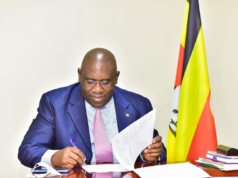
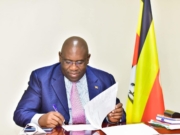
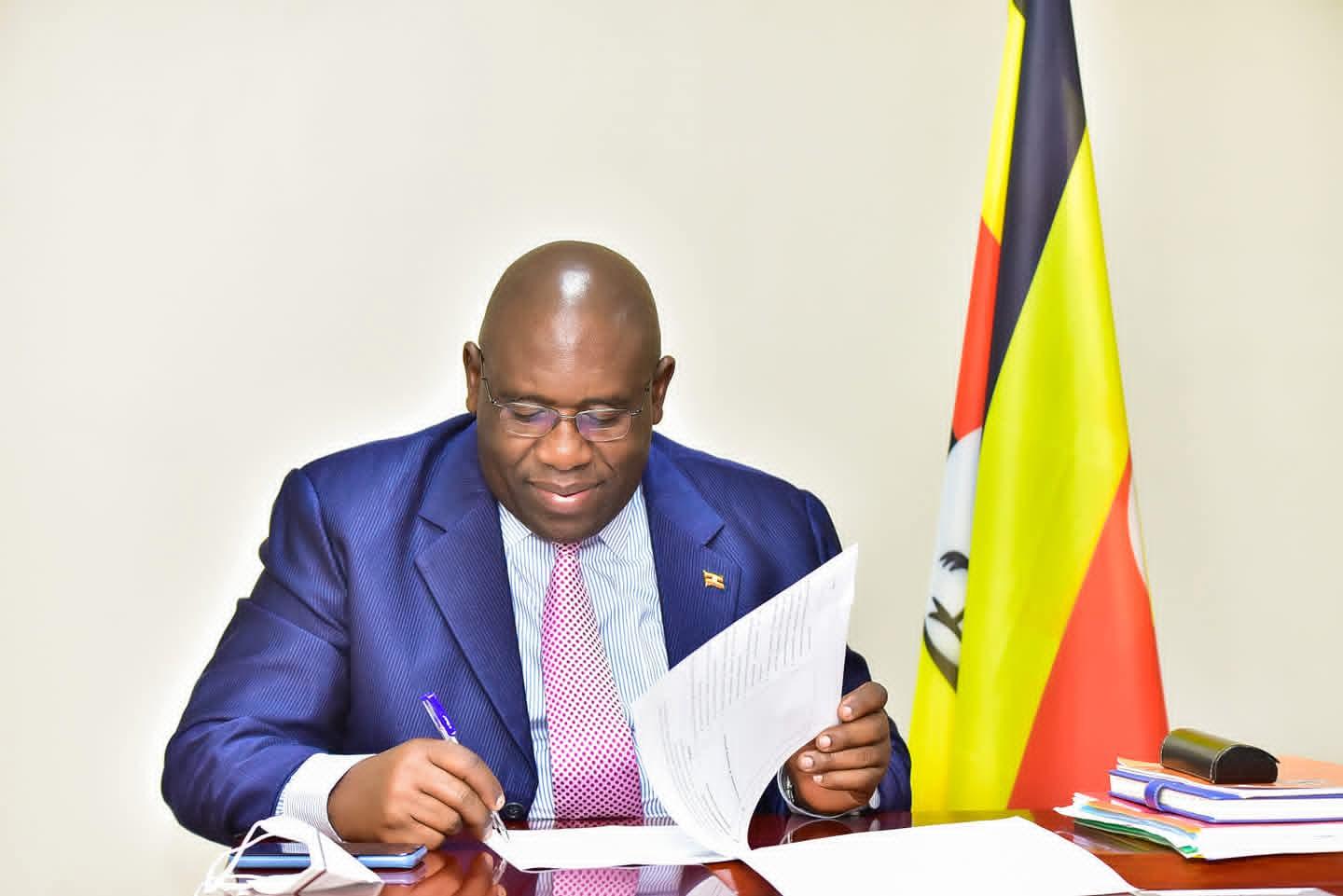
Hon. Asuman Kiyingi returns fire at his contemporary.
In “Beyond Stalin: Rethinking Uganda’s National Question,” Senior Advocate and former Minister Hon. Asuman Kiyingi steps out of the seminar room and into the square. He rejects borrowed definitions. He indicts rented policy. He names the principal contradiction that polite commentary tiptoes around: neocolonial dependency dressed as development, and elite fragmentation marketed as devolution. Read him verbatim:
Beyond Stalin: Rethinking Uganda’s National Question
By Asuman Kiyingi
Kenneth David Mafabi’s recent article, “Answering the Contemporary National Question,” deserves credit for reopening a debate that has long been neglected in Uganda’s public discourse. At a time when much political commentary is confined to personalities, scandals, and electoral disputes, Mafabi offers something refreshing and ambitious: a theoretical inquiry into the foundations of nationhood itself.
Drawing heavily on Joseph Stalin’s 1913 essay Marxism and the National Question, Mafabi adopts a classical Soviet definition of nationhood, arguing that a nation is neither a tribe nor a race but a historically constituted and stable community characterized by four defining features: a common language, a common territory, an integrated economic life, and a common psychological make-up expressed through culture.
Applying this framework to contemporary Uganda, he contends that the country’s historical mission is the consolidation of a stable multi-national Ugandan community, ultimately finding expression within a stronger East African Federation and a broader Pan-African Economic Community.
This argument possesses a certain intellectual elegance. It correctly rejects crude tribalism as a basis for nationhood and recognizes that nations emerge through historical processes rather than biological inheritance. Yet its central weakness lies precisely in its elegance.
Mafabi approaches the National Question as though it were primarily a matter of definition and institutional design. He presents nationhood as a technical problem whose solution can be derived from an abstract checklist inherited from twentieth-century Soviet theory. In doing so, he overlooks the concrete historical forces that have prevented genuine nation-building in Uganda and much of post-colonial Africa.
The National Question is primarily not a question of language, territory, culture, or even economic integration. It is a question of power. More specifically, it is a question of whether a people possess sufficient political, economic, and cultural sovereignty to determine their own collective destiny. That is where Mafabi’s framework breaks down.
The first difficulty is methodological. Why should a twenty-first-century African society seeking to understand its own historical condition begin with Stalin’s 1913 definition rather than the rich body of African scholarship that has spent decades interrogating precisely this problem? The National Question in Africa emerged under conditions fundamentally different from those that shaped European nation formation. European nations generally evolved through long processes of territorial consolidation, economic integration, and state formation. African states, by contrast, were largely products of colonial conquest. To analyze post-colonial Africa through categories developed for pre-revolutionary Europe is to risk mistaking historical analogy for historical explanation.
Ugandan scholars such as Mahmood Mamdani and Dani Wadada Nabudere approached the National Question from a different starting point. Rather than asking what structural characteristics define a nation, they asked what historical processes prevent genuine nationhood from emerging.
Mamdani’s enduring contribution was to demonstrate that colonialism did not simply occupy African societies; it fundamentally restructured them. Through indirect rule, colonial administrations transformed fluid cultural identities into rigid administrative categories and institutionalized ethnicity as a mechanism of governance. The result was what Mamdani famously described as a bifurcated state that produced citizens in urban spaces and subjects in rural spaces. The central post-colonial challenge, therefore, was not merely to unite different ethnic groups under a common flag. It was to create a political community in which citizenship transcended ethnicity and equal membership in the nation was no longer mediated through tribal identity. The National Question, in this sense, is fundamentally a citizenship question.
Yet the citizenship question cannot be separated from the question of power. A citizenry deprived of meaningful control over its natural resources and economic future cannot fully exercise political sovereignty. Citizenship itself cannot flourish in a political vacuum. It requires a sovereign state capable of exercising meaningful control over its economic destiny. This is where Mamdani’s insights intersect with those of Yash Tandon and Dani Wadada Nabudere. Both scholars recognized that the post-colonial state inherited not only colonial administrative structures but also a subordinate position within the global capitalist order. Formal independence removed direct colonial rule but left intact a system of economic dependence that constrained the capacity of African societies to chart autonomous developmental paths.
Tandon’s critique is particularly relevant. He argues that national development becomes impossible when economic policy is effectively externalized; when decisions affecting agriculture, industry, finance, and trade are increasingly shaped by international financial institutions, foreign capital, and unequal global market relations. Under such conditions, political independence masks economic dependence.
Nabudere went further by arguing that the post-colonial state itself had become structurally dependent on external centres of accumulation. For him, the National Question could not be resolved through administrative reforms alone because the state had been integrated into a global system that rewarded dependency and punished autonomous development. His insight remains profoundly relevant to contemporary Uganda.
The National Question therefore cannot be reduced to a cultural or administrative problem. It is inseparable from the question of imperialism. This is not because every social problem originates abroad, as critics often caricature anti-imperialist analysis. Rather, it is because imperialism constitutes the principal contradiction within which many secondary contradictions reproduce themselves.
Corruption, primitive wealth accumulation, electoral fraud and authoritarianism, and social fragmentation certainly possess internal dynamics. But these dynamics do not exist in isolation. They are frequently sustained by an international order willing to tolerate, finance, and legitimize local ruling classes so long as they preserve existing patterns of economic dependence and geopolitical alignment. Throughout the post-colonial period, African regimes have often retained external legitimacy not because of their democratic credentials but because of their strategic and economic usefulness within the prevailing international order. The issue is therefore not whether local elites possess agency. They do. The issue is the structural role they perform.
To understand how this contradiction emerged, one must return to the historical formation of Uganda itself. Prior to colonial conquest, the territory now known as Uganda contained numerous societies developing along distinct yet interconnected historical trajectories. Some possessed centralized political institutions while others were organized through more decentralized systems of governance. They traded with one another, forged alliances, competed for resources, and evolved according to their own internal dynamics.
British colonialism did not merely interrupt these processes; it subordinated them to the imperatives of imperial extraction. The colonial state was not established to build a nation. Its primary purpose was extraction. Administrative boundaries, ethnic classifications, labour policies, and regional economic specializations were designed to facilitate imperial control rather than national integration. Indirect rule deliberately politicized ethnic difference and transformed local identities into instruments of governance. Regions were assigned distinct economic functions, creating structural inequalities that would persist long after formal independence. The result was not nation-building but fragmentation.
When independence arrived in 1962, the colonial state changed hands but its underlying architecture remained largely intact. Uganda became politically independent without achieving substantive economic sovereignty. The post-colonial state inherited colonial institutions while operating within an international system designed to preserve unequal relations between the industrialized centre and the developing periphery. Viewed from this perspective, the persistence of the National Question becomes easier to understand.
Mafabi correctly emphasizes the importance of a common economic life. Yet contemporary Uganda’s economy increasingly exhibits the opposite tendency. Decades of neoliberal restructuring have weakened domestic productive capacity, privatized strategic national assets, and subordinated development priorities to external financial interests. The consequence has not been deeper national integration but heightened dependency.
Similarly, Mafabi calls for a stable multi-national commonality. Yet the political trajectory of recent decades has frequently encouraged fragmentation rather than unity. The continuous multiplication of districts, many of them financially unsustainable, has reinforced localized patronage networks while deepening competition over scarce resources. Instead of cultivating national consciousness, such arrangements have in many instances strengthened parochial identities.
Most importantly, no durable nation can emerge where citizens possess little confidence in the institutions that govern them. A nation is not merely a territory or an economy. It is a community of political trust. Electoral processes widely perceived as compromised, persistent corruption, shrinking civic space, and recurring patterns of political exclusion weaken precisely the shared sense of belonging that nation-building requires.
This is especially evident among Uganda’s youth. For a generation confronting unemployment, declining economic prospects, and limited political opportunity, national identity increasingly appears disconnected from material reality. A society cannot expect its youth to invest emotionally in a national project from which they feel systematically excluded.
It is here that Mafabi’s invocation of the East African Federation becomes particularly problematic. Regional integration may offer important opportunities for trade, infrastructure development, and collective bargaining power. However, federation is not a substitute for resolving internal contradictions. Political scale does not automatically generate legitimacy. A federation composed of states that have not adequately resolved questions of citizenship, democratic accountability, and economic sovereignty risks reproducing existing problems on a larger geographical stage. The question is not whether East Africans should cooperate. They should. The question is whether genuine integration can be built upon unresolved domestic foundations.
The answer to the National Question therefore lies not in administrative engineering, but in political and economic transformation. It begins with identifying the principal contradiction confronting Ugandan society: the persistence of neocolonial dependency and the structures that sustain it. Only by recognizing this reality can citizens move beyond the horizontal conflicts of ethnicity, religion, and region toward a shared understanding of their common condition.
This requires building a broad popular front capable of uniting peasants, workers, youth, professionals, intellectuals, and patriotic elements of the domestic entrepreneurial class around a common programme of national salvation and renewal. Such a coalition must be rooted not in ethnic identity but in shared material interests. It must defend economic sovereignty, rebuild national productive capacity, strengthen democratic citizenship, and reclaim public institutions from both external domination and internal capture.
Equally important, it must democratize sovereignty itself. The National Question is not resolved merely by transferring power from foreign actors to domestic elites. History is replete with examples of post-colonial ruling classes that replaced external domination with internal domination. Genuine liberation requires both national sovereignty and popular sovereignty. Citizens must become active participants in shaping the political and economic direction of their society rather than passive spectators of decisions made elsewhere.
For this reason, the ultimate resolution of the National Question cannot emerge from administrative reforms, theoretical formulas, or elite-driven integration projects alone. It will emerge when Uganda becomes both politically democratic and economically sovereign; when citizenship supersedes ethnicity; when public institutions serve the common good rather than private accumulation; and when the country’s developmental trajectory is determined by its people rather than external centres of power.
David Mafabi is correct that the National Question remains unresolved. What he fails to recognize is why.
The obstacle is not the absence of a sufficiently integrated multi-national community. The obstacle is the continued existence of political and economic structures that prevent such a community from emerging in the first place. Until those structures are dismantled, the National Question will persist—not because Ugandans have failed to become a people, but because the conditions necessary for their collective self-determination remain constrained.
The writer is a Senior Advocate and former Minister.