









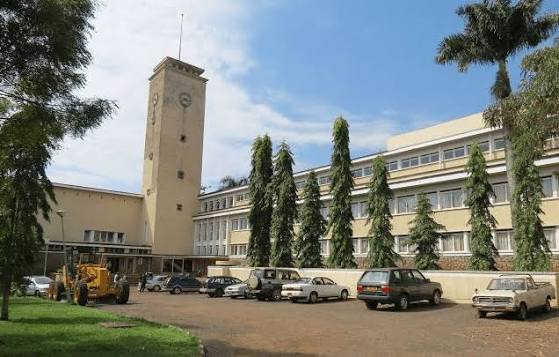
Jinja City’s decades-long wait for durable roads is finally giving way to action. A Shs 81 billion prefinancing deal has been activated and M/S Abubaker Technical Services and General Supplies Limited is mobilizing to upgrade 13.82 kilometers of critical roads in Southern Division to asphalt concrete standard. Works begin anytime, according to flawless sources.
For a city that once wore the crown of the East African Community’s industrial capital, the sound of graders and compactors returning to Southern Division carries more than engineering weight — it carries political and economic meaning.
The project covers Rippon Road, Narambhai Road East and West, Oboja Road, Nile Crescent Road, Owen Road, Kirinya Road, Kyabazinga Road, Elgon Close, Kisinja Road, Nile Avenue, Gokhale East and West, Elizabeth Road, and Jackson Crescent.
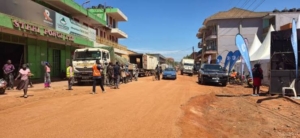
General engineering tests are included in the contract. These are the checks engineers run before, during and after road construction to make sure the work is safe, durable and worth the money and in this case the 81Bn Jinja is going to spend.
The 2.51km Nile Crescent Road and 1.74km Kisinja Road are especially significant because they form the backbone that links several factories directly to the main highway, cutting the distance raw materials and finished goods must travel on broken surfaces.
Contractor Profile: Local Capacity with Quarry Advantage.
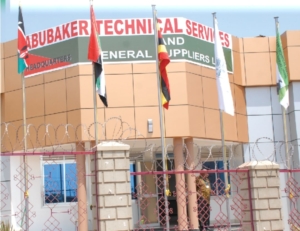
M/S Abubaker Technical Services and General Supplies Limited was registered in 2002 under number 52003 by the Registrar of Companies. The firm has spent more than two decades handling civil engineering and construction works across Uganda, and it is bringing that experience to Jinja.
Its main offices and yard sit on 22,505 square meters (equivalent to 5.6 acres) at Plot 1508 Kigombya-Mukono, about 22 kilometers from Kampala city center along the Kampala-Jinja Highway. That location matters because it places equipment and logistics teams directly on the corridor that feeds Jinja, reducing the time and cost of moving machinery and materials.
According to the company’s website, Abubaker Technical Services also owns a granite rock quarry site covering 161,120 square meters in Mayilikiti, Nakaseke District, 52 kilometers from Kampala off the Kampala-Gulu Highway.
Owning its own quarry gives the contractor direct control over aggregates. City engineers say that vertical integration is crucial for a prefinancing project where speed, cost control, and consistent material quality determine whether deadlines are met or missed.
City Hall Mood: A Smile From Ear to Ear.
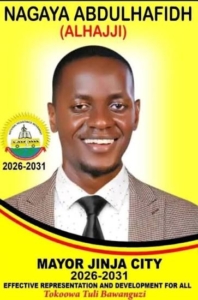
The timing of the project has created a visible mood shift at Jinja City Hall. The new Mayor His worship Hajji Abdulhafidh Nagaya, who unseated former NUP mayor His Worship Rio Alton Peter Kasolo ‘Okocha’, is barely three months in office. Yet he is inheriting the first major road upgrade in years.
Sources at City Hall say the mayor must be a very happy man, smiling from mouth to ear at this development landing so early in his term. For a mayor who campaigned on restoring order and attracting investment, the Shs 81Bn tarmac is political oxygen. It is proof that Jinja can move from talk to works, and it arrives just as he is settling into the mayoral seat.
The Exposure Uganda (TEU), a revolutionary digital news platform made repeated efforts to get an official comment from Mayor Nagaya. Calls to his known lines went unanswered and he did not call back by press time. Despite the silence, the symbolism is not lost on residents: a new mayor, a new road contract, and a city eager to believe that change is possible.
Jinja City Council: Prefinancing Removes the Waiting Game.
Jinja City Council PRO Rajab Kitto confirmed that the prefinancing arrangement is what allowed works to begin without waiting for delayed budget releases from the center.
“This is a welcome intervention that will go a long way to solving road network challenges in the city once the regional industrial hub,” Kitto said. “For a city that wants to reclaim its position, infrastructure is the first language investors understand. Good roads tell them Jinja is ready for business again.”
He noted that Southern Division roads have been choking under pressure from industrial traffic, commuter boda bodas, taxis, and population growth. With Abubaker Technical Services mobilizing from Kigombya and drawing aggregates from its Nakaseke quarry, Kitto expressed optimism that efficiency and quality will be prioritized.
The Loud Call That Put This Project on the Table: Mbayo’s 2025 Letter to Museveni.
The Shs 81Bn upgrade is answering a cry first made in March 2025 by then Speaker of Jinja City Council Bernard Mbayo. In an open letter to President Yoweri Museveni, Mbayo warned that Jinja’s roads were suffocating the very industrialists who power Uganda’s tax base and employment figures.
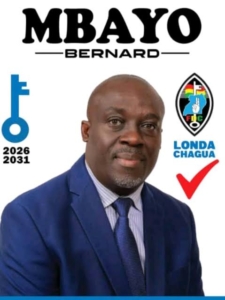
Mbayo, a 15-year Jinja leader and member of the Urban Authorities Association of Uganda, reminded the President that Jinja was planned as one of the best cities in East and Central Africa.
As a municipality it had 213 kilometers of roads built in the 60s, 70s and 80s. As a city, Jinja now has 516 kilometers to maintain — more than any other city council in Uganda. Yet under the World Bank-funded USMID program, only 3 kilometers are upgraded every 2-3 years. “We would require over 200 years to resolve the issue at this rate,” Mbayo who is now recuperating from the Jinja South West MP race loss wrote.
His sharpest point was economic, not technical. He singled out the 9.8-kilometer Walukuba/Masese road that serves Nile Agro Industries Ltd, Engano Millers formerly Grain Milling, MMI Steel Ltd, Sunbelt Industries, Keshwala Group, Madhvani Steel Ltd, Bidco Uganda Ltd, Aluminum Giant Ltd, Nilus Tobacco factory Ltd, Busoga Forestry Ltd, Maganjo Millers Ltd, Abyssinia Steel Uganda Ltd and others.
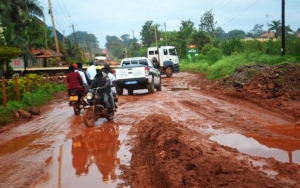
These firms bring about $350-400 million to the national treasury annually through taxes and local revenue and employ thousands of Ugandans. “Paradoxically these industries contribute significantly yet drive on roads in dire need of repair,” Mbayo stated. “This sounds like some ungrateful farmer who milks daily but is not ready to give the cow hay to sustain the steady flow of milk.”
Mbayo (FDC) also urged the President to expedite the Uganda Cities and Municipalities Infrastructure Development program UCIMID for the 10 new cities, reconstruct the 127km Jinja-Budondo-Mbulamuti-Kamuli road, and fix industrial roads like Walukuba/Masese.
In recent weeks, Jinja North MP Hon Hussein Muyonjo aka Swengere, probably still green and amateur in politics and leadership had been making wild and false accusations that Mabyo was the man frustrating construction of the road that stretches from Jinja through Kadaga’s Mbulamuti to Kamuli.
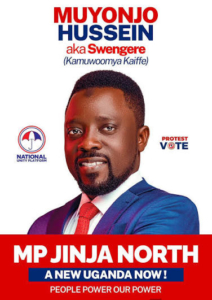
Yet the record shows Mbayo has been in the forefront pushing for that very construction, using his position in the Urban Authorities Association and his direct letter to the President to demand action. This is politics where you must be seen and heard to be talking tough.
Mbayo also flagged Colas Uganda’s offer to fund a feasibility study for 200 kilometers of city roads with a sovereign guarantee, and called for support to Jinja City’s own purchase of a grader and compactor from locally raised revenue.
He tied roads to youth skilling at Nakabango, the Nine Plus One ICT Park and Acer assembly line, environmental protection of Lake Victoria, and free street lighting for power-hosting cities like Jinja and Njeru.
From EAC Crown to Playing Catch-Up, Now Fighting Back.
Mbayo’s letter was rooted in history that Jinja residents still feel. In the 1960s and 70s, Jinja was East Africa’s manufacturing heartbeat. The Owen Falls Dam powered steel mills, textile factories, and food processors. Trucks from Kenya and Tanzania converged on Jinja daily. It was Kampala’s quieter, more efficient cousin.
Years of neglect, poor road maintenance, and shifting government priorities allowed Kampala to absorb investment, headquarters, and status. Factories that once roared along the Nile either closed or moved to the capital where roads, power, and policy attention were better. Jinja kept the history but lost the traffic.
A veteran factory manager in Kimaka now in his retirement told The Exposure Uganda: “We had the industries, the dam, the railway, and the port. What we didn’t keep was the roads. When your trucks spend 2 hours in potholes, Kampala starts looking cheaper.”
Why These 13.8KM Matter for Jinja’s Return.
Urban economists agree that no city becomes an industrial hub without roads that move goods fast and cheap. In Jinja, where cement, steel, sugar, fish, and manufactured exports drive the economy, every minute a truck spends in a pothole is money lost. Every broken axle and tire are a cost passed to the consumer.
A durable road network does three things Jinja urgently needs. First, it cuts transport and vehicle maintenance costs for boda bodas, taxis, and heavy trucks that keep the industrial park alive.
Second, it makes Jinja attractive again to investors who compare cities by infrastructure before they compare tax incentives. Third, it improves quality of life for residents — less dust in dry season, less flooding in rains, safer routes for school children and ambulances.
With the Standard Gauge Railway (SGR) project advancing, improved ferry services on Lake Victoria, and proximity to Kenya’s border, Jinja’s geography has always been an advantage. The missing piece was last-mile roads that could handle 21st century logistics. These 13.82 kilometers are the start of closing that gap.
Protecting the Investment: A Shared Responsibility.
As Abubaker Technical Services mobilizes equipment from its Kigombya yard and aggregates from Nakaseke, city leaders are also reminding residents that tarmac alone is not enough. Government, in partnership with the World Bank through USMID and now through prefinancing, is doing its part. The city must do its part too.
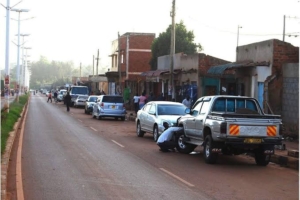
Drainages must remain clear and not be used as washrooms or dumping sites for polythene kits and household waste. Mechanics must avoid turning well-paved roads into open garages where engine oil and diesel spill and dissolve the asphalt binder. Garbage must go to designated collection points instead of piling up in the middle of streets from Bugembe town Council to Main Street and Central Market.
City Council has pledged to step up enforcement and public sensitization alongside construction. Politicians and technical staff have been urged to work together so that the roads serve their full design lifespan. The goal is simple: build once, protect always.
A Statement of Intent for a New Era.
The Shs 81Bn upgrade will not magically restore every factory that moved to Kampala. But it removes one major excuse investors have used for years.
For Mayor Hajji Nagaya, barely three months into office, it is an early win that aligns with the promise of order and investment. For Southern Division residents, it means reduced congestion, fewer accidents, and higher property values along upgraded corridors.
For Jinja as a city, it is a public statement: we are not just remembering our history as the EAC’s industrial capital, we are building the roads to become it again. The loud call Bernard Mbayo made in 2025 is now being answered, one kilometer at a time. President Museveni is known to be passionate about investors. Jinja is showing that with roads that keep the milk flowing.
Conclusion: Good roads are the veins of an urban economy, and Jinja cannot afford to let them clot again.
Every kilometer of tarmac laid by Abubaker Technical Services or any other contractor is more than concrete and bitumen: it is a lifeline for factories, a school route for children, an ambulance corridor for the sick, and a trade route for the trader at Central Market.
In a city like Jinja seen as Busoga’s capital, where steel, sugar, cement and fish move daily to Kenya, Kampala and beyond, good roads determine whether investors stay or leave, whether a boda boda rider or truck driver eats or breaks an axle, whether property values rise or rot. When roads fail, the city fails. When roads work, jobs multiply, dust settles, floods recede, and confidence returns.
But tarmac without discipline is a loan Jinja will pay twice.
The Shs 81Bn being invested under Mayor Hajji Nagaya’s early watch will be wasted if drainages remain open toilets, if mechanics turn Owen Road, Gabula Road or Obote Road into a garage, if oil continues to eat the binder, and if garbage mountains keep rising from Bugembe to Nile Avenue.
Best practices are not complex: dispose waste at designated points, keep drainages clear, report oil spills, and respect designated parking and service bays. Impunity must end — whether you are a rich family dumping kitchen waste at night, a politician telling technical staff to “go slow”, or a civil servant choosing TikTok or WhatsApp and YouTube channels over enforcement.
Jinja’s comeback will be built on two things: kilometers of asphalt and a culture of responsibility.
Let the graders roll, let the quarry stones bind, and let every resident decide today that they will protect what is being built. Because when the last truck leaves Abubaker’s yard, what remains is not the contractor’s job — it is ours. Protect the road, and the road will protect Jinja’s future.
We Expose, You Decide.