
















The Exposure+ Uganda (TEU) Preamble:
The Constitution of Uganda was not written in a basement. It was written in daylight, by men and women who believed that the law must bind the strong as tightly as it protects the weak.
Yet on June 15, 2026, before sunrise, Uganda’s Special Forces Command scaled the perimeter wall of Counsel Erias Lukwago’s home in Wakaliga without a warrant, without a charge, and without a judicial order, because he dared to serve legal papers on the Chief of Defense Forces under the Human Rights (Enforcement) Act, 2019. Within hours, General Muhoozi Kainerugaba announced the abduction on X with the words, “I have captured a FOOL and taken him to the basement!”, adding mockery about the lawyer’s physical distress while in custody.
The Exposure Uganda (TEU), a non-flinching revolutionary digital news platform does not publish rumour. We publish record. And the record now shows that a civilian lawyer/former KCCA Lord Mayor was seized for attempting to invoke a statute of Parliament, while Col(Rtd)Dr. Kizza Besigye remains in Luzira Maximum Security Prison for more than four hundred days without the commencement of a civilian trial, despite the Supreme Court’s clear ruling that military tribunals have no jurisdiction over civilians and despite Article 23(6) of our Constitution which commands release after two hundred and forty days without trial.
The Human Rights (Enforcement) Act is the reason this abduction happened. Section 10 empowers any court to order the release of persons unreasonably detained, and Section 13 makes it a crime punishable by ten years’ imprisonment for any person, regardless of rank, to disobey such an order.
That statute removes immunity, compels appearance, and punishes defiance. A regime built on command and impunity cannot coexist with a law that subjects generals to magistrates, which is why the response to a summons was not a legal motion but a pre-dawn raid.
General Muhoozi’s tweets are not political theatre. They are admissions of arbitrary detention under Article 9 of the International Covenant on Civil and Political Rights and evidence of cruel, inhuman treatment under Article 7.
The “basement” he boasts about is not an address but a doctrine, a space where habeas corpus cannot enter and where the Constitution is told to wait outside. Eddie Mutwe entered that basement in 2025. Erias Lukwago entered it in 2026. The pattern is deliberate, and the message to every lawyer in Uganda is unmistakable: use the Human Rights (Enforcement) Act, and you will vanish.
Professor Isaac Christopher Lubogo has written “The Basement Republic: Constitutional Fear, Human Rights Enforcement, and the Sword That Flees from the Pen” to explain, with citations and legal precision, how we arrived at this constitutional rupture.
His discourse traces the Act’s origins in Article 50(4), exposes why the sword fears a process server more than an armed battalion, and demonstrates how a tweet becomes evidence in The Hague.
This is not commentary for entertainment. It is a legal indictment for the record.
Therefore, The Exposure Uganda (TEU), invites every citizen, every law student, every member of the Bench and Bar, every clergyman and every survivor to read Professor Lubogo’s work verbatim.
The Basement Republic: Constitutional Fear, Human Rights Enforcement, And the Sword That Flees from The Pen.
An Academic Discourse on the Abduction of Erias Lukwago, the Tweets of General Muhoozi Kainerugaba, and the 400-Day Incarceration of Dr. Kizza Besigye in Uganda.
By Isaac Christopher Lubogo.
June 15, 2026.
Disclaimer
This article is a scholarly commentary based on publicly reported allegations, verified social media posts, court documents, and statements from human rights organizations as of June 15, 2026. The facts concerning the abduction of Mr. Erias Lukwago remain partially disputed, and official responses from the Uganda People’s Defence Forces (UPDF) or the Office of the Chief of Defence Forces have not been fully issued at the time of writing. The author presents this analysis as a constitutional, legal, and philosophical exploration—not a judicial determination. Readers are encouraged to consult primary legal sources and follow due process developments.
Introduction: A Constitutional Parable At Wakaliga.
At approximately 5:00 AM on June 15, 2026, operatives of Uganda’s elite Special Forces Command (SFC) scaled the perimeter wall of Erias Lukwago’s residence in Wakaliga, a suburb of Kampala. There was no arrest warrant. There was no charge sheet. There was no judicial order. There was only a mission: to seize a lawyer who had dared to invoke the Human Rights (Enforcement) Act of 2019 to summon the Chief of Defence Forces (CDF), General Muhoozi Kainerugaba, to appear before a civilian court and show cause why he should not be held liable for unconstitutional conduct.
Within hours, General Muhoozi posted on X (formerly Twitter): “I have captured a FOOL and taken him to the basement!” He added that Lukwago would “learn Kiswahili” and that the lawyer had “urinated like three times already” and “needs diapers.” This was not a denial. It was a boastful confession—a public announcement that the rule of law had been replaced by the rule of the basement.
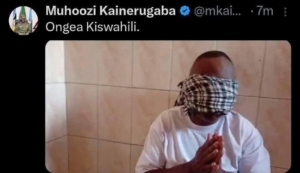
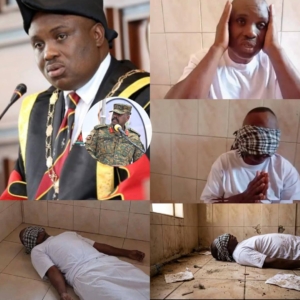
TEU Editor: What is a “basement”?
The Oxford English Dictionary defines basement as “the floor of a building which is partly or entirely below ground level”.
Merriam-Webster adds a second meaning: “the lowest position in a hierarchy or ranking.”
Cambridge calls it “rooms that are partly or completely below the level of the ground.”
Collins notes the figurative sense: “the lowest level or worst condition.”
In every standard dictionary, a basement is architectural. It is concrete, stairs, and damp. It is not a legal doctrine. It is not a clause in the Constitution. Black’s Law Dictionary does not even define it.
Yet on June 15, 2026, General Muhoozi Kainerugaba gave the word a new constitutional meaning when he tweeted: “I have captured a FOOL and taken him to the basement!”
The context:
He merged all three dictionary senses into one act of state violence.
Below ground: The Special Forces Command seized Erias Lukwago before dawn and held him where sunlight and habeas corpus cannot reach.
Lowest in hierarchy: By mocking the lawyer’s terror and bodily functions, the General declared that the Constitution ranks beneath the CDF, that Article 1’s declaration that “power belongs to the people” is now inverted, and that a process server is below a commando.
Hidden from law: The basement became procedure. No warrant. No charge. No court order. Just a tweet as a judgment.
Dictionaries say a basement is below ground. In the Basement Republic, the basement is below law. It is where Article 23(6) is buried on day 241. It is where Section 13 of the Human Rights (Enforcement) Act is told to wait outside. It is where the sword announces that it no longer fears the pen, because it has taken the pen to a place where ink cannot dry.
The diagnosis is clear: when a general redefines a noun from the Oxford English Dictionary into a system of illegal detention, the country no longer has basements. It has a basement. Singular. National. Constitutional.
This moment is not merely another political abduction in Uganda’s troubled history. It is a constitutional rupture. It reveals a regime so terrified of legal process that it deploys special forces against a lawyer holding an envelope. It forces us to ask: Why does the sword fear the pen? And what does the “basement”—as a recurring metaphor for extrajudicial detention—tell us about the state of constitutionalism in Museveni’s Uganda?
This discourse explores three interconnected dimensions. First, the legal implications of the Human Rights (Enforcement) Act and why it provoked such a violent response. Second, the possible international legal consequences of General Muhoozi’s tweets. Third, the current legal status of Dr. Kizza Besigye’s continued incarceration beyond four hundred days without trial. Together, they paint a picture of a state where the law is not merely ignored but actively hunted.
The Enforcement Act: A Statutory Weapon The Regime Could Not Tolerate
Genesis and Purpose of the Human Rights (Enforcement) Act, 2019.
The Human Rights (Enforcement) Act was enacted pursuant to Article 50, subsection 4, of the Constitution of Uganda, which mandated Parliament to make legislation for the enforcement of human rights. Its revolutionary core is disarmingly simple: any person—including state actors, including generals, including the Chief of Defence Forces—who violates another’s constitutional rights loses any immunity they might otherwise enjoy.
The Act operates through several key mechanisms. A victim of a human rights violation, or any other person acting on their behalf, may apply to the High Court for redress. No person may plead immunity under any other law as a defence once a court finds them to have violated rights. And critically, non-compliance with a court order for release is a criminal offense punishable by up to ten years’ imprisonment.
This last provision is the regime’s nightmare. It means that if a High Court orders the release of an unreasonably detained person, anyone—including the CDF—who refuses to obey that order faces a decade in prison. The Act transforms political power into personal criminal liability.
Lukwago’s Offense: Service of Process.
Lukwago, as lead counsel for Dr. Kizza Besigye, petitioned the High Court under this Act. He sought to summon General Muhoozi and the Attorney General to answer for the prolonged, unconstitutional detention of Besigye—a civilian held for over four hundred days without trial, far beyond the constitutional bail limit, and repeatedly denied access to his legal representatives. The court reportedly granted leave for service of process.
That is the entire “crime” for which Lukwago was abducted: preparing to hand legal documents to a general. There was no allegation of violence, no incitement, no unlawful act. There was only the audacity of a lawyer who believed that the law applies equally to everyone, including the son of the President.
Why the Act Threatens the Sword.
The Act dismantles three pillars of impunity that have protected Uganda’s security establishment for decades.
The first pillar is official immunity. Under previous legal frameworks, a soldier or general could claim that acts done in the course of duty were shielded from civil or criminal liability. The Human Rights Enforcement Act explicitly strips away that shield. A finding of a rights violation removes any immunity, no matter how high the office.
The second pillar is state secrecy. The Act empowers courts to compel the appearance of any person, to demand disclosure of information, and to issue orders that cannot be evaded by bureaucratic opacity. A general cannot simply refuse to appear by claiming he is too busy or too important. The court’s summons carries the full weight of criminal sanction.
The third pillar is non-compliance with impunity. Before this Act, a government could ignore court orders with little consequence. Now, refusal to obey a release order is itself a crime carrying up to ten years in prison. The Act does not care about rank, about political connections, or about family names. It cares only about the violation.
For a regime built on military authority and personal rule, a statute that allows a civilian lawyer to summon the Chief of Defence Forces to a magistrate’s court is existential. It transforms political power into legal liability. That is why the response was not a legal objection—no motion to quash, no application for stay, no constitutional challenge. The response was a pre-dawn abduction. The sword did not fight the pen with arguments. It fought with commandos.
The Tweets as Evidence: International Law and the “Basement” Confession.
Legal Classification of the Tweets.
General Muhoozi’s posts are not merely offensive or undignified. They are evidentiary admissions under international criminal and human rights law. Each tweet carries potential legal consequences that extend far beyond Uganda’s borders.
The statement “I have captured a FOOL and taken him to the basement” constitutes an admission of extrajudicial detention. Under Article 9 of the International Covenant on Civil and Political Rights, which Uganda has ratified, no one shall be subjected to arbitrary arrest or detention. A seizure without warrant, without charge, and without judicial oversight is the very definition of arbitrary detention.
The statements “He has urinated like three times already” and “This one needs diapers” amount to cruel, inhuman, or degrading treatment. Article 7 of the International Covenant on Civil and Political Rights and Article 5 of the African Charter on Human and Peoples’ Rights both prohibit such treatment. The public mockery of a detainee’s physical distress is not merely unprofessional; it is a human rights violation.
The statement “This one will learn Kiswahili” is a punishment for the exercise of legal rights. Lukwago’s only offense was petitioning a court. To imprison him and force him to learn a language as a form of re-education or humiliation violates his right to freedom of expression under Article 19 of the International Covenant and his right to petition government under Article 21 of the Universal Declaration of Human Rights.
The earlier tweet regarding Eddie Mutwe—”I still have to castrate him”—constitutes a threat of torture. Under Article 16 of the UN Convention Against Torture, which Uganda has ratified, a threat of torture is itself a violation, even if the act is not carried out.
The Pattern of Basement Detentions.
This is not General Muhoozi’s first use of the basement as a public boast. When Eddie Mutwe, a supporter of opposition leader Bobi Wine, was abducted by SFC operatives in April 2025, Muhoozi posted a photograph of Mutwe shirtless and wrote: “He is in my basement … You are next!” He later added: “I still have to castrate him.” Mutwe was held incommunicado for weeks before being released without charge.
Lukwago now joins that list. The pattern is unmistakable: anyone who challenges the authority of the CDF, whether through political activism or legal process, is taken to “the basement.” The phrase has become a signature—a brand of impunity. And the fact that Muhoozi broadcasts these abductions on social media suggests not just arrogance but a calculated message to anyone else who might consider invoking the Human Rights Enforcement Act: this is what happens to those who try to summon the general.
Possible International Actions.
The international community has already responded, albeit cautiously and incompletely.
The Commonwealth Secretary-General, Rt Hon Patricia Scotland KC, issued a formal statement on February 16, 2025, expressing deep concern over Besigye’s detention. The statement noted that the continued incarceration undermines the ruling of the Supreme Court of Uganda of January 31, 2025, and violates the principles of democracy, human rights and the rule of law to which all Commonwealth members are committed. The Secretary-General specifically referenced the abduction of Besigye from Nairobi, Kenya, as a disregard for both Ugandan and Kenyan law.
A senior United States senator has called for a review of military and security ties with Uganda, warning that General Muhoozi has crossed a diplomatic line. This raises the prospect of several concrete actions. Section 7031(c) of the United States Immigration and Nationality Act permits the Secretary of State to impose visa sanctions on foreign officials who are responsible for gross violations of human rights. The Leahy Law prohibits United States military assistance to foreign security force units that commit such violations. Both could be invoked against Muhoozi personally and against the SFC units he commands.
Amnesty International has designated both Besigye and Lukwago as prisoners of conscience and issued urgent actions to the United Nations Human Rights Council. The organization has documented that Besigye is seriously ill, requiring urgent specialized medical attention, and is being held in conditions that Amnesty considers inhumane.
The African Commission on Human and Peoples’ Rights could be petitioned to issue a finding against Uganda. The Commission has the power to declare violations, order remedies, and refer persistent violators to the African Union Assembly.
The most likely immediate international actions are, first, United States visa sanctions against General Muhoozi personally; second, enhanced Commonwealth monitoring or suspension; third, an African Union Commission of Inquiry into extrajudicial detentions in Uganda; and fourth, potential referral to the International Criminal Court if a pattern of crimes against humanity—including detention, torture, and persecution—can be established.
The Tweets as a Strategic Vulnerability.
No modern authoritarian regime has so publicly documented its own violations. General Muhoozi’s tweets are admissible in any international forum as declarations against interest—statements that a reasonable person would not make unless they were true. They defeat any future claim that the detentions were lawful, that the abductions were operational necessities, or that the abuses were unauthorized acts of rogue operatives.
The sword’s desire to humiliate has become its own noose. Each boastful tweet is a piece of evidence in a future prosecution, whether before the International Criminal Court, a United Nations human rights body, or a future Ugandan truth commission. In this sense, the pen remains mightier than the sword even when the sword is tweeting.
The Besigye Incarceration: Four Hundred Days, No Trial, No Bail.
Procedural Chronology of a Collapsed Case.
Dr. Kizza Besigye, a retired army officer turned opposition leader and four-time presidential candidate, was abducted in Nairobi, Kenya, on November 16, 2024, and forcibly returned to Uganda. He was initially held without charge for sixty-five days—far exceeding the constitutional forty-eight-hour limit within which an arrested person must be brought before a court.
On February 20, 2025, he was formally charged with treason and remanded to Luzira Maximum Security Prison. The government first attempted to try him before a General Court Martial, a military tribunal. But the Supreme Court of Uganda ruled on January 31, 2025—reaffirming a 2021 Constitutional Court decision—that military trials of civilians are unconstitutional. Besigye, as a retired soldier, is legally a civilian under Ugandan law. The Supreme Court made clear that no civilian, regardless of past military service, may be tried by a court martial once they have returned to civilian life.
Yet the civilian trial has not begun. As of June 15, 2026, more than four hundred days have passed since Besigye’s abduction. No plea has been entered in a civilian court. No trial date has been fixed despite judicial directives. Bail has been denied repeatedly despite the constitutional provision that any person detained for more than two hundred and forty days without trial must be released. And on June 4, 2026, Besigye’s lawyers were denied prison access, including denial of laptops and flash drives needed for trial preparation—even as a trial judge had scheduled a hearing for June 11.
Constitutional Violations in Detail.
Besigye’s continued detention violates at least six explicit provisions of the Constitution of Uganda.
Article 23, subsection 1, provides that no person shall be deprived of personal liberty except in cases and procedures specified by law. Besigye was abducted from a foreign country without any warrant, any extradition proceeding, or any legal process whatsoever. That is the opposite of deprivation of liberty by law.
Article 23, subsection 3, requires that any person arrested be informed immediately of the reason for their arrest. Besigye was not informed of any charge until sixty-five days after his abduction.
Article 23, subsection 4, requires that a person arrested be brought to court within forty-eight hours. Besigye was first brought to court after sixty-five days.
Article 23, subsection 6, provides that a person detained for more than two hundred and forty days without trial shall be released unless the state can show exceptional cause. Besigye has been detained for more than four hundred days. No exceptional cause has been shown. Indeed, no trial has even begun.
Article 28, subsection 1, guarantees the right to a fair and speedy trial. Four hundred days without the start of trial is not speedy by any definition.
Article 41 guarantees the right to information and access to public records. Besigye’s lawyers have been denied physical access to their client, denied the ability to bring legal documents into the prison, and denied the basic professional interaction necessary to prepare a defense. This is a violation not only of Article 41 but of the fundamental right to counsel.
Health and Humanitarian Crisis.
Amnesty International has reported that Besigye is seriously ill, requiring urgent specialized medical attention, and is being held in detention conditions that the organization considers inhumane. Specific details of his medical condition have not been publicly released for privacy reasons, but sources indicate that he suffers from chronic conditions that require regular monitoring and medication—medication that the prison has allegedly failed to provide consistently.
Denial of adequate medical care for a sixty-four-year-old detainee with pre-existing conditions may itself constitute torture or cruel, inhuman treatment under Article 11 of the UN Convention Against Torture. The Convention defines torture as the intentional infliction of severe pain or suffering, whether physical or mental, for purposes including intimidation or punishment. Holding a seriously ill detainee without proper medical care can meet that definition.
The Legal Remedy That Was Blocked.
Under Section 10 of the Human Rights (Enforcement) Act, anyone who is unreasonably detained may petition the High Court for unconditional release. The court, upon finding detention unreasonable, must order release. Under Section 13, refusal to obey such an order is a crime punishable by up to ten years’ imprisonment.
Lukwago, as Besigye’s lead counsel, filed such a petition. The court was poised to hear it—and to potentially issue a release order requiring Besigye’s immediate freedom. The regime could not allow this to happen. A judicial order for Besigye’s release, backed by a ten-year criminal penalty for non-compliance, would have placed General Muhoozi and the entire security apparatus in an impossible position: obey a court and release a political enemy, or disobey and face criminal prosecution.
General Muhoozi chose a third option. He did not wait for the order. He abducted the petitioner. That act is itself a violation of the Human Rights Enforcement Act—Lukwago is now himself unreasonably detained—and arguably an obstruction of justice under both Ugandan and international law. The regime did not defeat the legal argument. It prevented the argument from being heard.
The Fear Trajectory: Why The Pen Is Mightier And Why The Sword Knows It
The Philosophical Core.
The proverb “the pen is mightier than the sword” is often misunderstood. It does not mean that words defeat bullets in direct combat. A general with a battalion will always prevail over a poet with a notebook in a physical confrontation. The proverb means something deeper: legitimacy outlasts force.
The sword can silence a person in a moment. It cannot silence a legal principle over a generation. A general can occupy a city. He cannot occupy the moral imagination of a people who have read their constitution. A regime can imprison a lawyer. It cannot imprison the idea that lawyers have the right to serve process.
General Muhoozi’s overreaction—sending SFC commandos to seize a lawyer who was merely preparing to hand him legal documents—reveals a deep, almost pathological fear. What does the most powerful military figure in Uganda fear? He fears a piece of paper. He fears that if he is “served,” he becomes subject to a court. And if he becomes subject to a court, he becomes accountable. And if he becomes accountable, the entire architecture of dynastic impunity begins to crumble.
The Basement as a Political Metaphor.
The “basement” is not a specific geographic location. It is a state of exception—a space where the constitution does not enter, where habeas corpus cannot reach, where torture is a joke, and where a general can mock a lawyer’s incontinence on social media. It is the physical manifestation of the political theorist Carl Schmitt’s state of exception: the sovereign who decides who is free and who disappears, who lives and who dies, who speaks and who is silenced.
But the basement has a weakness. It requires silence. It depends on the disappeared remaining disappeared, on the tortured remaining invisible, on the abducted remaining unknown. And Lukwago’s abduction was not silent. It was livestreamed in tweets. The basement was advertised. The humiliation was broadcast. The pen found a way out.
The Question That Remains.
So, we return to the question that opened this discourse: why does the sword fear the pen?
The answer is now clear. The sword fears the pen because the pen writes the constitution. The pen files the petition. The pen serves the summons. The pen records the abduction. The pen submits the application to the International Criminal Court. The pen writes the history that the sword cannot erase.
General Muhoozi can take Lukwago to a basement. He cannot take every lawyer who has read the Human Rights Enforcement Act. He can mock one man’s urination. He cannot mock the principle that detention without charge is arbitrary. He can tweet his victories. But each tweet is a confession, and each confession is a chain around his own ankles.
The pen is mightier than the sword not because it wins every battle, but because it never stops writing.
Conclusion: Uganda At The Constitutional Crossroads.
Uganda now faces a choice that will define its trajectory for generations. The abduction of Erias Lukwago, the four-hundred-day detention of Kizza Besigye, and the celebration of extrajudicial power on social media constitute not a series of isolated incidents but a systemic assault on constitutional governance. The Human Rights (Enforcement) Act was meant to provide a remedy. Instead, it has become a target.
The international community is watching. The Commonwealth has spoken. The United States may act. The African Commission could issue findings. But ultimately, the question is Ugandan. Will the law remain a paper tiger, beautiful on the page but harmless in practice? Or will the tiger learn to bite?
Three things are certain. First, Lukwago’s petition under the Human Rights Enforcement Act was legally sound. He had every right to summon the CDF to court. Second, General Muhoozi’s tweets are admissible evidence of extrajudicial detention and cruel treatment. They will follow him in any international forum. Third, Besigye’s continued incarceration violates the Ugandan Constitution, the International Covenant on Civil and Political Rights, and the African Charter on Human and Peoples’ Rights. There is no legal justification for holding him for four hundred days without trial.
For now, Lukwago sits in a basement. Besigye sits in Luzira Prison. And a general tweet from his office, boasting of his power to make lawyers urinate in fear. But the pen is not dead. It is being smuggled out of the basement, one word at a time. And that is why the sword is afraid.
Peace.
This discourse is provided for academic, legal, and human rights education purposes. It does not constitute legal advice. All facts are based on sources available as of June 15, 2026, and may be subject to change upon official disclosure. The author welcomes scholarly engagement and critique.