





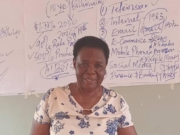




Aged 19, Mariam Nangobi, a resident of Bwondha landing site in Mayuge district, life has been rough since she dropped out of school in Primary Seven after the father failed to raise school fees.
Sadness envelopes her face as she narrates the situation which befell her when she became pregnant shortly after dropping out of school.
“Life was hard. I did not have necessities, including food and sanitary pads. I was in that desperate situation that a bodaboda man convinced me to sleep with him. He used to pamper me with gifts, but after I became pregnant, he ran away,”Nangobi narrates.
Stuck and not sure of how she would take care of the child she was expecting, Nangobi decided to terminate the pregnancy, but she not sure how she was to do it safely because abortion is illegal in Uganda.
“I was given a herbal concoction by a friend and the foetus was expelled from my womb, but with a lot of bleeding,”Nangobi explains.
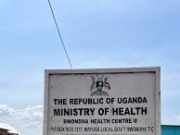
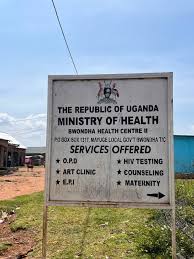
When the bleeding persisted, Nangobi went to to Bwondha Health Centre II, which also referred her to Mayuge Health Centre IV.
Midwives managed managed her complications and advised her to use family planning to prevent unwanted pregnancies in future.
“I decided to go to the health centre because I thought silence would kill me if I did not speak out. Fortunately, the health workers treated me well. They did not judge me,” she said.
For Rebecca (second name withheld), terminating a pregnancy was because she wanted to keep her marriage.
Her husband had gone abroad for greener pastures. Left alone in Uganda, Rebecca, who was also a leader in a church, slept with another man and conceived.
Terrified of how she would be judged after conceiving in the absence of her husband, she procured an abortion after a Google-search.
She drank a concoction of Panadol tablets, forcing the fetus out. When her health deteriorated, she went to Mayuge Health Centre IV.

“The doctor and midwives helped me to control the bleeding. They also counseled me,” she says.
Rebecca was a graduate, while Nangobi was a P7 dropout; but they both suffered fear, stigma and judgment after abortion.
Across Mayuge district, many mothers, especially teenagers carry out abortions for fear of giving birth to children that they are unable to take care of.
Dr Asuman Basembeza, the Mayuge District Health Officer(DHO) said abortions are common, but most mothers seek care late.
“They use crude methods of abortion and only seek medical care late. Many girls always get unwanted pregnancies and resort to these things late. After festivities and February, we saw many young women came in with complications,” he said.
He said they try to offer services, but coverage remains low.
“Mayuge has 14 health facilities, three health centre IVs and 11 health centre IIIs. Seven are in the islands. Most health centres offer post-abortion care. About 60% of health workers were knowledgeable enough to provide post-abortion care. All doctors are well trained and post-abortion care is included in the training manual,” he explains.
Dr Basembeza says they always take a holistic approach, but says men are not part of the care.
“Men rarely accompany women. Most always arrive feeling guilty. Whenever a woman comes in, we treat a patient as a patient. We do not ask ‘who did It. Abortion is one of the leading causes of maternal mortality in Uganda and Sub-Saharan Africa. We are seeing an increase among women below the age of 25,” he says.
Dr Basembeza says they receive many cases in February and March, the period after the December school holidays and Valentine’s Day.
“Abortion was only a symptom of something bigger. February 14 (Valentine Day) is no longer about love between husbands and wives, it is about promiscuity where men have what the call away matches,” he explains.
Busoga Kingdom.
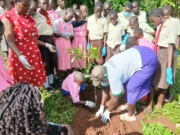
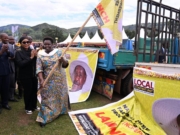
In an effort to prevent the deaths, Busoga Kingdom has launched a campaign dubbed Abasadha N’Empango (meaning Men were the Pillars) to sensitize communities about reproductive health.
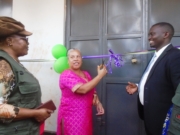
Launched by the Kyabazinga, William Nadiope Gabula IV, the initiative positions men and boys as protectors, providers, and leaders with a focus on combating teenage pregnancies and child marriages.
The campaign challenges men to speak up, protect young girls, and take an active role in family upbringing. It also pushes men to improve household incomes, because economic pressure often forced children out of school and into early marriages or risky sexual encounters.
National Policy.
At the national level, the Ministry of Health has positioned post-abortion care (PAC) as a core component of emergency obstetric and newborn care.
Under the National Guidelines for Comprehensive Abortion Care, 2016 and the National Policy Guidelines and Service Standards for Sexual and Reproductive Health and Rights, 2022, all Health Centre IVs and hospitals are mandated to provide 24-hour PAC services.
Health Centre IIIs are expected to provide basic PAC and refer complications to higher facilities. To standardize treatment, the Ministry phased out Dilation and Curettage as first line care in most cases. Manual Vacuum Aspiration and Misoprostol became the recommended methods. Both can be administered by trained midwives and clinical officers which expanded access beyond doctors only.
Health facilities have been further directed to offer confidential, private and non-judgmental care, and to provide family planning counseling and a method before discharge to reduce repeat cases.
For capacity, the Ministry of Health has since integrated PAC into pre-service training for doctors, nurses and midwives. It also conducted in-service mentorship and training through partners. PAC data is now captured monthly through the health management Information System which tracks both case numbers and PAC coverage at district level.
The World Health Organization’s 2022 Abortion Care Guideline defines PAC as essential care for complications after any pregnancy loss, and called for confidentiality, non-judgmental care, and immediate contraceptive counseling.
Consultant gynecologists in the region have often been quoted as saying that the uterus does not ask whether a woman is a church elder or a school dropout. When it is bleeding, they note, it demands care. PAC, they said, is medicine, not morality.
Mayuge health experts interviewed said the government phased out the dilation and curettage, a surgical procedure where a metallic instrument known as curette is used to scrape the lining of the uterus to remove pregnancy tissue.
It requires anesthesia, an operating theatre and a trained doctor. It carries higher risks of uterine injury, infection and bleeding compared to newer methods.
In Uganda it was once the common method for managing incomplete abortions and miscarriages.
The health experts said they currently use the manual aspiration, a minor procedure where a hand-held syringe is used to remove tissue from the uterus. No electricity or operating theatre is needed.
The Ministry adopted it as the preferred method for PAC in Health Centre IVs and hospitals because it is faster, can be done by midwives and clinical officers after training, uses local anesthesia has fewer complications.
The third method is a tablet that causes the uterus to contract and expel its contents. The Ministry listed it on the essential medicines list for PAC because it can be given orally or vaginally, does not require instruments or a theatre and can be used even at HCIII level with training.
It is especially useful at landing sites, on islands like Bwondha and other hard-to-reach areas where surgical equipment or specialists are limited.