
















The Exposure Uganda (TEU) Preamble:
When a constitution continues to breathe but its authority has quietly been relocated, can a nation still claim to be governed by law?
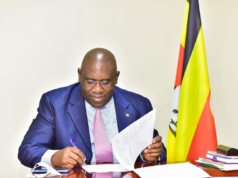
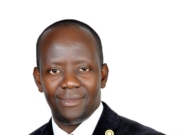
That is the jurisprudential gauntlet thrown down by Senior Advocate Hon Asuman Kiyingi in a blistering rejoinder to presidential advisor Morrison Rwakakamba, reigniting Uganda’s most consequential debate: whether the Republic is witnessing the slow migration of sovereign power from institutions de jure to centers of influence de facto.
The debate is about where power lies. De jure-by law the 1995 Constitution gives power to Parliament, Courts and elected leaders. De facto in practice Kiyingi argues that effective decision-making is increasingly moving to informal centers outside those institutions.
Rwakakamba says the fact that Parliament sits, courts work and elections happen proves that democracy is alive. Kiyingi says that it is like judging a car by its logbook, not by who is driving it.
At stake is whether Uganda is preserving constitutional form or constitutional substance.
In his earlier response, Rwakakamba defended the constitutional order by pointing to its visible architecture: Parliament sitting and passing an UGX 84.3 trillion budget, courts adjudicating disputes, elections being held, and public contestation thriving in the media.
Invoking Articles 98 and 99, he framed recent developments as executive delegation rather than constitutional displacement, and described Uganda’s condition as “hybrid constitutionalism” — a system where democratic forms persist alongside other centers of influence.
Hon Kiyingi does not dispute the survival of those forms. His charge is far more fundamental. He argues that Uganda now faces the classic pathology of hybrid constitutionalism — where the architecture of democracy stands intact, but the locus of imperium has shifted beyond the reach of legal accountability.
What follows is not a quarrel over personalities, but a contest over the very ontology of constitutional power in the 1995 constitutional order: Form, or Substance?
In Philosophy, ontology asks “what is the fundamental nature and source of this thing?” So, ontology of constitutional power is another way of saying where does power fundamentally come from, what is it and who is it supposed to belong to under the 1995 Constitution?”
The Constitution’s ontology rejects the idea that power resides in one dominant center or in informal networks. It says power resides in institutions acting according to law.
Why Kiyingi uses the term in this article:
When he writes a “contest over the very ontology of constitutional power” he means:
Rwakakamba and I disagree on the most basic question: What is power under our constitution? Is it still legally located in Parliament, Courts and statutory bodies as the 1995 Constitution designed? Or has it, in practice, shifted to informal centers where law and legal accountability do not reach?”
If the ontology changes, if power no longer flows from the people through institutions by law, then even if the Constitution text remains, the constitutional order has changed.
Read On Verbatim:
By Asuman Kiyingi
I welcome Morrison Rwakakamba’s thoughtful response to my essay, The Theatre of Legitimacy: Why Muhoozi’s “Slow Coup” is the Climax of Uganda’s Gun Rule. Constitutional democracy flourishes when ideas are tested through reasoned argument rather than silenced by coercion. In that respect, his intervention contributes to an important national conversation.
Yet, after a carefully argued essay, Rwakakamba never answers the constitutional question I posed. Instead, he answers a different one.
I never argued that Uganda has formally repealed the 1995 Constitution, dissolved Parliament, closed the courts, or abolished elections. Nor did I suggest that President Museveni has ceased to occupy the presidency. Those are the questions Rwakakamba chooses to answer.
My question is simpler, but constitutionally more fundamental:
Where does effective public power actually reside, and are the powers created by the Constitution still being exercised by the institutions to which the Constitution entrusts them?
That is the constitutional question his article never answers.
Rwakakamba points to Parliament sitting, courts hearing cases, elections taking place, and the passage of an UGX 84.3 trillion national budget. These are undoubtedly constitutional forms. But constitutionalism has never been judged by institutional survival alone.
Modern constitutional decline rarely begins with tanks surrounding Parliament or the formal suspension of a constitution. More often, constitutional forms survive while effective authority gradually migrates from legally accountable institutions to informal centers of power that increasingly determine public outcomes without assuming corresponding constitutional responsibility.
The constitutional question is therefore not whether institutions continue to exist, but whether they continue to exercise the authority the Constitution entrusts to them.
Rwakakamba argues that because these developments remain publicly contested—in Parliament, the courts, and the media—constitutionalism remains alive. Respectfully, political contestation and constitutional accountability are not the same.
Citizens may protest, lawyers may litigate, and Parliament may debate, but constitutionalism ultimately depends upon whether those exercising public power remain legally answerable to institutions capable of restraining them.
If effective power can routinely be exercised outside legally authorized institutions without legal consequence, contestation becomes evidence of political freedom, not necessarily of constitutional accountability.
This brings us to the principle of legality, which Rwakakamba again sidesteps. The Constitution distributes public power deliberately. Institutional boundaries are not matters of administrative convenience; they are constitutional safeguards against arbitrary power.
Consider the closure of Nation Media Group’s televisions(NTV/Spark TV), radio, and newspaper operations. The constitutional controversy was never simply whether government had grievances against the media house.
The real question was whether statutory powers entrusted by Parliament to civilian regulatory authorities could lawfully be displaced by military command without any publicly identifiable legal process. That question goes to the very heart of the doctrine of legality.
The same constitutional concern arises whenever senior military actors publicly threaten lawyers, journalists, or political leaders before ordinary legal institutions have acted. The issue is whether legal accountability is being administered through constitutionally competent institutions acting independently, or whether those institutions increasingly appear to validate decisions already made elsewhere.
Rwakakamba invokes Articles 98 and 99 to suggest that these developments merely reflect executive delegation rather than constitutional displacement. But executive authority cannot convert powers vested by statute in one institution into powers exercisable by another simply because it appears administratively convenient.
The doctrine of legality exists precisely to prevent public power from becoming personal discretion. The issue is not whether government remains effective; the issue is whether government continues to act through law.
Rwakakamba also invokes the language of “hybrid constitutionalism” to explain Uganda’s present condition. Ironically, that description undermines rather than strengthens his argument.
In comparative constitutional scholarship, hybridity generally describes systems in which democratic institutions formally survive while informal power increasingly determines political outcomes. Elections continue, courts remain open, and constitutions remain in force, yet the decisive allocation of public authority depends upon relationships of political loyalty and coercive influence rather than institutional independence.
That is not an answer to my argument. It is remarkably close to describing it.
There is a further irony. During the national debate over the removal of Article 102(b), in a September 2017 interview with The Observer newspaper, Mr. Rwakakamba himself argued that abolishing the presidential age limit would remove “the last firewall that guarantees peaceful transition.” He warned that constitutional institutions capable of managing peaceful succession were still insufficiently developed and spoke of “institutions that are diminishing.”
Those observations rested upon an important constitutional insight: that constitutional decline need not occur through the formal abolition of institutions but may arise from the weakening of their practical capacity to perform their constitutional functions.
That insight remains constitutionally sound. It is therefore difficult to understand why the same distinction between constitutional form and constitutional substance is now dismissed as a manufactured narrative.
Neither John Locke (Second Treatise of Government, 1689) nor Montesquieu (The Spirit of the Laws, 1748) measured constitutionalism by the continued existence of institutions alone. Locke argued that legitimate government rests upon the exercise of public power through settled law rather than arbitrary discretion. Montesquieu maintained that liberty depends upon constitutional powers remaining genuinely separated rather than concentrated in a dominant centre of authority. Both were concerned with constitutional substance rather than constitutional appearance. That remains the unanswered question.
On one important point, Rwakakamba and I agree: Uganda’s constitutional project deserves vigorous defense. Our disagreement concerns how constitutional decline should be recognized.
We must defend this project through robust civic engagement and open, reasoned debate—the very antithesis of the arbitrary force, bayonets, bullets, and basements that characterize the abduction and lawless detention of political opponents.
Constitutions rarely perish through a single dramatic rupture. More often, their institutions continue to function while their practical authority is progressively diminished. The constitutional question is therefore not whether Parliament sits, courts hear cases, or elections are held. It is whether public power continues to be exercised through the institutions the Constitution creates.
A constitution does not cease to exist when its institutions disappear. It begins to lose its authority when its institutions remain, but their constitutional powers are increasingly exercised elsewhere. That is the constitutional question Morrison Rwakakamba’s article never answers.
The writer is a senior advocate and former MP/ Minister.