









The Exposure Uganda (TEU)Preamble: The Causeway and The Sword.
“The law is a causeway upon which, so long as he keeps to it, a citizen may walk safely.”
Robert Bolt wrote that for Sir Thomas More in A Man for All Seasons, not as poetry but as political engineering. More was warning his son-in-law: tear down every law to get at the Devil, and when the Devil turns round on you, there is nowhere left to stand. The laws are the causeway through the swamp. Cut them, and we all sink.
Jurisprudence has a parallel axiom, older than Blackstone: the sword and the pen are the two great instruments of power. Cedant arma togae. Let arms yield to the toga. When the sword arrests the pen, it confesses it has no answer for the argument. Force replaces reason only when reason has already won.
On the morning of June 15, 2026, the Special Forces Command did not merely breach a wire fence in Wakaliga. They breached Bolt’s causeway. They cut down Article 23 of the Constitution, which says no person shall be deprived of liberty save by court order.
They cut down the UPDF Act, which grants soldiers no power to arrest civilians in bedrooms. They cut down the UN Basic Principles on the Role of Lawyers, which forbid identifying advocates with their clients’ causes. They cut it all down to stop one man from delivering one envelope.
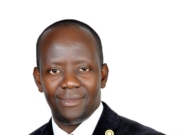
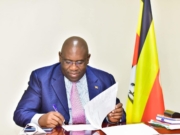
That man, Erias Lukwago, has walked Bolt’s causeway for decades. He served 15 years as Lord Mayor of Kampala and as a Member of Parliament. He is a veteran opposition figure who now leads the People’s Front for Freedom, born of the break from FDC.
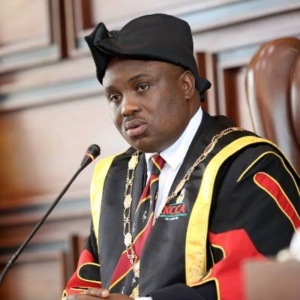
He is a Senior Advocate of the High Court. On that morning he was not organizing a rebellion. He was doing what Cicero’s togae were meant to do: serving process. The document was for the Chief of Defense Forces, in a pending human rights application for Dr. Kizza Besigye, detained over 400 days without trial.
The state’s answer was not a pleading. It was a raid, an assault on Zawedde Lubwama Lukwago, and a tweet: “I have captured a FOOL and taken him to the basement!” Later, “the fool will not sleep tonite. Kiboko mpaka…”
That is the sword speaking because the pen has it cornered. It is the boast that betrays the fear — fear of Article 119’s command to the Attorney General, fear of Section 13 of the Human Rights (Enforcement) Act, fear of Justice Emmanuel Baguma’s bench.
So, Sir Thomas More’s question returns to us: with the laws cut down to seize one lawyer, where will the Attorney General stand? Where will Parliament stand? Where will the clergy stand when the Devil turns round? Article 3(4) does not leave that as philosophy. It imposes a duty to resist.
Now, Board With Us.
TEU readers, the diagnosis is laid out. The causeway has been cut. The sword has seized the pen. What follows is not opinion. It is law.
Senior Advocate Asuman Kiyingi now takes you inside the raid. He names the Articles breached, the Acts ignored, the international standards shredded. He names the motive: stopping a court summons. He names the remedy: habeas corpus, Article 119, criminal charges, judicial protection.
We Do Not Flinch, We Are The Exposure Uganda(TEU), We Expose, You Decide.
This is Beyond Parchment Barriers. Read every line. Read it like your Constitution depends on it. Because it does.
Beyond Parchment Barriers: Why The Military Abduction Of Counsel Erias Lukwago Is An Existential Crossroad For Ugandan Jurisprudence.
By Asuman Kiyingi
On the morning of June 15, 2026, the fragile facade of constitutionalism in Uganda suffered a devastating, calculated blow. The violent apprehension of senior advocate Erias Lukwago from his private residence in Wakaliga, Kampala, was not a standard law enforcement operation; it was a state-sanctioned assault on the independence of the legal profession and the administration of justice. While corporate legal bodies like the Uganda Law Society and Uganda Muslim Lawyers Association, and civil society organizations have understandably issued measured, diplomatically guarded institutional statements, those of us who have spent decades in the service of the law, the constitution, and the state cannot afford the luxury of polite euphemisms. We must call this what it is: an illegal military abduction and a retaliatory subversion of judicial process.
The tactical details of the raid bear the precise hallmarks of state-sanctioned lawlessness. Heavily armed elements of the Special Forces Command (SFC) cut the perimeter wire fencing of Counsel Lukwago’s home, committed physical assault and battery against his wife, Zawedde Lubwama Lukwago, and invaded a private bedroom without a judicial warrant. To execute domestic arrests against civilians in this manner is fundamentally ultra vires (beyond statutory authority). Under the 1995 Constitution and the UPDF Act, military detachments possess no residual powers to enforce domestic criminal law against civilians. Bypassing standard legal protocols, such as a criminal summons or a civilian police warrant, reduces our criminal justice system to arbitrary gun rule.
However, the constitutional violation runs far deeper than a lawless arrest. We must unmask the true, chilling motive behind this operation. This abduction occurred precisely while Counsel Lukwago, acting in his professional capacity as lead defense counsel for veteran opposition politician Dr. Kizza Besigye, was preparing to legally serve formal High Court documents to the Chief of Defence Forces (CDF), General Muhoozi Kainerugaba, regarding an ongoing human rights and treason-related application. Intercepting an advocate to violently prevent the service of court process on a military commander is a blatant, criminal obstruction of justice. It signals a terrifying reality: that high-ranking military officials consider themselves above the reach of the law and are willing to paralyze the legal system to maintain institutional immunity.
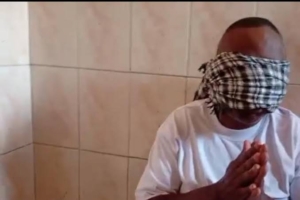
This contempt for the judiciary has been flagrantly broadcast to the public. Simultaneously with the raid, the CDF, Gen. Muhoozi Kainerugaba, issued public declarations on social media platform X, stating, “I will HANG Kizza Besigye the first chance I get to do it!”—followed by the unauthorized circulation of an image showing Counsel Lukwago in military custody. The last X post I saw from General Muhoozi around 7.40 pm was a picture of a distraught Lukwago in custody captioned “the fool will not sleep tonite. Kiboko mpaka…”. Such behavior openly subverts the presumption of innocence guaranteed under Article 28(3)(a) of our Constitution and treats the formal judicial system with total contempt. Public commentary by persons holding high public office carries massive systemic influence; when it is used to preview extrajudicial executions and parade arrested advocates, it utterly breaks down public confidence in the rule of law.
By subjecting a prominent advocate to a forced, violent apprehension in direct connection with his professional duties, the state has also flagrantly violated the UN Basic Principles on the Role of Lawyers (1990). These international standards mandate that governments ensure lawyers can perform their professional functions without intimidation, hindrance, or improper interference, and explicitly dictate that lawyers shall not be identified with their clients’ causes. The protection of an advocate is not an elite privilege; it is the ultimate shield for the ordinary citizen. If a senior advocate and political party president can be snatched from his bed for serving a court document, no citizen in this country can ever safely look to the courts for refuge.
A Framework for Immediate Accountability
Consequently, we must shift from passive condemnation to an unyielding framework of accountability:
- Immediate Habeas Corpus:The government must immediately disclose the exact place of detention where Counsel Erias Lukwago is being held by the SFC and ensure his immediate, unconditional release or his prompt arraignment before a competent, civilian court of law.
- Intervention of the Attorney General:Under Article 119 of the Constitution, the Attorney General must formally intervene as the principal legal adviser to the government, affirm that military bodies like the SFC have zero legal authority to detain civilians, and advise the executive to halt these systemic violations of the UPDF Act.
- Criminal Prosecution of Commanders:In light of the reported severe physical assaults perpetrated against Counsel Lukwago’s family during the raid, criminal proceedings for assault, battery, and kidnap must be initiated against the operational commanders of the SFC unit involved.
- Protection of the Bench:The Chief Justice and the Principal Judge must provide robust institutional protection to High Court Judge Justice Emmanuel Baguma and the entire bench. The judiciary must not allow military intimidation to halt or stall the processing of constitutional human rights enforcement applications.
The Constitutional Command to Resist
James Madison famously warned that constitutional provisions, when undefended, are mere “parchment barriers” against the encroaching nature of power. We are currently witnessing those barriers being shredded.
We must remind all state actors and military commanders that the Constitution is the supreme law of the land and binds all authorities and persons throughout Uganda. Article 3(4) of the 1995 Constitution imposes a sacred, non-derogable obligation on all citizens to defend the constitutional order and resist any person or group attempting to subvert or abrogate it.
I therefore call upon the Uganda Law Society, Parliament, the clergy, and all citizens of goodwill to recognize this abduction not merely as an isolated attack on an individual, but as an existential threat to the independence of both the Bench and the Bar. We must collectively, legally, and unyieldingly resist this creeping militarization of our legal system before the courts are rendered entirely obsolete.
For God and My Country.
The writer is a Senior Advocate of the High Court of Uganda, a Constitutional Law Scholar, and a former Minister.