
















TEU Preamble. Reading the Said, the Unsaid and the Weight Between the Words.
In law, and in life, silence is never empty, it is a language of its own.
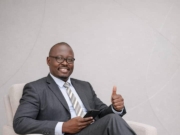
Senior Advocate and former Minister Hon Asuman Kiyingi sat with that silence in Luzira Magistrate’s Court. He watched Grade One Magistrate Her Worship Sheila Gloria Atim face a file that was not just about bail. It was about age, about politics, about history. Before her was former Ethics &Integrity Minister Hon Dr. Miria Matembe, 73, seemingly ailing, and one of the framers of the 1995 Constitution. The state wanted her kept in, the public was watching. The pressure was real. And then the Magistrate spoke. But before she spoke the law, she spoke herself.
“I am a simple human being entitled to give justice to all people of Uganda. I owe allegiance to Uganda. I am a judicial officer, a Catholic by religion and aged 45 years. God help me in the decision I am about to deliver.”
To the untrained ear, that was a courtesy. To Asuman Kiyingi, that was a judicial philosophy delivered in 5 sentences.
First, what he heard philosophically. This was the ancient contest between logos and kratos.
Logos is Greek for reason, order, and law. Kratos is power, force, and the will of the mighty. Every courtroom is where these two meet. When a judicial officer begins by saying “I am a simple human being,” she is deliberately placing logos above kratos. She is saying: “I will not be intimidated. I will not be flattered. I will reason.”
Hon Kiyingi saw a woman refusing to let the office wear her. Instead, she was wearing the office with humility. In psychology, this is called “self-distancing.” By naming herself plainly -age, faith, humanity-she removes ego from the room. That is how a judge protects impartiality.
Second, what he heard legally. “I owe allegiance to Uganda.” That phrase is the Constitution speaking through a person. Article 126 demands that judicial power be exercised in the name of the people and in accordance with the law. Allegiance to Uganda is allegiance to that text, not to personalities.
For context: Article 126 cited above is the anchor of judicial authority in Uganda. It provides two key things: first the source of power that judicial power is not derived from the president, parliament or any individual.
“Judicial power is derived from the people and shall be exercised by the courts…in the name of the people and in conformity with law and with the values, norms and aspirations of the people”. This is why a judicial officer owes allegiance to Uganda and to the Constitution, not to personalities.
Second, the principles of justice-when adjucating both civil and criminal cases, courts must apply five principles: equality, that is justice to all irrespective of social or economic status, speed-justice shall not be delayed, three(compensation)-adequate compensation to victims of wrongs, four (reconciliation) between parties shall be promoted and five is (substance over technicalities)-substantive justice without undue regard to technicalities.
In essence, Article 126 reminds the judiciary that it serves the people, under the law and according to conscience.
“Bail,” Kiyingi would later argue in his article, “is not mercy. It is memory.” It is the court remembering Article 23 on personal liberty and Article 28 on presumption of innocence. It is the court remembering Besigye v. Uganda where the High Court said discretion must be exercised judiciously, and Patel v. Uganda where the test for sureties was set.
What the Magistrate did not say was also law. She did not mention politics. She did not mention which side Dr. Matembe belongs to. In law, omission is a decision. Her silence on those things was her fidelity to Article 28: that a person is innocent until proven guilty.
Third, what he heard theologically. “I am a Catholic. God help me.” This is coram Deo. A Latin phrase meaning “before the face of God.” It is the idea that every judgment is made in the presence of a higher witness.
She also invoked Imago Dei. This is a theological term meaning “the image of God.” It is the belief that every human person, whether 25 or 73, whether in power or in prison, carries a dignity that cannot be erased by age, illness, or accusation. By saying “God help me,” the Magistrate was not being religious for show. In the Judeo-Christian tradition, judges were always reminded that they judge for God. Hon Kiyingi read this as an act of accountability. She was telling the courtroom: “I will answer for this.”
Fourth, what he heard psychologically. In psychology, what people do not say reveals what they are guarding.
She did not say if she is married. She did not say if she has children. She did not give biographical details that invite sympathy or attack.
In a country where a goodnight text or a lift to town can become a national debate, that restraint is strategy. It is called “boundary setting.” She was drawing a line: “Judge me on the law, not on my life.”
Hon Kiyingi also heard courage in the pause. In high-pressure cases, the easiest thing is to adjourn, to delay, to let someone else decide. She chose to decide. That is what psychologists call “moral agency” -acting in line with values even when there is risk. Through Hon Kiyingi’s eyes, this was not an isolated ruling. It was an echo.
It echoed Justice Samuel Wako Wambuzi, who said judicial independence is for the protection of citizens.
It echoed Justice John Bosco Katutsi, who refused to let courts become rubber stamps. It answered Justice Martin Stephen Egonda-Ntende’s retirement question: “Team Judiciary, where are our Wambuzis?”
In Luzira, the answer was 45 years old, in a magistrate’s robe, and speaking to God before speaking to the file.
The Exposure Uganda (TEU), your very credible and informative platform, therefore invites you to read Senior Advocate Asuman Kiyingi’s full piece.
Read the words, then listen for the silence between them. That is where the Constitution lives.
Read verbatim:
A Beacon of Judicial Courage: Saluting Magistrate Sheila Gloria Atim’s Fidelity to the Constitution
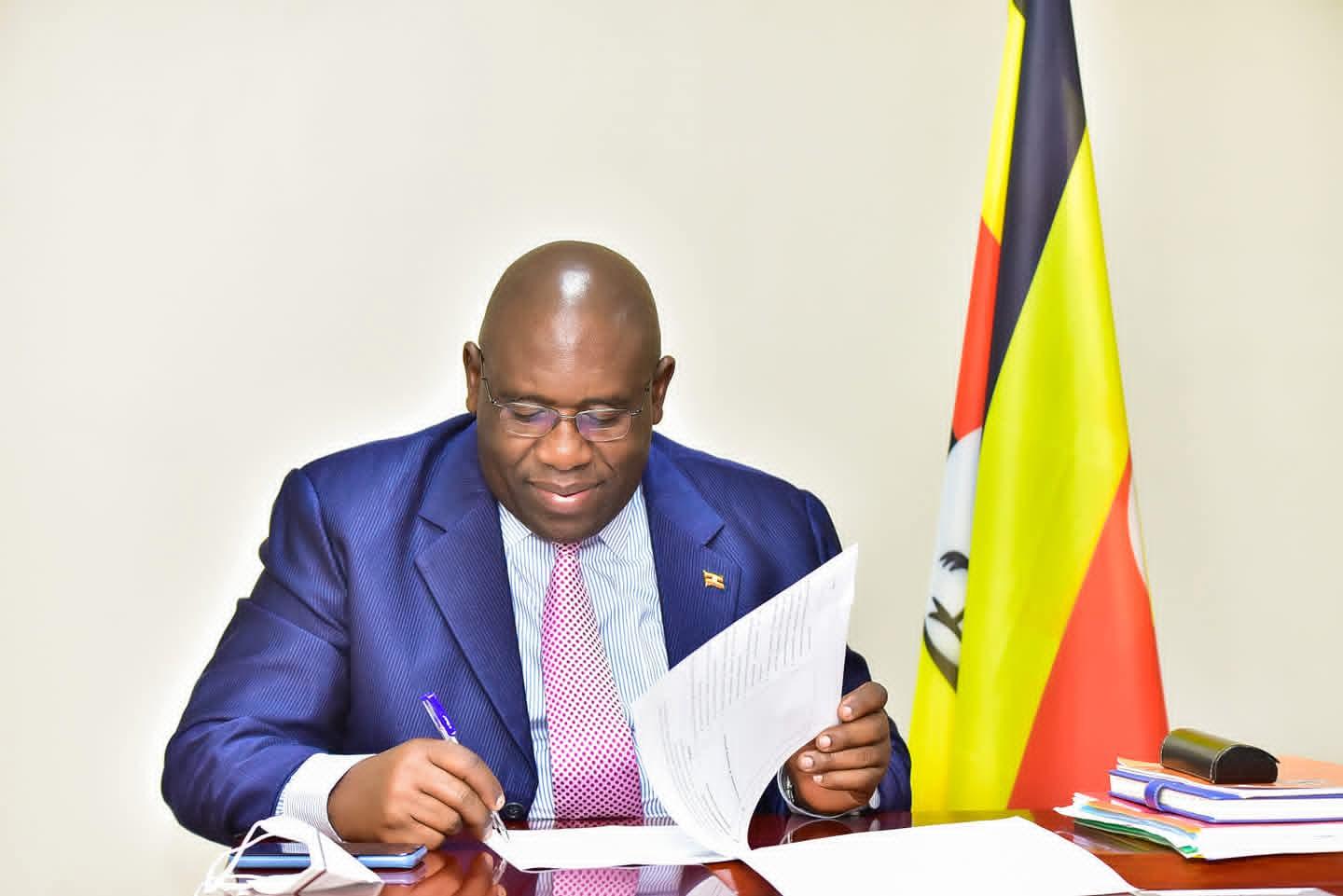
By Asuman Kiyingi
In every constitutional democracy, the courtroom is the ultimate frontline where individual liberty confronts the coercive power of the state. It is in politically charged cases, where executive displeasure looms over judicial proceedings, that the true character of a judicial officer is revealed.
Inside Luzira Magistrate’s Court, Grade One Magistrate Her Worship Sheila Gloria Atim offered Uganda a compelling demonstration of judicial independence, institutional courage and fidelity to the Constitution.
In granting bail to the ailing 73-year-old former Ethics Minister, Hon Dr. Miria Matembe, Magistrate Atim did far more than exercise judicial discretion. She reaffirmed the constitutional principles of liberty, due process and the presumption of innocence.

Faced with determined state efforts to keep the veteran anti-corruption and good governance crusader in detention despite her age and frail health, Atim refused to allow political pressure or institutional intimidation to eclipse the law.
Before delivering her ruling, she declared:
“I am a simple human being entitled to give justice to all people of Uganda. I owe allegiance to Uganda. I am a judicial officer, a Catholic by religion and aged 45 years. God help me in the decision I am about to deliver.”
Those remarkable words captured the essence of the judicial oath. By affirming that her allegiance was to Uganda and justice for all, she reminded the nation that a judicial officer’s highest loyalty is neither to the Executive nor to public opinion, but to the Constitution and the law.
Though serving on the lower bench, Magistrate Atim’s courage belongs to a distinguished lineage of Ugandan jurists who chose constitutional duty over convenience.
It evokes the legacy of former Chief Justice Samuel Wako Wambuzi, who consistently maintained that judicial independence exists not for the comfort of judges but for the protection of citizens. It recalls the steadfastness of the late Justice John Bosco Katutsi, who famously refused to let his court be used as a rubber stamp for executive overreach, insisting that the temple of justice must remain unsullied by political machinations.
The bridge between that generation and the present was eloquently drawn by Justice Frederick Egonda-Ntende upon his retirement. Lamenting what he regarded as an increasing judicial reluctance to intervene in plainly deserving cases, he recalled the refusal to allow NUP’s deputy spokesperson Alex Waiswa Mufumbiro to leave prison to bury his wife and asked: “Team Judiciary, where are our Wambuzis? Where are our Kityos?” It was less a lament than a challenge to the Bench.
In Luzira, Magistrate Her Worship Atim answered that challenge. She demonstrated that constitutional courage is not the preserve of appellate courts; it begins in the magistrates’ courts, where ordinary citizens first encounter justice.

The significance of her ruling extends far beyond Hon Dr. Matembe. Every Ugandan who appears before a magistrate depends on the assurance that liberty will not depend upon political influence, wealth or official favour.
Article 23 of the Constitution protects personal liberty, while Article 28 entrenches the presumption of innocence. Bail is therefore not an act of judicial charity but a constitutional safeguard against punishment before conviction.
That principle has long been reflected in Uganda’s jurisprudence. In Col. (Rtd) Dr. Kizza Besigye v. Uganda (2005), the High Court reaffirmed that although bail is discretionary, the discretion must be exercised judiciously and consistently with constitutional guarantees.
Likewise, Arvind Patel v. Uganda (2003) established enduring principles regarding the assessment of sureties. By faithfully applying those principles and granting non-cash bail to one of the framers of Uganda’s Constitution, Magistrate Atim demonstrated that the law remains a shield for citizens rather than a weapon of the state.
Her ruling also comes at a moment when public confidence in the administration of justice faces unprecedented strain. Dr. Kizza Besigye and his co-accused, Hajji Obeid Lutale, have formally complained to their trial judge that they have been denied representation by counsel of their choice, including Erias Lukwago and Martha Karua.
Questions have also arisen over whether the limited time allowed to prepare their defence adequately safeguards the constitutional right to a fair hearing. Earlier, the reported abduction of Erias Lukwago while preparing to serve court process on the Chief of Defence Forces, following the latter’s public declaration that only the President could summon him, deepened public concern about equality before the law and respect for judicial process.
Against that backdrop, Magistrate Her Worship Atim’s fidelity to constitutional principle assumes even greater significance.
As Justice George Kanyeihamba observed, a judge’s greatest weapon is not the coercive force of the police but the moral authority of a well-reasoned decision. Magistrate Atim reminded Uganda that judicial independence is not an abstract constitutional ideal reserved for academic debate. It is a daily choice made by individual judicial officers whenever liberty stands against power.
Uganda’s Constitution will endure not simply because its provisions were eloquently drafted, but because judges and magistrates continue to honour them when doing so carries personal and institutional risk. In Luzira, Magistrate Sheila Gloria Atim demonstrated that the tradition of Justice Samuel Wako Wambuzi, Justice John Bosco Katutsi, and Justice Martin Stephen Egonda-Ntende has not disappeared.
At a moment when many Ugandans are asking whether the courts remain the last refuge of the citizen, she offered hope: the Constitution still speaks with authority wherever judicial officers possess the courage to let the law—not power—have the final word.
The writer is a Senior Advocate and former Minister.
The Exposure Uganda (TEU) Closing Note.
The Exposure Uganda (TEU) is not cut from the same cloth as the many pages that have flooded our digital space. We are not part of a culture where any person recovers from illness, buys bundles, and then declares themselves a newsroom. Media is not a hobby. It is a calling, a discipline, and a public trust.
TEU is a revolutionary digital news platform built on knowledge, sharpened by skill, tested by experience, and sustained by competence.
We have the training and the temperament to engage any subject- law, governance, theology, economics, culture- with depth, with balance, and without malice.
We do not exist to serve individuals; we do not exist to fight institutions. Our work is not partisan, and it will never be personal. As philosophers have long reminded us, “The purpose of the press is to expose the powerful to the people, and the people to the powerful.” We take that seriously.
Theologically, we understand that truth is sacred. Scripture teaches that “You shall know the truth, and the truth shall set you free.” John 8:32. To expose is therefore not to destroy. It is to liberate. It is to place facts before citizens so that they can judge for themselves.
Our allegiance is not to a party, a personality, or a patron. Our allegiance is to truth. To the Constitution of the Republic of Uganda. And to the people whose stories we carry.
We do this work with respect for human dignity, with fidelity to facts, and with the professionalism that journalism demands. We verify before we publish. We give context before we conclude. We listen before we speak.
In an era where noise is mistaken for news, TEU chooses to be light.
Our Motto: We Expose. You Decide.
We welcome your views: To comment on this article, share a story idea, tip, or send us confidential information, reach TEU on WhatsApp 0776462509 or Call 0704019359. You can also email us at: exposureuganda000@gmail.com