

















“A constitution is not self-enforcing. It survives only to the extent that power continues to reside where the Constitution placed it.”
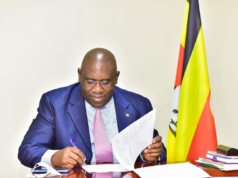
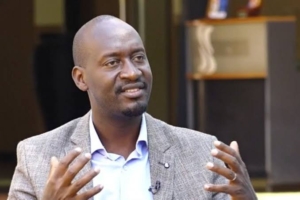
Senior Advocate and former Minister Hon Asuman Kiyingi has closed his public exchange with presidential advisor Morrison Rwakakamba, saying the debate has clarified a fundamental divergence on how to measure constitutional health in Uganda.
In a statement titled “After the Exchange: The Constitutional Questions That Remain” published Monday, Kiyingi thanked Rwakakamba for engaging the subject with civility. He, however, maintained that the central question is not whether institutions exist, but whether they still wield the authority the Constitution gave them.
On the question of institutional independence
Kiyingi said two conceptions of constitutionalism emerged during the exchange.
“One measures constitutional health by the continued existence of institutions and the availability of legal remedies. The other asks a more demanding question: Do those institutions continue to exercise the independent authority that the Constitution entrusts to them, or are they yielding to informal, parallel centers of power?” he wrote.
Invoking the rule of law tradition, Kiyingi quoted British jurist A.V. Dicey, 1835-1922, author of The Law of the Constitution: “The rule of law means the absolute supremacy or predominance of regular law as opposed to the influence of arbitrary power.” Dicey’s formulation remains the foundation of constitutional law across Commonwealth jurisdictions.
He added the warning of Lord Acton, 1834-1902, the British historian and liberal thinker: “Power tends to corrupt, and absolute power corrupts absolutely.” Acton’s maxim is still invoked by courts and anti-corruption bodies worldwide when testing limits on authority.
“My concern has always been with the latter,” Kiyingi stated.
Article 208 and the PLU structure.
The former minister said Article 208, which requires the army to be non-partisan and subordinate to civilian authority, sits at the center of the controversy.
“Civilian supremacy is not a slogan,” Kiyingi wrote. “It is the bedrock on which republics stand or fall.”
He cited Samuel Huntington, 1927-2008, the Harvard political scientist and author of The Soldier and the State: “In a democratic polity the military is a tool of the state, not the master of the state.” Huntington’s work remains the standard text on civil-military relations in democracies.
Kiyingi pointed to the recent public release of the Patriotic League of Uganda (PLU) Central Executive Committee as a case study. The structure lists an active, uniform-wearing military commander at the apex of a political organization, with senior government and parliamentary officials within the hierarchy.
He also cited the processing of Hon. Dennis Namara’s bill to amend the Administration of Parliament Act.
“While the legislative maneuvering occurs entirely within the formal rules of procedure, the reality that it is being utilized to execute a publicly stated desire by the military command to restructure the leadership of the Opposition cannot be ignored,” he stated.
Echoing Baron de Montesquieu, 1689-1755, the French philosopher whose The Spirit of the Laws shaped modern separation of powers, Kiyingi warned: “There is no liberty if the power of judging is not separated from the legislative and executive powers.” Montesquieu’s framework underpins Uganda’s 1995 Constitution and most democratic systems today.
“When internal legislative mechanisms are deployed to fulfill an external command, we must ask whether civilian authority is still autonomous,” he added.
Media, legality and the absence of regulators.
On the question of the media, Kiyingi raised concerns about recent interventions at Nation Media Group. He noted that before those interventions, the military command had publicly called for a press of “revolutionaries and cadres.”
Quoting Thomas Jefferson, 1743-1826, drafter of the US Declaration of Independence: “Were it left to me to decide whether we should have a government without newspapers or newspapers without a government, I should not hesitate a moment to prefer the latter.” Jefferson’s defense of a free press is still cited in free speech jurisprudence globally.
He said that when editorial and management changes followed, while the statutory regulator, the Uganda Communications Commission, was publicly absent, it raised the question of whether legality had yielded to informal command.
Kiyingi invoked the ancient common law maxim “Ubi jus, ibi remedium” — where there is a right, there is a remedy. “It is a principle articulated by Sir Edward Coke and William Blackstone that the law will not recognize a right without also providing a means to enforce it. If statutory bodies mandated to regulate are bypassed, then the right exists on paper but the remedy is gone. In that case, the law becomes ornamental,” he stated.
Warning against “slow poison”
Kiyingi rejected the view that current developments are mere “stresses” those institutions can withstand. He referenced Prof. Mahmood Mamdani, b.1946, the Ugandan scholar at Columbia University and author of Slow Poison, 2024, warning that states can erode gradually.
“It can act as a slow poison — a gradual, calculated hollowing out of civilian structures from within, where the outer skin of the institution is preserved… while its vital organs of accountability are systematically liquidated,” he wrote. Mamdani’s work on the postcolonial state is widely taught and debated across Africa.
He invoked Vaclav Havel, 1936-2011, Czech playwright, dissident and first post-communist President: “The tragedy of modern man is not that he knows less and less about the meaning of his own life, but that it bothers him less and less.” Havel remains a global symbol of moral resistance to authoritarianism.
And Martin Luther King Jr., 1929-1968, American civil rights leader and Nobel Laureate: “Injustice anywhere is a threat to justice everywhere.” King’s principle continues to anchor human rights law and constitutional interpretation.
Constitution as a continuing national project.
Kiyingi said he was not predicting collapse, nor denying that Uganda’s institutions continue to exist. His purpose, he said, was to invite reflection on whether constitutional authority still resides where the Constitution placed it.
Quoting John Locke, 1632-1704, the English philosopher whose Two Treatises of Government shaped liberal constitutionalism: “Wherever law ends, tyranny begins.” Locke’s ideas on limited government directly influenced the US Constitution and many others.
And James Madison, 1751-1836, “Father of the US Constitution” and 4th US President: “If men were angels, no government would be necessary. If angels were to govern men, neither external nor internal controls on government would be necessary.” Madison’s Federalist Papers remain the manual for constitutional design.
“A constitution is a continuing national project that depends entirely on public vigilance, institutional courage, professional integrity, and a shared constitutional culture,” the former minister stated.
He closed with Hannah Arendt, 1906-1975, the German-American political philosopher and author of The Origins of Totalitarianism: “The sad truth is that most evil is done by people who never make up their minds to be good or evil.” Arendt’s work on power, bureaucracy and civic responsibility is now central to debates on democratic erosion worldwide.
Kiyingi said he would now leave the particular debate, but will continue to contribute to the national conversation on constitutionalism.
The Exposure Uganda (TEU) Editorial.
A Nation Strengthened by Conversation. Democracies do not collapse in a single moment, they weaken when citizens stop talking to each other, and when disagreement is mistaken for disloyalty.
What Uganda needs now is not uniformity of opinion, but the healthy intercourse of ideas: robust, respectful, and unafraid. That conversation must happen in Parliament and the press, in the academy and the marketplace, in boardrooms and in village meetings, online and offline. It is in that exchange that a constitution stays alive.
We do not have to agree on everything to belong to the same country. The rainbow teaches us this: it is beautiful precisely because it holds many different colors. The fact that the world is full of millions of different, beautiful colors does not make any one of them less useful. Each has its place. Each reflects its own light. And together they form something no single color could ever achieve alone.
This is the spirit in which we commend the recent public exchange between Senior Advocate Asuman Kiyingi and Presidential Advisor Morrison Rwakakamba.
In an era where many rush to insult or to claim a monopoly of knowledge, the two gentlemen modeled something different: civility, patriotism, and a willingness to listen. They disagreed fundamentally, but they did so without questioning each other’s love for country. That is the standard we must normalize.
Unlike those who mistakenly believe they alone hold all wisdom and therefore refuse to hear anybody else; Uganda’s future depends on leaders and citizens who can argue, learn, and still walk forward together.
If we can govern ourselves in this way, different voices, different views, one nation — then the Constitution will not be a document we only quote in crisis. It will and should be a culture we practice every day.
That is how institutions endure. That is how a republic is built.
At The Exposure Uganda (TEU), we are not just another website, we are a revolutionary digital news platform.
We were not built to chase clicks, echo press releases, or serve power or any grouping and individual. We were built to do what the moment demands: expose truth, defend facts, and return judgment to the people.
We come with the professional competence to investigate without fear, the institutional ability to verify without shortcuts, and the ethical demands to publish without malice.
We are non-partisan. We do not belong to any party, any patron, any cabal. Our only loyalty is to the Constitution, to the public interest, and to you the citizen.
In a time when many claim a monopoly of knowledge and refuse to listen, TEU chooses a different path. We will ask the hard questions. We will name what others hide; we will publish what others fear.
Because democracy cannot survive in darkness, because a nation is only as strong as the information its people have. Because you deserve to know before you decide.
The Exposure Uganda (TEU): We Expose, You Decide.