


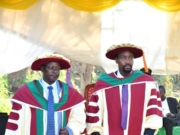
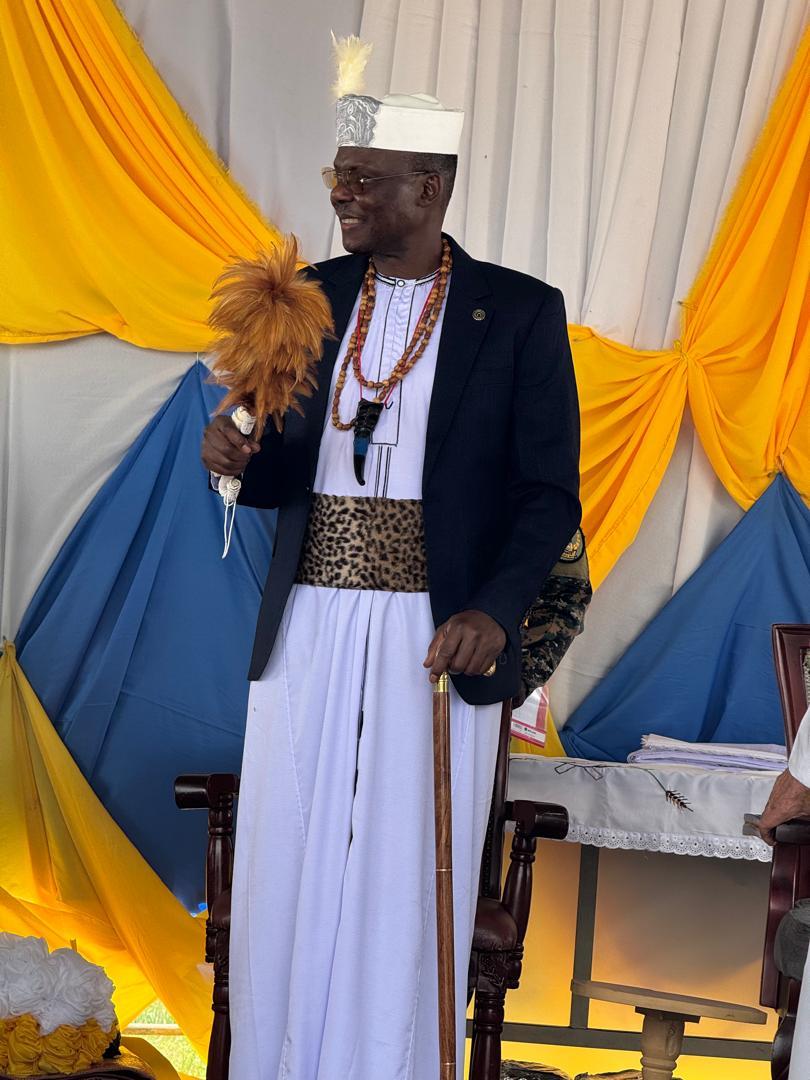
The Lango Paramount Chief HRH Eng. Dr. Michael Moses Odongo Okune has launched a sweeping critique of cultural erosion in Lango sub-region, accusing some Christian clerics of demonizing polygamy, betraying Leblango, and misusing scripture to silence accountability.
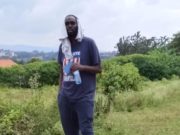
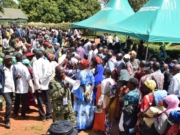
Speaking at a cultural sensitization meeting at his Senior Quarters-based private palace in Lira City West division, the Won Nyaci Me Lango said the recurrent attack on polygamy orchestrated by certain clergy was hypocritical and part of a wider assault on Lango identity through language, food, dress, names and marriage customs.
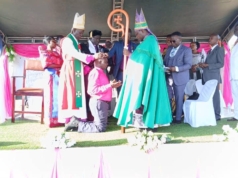
For context, during a recent installation of a clan chief, one of the clergymen who attended used the occasion as a direct launchpad targeting owitong in Lango and the cultural entity as being recklessly and intentionally promoting one very sinful practice of polygamy.
The cleric’s stance represents a wider position held by the Christian Church in Uganda and sub-Saharan Africa where monogamy is taken as an ideal form of marriage and is labelled not only as holy but Biblical and Godly.
Anyone who deviates from this is treated as an outcast and an agent of Satan who does not partake of the Holy Eucharist nor any leadership position.
More often such men become the targets of weekly Sunday sermons or in public events like funerals, marriages or parties wherever the clergies are given opportunity to either greet or deliver sermons.
“Polygamy is Lango. Monogamy is Western”
Okune rejected the labelling of polygamy as “devilish”, insisting it was central to Lango and African social organization for centuries.
“For centuries, Lango people and Africans as a whole had many wives and lived in peace with hardly any cases of separation and divorce as we see today,” Okune said. “Was that brought by clan chiefs or owitong? Who is responsible for the broken homes we now witness? Monogamy as enforced today is a Western practice. It has nothing to do with Lango or African cultural beliefs and practices.”
He said any man capable of competently maintaining more than one wife should be allowed to do so. “I cannot be head of a cultural institution and begin fighting positive norms, values and practices that sustained our society,” he said. “Our ancestors managed large households responsibly. They provided, protected and raised children together. That is Lango polygamy.”
His position echoes recent scholarship. In Polygamy among Christian Couples: Challenges and Prospects 2021, Esther Olukemi Aningor and Gloria Ndigeka Ayantayo argue that polygamy in Africa was historically tied to social security, lineage continuity, labour and communal support. Colonial Christianity, they note, imported European monogamous ideals without contextualizing them to African family systems, creating tension between doctrine and lived reality.
Clergy Accused of Language Betrayal and Biblical Misquotes.
Okune said the erosion of culture goes beyond marriage into language and worship. He accused some clergy of failing to preach fluently in Leblango while using English jargon to appear superior.
“Even the clergy themselves cannot preach fluently in Leblango but pretend to know more English which is part of English culture,” Okune said. “They use theological jargon apparently to show their mastery of the Bible and sound pompous to the amusement of the usually quiet Christian believers who fear being labelled as big-headed and rebels by the clergy.”
He criticized the frequent use of Psalm 105:15 and 1 Chronicles 16:22 — “Touch not my anointed and do my prophet no harm” — to silence criticism.
Biblical scholars explain the context: both verses appear in a song recounting God’s protection of Israel’s patriarchs — Abraham, Isaac and Jacob — as they wandered as foreigners. “Anointed” refers to these covenant patriarchs, not modern church office-holders. The warning was to foreign kings like Pharaoh and Abimelech not to harm God’s chosen people.
“The verse was a protection promise to Abraham, Isaac and Jacob while God fulfilled His covenant,” Okune said. “It was not a shield for modern clergy against accountability. The Bible itself is full of prophets who corrected kings and priests. Using that verse to silence questions is not biblical.”
“If a clergyman cannot preach the gospel in Leblango to his own people, how can he claim to be their shepherd? If he hides behind English jargon and misquoted scriptures, then he is serving culture, not God,” he added.
“Why baptize me Michael Moses?”: The Battle Over Names.
Okune also challenged the practice of renaming converts during baptism with names whose meanings neither clergy nor converts understand.
Like the bearer of this bye line, Nelly Nelsons, a name that literally means ‘daughter of the champion’ or son of Neil’ in English.
Odongo Okune Praises Museveni’s Naming of Muhoozi.
The won Nyaci praised President Yoweri Museveni for naming his son now the Chief of Defense Forces (CDF)Gen Muhoozi Kainerugaba, fondly known as MK without any European connotation.
Unlike some who carry long, ornate Western names that have no bearing on Ugandan or African identity, Museveni chose Muhoozi, a Runyakore name which means My Avenger, that is identity with purpose.
He faulted the tendency among some clergy in Lango to equate European names with piety while condemning those who are passionate about their culture and who live upright, purposeful lives of service to humanity.
“it is illogical and misleading to tag holiness to foreign names and tag as unchristian to our own names, a man’s righteousness is not Moses, Calvin, Mary or Rosemary or Cecilia, it is his fear of God, care of his family and service to his people while here on earth”, Okune said.
Yet Okune is also asking: “Why baptize me Michael Moses? Beautiful sounding names with bad meanings. Why not give me names like Odongo Okune Akome Gum, or Odongo Okune Atin Acwec?” he asked. “Why give us names like, Cecilia(blindness), Calvin(bald), Edward (big head), Claudia(lame), Leah(weary)and Kennedy (misshapen head), and others which we do not know or understand, yet we have plenty of names with rich theological and sociological relevance and meaning?”
He accused the majority of Christian clerics of being “misled and blinded by Western or European cultural practices, beliefs, norms and values”.
Leblango Names carry lived Meaning.
Okune’s examples with cultural accuracy:
Akome Gum: The Lucky One – given to a child born after hardship, survival, or good fortune.
Atin Acwec: Child of the Creator – marks divine origin and blessing.
Akec / Okec: Born during famine – girl/boy respectively, memorializing survival through hunger.
Ayo / Oyo: Born by the roadside – girl/boy, marking birth circumstances.
Akot / Okot: Born during rain/rainy season – girl/boy, tying identity to weather and time.
Opio / Ocen: Twin boys
Apio / Acen: Twin girls.
Contrast with Western names cited: Mary = “bitter sea” Hebrew; Cecilia = “blind” Latin; Claudia = “lame” Latin; Calvin = “bald” Latin; Livingstone = “farm by the stone” English; Rosemary = “dew of the sea” Latin; Robert = “bright fame” Germanic; Rogers = “son of Roger”.
Okune’s point: Lango names already carry theology and sociology. They record history, circumstance and blessing in Leblango. Foreign names teach nothing unless you study Latin, Hebrew or English history.
What African Christian scholars and clerics say
The debate over polygamy, language and names is not new. Africa’s most respected Christian scholar, the late Prof. John Samuel Mbiti 1931-2019, spent his life arguing that culture and Christianity must speak to each other, not fight each other.
Mbiti, a Kamba Anglican priest and “father of modern African theology”, rejected the idea that Africa was a spiritual vacuum before missionaries arrived. In African Religions and Philosophy 1969 he wrote that African religion was holistic: “There is no formal distinction between the sacred and the secular… Wherever the African is, there is his religion”. For Mbiti, marriage, naming, food and proverbs were all theology.
On Polygamy.
Mbiti described polygamy factually, not polemically. He noted: “Marriage and procreation amongst the African communities are a unity; without procreation, such marriage is incomplete”. He explained that polygyny — one husband, multiple wives — “fits well into the social structure of traditional life and serves many useful purposes”, including lineage continuity, social security and care for widows through levirate marriage.
Mbiti did not argue for polygamy as Christian doctrine. But he refused to dismiss it as “devilish” or “primitive”. He called African Traditional Religion a praeparatio evangelica , God’s preparation for the gospel.
His position: understand the cultural logic first, then engage it with pastoral care and dialogue, not blanket condemnation. That mirrors Won Nyaci Okune’s call for “loving care and counselling, not confrontation”.
On Naming and Language.
For Mbiti, names were proof that Africans already knew God. “When Africans bring children into the world, the children are given names that reflect belief in divinity”.
He cited Yorùbá Olúwaṣẹgun = “God has brought the battle to an end” and Igbo Chidinma = “God is good”. His own name Mbiti means “child dedicated to God”, given to stave off infant death — the same logic as Lango names like Akome Gum “The Lucky One” and Atin Acwec “Child of the Creator”.
Mbiti put his belief into action by becoming the first African scholar to translate the entire New Testament from Greek into his mother tongue Kikamba: Utianiyo Mweu Wa Mwiyai Yesu Kilisto 2014. He did it because “Bibles were mostly translated by foreigners… mainly starting from colonial European languages”. His message to clergy: preaches the gospel in the language of the people’s heart, not only in English.
That directly supports Okune’s complaint that some clergy “cannot preach fluently in Leblango but pretend to know more English” and use theological jargon to sound “pompous”.
On culture vs Christianity.
Mbiti’s method was inculturation letting the gospel grow from African soil. He argued Christianity should “build on a foundation that already existed in traditional African religions”. He stressed ubuntu and communalism: “people belong to a community first”. That is why extended families, clan responsibility and polygamous households made sense in Africa, while Western individualism felt foreign.
His conclusion is that an “indigenous, traditional, and African” form of Christianity “holds the greatest potentialities of meeting the dilemmas and challenges of modern Africa”.
In practice, that means the Church must do the hard work Mbiti called for: sift which cultural practices align with gospel values and which need transformation, instead of erasing everything African in the name of “piety”.
How Africa names: Names as Archives.
Scholars across Africa agree naming is not random labelling. “Naming practices across African societies constitute vital mechanisms for the preservation of genealogical knowledge, settlement histories, and sociopolitical as well as spiritual affiliations”.
Names encode kinship structures, birth circumstances, reincarnation beliefs, social roles, and ancestral connections, functioning as “oral genealogical records transmitted across generations”.
Among the Yorùbá, names encode lineage and migration history. Among the Meru of Tanzania, “every traditional name has a unique story and connotations” and naming rituals celebrate new life. Among the Akan, the maxim is nsɛmmɔne nti na yɛkyɛ din – “it is because of criminal acts that names were shared”, meaning every person has a name that solely identifies and marks them.
Scholars warn that “death of native names implies the death of important identity markers”. When missionaries prohibited indigenous names and encouraged only saints’ names, they contributed to “a change in identity as Africans”.
Clerics Accused of Hypocrisy.
Okune turned his criticism on what he called double standards among some clergy. Without mentioning names, he cited an unnamed highly placed cleric who allegedly had an affair with the wife of a junior clergy and sired a child.
“It is hypocrisy for purportedly happily and holily married and wedded clergy to secretly have affairs with concubines or even people’s wives, yet appear as angels in pulpits and public functions,” he said. “Many things need loving care and counselling, not confrontation.”
He insisted culture is not at war with religion: “The two must work for both the spiritual and material welfare of the people who are called Christians by the Church or subjects by the cultural body.”
Call for Dialogue, not War.
Okune said the Lango Cultural Institution supports marriages that uphold responsibility, respect for women, and care for children, whether monogamous or polygamous.
“What we oppose is abandoning our values for imported norms that are now producing divorce, single mothers, street kids and land conflicts,” he said. “The Church must stop the confrontational approach. If a man can maintain his household justly, who is the Church to destroy that home in the name of Western culture?”
Call for Dialogue, Not War.
Okune said the Lango Cultural Institution supports marriages that uphold responsibility, respect for women, and care for children, whether monogamous or polygamous.
“What we oppose is abandoning our values for imported norms that are now producing divorce, single mothers, street kids and land conflicts,” he said. “The Church must stop the confrontational approach. If a man can maintain his household justly, who is the Church to destroy that home in the name of Western culture?”
Returning to his central plea, Okune said the real issues of the day — prostitution, divorce, domestic violence, alcoholism — will not be solved by public blame. “We must hold hands and guide the people God has given us,” he concluded. “A Lango who is ashamed of Leblango is a Lango without roots. Let us teach our children to be proud Langi first, and global citizens second.”
Time For Unity, Not Division.
Okune said the Lango Cultural Institution supports marriages that uphold responsibility, respect for women, and care for children, whether monogamous or polygamous.
“What we oppose is abandoning our values for imported norms that are now producing divorce, single mothers, street kids and land conflicts,” he said. “The Church must stop the confrontational approach. If a man can maintain his household justly, who is the Church to destroy that home in the name of Western culture?”
Returning to his central plea, Okune said the real issues of the day — prostitution, divorce, domestic violence, alcoholism, will not be solved by public blame. “We must hold hands and guide the people God has given us,” he concluded. “A Lango who is ashamed of Leblango is a Lango without roots. Let us teach our children to be proud Langi first, and global citizens second.”
For Okune, revival starts with language, the kitchen table and the naming stool: “Let us teach Leblango in our homes, let us cook kwon kal again, let us give our children names that preach our values. A Lango who is ashamed of Leblango is a Lango without roots, so let us teach our children to be proud Langi first, and global citizens second.”
HRH Okune clarified that he is not waging war on the Christian Church or its leadership but that “this is a push back, not an attack”.
He described what he sees as a sustained, one-sided smear campaign that demonizes culture and its leaders, creating the impression that every socio-economic problem like poverty, prostitution, divorce and alcoholism, among others is the fault of tradition.
“The message is a loud call for introspection, the Church must also acknowledge its share f historical wounds that still haunt us today. We cannot heal by trading bar bs and tantrums, what we need now is constant, serious and honest engagement between culture and the church seated at the same table, not shouting sweeping condemnation from opposite podiums”, he appealed.