





















The Exposure Uganda (TEU) Preamble: Fasten Your Seatbelts — This Flight Has No Autopilot.
Ladies and gentlemen, welcome aboard TEU Flight 031/5: “The Structural Truth”.
This is not your ordinary end of May Sunday commentary. This is a supersonic jet cutting through four decades of Ugandan political fog at 45,000 feet.
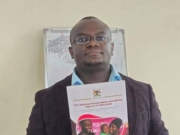
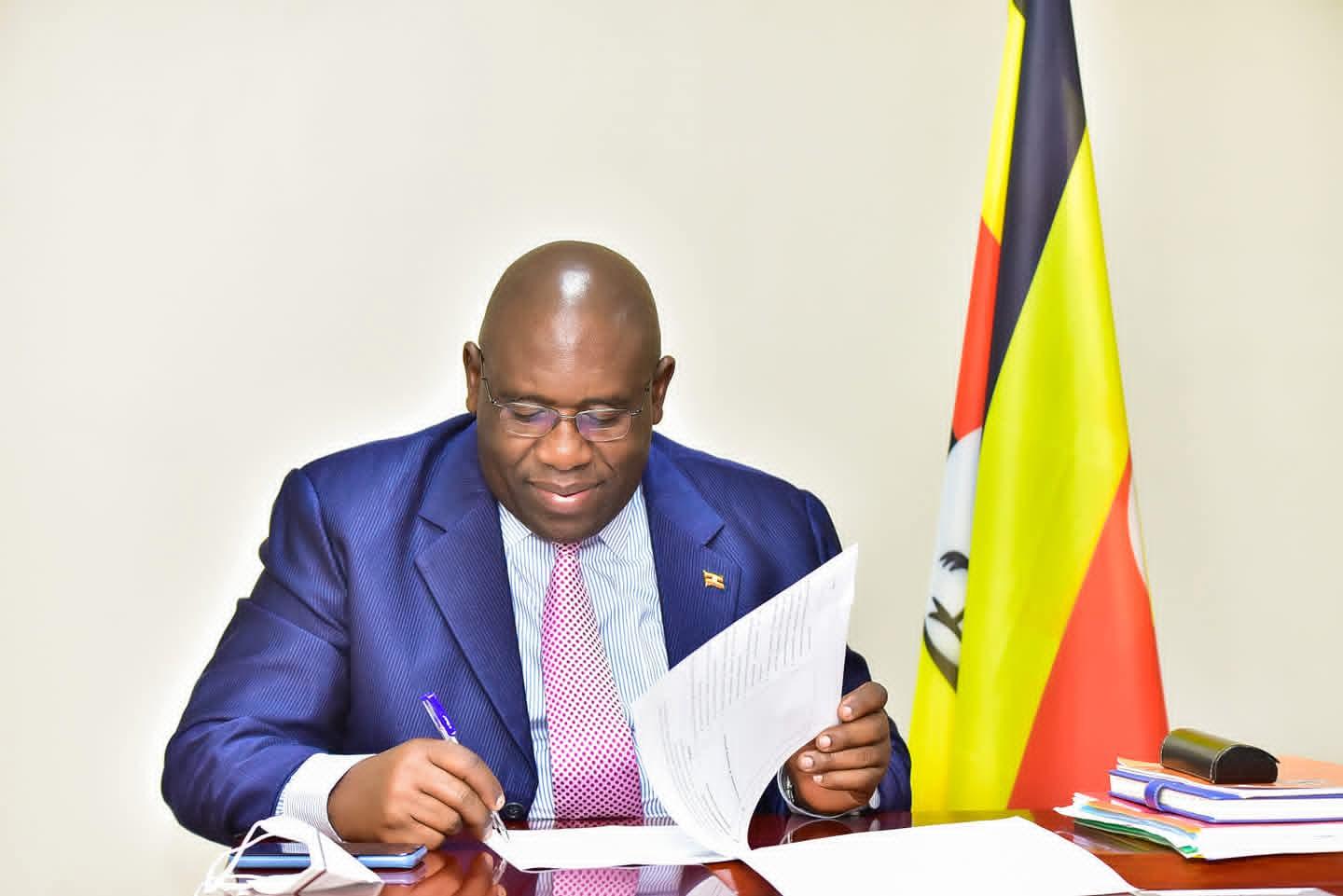
The air is thin up here, the turbulence is real, and the pilot speaking today is not a cheerleader. He is Hon. Asuman Kiyingi, Senior Advocate and former Minister, a man who has sat inside the cockpit of power and lived long enough to tell you how the machine actually works.
To decode it, Kiyingi borrows from Niccolò Machiavelli, (1469–1527) — the Florentine diplomat, historian, and author of The Prince. Dead 500 years, yet his shadow still governs every corridor of power from Kampala to Beijing.
Machiavelli’s brutal insight was simple: rulers who depend on personal power must never allow subordinates to become independent centers of attraction.
Hon Kiyingi rips the bandage off our national denial with the same scalpel. He tells you what no press release will: In Uganda, elite purges are not betrayals. They are blueprints. They are not accidents or moral failures. They are the operating system that keeps the center in control.
Jailed Col Dr Kizza Besigye, the late Eriya Kategaya, former Prime Minister John Patrick Amama Mbabazi, Rt Hon Mama Rebecca Alitwala Kadaga and now former speaker Rt Hon Annette Anita Among: The names change, but the script remains identical.
The moment an ally builds an independent base and loyalty turns into leverage, the system executes what Machiavelli prescribed: contain, isolate, neutralize. Not out of hatred, but out of structural logic. In personalized power, there can be only one sun. Every other star must stay a planet, or it gets burned.
This will be uncomfortable reading, it will bruise egos, shatter illusions, and force you to choose between mourning “betrayal” or finally understanding the architecture of power that produces it. But if Uganda is ever to land safely, we must first stare honestly at the altitude we have been flying at for 40 years.
To All TEU Passengers / Readers:
The engines are roaring and this is high-speed, high-altitude analysis with no hand-holding and no sugar-coating. Fasten your seatbelts, check your emotions at the gate. If you came for tribal or any sectarian slogans or personalized tears, this flight will depressurize your comfort zone.
Also stow your illusions, because phrases like “He was my friend” and “After all I sacrificed” belong in the cargo hold. Up here we deal in structure, incentives, and systems, not sentiment.
Observe flight etiquette: Do not interrupt the pilot with premature denials, listen first, then interrogate the logic, do not open emergency exits mid-air with knee-jerk insults. Think before you react. Keep your tray table of cheap cynicism folded. Cynicism is easy. Analysis is rare.
Oxygen masks will drop for those gasping at the truth, so put yours on before you try to save others from disillusionment.
The journey ahead will be turbulent because you will see the same cycle repeat: elevation, then autonomy, then containment, then purge. You will see how institutions designed to protect citizens have been converted into tools for managing elites. You will understand why Uganda keeps bleeding at every transition.
But turbulence is not the destination. Understanding is. So, lean in and read every paragraph as if your political survival depends on it, because in this system, it does. Kiyingi is not predicting the future. He is describing the flight path we have been on since 1986.
The plane is moving, the altitude is dangerous, and the truth is non-negotiable. Jump on board, fasten up, and let’s see if Uganda has the courage to land on the runway of institutions before the next purge rips the wings off.
TEU clears you for takeoff.
The Structural Logic of Political Fallouts in Uganda: Why Elite Purges Are a Feature, Not a Betrayal
By Asuman Kiyingi
Centuries ago, Niccolò Machiavelli warned in The Prince that rulers who govern through personal power must constantly prevent subordinate centers of influence from becoming independent poles of attraction. In modern political science, this is understood as the core logic of competitive authoritarianism: the center must maintain a strict monopoly over patronage and coercion to survive. Once an ally accumulates sufficient political, military, financial, or institutional influence, containment becomes structurally inevitable.
Yet, Ugandans often react to major political fallouts with intense emotionalism. Every political rupture produces familiar, personalized lamentations: “I was used.” “I was betrayed.” “After all I sacrificed, this is how they repay me.”
Supporters mourn fallen political giants as victims of extraordinary injustice, while rivals celebrate their downfall as moral punishment. Uganda’s political history suggests something far more uncomfortable: these political purges are not accidents, nor are they sudden deviations from the norm. It is how the system operates and preserves itself.
In highly personalized, neo-patrimonial political orders, powerful allies are rarely removed because of sudden moral discoveries. They are removed because they have ceased to be useful in the prevailing balance of power, or because they have become too powerful to remain safely inside it. Political alliances in such systems are tactical, temporary, and survival-driven. Those who mistake proximity to power for permanent security eventually discover that loyalty does not guarantee protection; it only postpones vulnerability. Uganda’s modern history reflects this structural logic with remarkable consistency.
Nearly every major fallout within the National Resistance Movement (NRM) has followed the same trajectory. A political actor is elevated because they are useful to the system. They gradually accumulate influence and develop an independent network. Their growing autonomy begins to threaten centralized control, and the state subsequently activates mechanisms to isolate, weaken, or remove them.
The fallout between President Yoweri Museveni and Dr. Kizza Besigye in 1999 was not merely a disagreement between old comrades. It reflected a deeper institutional contradiction. Besigye’s critique of corruption, militarization, and the personalization of power challenged the evolving structure of the Movement system itself. His greatest danger to the center was not simply his eloquence; it was that he possessed independent historical legitimacy within the bush war generation and could mobilize support beyond presidential patronage.
Once that happened, containment became inevitable. As Besigye broke away to form the Reform Agenda, and as other disgruntled ‘historicals’ coalesced around the Parliamentary Advocacy Forum (PAFO), the system recognized a growing structural threat.
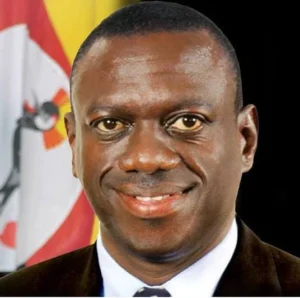
These forces eventually merged into the Forum for Democratic Change (FDC). Decades later, the ongoing fragmentation of that opposition space under state pressure contributed to the emergence of the People’s Front for Freedom (PFF)—the latest manifestation of this continuous cycle. Though these political formations evolved over time, the state’s response remained remarkably consistent: legal prosecution, military court actions, financial strangulation, surveillance, and targeted political containment. The structural lesson was unmistakable: independent legitimacy outside presidential control would not be tolerated, and any vehicle attempting to organize it would eventually come under sustained pressure.
The 2005 removal of presidential term limits exposed another structural reality. Senior historical figures like Eriya Kategaya, Jaberi Bidandi Ssali, and Amanya Mushega believed the Movement still retained internal ideological rules and collective leadership traditions. They opposed the removal of term limits partly because they assumed succession within the Movement remained institutionally negotiable. They misread the direction of the system.
Once term limits became an obstacle to regime continuity, historical loyalty ceased to matter. Kategaya and others were swiftly removed from Cabinet and replaced by younger, more dependent actors whose political survival relied primarily on presidential favor rather than historical stature. This transition marked a profound shift in Uganda’s governance architecture: away from a broad-based liberation coalition toward a heavily centralized patronage order.
No modern Ugandan example illustrates this logic better than the rise and fall of Amama Mbabazi. Mbabazi was not merely Prime Minister; he simultaneously controlled the office of Secretary General of the NRM, giving him unprecedented influence over both state and party structures. Through these dual positions, he built an extensive grassroots mobilization network that increasingly functioned independently of State House.
His eventual downfall was therefore not simply about personal ambition; it was about institutional duplication. In personalized political systems, parallel organizational machines are viewed as existential threats. Once the regime concluded that Mbabazi had developed an independent apparatus capable of mobilizing support nationally, the response was swift and decisive. The Kyankwanzi retreat institutionalized his isolation through the sole-candidate resolution, stripping him of his party and government leverage before executing full electoral containment in 2016. The message again was clear: no political actor may grow powerful enough to negotiate with the center as an equal.
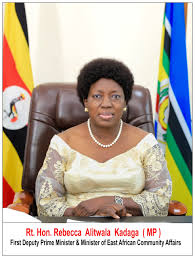
The removal of Rebecca Kadaga from the Speakership in 2021 followed the same historical trajectory. Over time, Kadaga had transformed the office into more than a ceremonial legislative position. She developed substantial regional loyalty in Busoga, cultivated institutional prestige within Parliament, and occasionally projected parliamentary independence against executive preferences. Her defeat was therefore less an ordinary parliamentary contest than a strategic reassertion of executive dominance over an institution beginning to exhibit signs of autonomous political identity.
The ongoing tensions surrounding former Speaker Anita Among fit squarely within this historical pattern, albeit with a unique structural twist. Her rise represented classic political co-optation.
Originally associated with the opposition FDC, she became an effective political mobilizer for the ruling establishment, particularly in the Teso sub-region and within Parliament itself. Over time, however, the legislature increasingly evolved into a powerful patronage center.
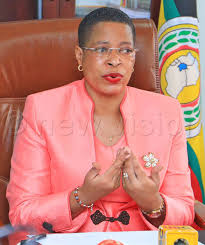
Control over budgets, the Parliamentary Commission, Committees, allocations, and institutional networks enabled the Speakership to cultivate extensive cross-party loyalties. But in a clientelist political order where the executive must ultimately retain dominance over patronage distribution, the emergence of an alternative, financially autonomous center of political influence naturally creates strategic anxiety, especially during a sensitive succession period.
The deeper issue is therefore not merely the specific corruption allegations or internal party disagreements. It is the structural reality that the system cannot comfortably accommodate parallel centers of political and financial gravity.
Once an institution begins to complicate centralized control, the state activates its instruments for elite discipline. This includes party restructuring, anti-corruption investigations, parliamentary disciplinary processes, judicial proceedings, selective criminal prosecution, and the calculated invocation of leadership code enforcement.
Notably, the primary bottleneck within leadership code enforcement resides in the statutory framework of the Leadership Code Act itself—which mandates that only the Inspector General of Government can prosecute—allowing the center to utilize these mechanisms selectively as tools of political management rather than uniform legal accountability.
Reinforced by the quiet pressure of the security architecture, the very same institutions that protect incumbents during periods of usefulness rapidly become instruments of neutralization once political calculations change. This is why political actors who once appeared untouchable suddenly find themselves isolated almost overnight.
Many Ugandans personalize these fallouts because politics is often interpreted through the lenses of morality, friendship, ethnicity, or loyalty. Yet the deeper problem remains structural. The pattern persists because the system incentivizes it. But analyzing these dynamics is not merely an exercise in cynicism; it is a prerequisite for understanding how states trapped in cycles of elite insecurity eventually weaken themselves from within.
Uganda cannot permanently stabilize its politics through the management of personalities alone. If the country is to break this exhausting cycle of purge and panic, it must gradually shift from personalized survival mechanisms toward strong, impersonal institutions.
That transformation requires restoring constitutional safeguards, including meaningful presidential term limits, so that political competition does not become existential. It requires insulating accountability institutions such as the Judiciary, Electoral Commission, Inspectorate of Government, Auditor General, and Leadership Code Tribunal from executive calculations. As long as such bodies are perceived primarily as instruments for elite management, anti-corruption campaigns will continue to be viewed through political rather than legal lenses.
Uganda must also reduce the dangerous fusion between political power and economic survival. Where access to state power determines access to wealth, exclusion from office becomes economically catastrophic, intensifying political conflict. A stronger private sector, protected property rights, and independent economic opportunities would reduce the desperation associated with losing political office.
Political parties themselves must evolve beyond personalized political vehicles. Clear internal electoral systems, transparent succession procedures, and enforceable party constitutions would help transform political disagreements from national crises into manageable organizational disputes.
Ultimately, however, these reforms cannot emerge piecemeal or through unilateral acts of political generosity. They require a comprehensive and credible National Dialogue through which the ruling establishment, opposition forces, civil society, religious leaders, and other national stakeholders can negotiate a stable transition framework for the country.
One of the greatest drivers of political purges in highly centralized systems is the existential fear surrounding political transition. Without credible guarantees regarding security, dignity, and legal protection for outgoing leaders, incumbents will naturally prioritize immediate survival over long-term institutionalization.
Uganda’s recurring political fallouts are therefore not random betrayals between individuals. They are the logical outcome of a structural order built around centralized patronage, personalized authority, and fragile institutions. The tragedy is not simply that powerful individuals eventually fall out with the system. The deeper tragedy is that the system itself continually reproduces the conditions that make such fallouts inevitable.
Until Uganda builds strong institutions capable of surviving beyond individuals, political alliances will remain temporary, elite purges cyclical, and every generation will continue mistaking structural realities for personal betrayal.
The writer is a Senior Advocate and former Minister.