











Jinja City politicians have rejected a proposal by Town Clerk Godfrey B. Kisekka to outsource garbage collection to a “money-loaded” Kampala firm, calling it a “deadly drone fired at indigenous service providers” who have kept the city clean for years.
The standoff happened during a consultative meeting held in Council Chambers on Thursday, 15 July 2026, chaired by Southern Division Senior Town Clerk Nathan Kitakule.

In attendance were Mayor Al Hajji Abdulhafidh Nagaya, Speaker Juma Ssozi, division mayors Simon Kasirye and Ayub Wabika, councilors, LCs, and City Development Forum members led by Joy Muwanguzi.
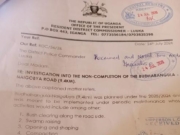
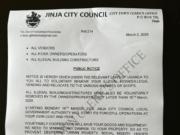
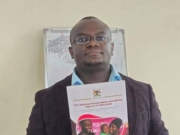
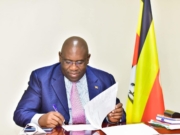
At the center of the dispute was a 7-page letter, Ref: CR 1259, authored by Kisekka. In it, he argued that existing catalogue of laws like: the Public Health Act Cap 310, NEMA Act 2022, and presidential directives and ministerial circulars were enough to immediately procure big, experienced service providers without waiting for a city Solid Waste Ordinance.
“You Cannot Just Kick Out Our People“
In the letter, Kisekka warned that the Ministry of Energy and Mineral Development has threatened to withdraw the idle Trommel machine at Masese unless the city shows a plan to turn biodegradable waste into compost, briquettes and methane power.
He also cited damaged buildings at the dumpsite and linked poor waste management to pollution of River Kiyira(Nile), Lake Victoria, disease outbreaks and climate impact.
But the political leadership was not convinced.
“You cannot just wake up and kick out our people who have continued to do a great job amidst all the challenges to keep the city clean, this cannot happen,” Mayor Nagaya fumed.

Sources at the meeting say Nagaya and fellow politicians want the current LCs and small CBOs to be given another one financial year, from 1st July 2026 to 30th June 2027, to continue collection before any new tender is awarded.
Speaker Juma Ssozi led the charge against the technical team, calling for honesty over condemnation.
“The Town Clerk and his civil servants need honest introspection as opposed to making reckless and sweeping condemnation at the LCs who have been the service providers,” Ssozi said.
“We all want a clean and safe city free of garbage but we must all do our part and seek lasting solutions. Otherwise, no single person can claim to know everything and therefore lock himself in an office and issue a letter as if it is a letter from the headteacher of a primary school to parents asking them to pay 50k for pupils tour.”
Ssozi, in a telephone interview also warned about the proposed outsourcing model.
“Unless many things are put right, the next bigger company who is profit oriented will come and overcharge residents. That has serious implications for our people,” he said.
Some councilors accused the Town Clerk’s office of “fraudulently selling off the dumpsite land at Masese” — a matter still in court — while now blaming LCs for the garbage crisis.
Mayor Nagaya directed Kisekka to seek Council minutes to delay tender awards and avoid “legal gymnastics with bidders.” Reports indicate the job has already been advertised.
A City Drowning While Offices Chat.
The letter painted a grim picture of Jinja’s waste system. Operations are currently run by small companies, infant CBOs and LCs using old trucks and tukutukus. To save on fuel and wages, most waste is dumped in markets, along roadsides and in drainages, especially at night and during rains.
There are no offices, no published schedules, no formal contracts or MoUs, and no avenue for complaints. For years there has been no council-approved charging policy, leaving residents vulnerable to overcharging.
Kisekka also faults the LCs managing the garbage of leaving medical and hazardous waste with no collection arrangement. Slum areas have never been mapped because trucks cannot access them.
At the dumpsite, poor tyres mean vehicles cannot go deep inside. After every downpour the access road collapses, forcing Council to hire a low-bed to deliver a wheel loader for 8 to 10 days just to create space.
In the CBD collection should be daily. In peri-urban areas, every 2 to 3 days. That is not happening. Tons go uncollected, and abandoned heaps attract flies and maggots.
But councilors turned the mirror back on the technical team.
“The LCs walk and use old small vehicles and tricycles as Kisekka alludes in his letter,” one councilor said.
“But our civil servants who are paid by government cannot go out in the field to sensitize the wanainchi unless there are allowances. They only sit in offices chatting on WhatsApp or laughing at themselves on TikTok videos instead of sensitizing city dwellers.”
Another added: “Now they want a money-loaded man from Kampala who will be wetting their beaks as payback. That is why they are in a hurry.”
Kisekka insisted that “garbage collection is not a gamble, it is science.” He called for data collection and analysis, and said that by 2027 the city must begin sorting at source. He argued bigger firms with cash and fuel are needed to turn waste into capital for youth, women and children through bio-degradable, briquettes and methane.
The Clock And The Politics.
“We don’t need to sleep at work, since we have only three years 2026-2029 to work seriously as by 2030-31, we shall be politicking for the next kisanji,” Kisekka wrote.
For politicians, giving LCs until 30 June 2027 buys time to streamline the system without disrupting livelihoods mid-year. The standoff now pits technical efficiency against political and community stability, with garbage at the center of Jinja’s 2026-2029 governance test.
But Kitakule maintains that nothing and nobody else can stop the procurement process which started with an advertisement so that more competent service providers come on board and the Council gets the best with adequate competence and capacity and experience.
“Sincerely everyone including you people in the media have been complaining about the bogus state of garbage disposal and management in Jinja City, why should we again turn around to make noise?” Nathan Kitakule slams.
The bids are going to be opened on Friday 17th July,2026 at the Town Hall as they wait for the Nagayi-led administration to liaise with Ssozi as speaker to convene a Council meeting and secure a resolution to stop the process.
“it is only the Council Resolution that can stop the procurement not a consultative meeting like the one held on Thursday otherwise someone can rush to the IGG or even the courts of law, so let’s be serious”, the Southern Division Senior Town Clerk stated.
What Research in Uganda Says About Best Practice?
Uganda-specific studies suggest Jinja’s problems are not unique — and that replacing LCs with one big firm may not be the answer.
A 2024 study in Gulu City found inadequate financial resources are the main hurdle to effective municipal solid waste management, with open dumping and burning still widespread.
Researchers noted that St. Mary’s Lacor Hospital had a working recycling system and suggested replicating such hospital-level segregation and “valourization” at city level to cut CO2 emissions and discourage open burning.
In Kampala slums, research using the Behavior Centered Design model found waste segregation and recycling were “not yet habitual” but were driven by physical space for bins, functional social networks, financial rewards, and community awareness.
The study recommends public and private sector partnership to develop recycling laws, increase awareness, and create sustainable markets for segregated products.
A study in Mbale City linked poor waste management directly to health. Only 38% of households owned waste containers and 62% relied on open dumping or burning. Households practicing open dumping were nearly twice as likely to report diarrhea. Researchers called for community sensitization, enforcement of anti-dumping laws, more trucks, and private-sector involvement.
Finally, a Kampala biogas study found that mixing organic waste like food waste, cattle dung and coffee husks produced more biogas and better detoxification than single substrates. It concluded that “digestion of mixed organic solid waste substrates is better method of waste management” and turns garbage into bio-fertilizer.
Taken together, the evidence points to 4 best practices for low-income cities: 1. Formalize and equip LCs and informal collectors instead of replacing them, 2. Invest in segregation at source and data collection, 3. Create markets for compost, briquettes and biogas, and 4. Enforce laws while increasing public awareness.
Context: Africa’s Garbage Burden.
Jinja’s fight reflects a crisis playing out across the continent. From Lagos, Accra to Nairobi, Kampala to Dar es Salaam and Juba, African cities collect less than half of the waste they generate.
Dumpsites leak into rivers and lakes — in Jinja’s case threatening the Nile and Lake Victoria and the entire food and fish value chain.
Experts argue the fix is formalizing informal collectors, investing in data, enforcing existing laws like the Public Health Act and NEMA Act 2022, and political will to stay the course.
In Jinja, that debate has just heightened and it started with a letter issued on Thursday that never made it past the Council Chambers.
As one councilor put it: “We don’t need lectures. We need partners who will work with the people on the ground, not over them.”