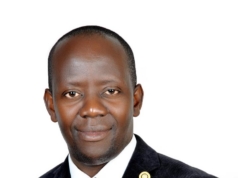

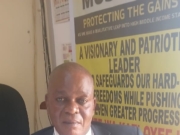


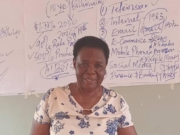


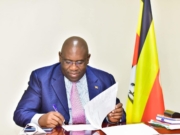

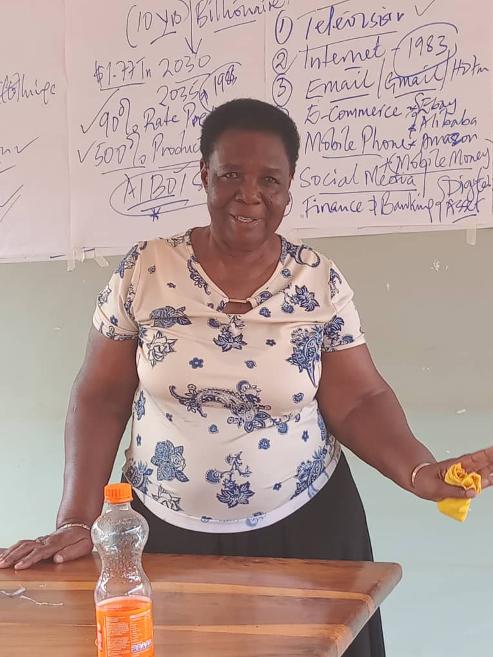
Senior Presidential Advisor in charge of Poverty Alleviation (SPA) for Busoga, Hon. Florence Mutyabule, has asked all Ugandans to wholeheartedly welcome and support the National General Cleaning exercise, saying it is about saving lives, saving money, and building prosperous communities.
The exercise, which took place on Saturday, 25th July 2026, was announced by Prime Minister Rt. Hon. Robinah Nabanja as part of government efforts to reawaken Ugandans to the importance of cleanliness in public health.
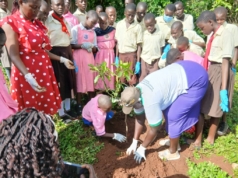
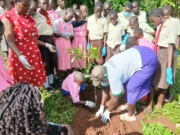
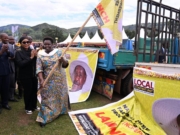
Across Busoga, reports from Jinja City, Kaliro, Iganga, Luuka, Bugweri, Namutumba, Bugiri, Namayingo, Mayuge, Buyende, Jinja and Jinja City and Kamuli showed leaders, civil servants, students, market vendors, boda-boda riders and ordinary residents turning out with brooms, pangas, gloves and garbage bags to sweep streets, weed public spaces, clear drainage channels and collect garbage for safe disposal.
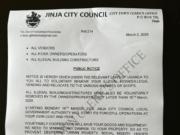
Government has now directed that this exercise will be held every last Saturday of the month from 7-10am.
Speaking after participating in the exercise and later moving through other parts of the region, Hon Mutyabule said the turnout was encouraging but cautioned that the real work must begin in homes.
“We must not clean only where people can see us and take photos for TikTok, Facebook, WhatsApp or for radio interviews, she said. We must also clean inside our houses, whether rental or personal. Some people appear very smart and clean when they step out, yet the moment you enter their homes you find dirt, cobwebs, and filth everywhere”, she stressed.
Speaking to journalists who caught up with her, Mrs. Mutyabule pointed to specific household problems that continue to undermine health and productivity like houses riddled with bedbugs(ebikuu) mean children spend nights scratching instead of sleeping and wake up too tired to learn. Cobwebs in sitting rooms and bedrooms trap dust that causes coughs and respiratory infections. Cockroaches and rats contaminate food and spread germs.
When a child is sick every other week, when a breadwinner is in hospital, that is money meant for school fees, food and business going to drugs, she said that is how poverty is entrenched.
On the presence of security personnel during the exercise, Mrs Mutyabule said it should not have been necessary. In any case, citizens and residents including visitors do not need to be coerced with a security presence to do what is right for their health and community.
But like the Lord Jesus Christ said in the Bible, “Moses permitted you to divorce your wives because of the hardness of your hearts” Matthew 19:8. Because of the hardness of some hearts, that is why the presence of security became inevitable. I am hopeful that with time, this exercise will become part of Uganda’s public health DNA, done willingly and without force.
She reminded residents of the old sayings that still hold true today. Cleanliness is next to godliness. An ounce of prevention is worth a pound of cure. And in our current situation, we must add that cleanliness is next to prosperity. Because every shilling we do not spend in hospital is a shilling we can invest in our families.
The former Namutumba District Woman MP also commended Cabinet chaired by the visionary leadership of President Yoweri Kaguta Museveni for coming up with the initiative, noting that it directly aligns with the government’s development agenda and the slogan “Kisanja No Sleep 2026-2031.”
“The President and Cabinet have shown leadership by prioritizing the health and dignity of Ugandans. This clean-up drive is part of building a healthy, productive and wealthy population, and that is exactly what Kisanja No Sleep is about”, she said.
Local Governments Must Prepare and Lead, Not Observers.
Mrs. Mutyabule used the opportunity to task all Local Governments to take ownership and adequately prepare for the monthly exercise, warning that poor planning will defeat the purpose.
Residents who participated complained of what they we saw in Jinja City as not acceptable. There were heaps of garbage piling and swarms of flies because there were no garbage trucks on the ground. There were no technical teams to guide people on where to dump and how to sort waste. It looked like the exercise was an ambush, they grumbled.
Residents faulted the Town Clerk of Jinja City, Godfrey B. Kisekka and his technical team who behaved as if they had been caught off guard.
“If some allowances were tagged, all workers including messengers, tea girls and cleaners from Town Hall would have turned up and signed for the money. But more importantly, the trucks would have been there, the supervisors would have been there, and the work would have been coordinated”, some locals complained.
Reacting to the complaints, Hon Mutyabule who did not want to apportion blames because this is a new initiative instead urged all City, Municipal and District leaderships to sit with their technical teams before every last Saturday and plan.
Background: What WHO and Government Say.
The World Health Organization has consistently emphasized that cleanliness in households and public spaces is fundamental to public health.
It states that ensuring universal access to safe sanitation systems in homes, schools, workplaces, health facilities and public spaces is essential in reducing disease, improving nutrition, and protecting overall well-being.
The organization warns that inadequate waste disposal promotes the cycle of infection. Bacteria and germs spread through contaminated soil, food, water and insects such as flies. WHO further notes that safe water, sanitation and hygiene in all settings is critical for infection prevention, patient safety, school attendance especially for girls, and for the dignity of communities.
In Uganda, government line ministries are pushing the same agenda through policy and action. The Ministry of Health identifies poor sanitation as one of the leading drivers of preventable disease outbreaks and promotes hygiene at household level as part of primary health care.
The Ministry of Water and Environment, through NEMA, is mandated to ensure proper solid and liquid waste management and to protect water sources from contamination. The Office of the Prime Minister is now coordinating the National General Cleaning exercise as a nationwide mobilization to institutionalize cleanliness as a civic duty.
Data from Uganda backs this position. Ministry of Health Disease Surveillance Reports covering 2022 to 2024 show that about 70 percent of cholera, typhoid and dysentery outbreaks in urban centers including Jinja were linked to blocked drainages, uncollected solid waste and poor liquid waste disposal.
A 2021 study by Makerere University School of Public Health in Kampala and Jinja found that households in areas with irregular garbage collection spent an average of 85,000 Shillings per year treating diarrhea, malaria and skin infections linked to the environment. Adults in those areas also lost an average of six working days annually due to preventable illnesses.
The National Environment Management Authority State of Environment Report 2020 to 2022 established that only about 40 percent of urban waste is collected and taken to designated disposal sites. The rest ends up in open spaces, wetlands and drainage channels, increasing flooding and disease risk.
The Uganda Bureau of Statistics Uganda National Household Survey 2023/24 shows healthcare expenditure accounts for 8.3 percent of the national household budget. The 2024 National Population and Housing Census further reveals that 7 percent of Uganda’s 10,698,913 households have no toilet facilities.
“Garbage in Its Place Means Wealth in Our Hands”. Mrs. Mutyabule said the government initiative directly aligns with both WHO guidance and Uganda’s own data.
“A clean and safe environment is not a luxury. It is the foundation of wealth creation and poverty alleviation. You cannot run a profitable market in filth. You cannot raise healthy children in garbage. When we dispose of waste properly, disease goes down, hospital bills reduce and productivity goes up. That is how money remains in our pockets”.
The Exposure Uganda (TEU) Editorial.
“From Brooms to Prosperity: The Monthly Clean-Up Must Be Owned by All”
The National General Cleaning exercise of Saturday, 25th July 2026 marks the beginning of what should become one of Uganda’s most important public health habits. Government, through the Office of the Prime Minister, has done well to institutionalize it for every last Saturday of the month.
But for it to succeed, it must move beyond being seen as “government work” and become a civic duty owned by every Ugandan.
Hon. Florence Mutyabule is right to remind us that cleanliness is not just about sweeping streets for cameras. A country cannot claim to be progressing when bedrooms are full of cobwebs, beds are infested with bedbugs, and kitchens are open to rats and cockroaches.
When we spend 85,000 Shillings a year treating preventable diseases because of garbage and poor drainage, then filth is not just a health problem. It is an economic problem.
We also agree with Hon Florence Mutyabule’s call to Local Governments. You cannot mobilize wanainchi and disappear. Jinja City’s experience, with heaps of garbage, swarms of flies, and no trucks on the ground, should be a lesson.
City and District leaders must plan, provide tools, deploy technical teams, and lead from the front. If allowances motivate messengers and cleaners to turn up, then budget for it. Leadership is about preparation, not excuses.
The WHO guidance and Uganda’s own health data are clear: poor sanitation fuels cholera, typhoid, dysentery and lost productivity. The monthly clean-up, if done well, directly supports the “Kisanja No Sleep 2026-2031” agenda of a healthy, productive and wealthy population under the visionary leadership of President Museveni and Cabinet.
To landlords: provide bins. To business owners: keep your frontage clean.
To religious and cultural leaders: preach it from the pulpit and the throne.
To households: start with your bedroom before you reach the road.
Let us welcome and support this move wholeheartedly. As Mutyabule put it, garbage in its place means wealth in our hands.
A clean Uganda will be a healthy Uganda. And a healthy Uganda will be a wealthy Uganda.
We Expose, You Decide.