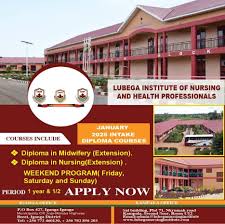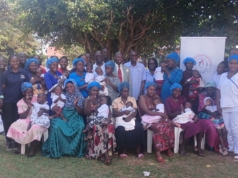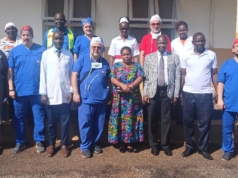












At the Lubega Institute’s 6th graduation, monarch, MPs and regulators dissect lifestyle diseases, poor sanitation and why cultural leaders must lead health mobilization.
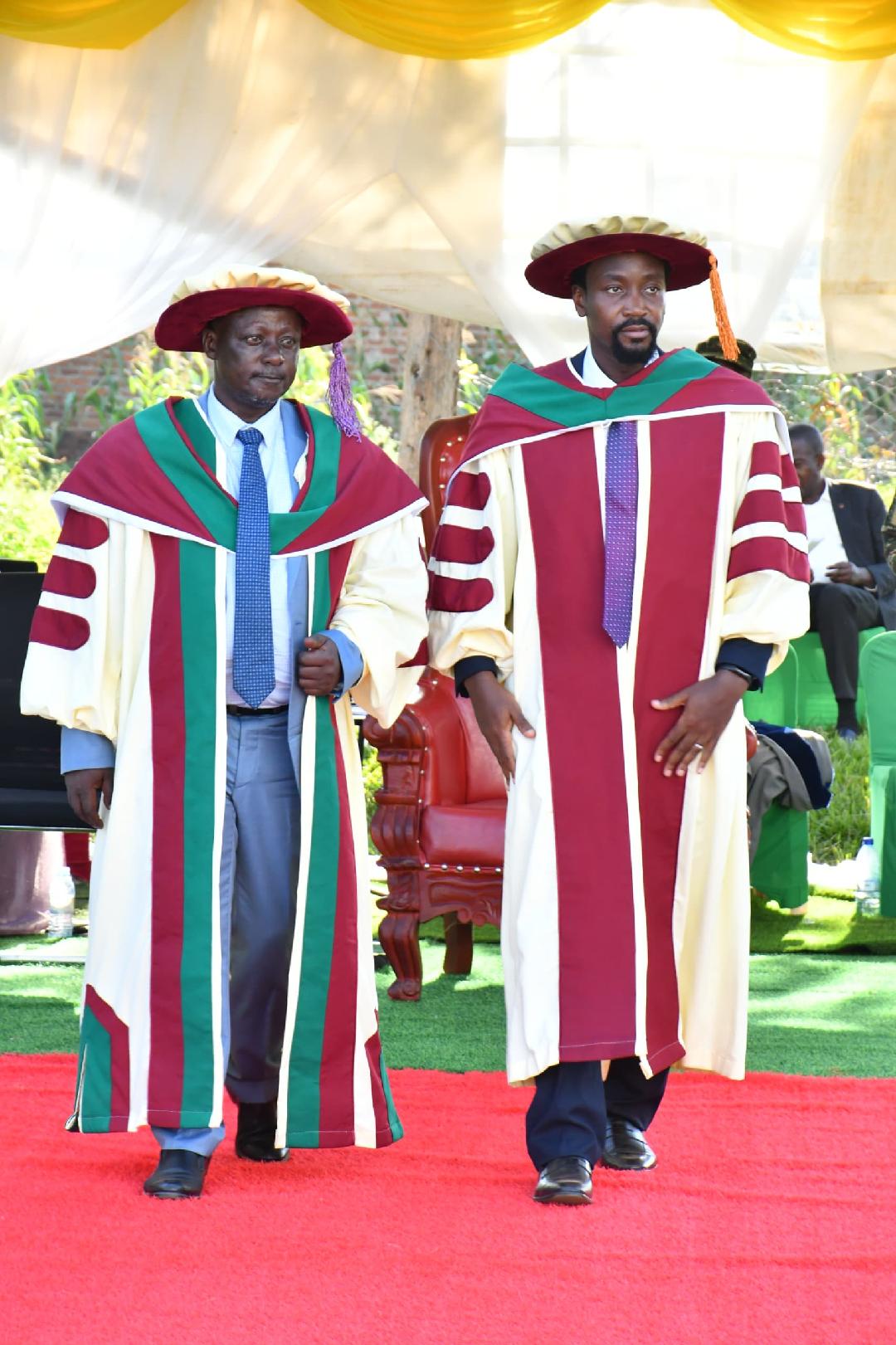
The Kyabazinga of Busoga and Chancellor of Lubega Institute of Nursing and Health Professionals His Royal Highness(HRH) William Wilberforce K. Nadiope Gabula IV, has told 600 newly graduated nurses, midwives, pharmacists and laboratory technicians that their certificates are covenants, not decorations, and that Uganda’s health future depends on prevention more than cure.
Speaking during the Busei-based institution’s 6th graduation ceremony at the Iganga campus on May 30, 2026, the Kyabazinga warned that communities will not remember graduates for their grades but for the lives they save at 2am and the health education they give in villages.

He urged them to become ambassadors of preventive health care by teaching hygiene in villages, nutrition in markets, immunization in churches and mosques, and maternal health to ordinary citizens.
The master-degree-holder now in pursuit of a doctorate-degree-monarch stressed that if every Ugandan understood that washing hands saves more lives than many antibiotics, hospitals would have room to breathe.
The Kyabazinga also positioned cultural institutions at the center of health delivery. He noted that through the Busoga Kingdom Education Fund, spearheaded by First Deputy Prime Minister Prof. Dr. Muhammed Lubega Kisambira, millions of shillings in bursaries have reached needy students.
His message was clear: educated kings and chiefs speak the language of science and their subjects listen. That makes them powerful allies, the central government must use in health mobilization.
Prof. Dr. Muhammad Lubega, Executive Director of the Institute, told the gathering that Lubega Institute has grown from 60 students in 2016 to about 2,000 students today from Uganda and beyond.
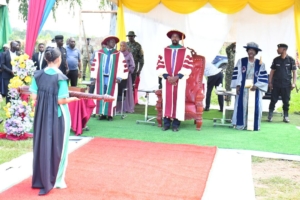
He announced that the institution has secured its letter of interim authority and submitted academic programs, and that by the grace of Allah it will transition into a fully-fledged University of Science and Technology before the end of 2026. Prof. Lubega also revealed major international linkages.
He said an MOU with Shenyang Medical School in China will allow academic exchange and research, while partnership with Canada Education Council will see the first batch of affiliated graduates travel to Germany by end of June for graduate programs worth approximately €37,000(an equivalent of 163M UGX annually.
He appealed to government to rehabilitate the dusty Iganga-Nakalama-Nawanyago road, which the Institute has maintained for ten years despite paying heavy taxes, arguing that world-class training cannot happen on broken infrastructure.
Rt Hon Rebecca Alitwala Kadaga, Uganda’s First Deputy Prime Minister and Minister for East African Community Affairs, commended Prof. Lubega for visionary leadership that has expanded quality education across Busoga, Uganda and neighboring South Sudan where the Institute runs a sister branch in Juba awaiting operational licenses.
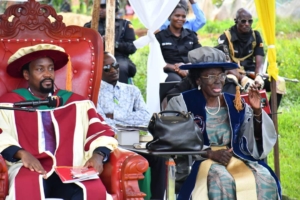
Mama Kadaga pledged government support for the Juba branch and expressed excitement over Lubega’s elevation to university status. She then turned to Uganda’s health workforce gaps, insisting that the Ministry of Health must prioritize specialized training.
Uganda, she said urgently needs nurses specifically equipped to handle special needs patients, palliative care, geriatric care and mental health because a general nurse cannot substitute for specialized skills.
On regional development, Mama Kadaga directed Busoga Parliamentary Caucus Chair Stephen Kisa Bakubalwayo to ensure area MPs are strategically placed on relevant parliamentary committees to advocate for the region, and she challenged MPs and local leaders to strictly monitor Parish Development Model (PDM) funds so that money reaches beneficiaries.
Hajati Safina Museene, Commissioner of Health Education and Training at the Ministry of Education and Sports, reaffirmed government commitment to private institutions which train the majority of Uganda’s health workers.
Hajjat Safina Museene who once served as Principal Tutor at the Jinja School of Nursing and Midwifery said the Ministry treasures their contribution and is willing to create a cohesive environment for training Ugandans and students from beyond the borders.
“We treasure what private institutions do, and we are willing to work with them to provide the best cohesive environment for training Ugandans and students beyond our borders”, she stressed in an address.
Mukakalisa Hellen, the Executive Secretary of the Uganda Health Professionals Assessment Board, reminded graduates that demand for nurses and allied health professionals is rising as communicable and non-communicable diseases increase.
She encouraged them to practice with humility, compassion and commitment to lifelong learning because the disease they will treat tomorrow may not be in today’s textbook.

The Lamp That Lit Modern Nursing.
The ceremony kept returning to one name: Florence Nightingale. Born in Florence, Italy in 1820, Nightingale is remembered globally as the founder of modern nursing.
In 1854 she was sent with 38 nurses to a British military hospital in Scutari during the Crimean War. She found soldiers dying not from bullets but from filth, rats, contaminated water and poor ventilation.
Mortality stood at 40 percent. Nightingale introduced handwashing, clean linens, fresh air, proper nutrition and strict record-keeping. Within months deaths fell to 2 percent.
Wounded men called her “The Lady with the Lamp” because she walked the wards at night with a lamp, checking on every patient.
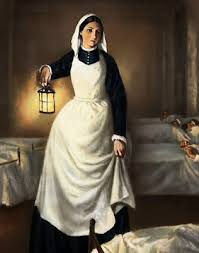
But Nightingale was more than a caregiver. She was a data scientist. She created early statistical charts to prove to Parliament that sanitation, not war, was the real killer.
That evidence forced the British government to reform military hospitals. In 1860 she established the Nightingale Training School for Nurses at St Thomas’ Hospital in London, the first secular nursing school in the world.
Her book Notes on Nursing became the foundation text for nursing education, and her core principle remains unchanged: “The very first requirement in a hospital is that it should do the patient no harm.”
Today the global nursing fraternity remembers her every 12 May on International Nurses Day. In Uganda, Mulago School of Nursing, which opened in 1921, was built on her model.
Every nurse who recites the Nightingale Pledge at graduation is promising to uphold her standards of hygiene, observation, discipline and compassion.
That is why when the Kyabazinga told Lubega graduates to champion prevention, he was simply asking them to carry Nightingale’s lamp into Busoga’s villages.
Prevention, Lifestyle and Uganda’s Disease Burden.
Florence Nightingale’s lesson is urgent for Uganda today because prevention means stopping disease before it starts instead of treating complications after damage is done.
It means vaccinating a girl against HPV now instead of performing chemotherapy for cervical cancer later. It means teaching handwashing now instead of treating cholera later. It means counseling on diet now instead of amputating a diabetic foot later.
The World Health Organization states it plainly that prevention is better than cure, and Uganda cannot afford to cure its way out of this crisis. Treating one diabetic patient for complications costs three to five million shillings yearly while teaching a village to reduce sugar and salt costs a fraction of that.
Mulago National Referral Hospital has 1,790 beds for 45 million people and no amount of hospital construction will match the speed at which lifestyle diseases are rising.
More importantly, a stroke at age 40 does not just kill a person, it orphans children and bankrupts families.
Uganda is also still battling neglected tropical diseases and water-borne illnesses alongside the new epidemic of non-communicable diseases. Schistosomiasis, intestinal worms, typhoid and cholera remain common in Busoga and other lakeshore districts because hygiene and sanitation are weak.
World Health Organization data shows that 38 percent of Ugandans lack basic handwashing facilities at home and open defecation still contaminates water sources. No pharmacy can cure a community that drinks unsafe water, which is why the Kyabazinga’s emphasis on hygiene is urgent and not basic.
The gravest emerging threat however is lifestyle disease. Uganda’s Non-Communicable Disease Risk Factor Survey shows that 26.4 percent of adults have hypertension and 6.1 percent have diabetes, about 1.4 million people, yet only 30 percent know their status.
Among urban elites the numbers are higher. The reason is diet and behavior. Many educated parents now feed school-going children on processed snacks, sweetened beverages, cookies and biscuits for lunch while dismissing vegetables, millet, beans and greens as food for the poor.
The result is children as young as twelve showing pre-diabetic blood sugar. Elites then try to correct it with jogging and gym memberships. Exercise helps but it cannot cancel a bad diet. As nutritionists warn, you cannot out-run a sugary soda. Diabetes is not caused by lack of gyms.
It is caused by excess sugar, salt, trans fats and sedentary habits. Vegetables are not poor man’s food. They are smart man’s medicine and prevention must start at the lunchbox.
Today Uganda faces a double disease burden. Malaria remains the number one killer and Busoga is still a high transmission zone. Cervical cancer kills about 3,200 Ugandan women yearly yet the HPV vaccine can prevent 70 percent of cases.
Tuberculosis accounts for 90,000 cases yearly and drug-resistant strains are rising. Mental health conditions, road accidents and alcohol-related liver disease are now among the top killers of Ugandans aged 15 to 49. Hospitals therefore fight malaria in one ward and diabetes in the next with the same understaffed nurses.
Home-Grown Solutions and Educated Leadership.
The graduation ceremony also underscored why Uganda must rely on educated cultural leaders and patriotic investors. The Kyabazinga speaks science and when he tells Busoga to vaccinate children or eat vegetables, subjects listen faster than they would to a poster.
Government must therefore treat Obwakyabazinga and other kingdoms as health stakeholders, not cultural decoration. Prof. Lubega represents the other pillar. He chose to build in Iganga instead of Kampala or abroad, producing nurses who will serve Germany and still serve home. That is patriotism with a stethoscope.
As graduates tossed their caps, the message was unified. Uganda does not just need more health workers. It needs health workers who prevent more than they treat, serve more than they earn, and remember that every patient is someone’s entire world.

From Nightingale’s lamp in Crimea to Lubega’s labs in Iganga, nursing has moved from battlefields to villages. If Uganda listens to prevention today, it will spend less on hospitals tomorrow.
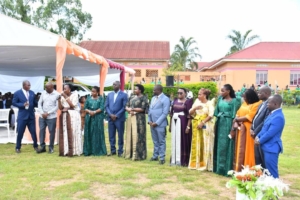
Dignitaries present included Second Deputy Mufti Dr. Hafith Muhammad Haruna Bukenya, Kampala Capital City Authority Executive Director Hajjat Sharifah Buzeki, Isabalangira Samuel Zirabamuzale Nkuutu, royal chiefs, Obwakyabazinga ministers, Hajji Yusuf Mpoza(Uganda Mufti’s special envoy to Great Britain), and Members of Parliament Stephen Kissa, Annet Nabirye, Jamal Ayagalaki, Nankwanga Stella Maris, Namatende Eunice, Martin Muzaale, Kungu Samuel, Peace Tibyaze, Wandera Sadala, Mariam Seif, Mastulah Namatovu, Saleh Mpata and John Bagoole.
TEU Explainer.
The Nightingale Pledge was written in 1893 by Lystra Gretter and a committee for the Ferrand Training School for Nurses in Detroit, Michigan and is modeled on the Hippocratic Oath.
Below is the classic version most nursing schools worldwide, including Uganda use at graduation:
I solemnly pledge myself before God and in the presence of this assembly,
To pass my life in purity and to practice my profession faithfully.
I will abstain from whatever is deleterious and mischievous, and will not take or knowingly administer any harmful drug.
I will do all in my power to maintain and elevate the standard of my profession, and will hold in confidence all personal matters committed to my keeping and all family affairs coming to my knowledge in the practice of my calling.
With loyalty will I endeavor to aid the physician in his work, and devote myself to the welfare of those committed to my care.
Key points it covers:
Purity plus faithfulness-personal and professional integrity.
Do no harm-abstain from harmful drugs/actions.
Confidentiality-patient privacy
Uphold the profession- continuous learning, standards.
Loyalty plus service- support doctors, put patient welfare first.
Many nursing schools now use a modern, gender-neutral version replacing “God” with “these witnesses” and “physician’ with “health team”.
But the 1893 original above is still the one recited at most Nightingale/Florence Nightingale-linked ceremonies, including the candle-lighting on International Nurses Day 12 May every year.