




















The Exposure Uganda (TEU) Preamble:
When The Law Stops Speaking and Power Starts Posting.
Every republic rest on a simple idea: power must explain itself in the language of law. Courts issue warrants. Parliament debates. Constitutions bind. That is the grammar of constitutional government.
What Senior Advocate Asuman Kiyingi calls “Sovereign Lawlessness” is the moment that grammar collapses. When a military officer can enter a lawyer’s home without judicial authority, detain him in an unknown place, and then post photographs of the man blindfolded for the public to see, the Constitution ceases to be the rulebook. It becomes decoration.
In Kiyingi’s context, “republic” does not just mean a country that is not a monarchy. He is using it in the constitutional and philosophical sense. A republic, for Kiyingi, is a political order where power belong to the people and is exercised through law, not through a person.
Asuman Kiyingi writes not from anger alone but as a lawyer, a republican, and a student of history. Through the lawyer’s lens he sees breaches of due process and fair hearing, the basic promise that no one is above the law. Abduction without warrant, detention without record, threats aimed at Parliament, the judiciary and Buganda Kingdom. For him these are not political complaints. They are constitutional violations.
Through the republican philosopher’s lens, he recalls James Madison’s warning about parchment barriers, the truth that constitutions fail when institutions lack courage.
He recalls John Locke’s warning that when rulers govern by fear instead of law, sovereignty returns to the people. He also takes up Carl Schmitt’s dangerous question about who decides when the law is suspended. Kiyingi’s answer is clear. In a republic, nobody. The law decides.
Through the historian’s lens he places Uganda beside Chad, Togo and Zaire not to copy their fate but to recognize a pattern. When family succession, military authority and personalized power converge, institutions are hollowed out one by one.
What Kiyingi notes as different this time is style. Earlier regimes used legal procedure as camouflage. This one uses public humiliation as strategy.
Kiyingi does not close with despair, he closes with Article 3. The Constitution itself anticipated moments when institutions would falter and it placed ultimate sovereignty not in the barracks, not in State House, not in Parliament, but in the people. His call is for citizens to raise the cost of lawlessness without breaking the law. Insist on procedure. Document abuses. Use regional courts. Stand together as institutions.
Read Kiyingi’s piece and ask yourself which lens he is asking you to look through right now. Is it the lawyer’s lens that checks every action against the Constitution? Is it the republican’s lens that asks whether power can still explain itself. Or is it the historian’s lens that warns about patterns we have seen before. That is the choice he puts before every Ugandan reader.
Sovereign Lawlessness: How to Salvage What Remains of the Uganda Republic.
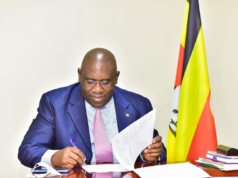
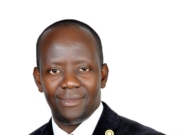
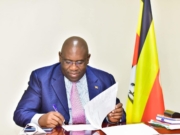
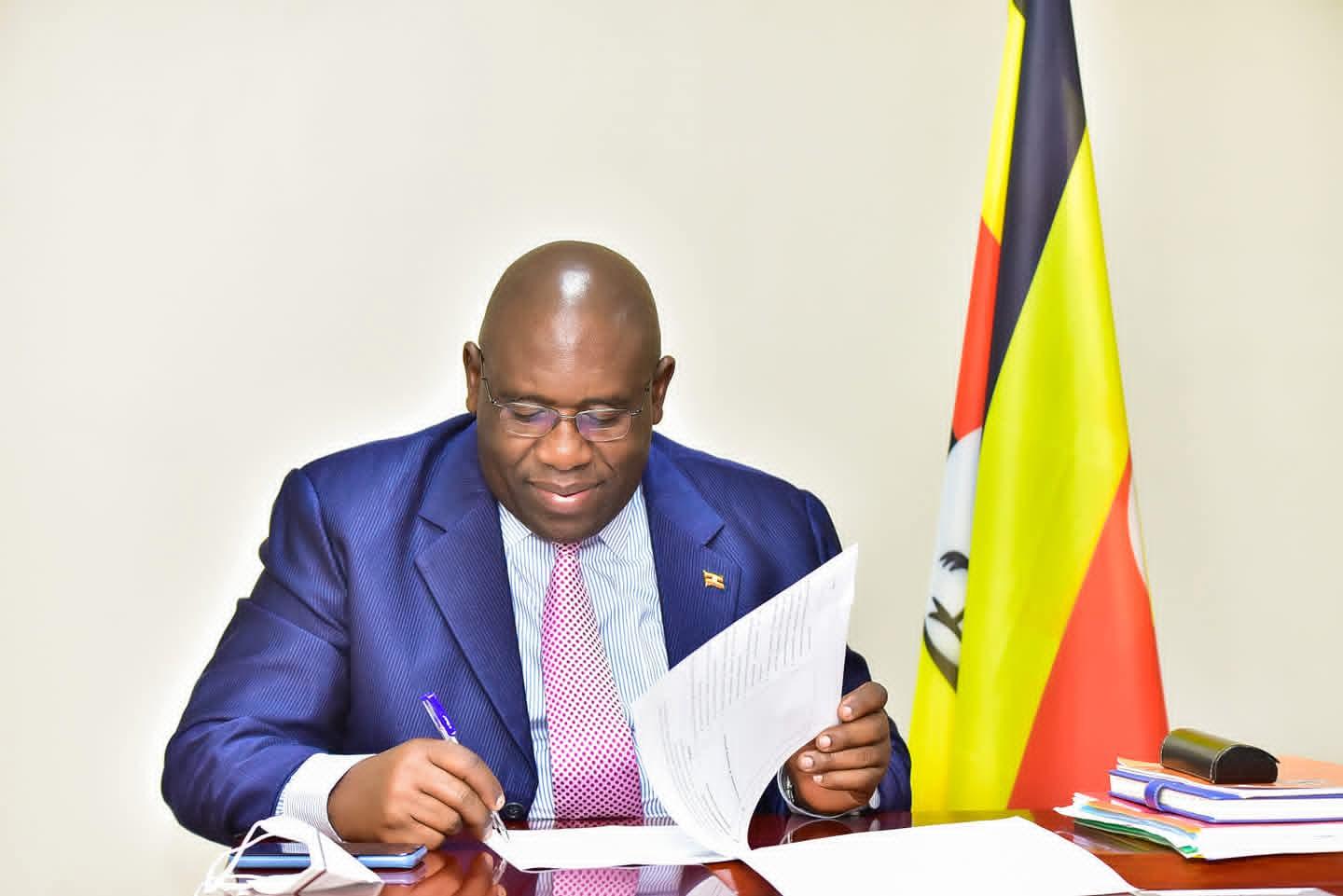
By Asuman Kiyingi
A profound and suffocating state of fear has been systematically engineered across Uganda. For the average citizen, the traditional markers of constitutional governance appear increasingly overshadowed by the reality of an alternative power center operating beyond the restraints of civilian law.
The country has been plunged into mounting public anxiety over a relentless series of high-handed actions that project the Chief of Defense Forces (CDF), General Muhoozi Kainerugaba, as all-powerful, unaccountable, and effectively beyond the reach of the institutions established by the Constitution.
The most chilling manifestation of this unchecked authority unfolded in the pre-dawn darkness of mid-June 2026, when armed security operatives reportedly scaled residential fences in Wakaliga, Kampala. They did not arrive with judicial warrants. They arrived in unmarked “drone” minibuses and forcibly entered the residence of former Kampala Lord Mayor and senior advocate, Ssalongo Erias Lukwago. He was abducted by armed operatives and held incommunicado for days. When Lukwago eventually appeared before a court, visibly weakened and stripped of the ordinary protections of due process, he was charged with misprision of treason—an offence relating to the alleged failure to report a treasonous plot. By then, the institutional mask had completely fallen.
The abduction and detention in an unknown ungazetted place were not merely acknowledged; they were publicly celebrated. Through statements posted on his verified X account, General Muhoozi Kainerugaba openly claimed responsibility for Lukwago’s capture and detention.
The posts included photographs showing Lukwago blindfolded while in custody. In a series of posts, the General claimed that Lukwago had “urinated thrice,” required diapers, and would spend the night subjected to “kiboko” (caning). These statements, published by the country’s highest-ranking military officer, generated widespread alarm about the treatment of a senior advocate and opposition leader while in military custody.
The same verified X account subsequently carried threats directed at political opponents and traditional institutions. In one widely circulated post, the General declared that after targeting opposition figures, he would pursue the Katikkiro of Buganda and the Kabaka if their television and radio stations did not cease broadcasting about the individual he captured and subsequently handed over to the police.
When the head of a state’s military apparatus can summarily detain a senior officer of the court, torture him and boast about it publicly as a personal “capture,” and subsequently use dehumanizing slurs to threaten the Katikkiro and the Kabaka of Buganda, a dangerous constitutional threshold has been crossed. This is no longer merely political repression.
It represents the consolidation of what may properly be described as Sovereign Lawlessness—a condition in which a dominant actor signals to the entire country that he is answerable to nobody except the ultimate source of personal power, standing effectively above Parliament, Cabinet, the courts, traditional institutions, and the citizenry.
In constitutional theory and political science, this concept describes a dangerous mutation of state authority. It combines Carl Schmitt’s notion of the sovereign as the actor who decides on the exception with James Madison’s warning regarding “parchment barriers”—the structural reality that constitutional texts become ineffective when institutions lack the capacity or will to enforce them. Sovereign Lawlessness emerges when state power becomes detached from legal justification and accountability. Law ceases to function as a neutral framework governing society and instead becomes an instrument deployed selectively against opponents while granting effective immunity to those exercising power.
Authority is no longer validated by constitutional office, legal process, or democratic delegation, but by the capacity to coerce and the willingness to exercise coercion publicly.
This development is not disconnected from Uganda’s political history. Rather, it reflects a long-standing pattern in which independent centres of influence are systematically neutralised before they can mature into meaningful alternatives to executive authority.
The fate of Col Dr. Kizza Besigye, the political isolation of Amama Mbabazi, the dismantling of General Kale Kayihura’s security networks, and the curtailment of Rebecca Kadaga’s independent parliamentary influence all illustrate variations of the same principle.
Most recently, the political difficulties confronting Anita Among arguably follow a similar historical trajectory. The principle is quintessentially Machiavellian: a ruler must never permit the emergence of an independent centre of political gravity capable of rivaling the throne.
Yet under General Muhoozi, this logic appears to have undergone a significant mutation. The earlier model relied upon legal processes, bureaucratic manoeuvres, and institutional management to preserve a veneer of constitutional order.
The emerging model increasingly dispenses with subtlety. It does not merely manipulate institutions; it publicly humiliates them. Threatening the Buganda Kingdom, its Katikkiro, and its media platforms for reporting on a matter of public concern represents an attempt to subordinate one of Uganda’s most enduring centres of cultural and historical legitimacy to raw military authority.
Uganda’s trajectory is not unique. Across Africa, republics have often been weakened when institutions were subordinated to family succession projects. In the Chadian model, following the death of President Idriss Déby in 2021, the constitutional succession framework was set aside as military authorities dissolved key structures to install his son, Mahamat Déby. The Togolese precedent offers an example of institutional capture; following the death of President Gnassingbé Eyadéma in 2005, the military facilitated the installation of his son, Faure Gnassingbé, using legislative institutions to regularise an extra-constitutional transfer of power.
In the Mobutuist model of Zaire, meaningful coercive power was progressively concentrated within elite units personally loyal to Mobutu Sese Seko, draining practical authority from formal state offices. While Uganda’s circumstances remain distinct, repeated public declarations by General Muhoozi expressing his desire to succeed his father as President have naturally generated public debate regarding the future relationship between military authority, dynastic succession, and constitutional governance.
The anxiety now gripping many Ugandans stems from a disturbing shift: ordinary civic activity increasingly risks being framed as subversion. Activities ordinarily protected under Chapter Four of the Constitution—political discussion, media engagement, public criticism, and civic mobilization—are increasingly treated as security concerns.
Opposition figures, such as Leader of the Opposition Joel Ssenyonyi and vocal legislators like Ssemujju Nganda, are subjected to routine, public threats of containment. General Muhoozi has publicly stated that he intends to name a Leader of the Opposition of his choice to replace Ssenyonyi. Journalists and media organisations are vilified, with independent outlets like NTV and the Daily Monitor openly labeled by the CDF as circus clowns, alongside the ominous declaration that those days are over because leadership has been handed to his generation. Previously, when summoned to appear before a Parliamentary Committee, General Muhoozi refused to attend, derisively dismissing the Committee members.
Most alarmingly, the logic of intimidation has begun extending even to senior figures within the state itself. When Major General (Rtd) Kahinda Otafiire publicly raised concerns about what he termed “rogue security elements” within the Police Crime Intelligence Directorate allegedly involved in unlawful killings, the response was not an institutional inquiry.
Instead, he became the subject of public threats from military figures, with the CDF warning that the minister had provoked lions enough and was dangerously close to being arrested. Such incidents reinforce the terrifying perception that constitutional office no longer guarantees protection from arbitrary, personalized power.
When institutions fail, constitutional responsibility does not disappear. The Constitution of Uganda locates sovereignty in the people. Article 1(1) explicitly provides that all power belongs to the people, while Article 3 imposes a mandatory injunction and a supreme constitutional right upon every citizen to defend the Constitution against efforts to subvert the established constitutional order. This does not require violence; indeed, constitutional fidelity demands precisely the opposite. It requires lawful, organised, and principled resistance to illegality.
Under the lawful authority of Article 3, a terrified population can utilize specific, asymmetric mechanisms to raise the political cost of lawlessness. First, public servants remain custodians of legality through bureaucratic constitutionalism.
To protect the state apparatus from absolute capture, civil servants and professional officers can insist upon strict procedural compliance, demand formal written instructions, document irregular directives, and maintain meticulous administrative records to slow and expose unconstitutional exercises of power.
Second, where domestic remedies prove inadequate due to institutional capture, citizens and civil society organisations must systematically bypass local bottlenecks through regional and international litigation. Invoking supranational regional mechanisms, such as the East African Court of Justice (EACJ), places the regime under international legal scrutiny. Articles 6(d) and 7(2) of the EAC Treaty legally bind member states to the principles of good governance, democracy, the rule of law, and social justice, while Article 30(1) allows any resident of a Partner State to challenge the legality of state actions. Because EACJ judges sit entirely outside the reach of local military deployment, regional litigation dramatically increases the diplomatic and economic costs of unconstitutional conduct.
Third, the digital age allows citizens to turn threats into legal exhibits through meticulous documentation and evidence preservation. The principal actors of this current overreach are leaving an undeniable, primary trail of their own lawlessness. Every public threat, admission of unlawful conduct, and documented abuse should be permanently archived. Today’s reckless social media post becomes tomorrow’s legal exhibit when international bodies look to enforce targeted transnational financial and travel sanctions under frameworks like the Global Magnitsky Human Rights Accountability Act—a path previously seen when General Kale Kayihura was sanctioned in 2019 for his alleged role in corruption and serious human rights abuses.
Finally, because divide-and-rule methods rely on the isolation of individual targets, the most effective response is building institutional solidarity. When traditional cultural institutions like the Buganda Kingdom, religious bodies, professional associations like the Uganda Law Society, civil society organizations, and independent media explicitly align, they form an immense social block. Constitutional governance survives when institutions collectively refuse to stand alone, or to validate personalized tyranny by whatever name it is called.
Sovereign Lawlessness is ultimately unstable. A political order that simultaneously intimidates the judiciary, weakens Parliament, threatens traditional institutions, attacks the media, and marginalizes constitutional safeguards gradually erodes its own foundations.
The Constitution anticipated moments of institutional failure and therefore placed ultimate sovereignty not in the military, not in political parties, and not in individuals, but in the people themselves. The challenge facing Uganda today is not simply whether its institutions can survive. It is whether its citizens, acting lawfully and collectively under the authority of Article 3, can preserve the constitutional republic before personalized military power supplants it entirely.
The writer is a Senior Advocate and former Minister.