




















The Exposure Uganda (TEU) Preamble: Law, Politics, and the Burden of Words in a Constitutional Republic.
Uganda’s constitutional order rests on a permanent tension: the right to speak, and the duty to speak without tearing the social fabric. Article 29(1)(a) of the 1995 Constitution guarantees freedom of expression, while Article 43 reminds us that no right is absolute where it injures others or undermines public order.
It is in that narrow corridor that the offence of “promoting sectarianism” under section 38 of the Penal Code Act, Cap. 128, operates.
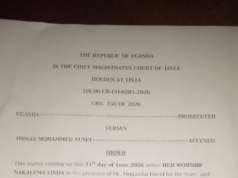
The charge against former Ethics and Integrity Minister Hon. Dr. Miria Matembe on 30th June 2026 — for allegedly stating on DK TV Uganda that “all our taxes are being spent on the Banyankole women ministers” — forces the Republic to answer three questions at once:
Legally: Where is the line between political criticism of patronage, public expenditure, and ethnic concentration in office, and identity-based incitement that the law punishes? The Constitutional Court in Mwenda and Another v Attorney General UGCC 9 upheld section 38 as a justifiable limitation, but insisted it must be applied strictly, not assumed from political disagreement alone. [2010]
Politically: In a polity where governance, ethnicity, and resource allocation are constantly conflated in public debate, can criminal law discipline speech without chilling legitimate accountability? The charge sheet from Jinja Road Police, Ref: CRB 638/2026, alleges a likelihood of hostility. The defense will invoke section 38(2): speech meant to expose, discourage, or eliminate sectarian practices.
Philosophically: What kind of republic do we want to be? One where citizens may not name the tribe of those in power when questioning state spending? Or one where the state must meet a high evidentiary bar before converting robust, even uncomfortable, political speech into a crime? As Onyango Obbo & Mwenda v AG UGSC 1 held, limitations on speech must be “acceptable and demonstrably justifiable in a free and democratic society.”[2004]
The Matembe case is therefore not just about one statement, one minister, or one tribe. It is a test of how Uganda adjudicates power, identity, and dissent. The outcome will turn on context, tone, audience, and proof — not on implication alone.
Engage the Author Directly.
For the complete statutory analysis, evidentiary gaps, defense and prosecution strengths, and the full constitutional-philosophical assessment, read Prof. Isaac Christopher Lubogo’s paper in its entirety, without paraphrase or reduction.
We invite all lawyers, scholars, journalists, students, and citizens to interact with Prof. Lubogo on this subject. Share your questions, counter-arguments, or legal insights directly with him and be part of the national conversation on free speech, accountability, and sectarianism in Uganda.
Promoting Sectarianism and the Matembe Charge in Uganda: A Critical Legal Analysis
Executive Summary
By: Isaac Christopher Lubogo
30th June 2026

On 30 June 2026, former Ethics and Integrity Minister Dr Miria Matembe was charged with promoting sectarianism contrary to section 38(1)(d) of the Penal Code Act, Cap. 128 (formerly Cap. 120 prior to the 7th Revised Edition of the Principal Laws of Uganda), and remanded to Luzira Prison, according to the charge sheet from Uganda Police Form 53, Station: Jinja Road Police, Ref: CRB 638/2026.
The charge arises from an alleged statement made during a June 2026 appearance on DK TV Uganda, in which she reportedly said that “all our taxes are being spent on the Banyankole women ministers,” as recorded in the same charge sheet from Uganda Police Form 53, Station: Jinja Road Police, Ref: CRB 638/2026. The legal question, as framed by the charge sheet and the applicable statutory framework, is whether that statement crossed the line from political criticism into identity-based incitement, a distinction that the courts have grappled with in cases such as Mwenda and Another v Attorney General [2010] UGCC 9 (25 August 2010).
Section 38(1) of the Penal Code Act, Cap. 128 (formerly Cap. 120 prior to the 7th Revised Edition of the Principal Laws of Uganda), criminalizes any statement or act likely to degrade, revile, expose to hatred or contempt, create alienation or despondency, raise discontent or disaffection, or otherwise promote ill will or hostility against a group on account of religion, tribe, ethnic origin, or regional origin, as provided in section 38(1)(a) through (d) of the Penal Code Act, Cap. 128.
The provision does not punish mere offensiveness or controversial political speech; it requires proof of a sectarian tendency directed at a protected group, as confirmed by the Constitutional Court in Mwenda and Another v Attorney General [2010] UGCC 9 (25 August 2010), where the court upheld the provision while striking down the sedition provisions. Section 38(2) of the Penal Code Act, Cap. 128, also contains a statutory defense where the statement or act was done to expose, discourage, or eliminate sectarianism, a defense that may be relevant in the present case given Matembe’s history as an anti-corruption and governance activist.
The constitutional validity of section 38 was affirmed in Mwenda and Another v Attorney General [2010] UGCC 9 (25 August 2010), where the Constitutional Court struck down the sedition provisions in sections 39 and 40 of the Penal Code Act, Cap. 128, but upheld the offence of promoting sectarianism as a justifiable limitation on freedom of expression under Article 43 of the Constitution of the Republic of Uganda 1995.
That decision confirms that the offence is a valid limitation on freedom of expression under Article 29(1)(a) of the Constitution of the Republic of Uganda 1995, but one that must be applied carefully and proved strictly, as the court emphasized in its reasoning in Mwenda and Another v Attorney General [2010] UGCC 9 (25 August 2010).
The prosecution must therefore establish beyond reasonable doubt that the impugned words were actually uttered, that they were directed at a protected group, and that they were likely to promote hostility, hatred, or ill will on a sectarian ground, as required by section 38(1) of the Penal Code Act, Cap. 128, and as interpreted in Mwenda and Another v Attorney General [2010] UGCC 9 (25 August 2010).
The prosecution’s case appears vulnerable at the evidentiary level because the charge sheet from Uganda Police Form 53, Station: Jinja Road Police, Ref: CRB 638/2026, summarizes the alleged statement but does not provide the full broadcast recording or a verbatim transcript.
That omission matters because the exact wording, tone, surrounding exchange, and audience context may determine whether the statement was sectarian or merely political speech, as the charge sheet itself acknowledges by alleging that the statement was “likely to promote hostility, hatred or ill will against members of the Banyankole tribe” without providing the full context of the broadcast.
Without that fuller foundation, it is difficult to infer criminality from an isolated phrase, particularly given the high threshold established by section 38(1) of the Penal Code Act, Cap. 128, which requires proof that the words were “likely to” produce the prohibited effect.

The statement is also ambiguous, as the charge sheet from Uganda Police Form 53, Station: Jinja Road Police, Ref: CRB 638/2026, frames the allegation as a statement about taxes being spent on “Banyankole women ministers,” which may be read either as an ethnic generalization likely to stir resentment or as criticism of perceived patronage, public expenditure, or ethnic concentration in office.
The prosecution must do more than show that an ethnic label was used; it must prove that the words were likely to promote hostility against the protected group, as required by section 38(1) of the Penal Code Act, Cap. 128, and as emphasized in Mwenda and Another v Attorney General [2010] UGCC 9 (25 August 2010), where the court distinguished between legitimate political criticism and unlawful sectarian incitement.
The defense may also rely on section 38(2) of the Penal Code Act, Cap. 128, by arguing that the remarks were intended to expose or criticize sectarianism rather than encourage it, a statutory defense that the courts have recognized as an important safeguard for political speech.
The broader constitutional background reinforces a narrow reading of speech offences, as established in Charles Onyango Obbo and Andrew Mujuni Mwenda v Attorney General [2004] UGSC 1 (10 February 2004), where the Supreme Court affirmed the breadth of freedom of expression under Article 29(1)(a) of the Constitution of the Republic of Uganda 1995 and held that limitations under Article 43 of the Constitution of the Republic of Uganda 1995 must be acceptable and demonstrably justifiable in a free and democratic society. Although that case concerned false news rather than sectarianism, it remains relevant for the principle that criminal restrictions on speech require clear justification, as the Supreme Court held in Charles Onyango Obbo and Andrew Mujuni Mwenda v Attorney General [2004] UGSC 1 (10 February 2004), a principle that supports caution in stretching section 38 of the Penal Code Act, Cap. 128, to cover speech that is primarily political in character.
On balance, the charge is legally maintainable but evidentially contestable, as the prosecution has a valid statutory basis under section 38(1) of the Penal Code Act, Cap. 128, and a constitutionally upheld offence to rely on, as confirmed in Mwenda and Another v Attorney General [2010] UGCC 9 (25 August 2010), but it must still prove the exact words, the surrounding context, and the likelihood of sectarian hostility beyond reasonable doubt.
If that proof is thin, the defense can argue that the case seeks to criminalize political criticism dressed up as sectarian speech, relying on the statutory defense in section 38(2) of the Penal Code Act, Cap. 128, and the constitutional protections in Article 29(1)(a) of the Constitution of the Republic of Uganda 1995, as interpreted in Charles Onyango Obbo and Andrew Mujuni Mwenda v Attorney General [2004] UGSC 1 (10 February 2004).
The true weakness in the prosecution theory, as disclosed by the charge sheet from Uganda Police Form 53, Station: Jinja Road Police, Ref: CRB 638/2026, is not the law itself, but the evidentiary bridge between the alleged statement and the criminal offence, a gap that the prosecution must close with admissible and persuasive evidence at trial.