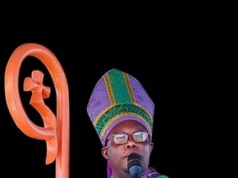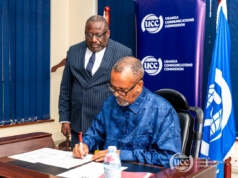

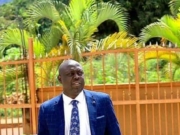




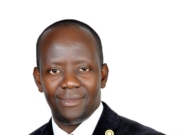


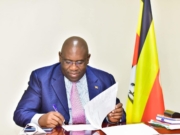
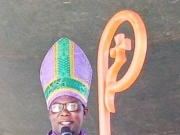

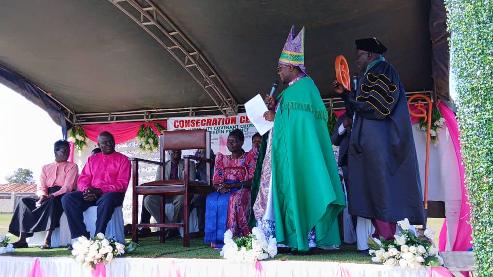
The Most Rev. Archbishop-Elect Professor Mugume Bagambaki Richard, Ecclesiastical Patriarch of the Five-Fold Episcopal World Federation [FFEWF] and President & Chancellor of UCCSAT University, has called the Church to return to the heart of 2 Peter 2: Beware of false teachers.
Speaking to Upper City Covenant Churches and students of UCCSAT this week, he said the warning was never meant to create suspicion, politics, or denominational fights. It was given to protect the gospel, to guard the flock, and to keep the pulpit holy in a generation that is overwhelmed with noise.
The Original Message: What Peter Was Warning About.
Archbishop Mugume urged the Church to begin where Peter began, because the problem Peter described has not disappeared. Only the packaging has changed.
Peter warned that false teachers would rise “among you” 2 Peter 2:1. They would not come as outsiders throwing stones. They would sit in our pews, wear our robes, and quote our scriptures. Their method would be to secretly introduce destructive ideas, twisting the truth rather than denying Christ outright at first.
Their motive, Peter said plainly, is greed. “In their greed they will exploit you with false words.” Ministry was never meant to be commerce, and the gospel was never meant to be sold. The consequence is severe, because “because of them the way of truth will be blasphemed.” When leaders fall into sin and scandal, the world does not blame the individual. The world blames the gospel.
To show that God is serious about this, Peter pointed to three judgments from the Old Testament. He spoke of fallen angels cast into chains of darkness, the world in Noah’s day swept away by the flood, and Sodom and Gomorrah reduced to ash. Yet in each judgment God also showed mercy, for He kept Noah and his household, and He rescued Lot from Sodom.
From this Peter draws a great and comforting truth: “Then the Lord knows how to rescue the godly from trials, and to keep the unrighteous under punishment until the day of judgment.” God’s hand of judgment rests on pride, while His hand of deliverance rests on the righteous. He knows how to protect FFEWF and Upper City Covenant Churches that choose to walk in truth.
Peter then gave a clear profile so believers could discern. False teachers despise authority and accountability. They speak arrogantly about things they do not understand. They live by appetite like irrational animals. They treat the church as a place for food, fame, and pleasure rather than holiness. Their eyes are full of adultery, and they deliberately target unsteady souls.
Their hearts are trained in greed, walking in “the way of Balaam” who sold spiritual access for money. They promise freedom while they themselves remain slaves to corruption. Peter ends with a heartbreaking image of people who once knew the truth and then turned back, “like a dog returns to its own vomit.” This is why discipleship and deep foundation at UCCSAT are not optional, because knowledge without character will always lead to shipwreck.
The Biblical Theology: Teachers, False Teachers, And Heresies.
The archbishop said we cannot read 2 Peter 2 without placing it in the larger biblical story of teaching.
In Scripture, a teacher is a steward of God’s oracles 1 Peter 4:11. In the Old Testament, priests and prophets were responsible to teach the Law.
In the New Testament, Christ Himself is the Master Teacher (Teacher Par Excellence), and He gives teachers to “equip the saints for the work of ministry” Ephesians 4:11-12. James gives a sober warning: “Not many of you should become teachers, for you know that we who teach will be judged with greater strictness” James 3:1.
For context, par excellence is a French phrase which means “to the highest degree” or “the very best example”, so, when we say Jesus is Teacher par excellence, we are saying three things: in authority he teaches with God’s own authority, in character Jesus lived what he taught with humility, sacrifice and truth.
In method, Jesus forms disciples not just informing minds unlike other teachers who are after information, fame or money.
The danger from the beginning was distortion. In Peter’s time around AD 60–68, there were no seminaries, theological colleges and no printed Bibles in every home. A “teacher” was anyone who stood in the house, assembly, church or marketplace to explain Scripture, pray, or give instruction. That openness became an opening. False teachers came “among you” and used Christian language to lead people away.
Church history shows this pattern repeating.
The Gnostics in the 1st and 2nd centuries claimed secret knowledge beyond Scripture. They taught that the material world was evil and that Jesus only appeared to have a body. This directly denied the Incarnation and the bodily resurrection.
The Arians in the 4th century taught that Jesus was a created being and not God equal with the Father. This denied the deity of Christ and nearly split the Church until the Council of Nicaea answered with the Creed.
Other heresies followed the same path. Some added to the gospel. Some subtracted from the gospel. Some used the gospel for personal gain. Peter’s test for all of them remains. A heretic denies core truth about who Jesus is. A false teacher uses the gospel for personal gain. Both despise authority. Both target the unstable. Both bring reproach on the name of Christ.
Who Was A “Teacher” Then, And Who Is One Now?
In Peter’s day, a teacher was not a man with a degree on a wall. He was anyone who fed the flock through teaching, prophecy, or instruction. The church depended on traveling apostles and elders because believers were hungry for answers about suffering under Rome and about how to live holy lives. But without oversight, anyone with charisma could rise and begin to teach.
Today the office has expanded, but the biblical standard has not changed. A “teacher” is anyone who regularly shapes what people believe about God. That includes pastors and bishops in FFEWF and Upper City Covenant Churches. It also includes evangelists, authors, worship leaders, and social media voices with large followings. In 2026, a young person with a phone can reach more people in one week than Peter’s church heard in an entire year.
That is why the warning is more urgent now. A teacher is not only the man behind the pulpit on Sunday. He is also the voice on TikTok, the YouTube preacher, the WhatsApp prophet, and the conference speaker whose clips are shared across Uganda, Kenya, Tanzania, Rwanda, DR Congo and Nigeria, and the diaspora.
The test Peter gave has not changed. Does the teacher point to Christ or to himself? Does he live under authority or despise it? Is his motive greed or service? Does his life match his message?
Bringing It Down: The Same Warning In Today’s Context.
After laying the biblical foundation, Archbishop Mugume showed how the same dangers appear in new forms in Uganda, Africa, and across the world.
In Uganda and across Africa the pressure often comes through exploitation. The way of Balaam is alive when desperation is used to sell miracles, anointing oil, or breakthroughs. This turns the gospel into a transaction. There is also pressure to copy entertainment models and to soften holiness so that crowds will stay. That is the same spirit of licentiousness that Peter confronted.
In the Western world the pressure looks different. It comes through secularism. In some cities historic church buildings have been sold and turned into nightclubs, gyms, or community halls, while fellowship is replaced by isolated spirituality. The deeper idol is technology.
When our age preaches that science, Artificial Intelligence (AI), and money are the only answers to human problems, that is a modern way of denying the Master. It tells people they no longer need God, repentance, or holiness.
On social media the problem Peter named is multiplied. He said false teachers “entice unsteady souls,” and today that can happen in sixty seconds. A voice note, reel, or AI-generated sermon can reach millions before a pastor can teach one Bible study. Everyone now has a platform, but not everyone has been tested.
On denominational differences the archbishop urged wisdom and restraint. Christians sincerely disagree on baptism, tithing, Sabbath and Sunday, marriage, and the prosperity gospel. But disagreement is not the same as deception. Peter’s test was never about secondary issues. His test was always about Christ, character, and greed.
Street Preachers: Teachers In The Marketplace & Buses/Taxis.
Archbishop Mugume noted that the “marketplace” Peter spoke of is still with us today, only now it is the taxi parks, arcades, and major streets of Kampala, Jinja, Mbale, Gulu, Lira and Mbarara, among others.
A street preacher with a Bible and a loudspeaker is functioning as a teacher. He is shaping what hundreds hear about God in a single afternoon, and when videos are shared on TikTok and WhatsApp, that message can reach thousands more by evening. This is not a small thing.
Like the teachers in Peter’s day, street preachers are often the first voice a lost person hears. For this reason, the same test applies. Does the message point to Christ crucified and risen? Is the preacher under the covering and accountability of a local church? Is the motive service or money?
The streets can be a powerful place for evangelism and repentance. But they can also become a place where the way of Balaam appears, when desperation is used to sell miracles or when truth is twisted for attention. The Church must not ignore street preachers. We must train them, cover them, and help them to reflect Jesus, the Teacher par excellence, even on the pavement.
God’s Call Today: Wisdom, Not Fear.
Jesus Himself warned to beware of false prophets. Paul warned the Ephesian elders “night and day with tears.” Peter wrote so that we would not be carried away by the error of lawless people and lose our stability.
For FFEWF, Upper City Covenant Churches, and UCCSAT, the response remains unchanged from the first century. Guard the doctrine by teaching sound doctrine and testing every message with Scripture as the Bereans did.
Guard the character, because a gift without fruit is dangerous, and the Church must ordain character alongside calling. Guard the people by providing oversight and covering, since shepherds are responsible to protect the vulnerable from exploitation.
And if anyone has followed false teaching or has compromised along the way, the hand of deliverance is still open, just as it was for Lot. Repentance still leads back to safety.
The archbishop closed in prayer: “Father, deliver us from deception. Give us discernment. Raise up true teachers who speak Your oracles. Protect UCCSAT students and FFEWF leaders from the way of Balaam. Establish us in truth until Christ comes. In Jesus’ Name, Amen.”
“But grow in the grace and knowledge of our Lord and Savior Jesus Christ.” 2 Peter 3:18
For Teaching, Ordination & Theological Training:
+The Most Rev. Archbishop Elect Professor Mugume Bagambaki Richard
Ecclesiastical Patriarch, Five Fold Episcopal World Federation
President & Chancellor, UCCSAT University
Tel/WhatsApp: +256 775 050 183
Email: fivefoldepiscopalworldfederati@gmail.com | uppercitycovenantchurches@gmail.com